

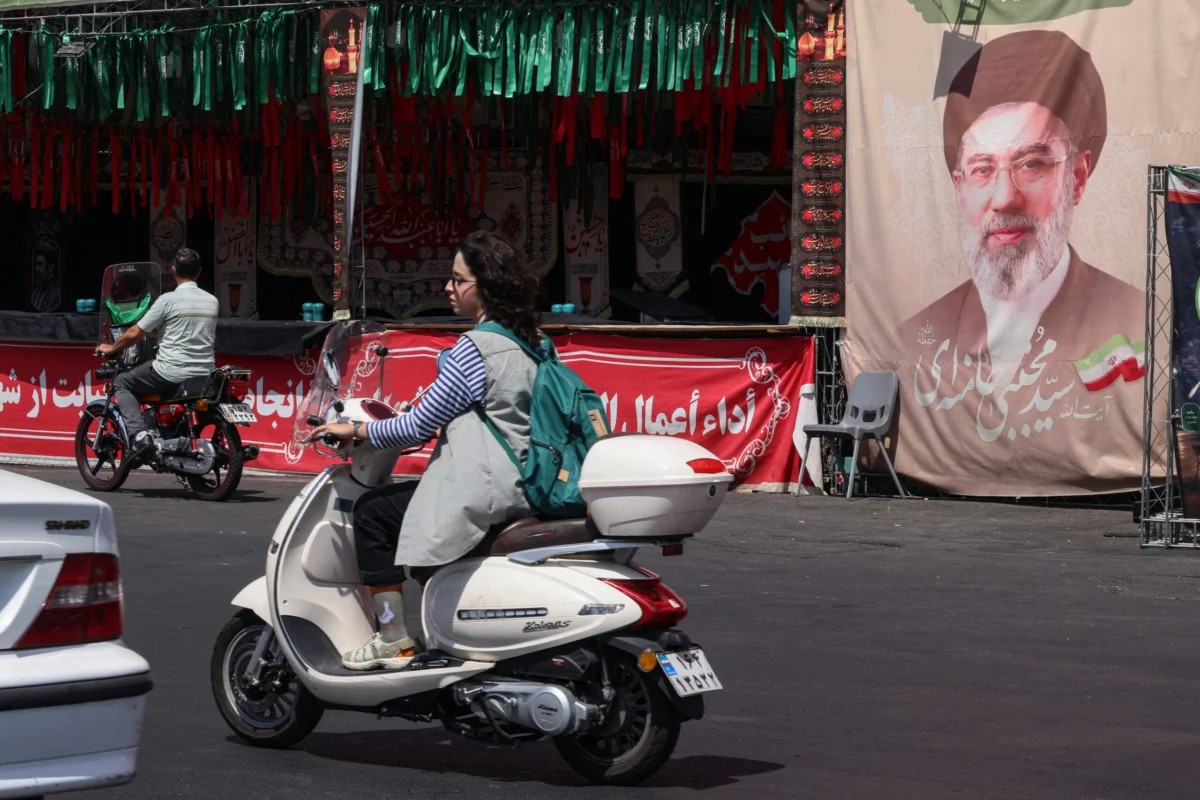
United States forces have launched their ninth consecutive night of strikes against targets within Iran, a significant escalation in a deepening regional crisis that saw one American soldier killed in northern Iraq, marking the first US military fatality since renewed hostilities commenced with the Islamic Republic. These retaliatory actions, confirmed by Washington on July 19, 2026, are explicitly aimed at "punishing" Iran for the loss of American life and signaling a resolute stance against what the Pentagon describes as persistent aggression by Tehran and its proxy networks across the Middle East.
The latest wave of strikes underscores a dangerously volatile period, transforming simmering tensions into overt military confrontations. The death of the US soldier, whose identity has not yet been publicly released pending family notification, occurred during an attack on a US military facility in the semi-autonomous Kurdistan Region of Iraq. While the specific perpetrators of that attack remain officially unconfirmed, US intelligence assessments, according to unnamed defense officials, strongly implicate Iran-backed militia groups operating within Iraq, notorious for their sophisticated drone and rocket capabilities. This incident has dramatically ratcheted up the stakes, pushing the long-standing shadow war between the two nations closer to direct, large-scale conflict.
The Escalation: A Chronology of Renewed Hostilities
The current cycle of intense military engagement did not emerge in a vacuum but is the culmination of years of escalating tensions, punctuated by a series of provocative actions and retaliatory measures. The "renewed hostilities" referred to by US officials can be traced back to several critical junctures following the US withdrawal from the Joint Comprehensive Plan of Action (JCPOA), commonly known as the Iran nuclear deal, in 2018. This withdrawal, coupled with the re-imposition and expansion of stringent sanctions, significantly crippled Iran’s economy and led to Tehran progressively reducing its commitments under the nuclear accord, enriching uranium to unprecedented levels and restricting international inspections.
The period between 2019 and early 2026 witnessed a steady increase in maritime incidents in the Persian Gulf, including attacks on oil tankers, drone shoot-downs, and seizures of commercial vessels, largely attributed to Iran or its proxies. Critical infrastructure in Saudi Arabia, particularly oil facilities, also came under sophisticated drone and missile attacks. The assassination of Iranian Major General Qasem Soleimani in January 2020 by a US drone strike in Baghdad marked a significant flashpoint, leading to Iranian ballistic missile attacks on US bases in Iraq, which resulted in traumatic brain injuries to over 100 American service members, though no fatalities at the time.
Fast forward to the weeks preceding July 2026, and the regional security landscape had further deteriorated. Reports from various intelligence agencies indicated an accelerated pace of Iranian development and deployment of advanced drones and precision-guided missiles, alongside intensified training and arming of its regional proxies, including Hezbollah in Lebanon, the Houthis in Yemen, and various Shiite militias in Iraq and Syria. These groups have increasingly targeted US interests and allies, particularly in the wake of broader regional conflicts, creating a volatile environment where miscalculation is a constant threat.
The immediate genesis of the "ninth consecutive night" of US strikes appears to be a series of aggressive acts by Iran-aligned forces in early July 2026, perhaps targeting international shipping or military installations in neighboring states, which prompted initial US defensive and retaliatory measures. Each subsequent night of US attacks has been framed by the Pentagon as a response to ongoing threats or as a punitive measure for prior actions, creating a dangerous tit-for-tat cycle. The death of the US soldier in Iraq on July 19 thus represented a critical threshold, crossing a line that US policymakers had previously indicated would elicit a strong, direct response.
The Incident in Northern Iraq and US Retaliation
Details surrounding the death of the American service member on July 19 remain under investigation, but initial reports suggest the individual was killed during a complex attack on a US base near Erbil, the capital of the Kurdistan Region. The attack reportedly involved a combination of armed drones and indirect fire, likely rockets, targeting a specific section of the facility. US forces in Iraq are primarily deployed as part of Operation Inherent Resolve, an international coalition dedicated to advising and assisting Iraqi security forces in their fight against the remnants of the Islamic State (ISIS). These bases, though fortified, have long been vulnerable to attacks from Iran-backed militias who view the US presence as an occupation.
Following the soldier’s death, the White House convened an emergency security meeting, with President [Hypothetical US President’s Name] reportedly authorizing the immediate and expanded retaliatory strikes against Iranian targets. The Pentagon issued a statement confirming that the "punishment" strikes on July 19 targeted a range of Iranian military infrastructure, including components of the Islamic Revolutionary Guard Corps (IRGC) Quds Force facilities, drone manufacturing sites, missile storage depots, and command-and-control centers. Satellite imagery and intelligence assessments are being used to evaluate the effectiveness of these strikes, with initial reports suggesting significant damage to targeted sites. However, Tehran has yet to confirm the extent of the damage or any casualties on its side.
Official Reactions and International Apprehension
The immediate aftermath of the strikes has been met with a flurry of official statements and international concern.
From the United States:
A spokesperson for the Pentagon, [Hypothetical Pentagon Spokesperson’s Name], reiterated the US commitment to protecting its personnel and interests in the region. "These strikes are a clear message that the United States will not tolerate attacks on its service members," the spokesperson stated. "We hold Iran directly responsible for the actions of its proxies and will take all necessary measures to deter further aggression. Our intent is to restore deterrence and de-escalate, but not at the expense of our security." President [Hypothetical US President’s Name] addressed the nation from the Oval Office, expressing condolences to the fallen soldier’s family and reaffirming the US resolve. "Let no one doubt our commitment to our troops and our allies," the President declared. "While we do not seek a wider war with Iran, we will unequivocally defend our people and our partners against any and all threats." The State Department has also engaged in urgent diplomatic outreach to regional allies and international partners, briefing them on the situation and emphasizing the defensive nature of the US actions, while urging Iran to cease its destabilizing activities.
From Iran:
Iranian officials have vehemently condemned the US strikes as an act of aggression and a violation of international law. The Iranian Foreign Ministry spokesperson, [Hypothetical Iranian Spokesperson’s Name], issued a statement accusing the US of "unprovoked military adventurism" and warned of a "decisive and crushing response" to any further attacks on Iranian soil. Tehran has consistently denied direct involvement in the specific attack that killed the US soldier in Iraq, instead attributing such actions to "local resistance groups" acting independently in response to foreign occupation. The IRGC has issued a separate, more bellicose statement, asserting its readiness to defend the nation’s sovereignty and threatening to target US military assets and bases across the region should the aggression continue. Supreme Leader Mojtaba Khamenei, though not directly commenting on the strikes, had previously warned against foreign intervention in regional affairs, reinforcing the narrative of external aggression.
From Iraq:
The Iraqi government finds itself in a precarious position, caught between its strategic partnership with the US and the powerful influence of Iran-backed militias within its borders. Prime Minister [Hypothetical Iraqi PM’s Name] released a statement condemning the violation of Iraqi sovereignty by both the attack on the US base and the subsequent US retaliatory strikes that have the potential to destabilize the country further. The statement called for all parties to exercise maximum restraint and respect Iraq’s territorial integrity, urging a diplomatic resolution to prevent Iraq from becoming a battlefield for regional powers. There have been renewed calls from some Iraqi political factions for the complete withdrawal of all foreign troops from Iraqi soil, fearing that their continued presence fuels instability.
International Reactions:
The international community has reacted with profound alarm. United Nations Secretary-General António Guterres issued a statement expressing deep concern over the escalating tensions and called for an immediate cessation of hostilities and a return to dialogue. "The risk of a wider regional conflagration is now perilously high," Guterres warned, urging all parties to prioritize de-escalation. European Union leaders, in a joint statement, also expressed grave concern, calling for restraint and emphasizing the need to uphold international law and find a diplomatic path forward. Russia and China, both permanent members of the UN Security Council, have condemned the US strikes as unilateral acts that undermine regional stability, with Russia calling for an emergency session of the Security Council to discuss the escalating crisis. Regional allies of the US, such as Saudi Arabia and the UAE, have largely expressed support for Washington’s right to self-defense while also privately urging de-escalation to avoid a catastrophic regional conflict that could devastate their economies and security. Israel, a staunch opponent of Iran, has publicly supported US actions, viewing them as necessary to curb Iranian expansionism.
Broader Implications and the Peril of a Wider War
The current trajectory of US-Iran hostilities carries profound implications for global security and stability. The nine consecutive nights of strikes, culminating in direct action against Iranian territory and the tragic loss of a US soldier, signify a significant departure from previous cycles of confrontation. This is no longer a purely "shadow war" but a rapidly intensifying military exchange that risks spiraling out of control.
Risk of Direct Conflict: The most immediate and alarming implication is the heightened probability of a direct, full-scale military conflict between the United States and Iran. Both sides possess significant military capabilities, and a sustained exchange could quickly overwhelm regional defenses and draw in other actors, including US allies and Iranian proxies, turning the Middle East into a vast battlefield. The Strait of Hormuz, a critical choke point for global oil shipments, remains a highly vulnerable target, and any disruption there would send shockwaves through the global economy.
Economic Fallout: Global energy markets have already reacted nervously to the escalating tensions. Oil prices have surged, reflecting fears of supply disruptions in the Persian Gulf, a region that accounts for a substantial portion of the world’s crude oil exports. Prolonged instability could lead to sustained high energy costs, impacting global inflation, economic growth, and supply chains worldwide. Sanctions on Iran, while intended to curb its nuclear program and malign activities, have also contributed to global market volatility.
Regional Destabilization: The fragile states across the Middle East, already grappling with internal conflicts, humanitarian crises, and economic woes, stand to suffer immensely from a wider US-Iran war. Countries like Iraq, Syria, and Lebanon, where both US and Iranian influences are deeply entrenched, could see their internal political and security situations unravel further, potentially leading to new waves of displacement and refugee crises. The proxy networks that Iran has cultivated over decades could be activated, leading to widespread regional attacks and counter-attacks.
Diplomatic Deadlock: The chances for a diplomatic resolution to the Iranian nuclear issue, or for broader regional security dialogue, appear increasingly remote. The current military escalation has eroded trust and hardened positions on both sides, making de-escalation efforts exceedingly difficult. International mediation, though urgently needed, faces significant hurdles as long as military actions continue.
Domestic Repercussions: In the United States, the death of a soldier and the prospect of a prolonged military engagement with Iran will inevitably spark intense domestic debate, particularly in an election year. Public support for military action could be tested if casualties mount or if the conflict appears to lack a clear objective. In Iran, the regime may use the external threat to rally nationalist sentiment and suppress internal dissent, though economic hardships exacerbated by sanctions and conflict could also fuel popular unrest.
The coming days will be critical in determining whether this latest phase of US-Iran confrontation can be contained or if it marks a dangerous pivot towards a larger, more destructive conflict. The world watches with bated breath as the two powers navigate the perilous path of retaliation and deterrence in a region already scarred by decades of conflict. The urgent imperative for all parties remains de-escalation, restraint, and a renewed commitment to diplomatic solutions to avert a catastrophe with global ramifications.
