

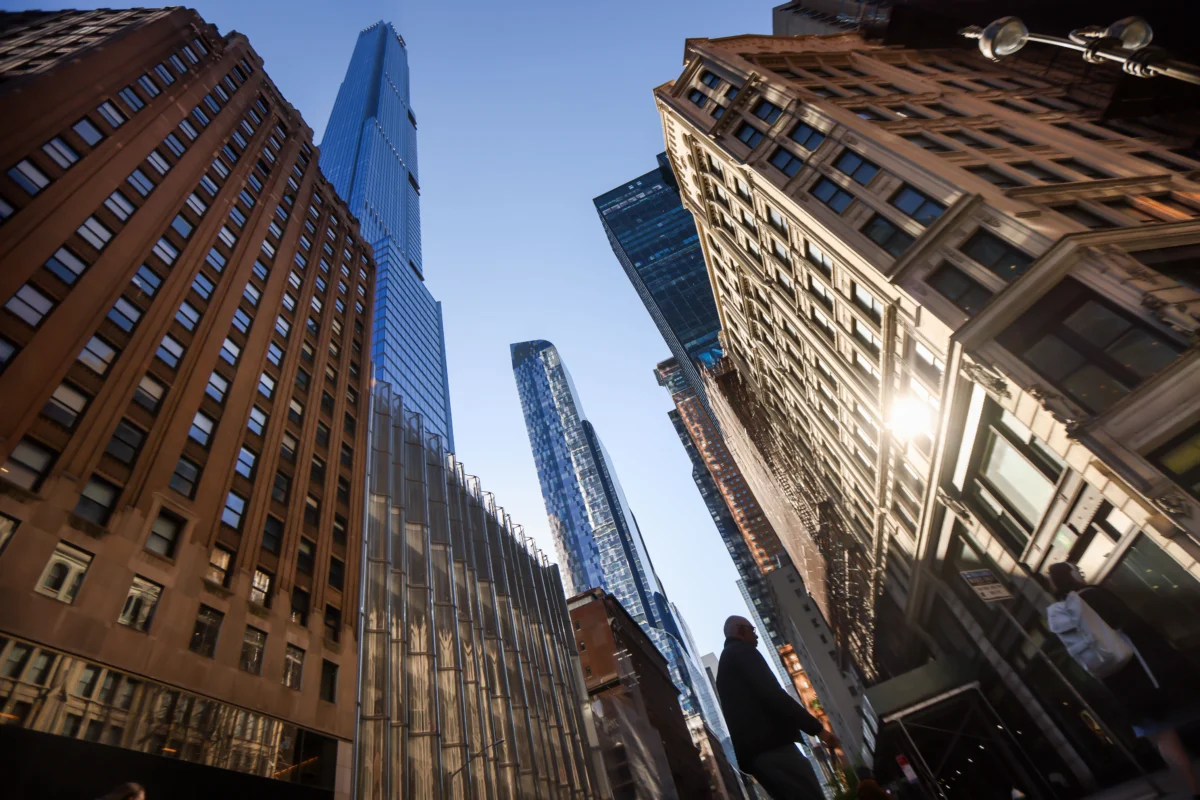
New York City’s luxury real estate market has shown remarkable resilience, defying initial predictions of a slowdown following the implementation of a new pied-à-terre tax on second homes. Just a month after Governor Kathy Hochul signed the controversial measure into law, luxury apartment sales remain robust, and inventory levels are plummeting, according to leading real estate brokers and market analysts. This unexpected strength suggests that a potent combination of surging wealth, limited supply, and high buyer confidence is currently outweighing concerns about the additional tax burden.
Background and the Genesis of the Pied-à-Terre Tax
The legislative journey for the pied-à-terre tax, officially known as the "non-primary residence tax," was contentious and lengthy. For years, advocates, particularly progressive lawmakers, argued that wealthy non-residents who owned luxury apartments but contributed little to the city’s tax base or daily economy were exacerbating the housing affordability crisis. The argument gained significant traction amid growing concerns about income inequality and the rising cost of living for permanent New York City residents. Proponents argued that a tax on these high-value, non-primary residences could generate substantial revenue to fund critical public services and affordable housing initiatives.
The concept was championed by figures like New York City Mayor Zohran Mamdani, whose name became synonymous with the potential for wealth flight due to taxation, a phenomenon brokers dubbed "the Mamdani effect." The tax was first formally proposed in April 2026, quickly moving through the state legislature. After intense debate and lobbying from various real estate interests, Governor Kathy Hochul and state lawmakers ultimately approved the measure on May 27, 2026. The tax officially took effect in early July 2026, applying to residences that fit the specified criteria as of January 5, 2026. This means any high-value pied-à-terre purchased this year would be subject to the new levy.
Initial Industry Apprehensions and Dire Warnings
The immediate reaction from the real estate industry was largely one of alarm. Organizations such as the Real Estate Board of New York (REBNY) issued stark warnings about the potential repercussions. In a statement released shortly after the tax’s passage, REBNY declared, "The tax on second homes will dampen market activity, reduce property values, hurt new development and weaken the city’s economy." Developers echoed these sentiments, predicting they would halt new projects due to diminished demand and profitability, while real estate lobbyists foresaw significant job losses across the sector. Many anticipated a rapid exodus of wealthy individuals to more tax-friendly locales, particularly Florida, which has long marketed itself as a haven for high-net-worth individuals seeking to minimize their tax obligations.
These fears were not unfounded; historical precedents in other global cities, such as London’s increased Stamp Duty Land Tax on high-value properties and non-resident buyers, have shown mixed results, sometimes leading to temporary market slowdowns or shifts in buyer behavior. The initial weeks following the proposal saw some buyers pause their deals, awaiting clarity on the tax’s specifics and potential impact. Scott Hustis of Paradigm Advisory at Compass recounted a particular instance where a buyer for a $16.5 million penthouse duplex in Madison Square Park Tower, listed on April 8, expressed immediate interest but then pulled back a week later when Governor Hochul announced the proposed tax.
Market Performance: A Counter-Narrative Emerges
Despite these dire predictions, the luxury market’s performance in the subsequent weeks painted a strikingly different picture. Far from showing weakness, key indicators demonstrated remarkable strength. According to Olshan Realty, there were 126 contracts signed for apartments priced at $4 million or more in June, a slight but notable increase from the 124 contracts recorded during the same four-week period last year. This uptick, however marginal, strongly contradicted the expectation of a significant dip in activity.
Further data underscored this unexpected buoyancy. Brown Harris Stevens reported that the average price of a Manhattan apartment soared to its second-highest level ever during the second quarter of 2026, climbing 5% over the past year to approximately $2.2 million. The ultra-luxury segment showed even more dramatic gains. Compass, another prominent real estate brokerage, revealed that sales of condominiums priced between $10 million and $20 million surged by an astonishing 55%. The segment for condos exceeding $20 million also experienced robust growth, with sales up 33% and average asking prices increasing by 14%.
Specific high-profile transactions in June further illustrated the market’s vigor. These included an $80 million duplex penthouse in a new condo development near Manhattan’s West Village, a $26 million downtown condominium, and a $22 million co-op on the Upper East Side. These deals signify not only continued demand at the very top end but also a willingness among ultra-wealthy buyers to proceed with significant investments despite the new tax.
Broker Insights and Buyer Psychology
Real estate professionals on the ground offer valuable insights into this market defiance. Lauren Muss of Douglas Elliman, who saw a $17.5 million condo listing go into contract in June, encapsulated the sentiment, stating, "The amount of money out there is insane. We’re seeing big things come to us every day. It’s only getting stronger." Her observation points to a fundamental driver: a vast pool of liquidity.
Scott Hustis’s experience with the Madison Square Park Tower penthouse further highlights a shift in buyer sentiment. While the buyer initially hesitated, by late May, as the details of the tax became clearer and more predictable, confidence returned. The penthouse ultimately went into contract on June 6. "There is a lot of confidence out there," Hustis affirmed. "Markets are strong. A lot more New York buyers are coming out of the woodwork." He noted that for ultra-wealthy buyers, the timing of a purchase within the market cycle often outweighs the concern over an added tax. "Right now, they’re seeing things go into contract and prices not coming down and they decide to execute," he explained.
Marc Palermo of Douglas Elliman, who recently secured a "strong offer" for a $19 million, 4,700-square-foot apartment at 565 Broome Street—a building known for high-profile residents like Novak Djokovic and Travis Kalanick—observed a similar trend. After attracting offers 20-25% below asking in late 2025 and early 2026, the market sprang to life in late spring. "People took a breath, they settled into the new reality and the smart ones charged in," Palermo stated. He also highlighted that virtually all high-end buyers in Manhattan are paying cash, bypassing mortgages, which underscores the immense wealth driving the market.
Driving Forces: Liquidity, Wealth Transfer, and Low Inventory
Several factors appear to be fueling this sustained demand, effectively neutralizing the anticipated "Mamdani effect":
- Explosive Liquidity Events: The market has been awash in new wealth generated from a series of high-profile financial events. The period leading up to and during the tax implementation saw significant initial public offerings (IPOs), including the much-anticipated SpaceX IPO and other tech and finance sector listings. These events, combined with sustained gains in the stock market and other asset classes, have created an unprecedented flood of liquidity, putting immense purchasing power into the hands of high-net-worth individuals.
- The Great Wealth Transfer: Another significant driver is the ongoing "great wealth transfer." As older generations pass down their assets, substantial sums of money are moving to younger generations. Marc Palermo noted a rise in high-end deals with buyers under 40, often facilitated by parents, family offices, or trusts. "We’re seeing a lot of gifts coming in from parents," he said, adding, "If you’re under 40 and you’re buying in New York City, chances are you’re not making enough to buy on your own." This generational transfer is injecting fresh capital into the luxury market.
- Record-Low Inventory: Perhaps the most critical factor exerting upward pressure on prices and accelerating sales is the severe lack of available luxury properties. Jonathan Miller, CEO of the appraisal and research firm Miller Samuel, reported that luxury inventory is down a staggering 40% compared to last year, reaching the lowest level he has observed since he began tracking it in 2004. This scarcity creates a highly competitive environment, where buyers are compelled to act quickly and decisively to secure desired properties, often overlooking additional costs like the pied-à-terre tax.
The Pied-à-Terre Tax: Mechanics and Financial Projections
The pied-à-terre tax is imposed on non-primary residences valued by the city at more than $1 million. For a $16.5 million penthouse, as in Hustis’s example, if it were not a primary residence, the tax bill would exceed $98,000 for the current fiscal year, in addition to standard property taxes. This significant annual surcharge was intended to generate substantial revenue for the city and state.
Governor Hochul and Mayor Mamdani initially projected the tax would raise $500 million annually. However, the New York City Comptroller’s office provided a more conservative estimate, predicting revenues closer to $340 million to $380 million per year. This discrepancy highlights the inherent challenges in forecasting tax revenues, especially for new and untested policies. The actual revenue generation will be closely watched in the coming years, as it will be a key metric in evaluating the policy’s success and potential future adjustments.
Long-Term Implications and Unanswered Questions
While the short-term impact on the luxury market has been surprisingly minimal, the long-term implications of the pied-à-terre tax remain to be seen. Real estate lawyers anticipate years of litigation stemming from issues related to property valuations, co-op board regulations, residency status definitions, and other complex legalities associated with the new tax. Such legal battles could create uncertainty and potentially lead to revisions or clarifications of the legislation.
Furthermore, while developers’ fears of halting new projects haven’t materialized immediately, a sustained disincentive for investment could eventually slow the pipeline of new luxury construction. If inventory levels remain historically low and new supply does not come online, it could exacerbate the affordability crisis even further down the market chain. The tax also adds another layer of complexity for international buyers, potentially making New York City less attractive compared to other global hubs with simpler tax structures.
The current market strength, driven by exceptional liquidity and scarcity, may prove resilient for some time. However, any significant shift in global economic conditions, a downturn in asset prices, or a tightening of monetary policy could alter the landscape. For now, New York City’s luxury real estate market continues to defy expectations, demonstrating that for the ultra-wealthy, the allure of prime Manhattan properties, coupled with abundant capital and limited options, remains a powerful force, even in the face of increased taxation. The ongoing narrative will undoubtedly continue to be a focal point for economic observers and policymakers alike.
