

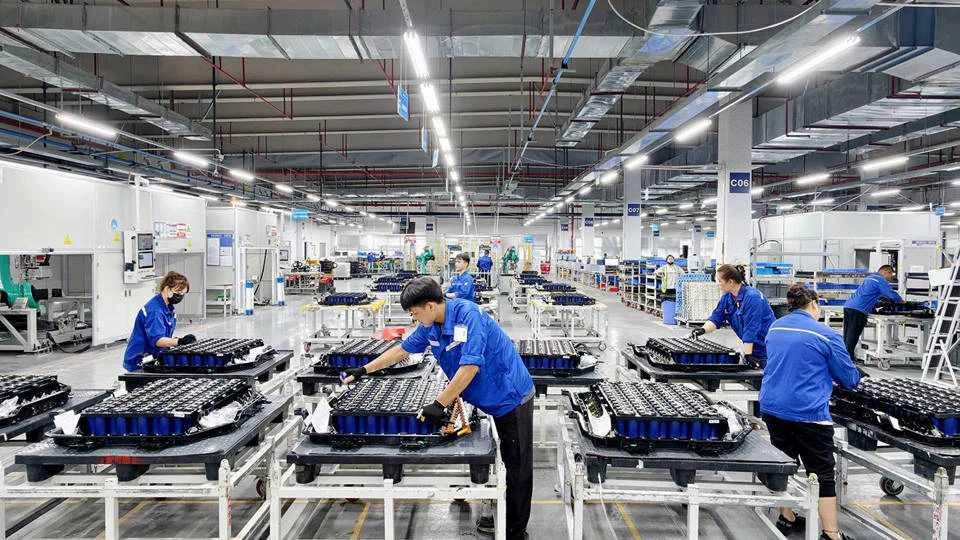
The global economic landscape is undergoing a profound transformation, with Chinese firms rapidly ascending to leadership positions in a spectrum of advanced industries that were once the exclusive domain of established Western economies. From the burgeoning electric vehicle (EV) sector and critical battery manufacturing to the intricate world of industrial robots, renewable energy in the form of solar panels, and the rapidly evolving field of artificial intelligence (AI), China’s technological and manufacturing prowess is undeniable. While the prevailing narrative has largely attributed this ascendant trajectory to extensive state subsidies, a closer examination, bolstered by recent analyses and observable trends, suggests a more complex and nuanced picture. The efficacy of subsidies, while historically significant, is increasingly being overshadowed by a confluence of other potent economic drivers, signaling a potential shift in global industrial power dynamics.
The Shifting Narrative: Subsidies as a Starting Point, Not the Endpoint
For years, the argument that China’s industrial success is primarily a product of generous state financial support has held considerable sway. This perspective, which posits that subsidies allow Chinese companies to produce goods at artificially low costs, thereby undercutting international competitors, has been a cornerstone of many analyses of China’s economic ascent. This viewpoint has recently been lent significant institutional weight by a comprehensive report from the Organisation for Economic Co-operation and Development (OECD). The OECD’s "Magic Database of Industrial Subsidies" aims to systematically catalogue and quantify the subsidies provided by governments globally, with a particular focus on those impacting international trade and investment. While the report’s findings are still being assimilated and debated within economic circles, its very existence underscores the widespread recognition of subsidies as a critical factor in shaping industrial competitiveness.
However, to solely attribute China’s current dominance in sectors like electric vehicles, batteries, and solar panels to subsidies is to paint an incomplete picture. The sheer scale and speed of China’s advancements suggest that while subsidies may have provided an initial impetus, they are no longer the sole, or even the most convincing, explanation for the sustained emergence of Chinese firms as global leaders. A deeper dive into the underlying economic mechanisms, technological innovation, market development, and strategic foresight employed by China reveals a more multifaceted and sophisticated approach to industrial development.
A Chronology of Ascent: From Imitation to Innovation
The trajectory of China’s industrial development can be broadly segmented into distinct phases, each building upon the successes and lessons of the preceding one.
Early Stages (1980s-1990s): The Foundation of Manufacturing: Following Deng Xiaoping’s "reform and opening up" policies initiated in the late 1970s, China began its journey towards becoming the "world’s factory." This era was characterized by the establishment of Special Economic Zones (SEZs) and a focus on attracting foreign direct investment (FDI). While the emphasis was on labor-intensive manufacturing and assembly, this period laid the groundwork for developing a vast industrial base, supply chain infrastructure, and a skilled workforce. Subsidies, often in the form of tax breaks and preferential land use, played a role in attracting early foreign investment and fostering nascent domestic industries.
The "Catch-Up" Phase (2000s-Early 2010s): Leveraging Scale and Subsidies: As China integrated further into the global economy, particularly after its accession to the World Trade Organization (WTO) in 2001, it began to aggressively pursue strategic industries. This period saw a more concerted effort to nurture domestic champions through targeted industrial policies and substantial subsidies. Sectors like solar panel manufacturing, for example, benefited immensely from government incentives, leading to a rapid expansion of production capacity. While this resulted in an oversupply that depressed global prices, it also allowed Chinese firms to gain significant market share and experience. Similar strategies were employed in the early development of the automotive and electronics sectors.
The "Leapfrog" and Innovation Era (Mid-2010s-Present): Beyond Imitation: The current phase is marked by a distinct shift from imitation and cost competitiveness to genuine innovation and technological leadership. Chinese firms are no longer content with simply manufacturing; they are increasingly driving research and development (R&D), patenting new technologies, and setting industry standards. The EV sector is a prime example. While early growth was fueled by subsidies, the current dominance of companies like BYD and CATL is a testament to their rapid advancements in battery technology, electric powertrain development, and integrated vehicle manufacturing. Similarly, in AI, Chinese tech giants are leading in areas like facial recognition, natural language processing, and smart city applications, driven by massive data sets and significant private and public investment in R&D.
Supporting Data: Quantifying the Shift
The quantitative evidence supporting China’s industrial ascent is substantial and multifaceted.
Electric Vehicles (EVs): China is not only the world’s largest market for EVs but also a dominant force in their production and the supply chain. In 2023, China’s domestic EV sales reached approximately 9.5 million units, representing over 60% of global sales. Chinese manufacturers, such as BYD, have surpassed traditional automotive giants in terms of EV production volume. BYD alone sold over 3 million EVs in 2023, a figure that eclipses many established global automakers. This growth is underpinned by a robust battery ecosystem, with Chinese companies like CATL and BYD (through its subsidiary FinDreams Battery) holding significant global market share in battery manufacturing. The International Energy Agency (IEA) has reported that Chinese firms accounted for over 70% of global battery production capacity in recent years.
Solar Panels: China’s dominance in the solar panel industry is unparalleled. Chinese manufacturers control over 80% of the global solar PV manufacturing capacity, from polysilicon production to finished modules. This has led to a dramatic decrease in the cost of solar energy, making it increasingly competitive with fossil fuels globally. The International Renewable Energy Agency (IRENA) has consistently highlighted China’s leading role in solar manufacturing capacity.
Industrial Robots: The adoption of industrial robots in China has surged, driven by the need for automation in manufacturing and the government’s "Made in China 2025" initiative, which identified robotics as a key strategic sector. China is the world’s largest market for industrial robots, and its domestic robot manufacturers are increasingly gaining traction, challenging established players from Japan and Europe. According to the International Federation of Robotics (IFR), China’s robot market has seen exponential growth, with significant investment in R&D and production.
Artificial Intelligence (AI): While the United States often leads in fundamental AI research, China has demonstrated remarkable prowess in the application and deployment of AI technologies. Chinese companies are at the forefront of areas like computer vision, speech recognition, and AI-powered surveillance systems, fueled by vast amounts of data and a supportive regulatory environment for certain applications. Venture capital investment in Chinese AI startups has been substantial, reflecting the perceived potential and rapid progress in the field.
Beyond Subsidies: The Pillars of China’s Industrial Strength
While subsidies have undeniably played a role, several other critical factors are driving China’s sustained rise:
1. Massive Domestic Market: China’s enormous and rapidly growing middle class provides a substantial domestic market for these advanced products. This allows companies to achieve economies of scale quickly, test and refine their products, and build a strong customer base before venturing into international markets. The sheer demand for EVs, for instance, has been a crucial catalyst for the industry’s growth.
2. Robust Supply Chain Ecosystem: Over decades of manufacturing, China has developed an incredibly deep and integrated supply chain. This includes not only raw materials and components but also specialized logistics, manufacturing equipment, and skilled labor. This intricate ecosystem enables rapid production, cost efficiencies, and agility in responding to market demands.
3. Strategic Industrial Policy and Long-Term Vision: While not solely reliant on subsidies, China’s industrial policies have been instrumental in guiding investment and development towards strategic sectors. Initiatives like "Made in China 2025" have provided a clear roadmap, incentivizing R&D, talent development, and the upgrading of manufacturing capabilities. This long-term vision, coupled with consistent government support and coordination, has fostered a conducive environment for innovation and growth.
4. Technological Assimilation and Indigenous Innovation: Chinese firms have demonstrated an exceptional ability to assimilate foreign technologies, improve upon them, and then develop their own indigenous innovations. This iterative process, often fueled by significant R&D investment, has allowed them to rapidly close the technological gap and, in some cases, surpass established leaders. The focus on practical application and rapid iteration has been particularly effective in fields like AI.
5. Talent Pool and Human Capital Development: China has made significant investments in education and vocational training, producing a large pool of engineers, scientists, and skilled technicians. The return of Chinese talent educated abroad, coupled with the growth of domestic research institutions, has provided a crucial human capital foundation for technological advancement.
6. Global Ambition and Market Penetration Strategies: Chinese companies are increasingly pursuing aggressive global expansion strategies. They are not only exporting finished products but also investing in overseas manufacturing, R&D centers, and sales networks. Their ability to offer competitive pricing, coupled with rapidly improving product quality and features, is enabling them to gain market share worldwide.
Official Responses and International Reactions
The OECD report, by focusing on industrial subsidies, has reignited debates among global policymakers and industry leaders.
Chinese Government Response (Inferred): While specific official responses to the OECD report are yet to be widely publicized in this context, China has historically defended its industrial policies, arguing that they are aimed at fostering domestic competitiveness and achieving national development goals. Beijing often emphasizes that subsidies are a common tool used by governments worldwide to support strategic industries and that its policies are in line with international trade norms, albeit with differing interpretations. China is likely to continue its pursuit of technological self-reliance and industrial upgrading, viewing these policies as crucial for its economic security and global standing.
International Reactions:
- United States and European Union: These economic blocs have been increasingly vocal about their concerns regarding China’s industrial policies, particularly the role of state subsidies and alleged unfair trade practices. They are likely to view the OECD report as further evidence to support their calls for greater transparency and a level playing field. Trade disputes and investigations into Chinese industrial practices are likely to persist.
- Other Developed Economies: Nations that compete with China in these advanced sectors will be closely scrutinizing the OECD findings. They may consider their own industrial policies to bolster domestic competitiveness and explore international collaborations to counterbalance China’s growing influence.
- Developing Economies: For many developing nations, China’s success offers a potential model for industrialization. However, they may also be concerned about the impact of China’s dominance on their own nascent industries and the potential for increased trade imbalances.
Broader Impact and Implications
The shift in global industrial leadership has profound implications across various domains:
1. Redefining Global Economic Order: The rise of China in advanced industries challenges the long-standing dominance of Western economies. This could lead to a more multipolar global economic order, with new centers of innovation and manufacturing.
2. Intensified Competition and Innovation: Increased competition from Chinese firms is likely to spur greater innovation and efficiency among established players in the West and elsewhere. This could ultimately benefit consumers through lower prices and improved products.
3. Geopolitical Shifts: Economic power is closely intertwined with geopolitical influence. China’s growing industrial might could translate into increased leverage in international affairs, influencing trade agreements, technological standards, and global governance.
4. Supply Chain Resilience and Diversification: The concentration of critical industries in China has raised concerns about supply chain vulnerabilities. This is prompting calls for diversification and the reshoring or near-shoring of production in some sectors, potentially leading to a restructuring of global supply chains.
5. Technological Standards and Norms: As Chinese companies become leaders, they will play a greater role in shaping global technological standards. This could have significant implications for interoperability, data privacy, and the future direction of technological development.
In conclusion, while state subsidies have undeniably been a catalyst for China’s industrial ascent, the narrative is evolving. The current leadership of Chinese firms in sectors like EVs, batteries, solar panels, and AI is a testament to a complex interplay of factors, including a massive domestic market, sophisticated supply chains, strategic industrial policies, a commitment to indigenous innovation, and a growing global ambition. The OECD report serves as a significant marker in this ongoing discussion, highlighting the importance of subsidies, but it also underscores the need for a more comprehensive understanding of the multifaceted drivers behind China’s remarkable economic transformation and its implications for the global economic order. The coming years will likely witness continued competition, adaptation, and a redefinition of industrial leadership on the world stage.
