

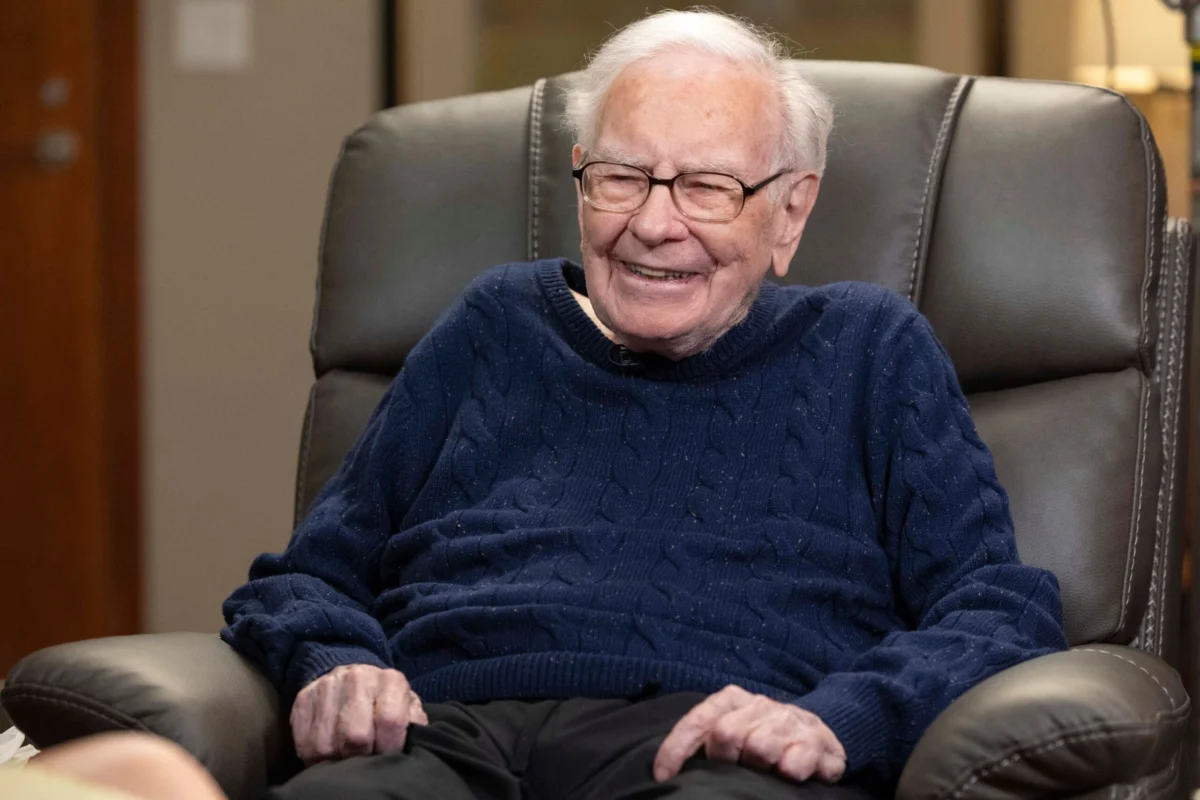
Warren Buffett, the esteemed chairman and CEO of Berkshire Hathaway, has announced a significant recalibration of his vast philanthropic commitments, including the cessation of future contributions to the Bill & Melinda Gates Foundation. This pivotal decision, revealed in a recent interview with CNBC’s Becky Quick, marks a new chapter in the allocation of the Oracle of Omaha’s immense wealth, redirecting a greater share towards foundations overseen by his three children and the Susan Thompson Buffett Foundation. Concurrently, Buffett disclosed that he personally initiated Berkshire Hathaway’s substantial investment in Alphabet, Google’s parent company, challenging prevailing assumptions about the influence of his successor, Greg Abel. These revelations, alongside insights into his market outlook, health, and views on economic leadership, underscore a period of profound transition for the 95-year-old investor and his multi-billion-dollar empire.
Shifting Philanthropic Landscape: A New Chapter for Buffett’s Billions
The most striking announcement centers on Buffett’s decision to discontinue his "lifetime" commitment of annual donations to the Bill & Melinda Gates Foundation. Over the past two decades, this partnership saw nearly $48 billion in Berkshire shares flow to the Gates Foundation, making Buffett one of its principal benefactors. While Buffett acknowledged Bill Gates’ "distasteful" ties to convicted sex offender Jeffrey Epstein, revelations from the recently unsealed Epstein files, he clarified that this was not the primary driver for his decision. Instead, Buffett cited a newfound confidence in his children – Susie Buffett, Howard G. Buffett, and Peter Buffett – to responsibly manage and effectively disburse "vast sums of money" through their respective charitable organizations: the Sherwood Foundation, the Howard G. Buffett Foundation, and the NoVo Foundation.
Buffett’s perspective on the Epstein matter evolved after extensive review, including Gates’ congressional testimony and a February Wall Street Journal report detailing Gates’ acknowledgment of two affairs that Epstein later discovered. Despite finding Gates’ actions "distasteful," Buffett stated, "I found nothing in there that was beyond what I could see — I could picture myself doing," emphasizing that "people make mistakes." He revealed that Bill Gates recently visited Omaha, and the two spent three hours discussing the matter, with Gates reportedly "OK" with the decision to end future contributions. Gates, in a statement to CNBC, lauded Buffett as "one of the greatest philanthropists of all time" and a "dear friend," expressing immense gratitude for his "unprecedented support" in saving millions of lives.
This shift represents a culmination of Buffett’s long-term philanthropic vision. He recounted that in 2006, when he initiated his significant donations to the Gates Foundation, he lacked the same confidence in his children’s readiness to manage such substantial philanthropic endeavors. Now, he is "impressed by the fact that my kids really want to give the money away" efficiently, avoiding the overhead of "huge buildings or holding conferences at esoteric places." His children’s foundations operate with notably lean expense ratios, a testament to their focus on direct impact rather than administrative grandeur, a principle Buffett himself champions at Berkshire Hathaway, known for its famously small corporate headquarters.
Empowering the Next Generation of Philanthropists and Accelerating Giving
The reallocation of funds will significantly bolster the capacity of the family foundations. While his three children’s foundations will each see a roughly 50% increase in their annual allocation of Berkshire shares, the Susan Thompson Buffett Foundation, named after his late first wife, will receive a tenfold increase in shares compared to last year. This foundation, which reflects the philanthropic interests and values of his first wife, Susie Buffett, is now poised to disburse approximately $4.5 billion this year alone, matching the amount the Gates Foundation received last year. Buffett explained this disproportionate allocation by stating it aligns with what his first wife "would have created" and what he "would have approved." He emphasized their shared values on social issues, noting her hands-on, "retail" approach to philanthropy contrasted with his own "wholesale" preference.
Beyond redirecting the flow of his donations, Buffett is also accelerating the pace of his giving. His revised plan aims to "dispose of all of my Berkshire shares within about eight years," targeting the end of 2034. This expedited timeline, a shift from his previous expectation of ten years post-mortem, is driven by the pragmatic realization that his children are "unfortunately growing older" and his desire for them to oversee the distribution of these funds while they are still actively engaged. He humorously noted his own concerns about "keeping your marbles" as he ages, underscoring the urgency of finalizing these arrangements.
A critical enabler of this accelerated timeline is Buffett’s profound confidence in Greg Abel, his designated successor as CEO of Berkshire Hathaway. Buffett explicitly stated that his belief in Abel’s leadership allows him to relinquish voting control of Berkshire Hathaway sooner than he might have otherwise. "He is the choice," Buffett affirmed, expressing his immense trust in Abel’s ability to steward the conglomerate, a trust he previously found in only a handful of individuals, including his late partner Charlie Munger. This decision reflects a carefully considered succession plan that balances the desire for effective philanthropic distribution with the long-term stability and leadership of Berkshire Hathaway.
Berkshire Hathaway’s Evolving Investment Strategy
In a revelation that surprised many financial observers, Buffett disclosed that he personally initiated Berkshire Hathaway’s substantial investment in Alphabet. This contradicts earlier speculation, including from CNBC’s Alex Crippen, that the significant tech play was a sign of Greg Abel "flexing his investing muscles." Berkshire has aggressively built its Alphabet stake, purchasing approximately $4.3 billion in Q3 last year, adding $11.5 billion in Q1 this year, and an additional $10 billion directly from the company to support its AI ambitions, bringing the total to over $31 billion. While acknowledging that Abel is "the decider" and approves all his investment actions, Buffett’s direct involvement signals an evolving comfort level with select technology giants, despite his long-standing aversion to the sector.
Buffett clarified that while Alphabet is a major holding, he doesn’t "like it as well as at least four or five other businesses that we own," including fully owned entities like BNSF Railway. His investment rationale for Alphabet, an "AI company," differs from his previous classification of Apple as a "consumer company." He recognizes that AI necessitates "huge amounts of money" in capital expenditure, a stark contrast to the "asset-light" models of earlier tech companies. Despite this capital intensity, Buffett believes Alphabet is "more likely to be a winner, based on their record, than — than probably 90 percent or — or 95 percent of what gets merchandised through Wall Street," criticizing Wall Street’s short-term focus over fundamental business earnings. He admitted a past "mistake" in not investing when Google was asset-light, demonstrating his adaptability to changing market dynamics.
His largest equity holding, Apple, valued at $76 billion, continues to hold his confidence despite the impending departure of CEO Tim Cook. Buffett expressed disappointment over Cook’s stepping down, likening him to a "Stradivarius playing the violin," but affirmed his continued faith in the company. He acknowledged the intense competitive landscape Apple faces, citing the ongoing efforts of "very, very smart people all over the world shooting and trying to figure out how to make sure that Apple’s future — the future isn’t as bright as the past." This perspective was reinforced by Apple’s recent lawsuit against OpenAI, accusing it of stealing trade secrets, a competitive action Buffett views as a natural, if sometimes ethically fraught, aspect of business.
Broader Economic and Corporate Insights
Buffett also offered his assessment of the new Federal Reserve Chairman, Kevin Warsh, calling him a "good choice." He acknowledged the immense complexity of the Fed’s dual mandate—maintaining 2% inflation and maximum employment—and expressed admiration for Warsh taking on the role. Buffett believes Warsh "will do the best he can" and "cares about the country," echoing his appreciation for past Fed leaders like Paul Volcker who made tough, unpopular decisions for the nation’s economic health.
On the broader market, Buffett reiterated his concern about excessive "gambling" in financial markets, a sentiment he has voiced frequently since the COVID-19 pandemic. He lamented that "it’s tough to find values when everybody is preferring gambling," suggesting that the current environment rewards speculation over fundamental investing. He contrasted the fleeting allure of speculative gains with the long-term, compounding returns favored by investors, noting that "since humans love to gamble so much, there’s more money in — in actually cultivating gamblers than there are cultivating investors."
The interview also touched upon the significant IRS lawsuit against Coca-Cola, a long-term Berkshire holding. The government is seeking approximately $20 billion in back taxes from Coca-Cola, alleging improper accounting of its overseas business, with potential implications dating back to 1996. While Coca-Cola asserts it had a standing agreement with the IRS, the case’s outcome could have "the biggest in American history" derivative effects on other multinational corporations. Buffett, acknowledging his "dog in that fight" as a major shareholder, refrained from offering an opinion on culpability, stating that the matter is best left to the courts. He did, however, express confidence that even a negative ruling would not "break Coca-Cola."
Finally, Berkshire Hathaway’s share repurchase program, which saw a modest $234 million in buybacks in Q1 2026, appears to be accelerating. Estimates from Barron’s, derived from Buffett’s recent SEC filing related to his foundation gifts, suggest that Berkshire repurchased between $5 billion and $11 billion of its own shares in Q2. The exact figure will be confirmed with the release of Berkshire’s Q2 earnings report next month, indicating a robust approach to capital allocation and shareholder returns.
A Personal Note from the Oracle of Omaha
In a rare personal disclosure, Buffett revealed that he "broke a leg… a few weeks ago," his first such injury in his 95 years. Despite the setback, he maintained his characteristic optimism, stating, "I feel good. I’m glad I was born." He reflected on his immense fortune—being born in the right country, at the right time, with the right aptitudes—and contrasted his philosophy of wealth with those who might "win the lottery" and expect perpetual support. His commitment to empowering his children to engage actively in philanthropy stems from a belief that wealth should be used to "level at the edges" of societal inequality, not perpetuate passive inheritance.
This comprehensive interview paints a picture of Warren Buffett as a leader meticulously planning his ultimate legacy, both financially and philanthropically, while remaining keenly engaged in the dynamic world of business and investment. His decisions underscore a deep commitment to his family, the efficient deployment of capital for good, and a steadfast belief in the principles that have defined his unparalleled career.
