

The Kingdom of Saudi Arabia has become the focal point of international diplomatic efforts as representatives from the Sudanese Armed Forces (SAF) and the paramilitary Rapid Support Forces (RSF) arrived in Jeddah to begin "pre-negotiation" talks. These discussions, brokered jointly by the United States and Saudi Arabia, represent the first high-level attempt to establish a formal dialogue since the outbreak of hostiles on April 15, 2023. The conflict, which has pitted General Abdel Fattah al-Burhan against his former deputy, Mohamed Hamdan Dagalo, commonly known as Hemedti, has rapidly transformed the capital city of Khartoum and its neighboring districts into a volatile theater of urban warfare.
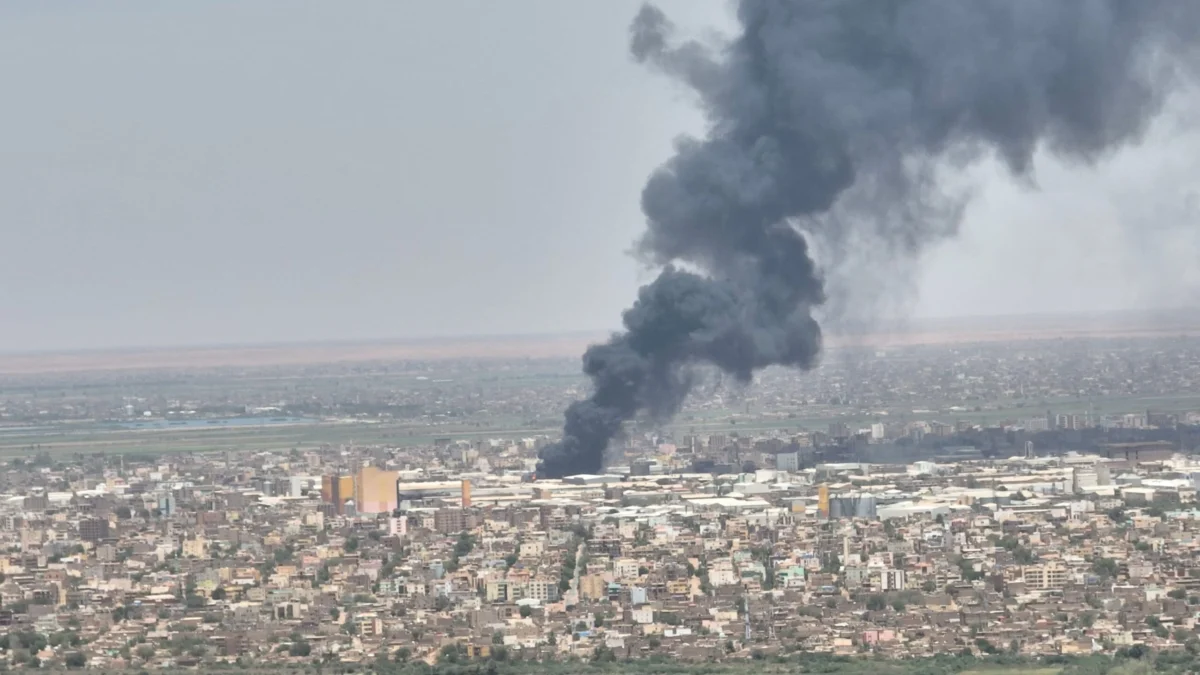
As the delegations gathered in the Red Sea port city, the situation on the ground in Sudan remained dire. Drone footage and eyewitness reports from the Sudanese capital continue to depict a harrowing landscape of destruction. Thick plumes of black smoke have become a permanent fixture over the skyline of Bahri, also known as Khartoum North, where heavy artillery and airstrikes have targeted industrial zones and residential neighborhoods. Despite the commencement of talks, residents in Khartoum report that the sounds of warplanes and explosions continue to shatter any hope of an immediate, informal truce. The primary objective of the Jeddah initiative is not yet a comprehensive political settlement, but rather a sustainable humanitarian ceasefire that would allow for the evacuation of civilians and the delivery of life-saving aid.
A Chronology of Escalation and Failed Transitions
To understand the current impasse in Jeddah, one must look back at the fragile political landscape of Sudan following the 2019 ouster of long-time autocrat Omar al-Bashir. Bashir’s thirty-year reign ended after months of mass pro-democracy protests, leading to a power-sharing agreement between military leaders and civilian political groups. This transition was intended to lead to democratic elections, but the process was fundamentally derailed in October 2021 when General Burhan and Hemedti joined forces to lead a military coup, dissolving the civilian-led government and arresting its prime minister.
The alliance between the SAF and the RSF, however, was one of convenience rather than shared vision. Throughout 2022 and early 2023, international mediators, including the "Quad" (the U.S., UK, Saudi Arabia, and the UAE) and the United Nations, pushed for a return to civilian rule via a "Framework Agreement." The breaking point arrived during discussions regarding the integration of the RSF into the regular national army. General Burhan insisted on a rapid two-year integration timeline, while Hemedti argued for a ten-year window, seeking to preserve his personal power base and the RSF’s autonomous command structure. This technical disagreement over Security Sector Reform (SSR) ultimately ignited the powder keg on April 15, as both sides mobilized forces across the country, leading to the current all-out war.
The Humanitarian Toll: A Nation on the Brink
The human cost of the three-week conflict is staggering and continues to climb. According to data from the Sudanese Ministry of Health and various international NGOs, the death toll has reached several hundred, though the actual figure is widely believed to be much higher due to the inability of medical staff to reach bodies in active combat zones. The United Nations High Commissioner for Refugees (UNHCR) has reported that over 100,000 people have already fled Sudan to neighboring countries, including Egypt, Chad, South Sudan, and Ethiopia. Furthermore, internal displacement is estimated to affect hundreds of thousands more who have fled the capital for relatively safer states like Al Jazirah or the Red Sea state.
The collapse of the healthcare system in Khartoum is perhaps the most immediate crisis. The World Health Organization (WHO) has confirmed that approximately 70% of hospitals in conflict-affected areas are now non-functional. Many facilities have been caught in the crossfire, while others have run out of fuel to power generators, oxygen for patients, or basic surgical supplies. While a WHO shipment of medical aid recently reached Port Sudan, the organization has emphasized that security clearances and the lack of "safe corridors" have prevented these supplies from reaching the epicenters of the violence in Khartoum and Darfur.
The Strategic Importance of the Jeddah Initiative
The choice of Jeddah as the venue for these talks is highly significant. Saudi Arabia has maintained a complex and deep-rooted relationship with both General Burhan and Hemedti. Both leaders previously provided thousands of Sudanese troops to support the Saudi-led coalition in Yemen, creating personal and financial ties between the Sudanese military apparatus and Riyadh. Furthermore, Saudi Arabia views the stability of Sudan as a matter of national security, given their shared coastline along the Red Sea—a vital artery for global trade and the Kingdom’s "Vision 2030" economic projects.
The United States has mirrored this urgency. White House National Security Adviser Jake Sullivan’s travel to Saudi Arabia to coincide with the talks underscores the Biden administration’s commitment to preventing a total state collapse in Africa’s third-largest country. The U.S. and Saudi Arabia issued a joint statement urging both parties to "actively engage" in the talks with the goal of a ceasefire and an end to the conflict. However, the rhetoric from the warring factions suggests a significant gap remains. General Burhan’s special envoy, Dafallah Alhaj, has stated that the army will not sit down directly with the "rebellious" RSF, characterizing the talks as a technical necessity for humanitarian aid rather than a political recognition of Hemedti’s forces.
Regional Implications and Geopolitical Stakes
Sudan occupies a strategic crossroads between the Middle East and Sub-Saharan Africa. Its instability threatens to destabilize a region already grappling with conflict and economic fragility. To the west, the Darfur region—where Hemedti’s RSF originated as the Janjaweed militia—has seen a resurgence of ethnic violence, raising fears of a return to the genocidal conflict of the early 2000s. To the south, the borders with South Sudan and Ethiopia are porous; any prolonged war in Sudan could disrupt oil exports from South Sudan or exacerbate border disputes with Ethiopia.
International observers are also monitoring the role of external actors. The RSF has long been linked to the Russian private military company, the Wagner Group, particularly regarding gold mining operations in Sudan’s northern and western regions. While the Russian government has officially called for a ceasefire, the presence of Wagner-linked interests adds a layer of geopolitical complexity to the conflict. Meanwhile, Egypt has traditionally backed General Burhan and the SAF, viewing the regular army as the only guarantor of stability on its southern border. The involvement of the U.S. and Saudi Arabia is, in part, an attempt to harmonize these various regional interests and prevent Sudan from becoming a proxy battleground.
Analysis: The Difficult Road to Peace
Despite the commencement of the Jeddah talks, analysts remain cautious about the prospects for a lasting peace. The fundamental issue is that both General Burhan and Hemedti view this conflict as an existential struggle for survival. For Burhan, the RSF represents a "rebel" entity that must be dismantled to restore the state’s monopoly on force. For Hemedti, the war is a fight against a "corrupt military elite" that he claims is trying to restore the remnants of the Bashir regime.
The current "pre-negotiation" phase is focused almost exclusively on the "humanitarian truce." This involves establishing clear rules for the movement of aid, the protection of civilian infrastructure like water and power plants, and the creation of safe zones for non-combatants. However, without a political roadmap that addresses the eventual integration of the RSF or the transition to civilian rule, any ceasefire is likely to be fragile. The history of the last three weeks has been defined by a series of violated ceasefires, each broken within hours of being announced.
Conclusion and Future Outlook
As the world watches the proceedings in Jeddah, the people of Sudan remain trapped in a nightmare of urban siege and dwindling resources. The success of the U.S.-Saudi initiative hinges on its ability to exert enough pressure—economic, diplomatic, or otherwise—to convince both generals that a military victory is unattainable.
The international community, led by the UN and the African Union, continues to call for a return to the negotiating table for a civilian-led transition. They argue that only a government representing the aspirations of the 2019 revolution can provide the long-term stability Sudan desperately needs. For now, the focus remains on the immediate: stopping the shells from falling on Khartoum, reopening the hospitals, and preventing a humanitarian catastrophe from turning into a regional conflagration. The talks in Jeddah are a vital first step, but the path to a peaceful and democratic Sudan remains fraught with unprecedented challenges.
