

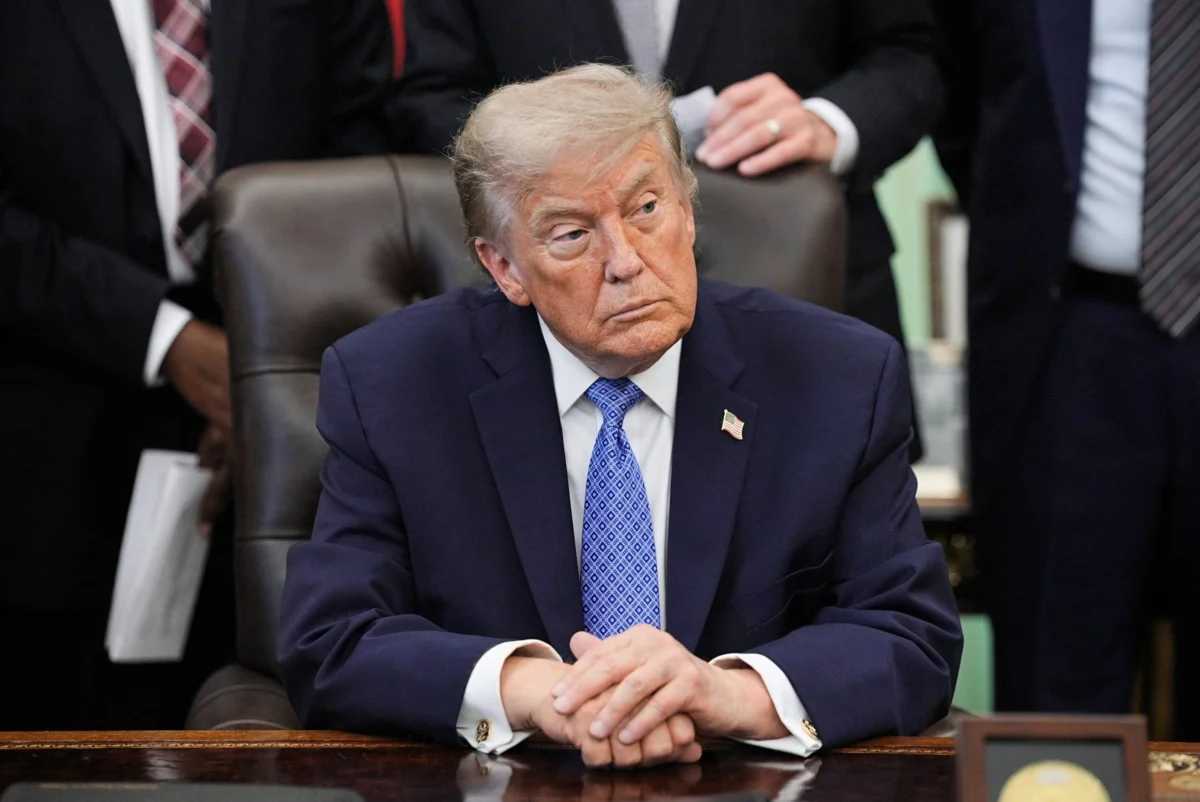
President Donald Trump announced Friday that he would not affix his signature to a sweeping housing bill, the 21st Century ROAD to Housing Act, which had sailed through Congress with overwhelming bipartisan support. His decision, communicated via his Truth Social platform, was framed as a direct protest against the Senate’s failure to pass the controversial election security legislation known as the SAVE America Act. Despite the presidential refusal to sign, the bill is poised to automatically become law at 12:01 a.m. ET on Saturday, underscoring a rarely invoked constitutional mechanism and highlighting a contentious political standoff in Washington.
The 21st Century ROAD to Housing Act, designed to alleviate the nation’s escalating housing affordability crisis by lowering costs for homebuyers and curbing the influence of institutional investors, garnered significant cross-aisle backing. It passed the House of Representatives with a commanding 358-32 vote and the Senate with an equally impressive 85-5 margin. These figures are far beyond the two-thirds supermajority required to override a presidential veto, making Trump’s refusal to sign a symbolic gesture rather than an impediment to the bill’s enactment. The White House, when pressed on whether Trump would issue a formal veto, referred inquiries back to the president’s social media declaration, signaling an intention to let the constitutional clock run out.
A Deep Dive into the 21st Century ROAD to Housing Act
The legislative journey of the 21st Century ROAD to Housing Act reflects a growing consensus across the political spectrum regarding the urgent need to address housing affordability. For years, economists and policymakers have warned about a severe housing supply shortage, particularly in metropolitan areas, which has driven up prices and pushed homeownership out of reach for millions of Americans. The bill aims to tackle these challenges through a multifaceted approach.
While specific details of the bill’s provisions are extensive, common elements in such legislation typically include measures to incentivize the construction of new affordable housing units, streamline local zoning and permitting processes, and provide financial assistance or tax credits to first-time homebuyers. Crucially, the bill also targets institutional investors, a demographic that has increasingly purchased single-family homes, often converting them into rentals or holding them as assets, thereby reducing the available stock for individual buyers. Analysts suggest the bill likely includes provisions such as increased taxes on large-scale property acquisitions by investment firms, restrictions on their ability to outbid individual buyers in certain markets, or incentives for them to divest properties suitable for owner-occupancy. The bipartisan support for the bill underscores the widespread recognition that the housing crisis transcends traditional partisan divides, affecting urban, suburban, and rural communities alike.
President Trump’s Protest: The SAVE America Act
President Trump’s decision to withhold his signature stems from his insistence on the passage of the SAVE America Act, a legislative priority focused on election security. In his Truth Social post, Trump lambasted the Senate for its inability to pass the bill, stating, "I will not sign the Housing Bill… in PROTEST over the fact that the United States Senate is not capable of passing THE SAVE AMERICA ACT." He further amplified his rhetoric, claiming the SAVE America Act’s non-passage was "CRAZY, and a serious threat to any politician who votes against it!"
The SAVE America Act is designed to implement stringent requirements for voter identification and citizenship verification. Key provisions include mandating photo identification to cast a ballot and requiring proof of citizenship to register for elections. Proponents argue these measures are essential to safeguard the integrity of U.S. elections and prevent non-citizens from voting. However, the bill has drawn significant criticism from Democrats and voting rights advocates who contend that it addresses a largely non-existent problem while potentially disenfranchising eligible voters, particularly minorities, the elderly, and low-income individuals who may face barriers in obtaining the required documentation.
It is already illegal for non-citizens to vote in federal elections, and extensive research has consistently shown that instances of non-citizen voting are exceedingly rare. A 2023 analysis by the Election Innovation Research Institute, for example, found the rate of non-citizen voting to be statistically negligible, typically far below 0.01% of all ballots cast. Critics argue that the emphasis on this issue is often a political tactic to justify stricter voting laws that can disproportionately affect certain demographics. Trump’s claim of broad public support for the SAVE America Act has also been challenged by polls, which have indicated significant public uncertainty or opposition, particularly regarding the citizenship verification aspects.
The Constitutional Path to Law
Under Article I, Section 7 of the U.S. Constitution, a bill passed by both chambers of Congress becomes law in one of three ways: if the President signs it; if the President vetoes it and Congress overrides the veto; or if the President takes no action within 10 days (excluding Sundays) while Congress is in session. In the latter scenario, the bill "shall be a Law, in like manner as if he had signed it." This mechanism is distinct from a "pocket veto," which occurs when Congress adjourns before the 10-day period expires, preventing the President from returning the bill with objections. Since Congress is currently in session, Trump’s inaction effectively allows the bill to pass into law without his endorsement.
This constitutional provision ensures that legislative gridlock, or a president’s refusal to engage with legislation, does not completely halt the lawmaking process, especially for bills with overwhelming congressional support. Trump’s tactic, while a clear political statement, ultimately fails to block the housing bill’s enactment, highlighting the limits of presidential power when faced with a strong legislative consensus.
The Economic Backdrop: A Housing Market in Crisis
The timing of Trump’s announcement is particularly noteworthy, coming just one day after the National Association of Realtors (NAR) reported that home prices in June surged to the highest level on record. The median price of an existing home sold last month reached an unprecedented $440,600, marking a 1.8% increase from the previous year. This escalating trend has fueled a growing affordability crisis across the nation, placing immense financial strain on American families.
Rising home prices, coupled with steadily increasing mortgage interest rates—which have hovered above 7% for much of the past year—have created an exceptionally challenging environment for prospective homebuyers, especially first-time purchasers. The NAR report further detailed a persistent shortage of housing inventory, contributing to competitive markets and rapid price appreciation. This economic reality forms the crucial backdrop against which the 21st Century ROAD to Housing Act was crafted and passed, underscoring the immediate and tangible impact its provisions are expected to have on millions of Americans struggling with housing costs.
Political Fallout and Midterm Implications
Democrats swiftly condemned President Trump’s stance, portraying it as further evidence of his indifference to the everyday struggles of American families. Senate Minority Leader Chuck Schumer (D-N.Y.) took to X (formerly Twitter), stating, "Millions of Americans are being crushed by housing costs. Donald Trump called their crisis ‘a big yawn’ – then refused to sign the most significant bipartisan housing bill in decades. His priorities couldn’t be clearer: higher costs for families and more power for himself." Schumer’s remarks referenced a previous characterization by Trump, painting a stark contrast between Democratic efforts to address kitchen-table economic issues and Trump’s focus on election-related legislation.
Representative Jason Crow (D-Colo.) echoed this sentiment on X, writing, "The rising cost of mortgages and rent are hitting Americans hard. Yet Trump refuses to act." These reactions highlight the Democratic strategy heading into the crucial November midterm elections, where the party has centered its messaging around economic affordability and the cost of living. Democrats hope that by emphasizing Republican perceived inaction or opposition on these issues, they can galvanize voters and potentially retake control of both chambers of Congress.
For Republicans, the situation presents a delicate balancing act. While many in the party supported the housing bill, Trump’s unwavering focus on the SAVE America Act and his demands regarding the filibuster introduce internal divisions. Trump has consistently urged his fellow Republicans in Congress to prioritize the SAVE America Act ahead of the midterms, going so far as to previously cancel a scheduled signing ceremony for the housing bill in June, citing the same demand.
The Filibuster Flashpoint
Central to Trump’s protest is his demand that Senate Republicans eliminate the legislative filibuster to clear the path for the SAVE America Act and other GOP priorities. The filibuster, a procedural tool in the Senate, requires most legislation to clear a 60-vote threshold to advance, rather than a simple majority of 51 votes. Trump views this rule as an obstruction to his agenda and has frequently called for its abolition.
However, Senate Republican leaders have steadfastly defended the filibuster, viewing it as a crucial mechanism to protect minority rights and ensure broader consensus in lawmaking. Senate Majority Leader John Thune (R-S.D.) publicly stated last month that there is insufficient support within the GOP caucus to eliminate the filibuster, let alone to advance the SAVE America Act without it. While Republicans currently hold a 53-47 majority in the Senate, several GOP lawmakers have signaled their opposition to the election bill, either due to concerns about its provisions or reluctance to alter established Senate procedures. This internal resistance within the Republican Party complicates Trump’s efforts to exert full control over the legislative agenda, even among his own party members.
Broader Implications and Future Outlook
President Trump’s highly publicized refusal to sign the 21st Century ROAD to Housing Act, despite its ultimate enactment, sets a significant political precedent. It demonstrates a willingness to leverage legislative inaction as a protest tool, even for broadly popular bills, to push for unrelated policy priorities. This tactic could signal a new phase of legislative brinkmanship, potentially influencing how future administrations interact with Congress on cross-cutting issues.
The incident also underscores the ongoing battle for the Republican Party’s direction. Trump’s continued dominance within the party, evidenced by his ability to dictate legislative priorities and demand procedural changes like filibuster reform, poses challenges for GOP leaders who must balance loyalty to the former president with their own legislative strategies and institutional prerogatives. The midterms will serve as a crucial test of whether Trump’s strategy of linking disparate policy issues resonates with voters or if the Democratic focus on economic relief gains traction.
Ultimately, the 21st Century ROAD to Housing Act will become law, offering a potential lifeline to a housing market under immense pressure. Its implementation will be closely watched for its impact on home prices, affordability, and the role of institutional investors. Meanwhile, the political debate surrounding election security and the future of the filibuster is expected to intensify, remaining a flashpoint in the lead-up to the November elections and beyond. The episode serves as a vivid illustration of the complex interplay between policy, constitutional procedure, and partisan politics in contemporary American governance.
