

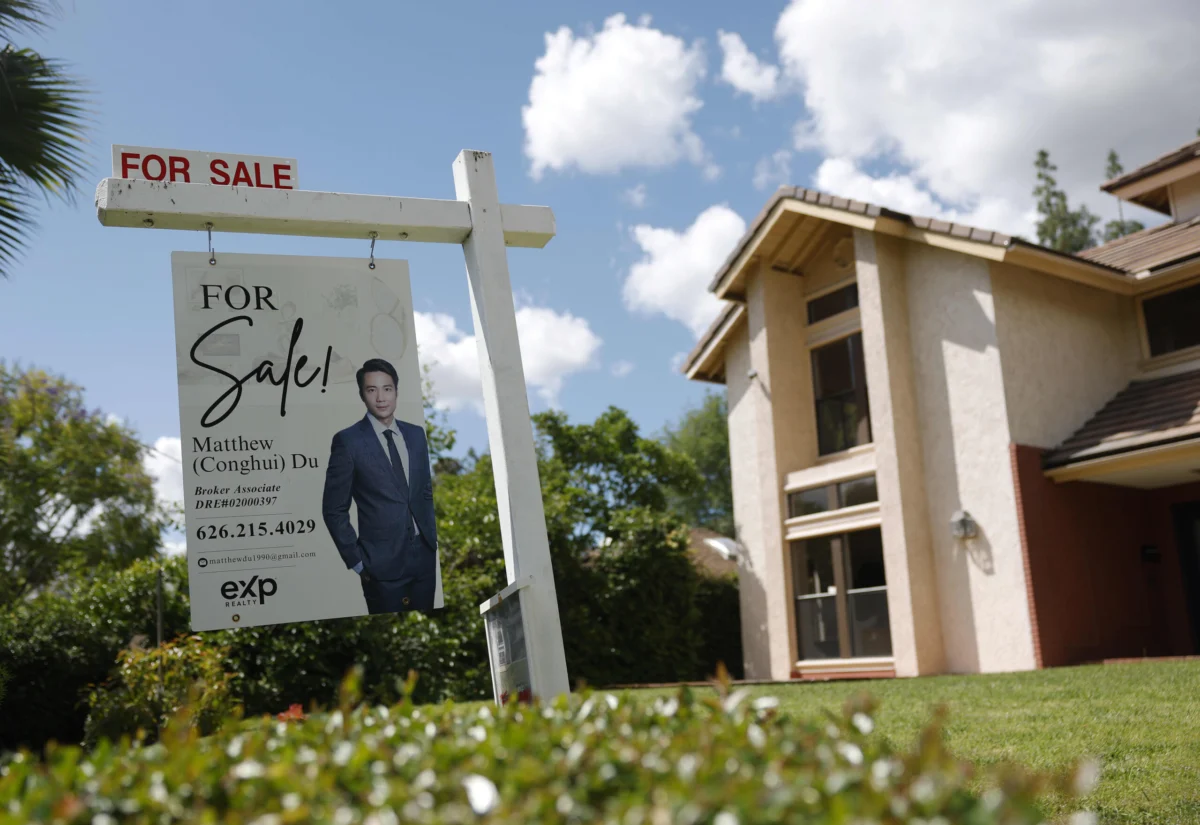
The U.S. housing market experienced a notable contraction in June, with sales of previously owned homes dropping by 2.4% from May, reaching an annualized rate of 4.09 million units, according to the National Association of Realtors (NAR). This decline defied analysts’ predictions for a slight month-over-month gain, underscoring the severe impact of elevated mortgage rates and soaring property values on buyer sentiment and purchasing power. Despite the monthly dip, June sales did register a modest 2.8% increase compared to the same period a year prior, indicating a slight year-over-year recovery from earlier market lows, yet still painting a picture of a constrained and challenging environment for prospective homeowners.
The primary drivers behind this cooling market activity are unequivocally the high cost of borrowing coupled with unprecedented home prices. The median price of an existing home sold in June climbed to an all-time high of $440,600, marking a 1.8% increase from the previous year. This record price point, typically seen during June as it often represents the peak of the spring buying season, highlights the persistent imbalance between supply and demand, even as buyer demand wanes under financial pressure.
The Dual Pressure of Rising Mortgage Rates and Record Prices
The current state of the housing market is a direct consequence of a confluence of economic factors that have profoundly reshaped affordability. Mortgage rates, which had enjoyed a prolonged period of historic lows, began an aggressive ascent in late 2021 and continued throughout 2022 as the Federal Reserve embarked on a series of interest rate hikes designed to combat persistent inflation. By the time contracts for June’s closed sales were likely signed in May, the average rate on the 30-year fixed mortgage was still trending upwards, pushing monthly payments significantly higher for prospective buyers.
This sharp increase in borrowing costs has dramatically eroded purchasing power. A buyer seeking to finance a median-priced home today faces a substantially larger monthly mortgage payment compared to just a couple of years ago, even for the same loan amount. For instance, a median home price of $440,600 with a 7% interest rate would result in a principal and interest payment far exceeding that of a 3% rate on a similar home just a few years prior, illustrating the financial chasm that has opened for many aspiring homeowners. The market’s sensitivity to these fluctuations is acute, as articulated by Lawrence Yun, NAR’s chief economist, who noted, "The back-and-forth in monthly home sales activity, driven by mild fluctuations in mortgage rates, shows how sensitive home buyers are to affordability conditions."
The record-high median sales price further exacerbates this affordability crisis. While mortgage rates impact the cost of financing, the sheer sticker price of homes means that even with a robust income, the initial outlay and overall loan amount remain formidable barriers. This phenomenon is particularly challenging for first-time buyers and those in lower-income brackets, who are increasingly priced out of the market. The persistent upward trajectory of home values, even in a period of cooling sales, indicates a deeper structural issue within the housing supply landscape.
A Deeper Dive into Inventory Dynamics
A critical element sustaining elevated prices despite softening demand is the stubbornly low inventory of homes available for sale. At the end of June, the total housing inventory stood at 1.56 million units. While this represented a slight 1.3% increase from June of the previous year, it marked a 0.6% decline from May, indicating a continued struggle to replenish the market. At the current sales pace, this inventory translates to a 4.6-month supply. For context, a market is generally considered balanced between buyers and sellers when there is approximately a six-month supply of homes. The current deficit clearly favors sellers, allowing them to maintain higher price points even as buyer activity moderates.
Several factors contribute to this chronic inventory shortage. A significant deterrent for potential sellers is the "lock-in" effect. Many existing homeowners refinanced or purchased their homes when mortgage rates were at historical lows, often below 3-4%. Moving to a new home now would entail taking on a new mortgage at significantly higher rates, potentially doubling or even tripling their monthly housing costs. This financial disincentive effectively keeps many would-be sellers on the sidelines, further constricting the supply pipeline.
Furthermore, new home construction, while showing signs of improvement, has not kept pace with population growth and household formation over the past decade. Regulatory hurdles, labor shortages, and rising material costs have constrained builders’ ability to rapidly scale up production, leaving a structural deficit that continues to underpin price appreciation. As Yun highlighted, "Progress on long-term housing affordability could be hampered if inventory growth continues to stall. Without consistent gains in inventory, home prices can accelerate. It is critical to introduce more supply to the market to widen the opportunity for homeownership." This sentiment underscores the consensus among housing economists that a substantial increase in housing stock is the most sustainable long-term solution to the affordability challenge.
Market Segmentation and Regional Variations

The impact of current market conditions is not uniformly distributed across all segments of the housing market or geographical regions. Data from June reveals a stark divergence in performance based on price tiers. Sales of homes priced below $100,000 saw a 1.7% decrease from a year ago, and those priced between $100,000 and $250,000 experienced less than a 1% increase. This indicates that the most affordable segments of the market are struggling significantly, likely due to the compounded effects of high rates and limited inventory making entry-level homes virtually unattainable for many.
In stark contrast, the higher end of the market continues to demonstrate robust activity. Sales of homes priced between $750,000 and $1 million surged by nearly 14% from the year prior, while homes priced above $1 million saw an even more impressive 18% increase. This trend suggests that affluent buyers, who are less sensitive to interest rate fluctuations or may have substantial equity or cash reserves, are continuing to drive demand in the luxury segment. This widening gap between the performance of the affordable and luxury markets further exacerbates wealth inequality and makes the dream of homeownership increasingly elusive for a large segment of the population.
Regionally, home sales in June presented a varied picture. While the majority of the country experienced month-over-month declines, the Northeast stood out as the sole region to register an increase in sales. This regional resilience could be attributed to a variety of factors, including unique local economic conditions, strong job growth in specific metropolitan areas, or a comparatively higher concentration of cash buyers or buyers less impacted by rising interest rates. Conversely, regions that experienced rapid price appreciation during the pandemic boom years, particularly in the South and West, might be seeing a more pronounced pullback as affordability becomes stretched to its limits.
Buyer Demographics and Market Dynamics
Shifts in buyer demographics also offer insights into the evolving market. In June, all-cash sales accounted for one-quarter (25%) of all transactions, a decrease from 29% a year ago. While still a significant portion, this decline could indicate that even cash buyers, including investors, are becoming more cautious or finding alternative investment opportunities. Alternatively, it might reflect a temporary dip as some cash-rich buyers wait for more favorable market conditions or potential price corrections.
Encouragingly, first-time buyers made up a slightly larger share of the market, accounting for 33% of sales, up from 30% a year ago. This modest increase is noteworthy given the challenging affordability landscape. It could suggest that some first-time buyers, perhaps with financial assistance from family, or those who have diligently saved, are seizing opportunities in specific sub-markets or are simply determined to enter homeownership despite the headwinds. However, this percentage remains below the historical average of around 40% for first-time buyers, underscoring the ongoing difficulties they face.
Broader Economic Implications and Outlook
The trajectory of the housing market holds significant implications for the broader U.S. economy. Housing is often considered a bellwether for economic health, with slowdowns potentially preceding broader economic contractions. A sustained cooling in home sales and construction can impact a myriad of related industries, including mortgage lending, home improvement, furniture manufacturing, and real estate services, potentially leading to job losses and reduced consumer spending.
For the Federal Reserve, these housing market figures present a complex challenge. While a cooling housing market can help to alleviate inflationary pressures by reducing demand for housing-related goods and services, the Fed’s primary mandate remains controlling overall inflation. If housing prices continue to rise, even with reduced sales volume, it complicates the picture for policymakers. The current data, showing declining sales but rising prices, suggests that the market is still grappling with fundamental supply-side issues that interest rate hikes alone cannot fully resolve. The Fed will likely continue to monitor housing data closely as it calibrates its future monetary policy decisions, balancing the need to tame inflation with the risk of triggering a deeper economic downturn.
Looking ahead, the housing market is likely to remain volatile in the near term. Stability in mortgage rates, or even a modest decline, would be a significant catalyst for renewed buyer interest. However, with inflation still elevated, aggressive rate cuts are unlikely in the immediate future. Inventory levels will also play a crucial role; a consistent increase in available homes could temper price growth and slowly improve affordability.
For prospective buyers, patience and strategic planning will be key. Sellers, particularly those not compelled to move, may continue to hold out for higher prices, maintaining the inventory squeeze. Builders, meanwhile, face the challenge of bringing more affordable homes to market despite rising costs. The long-term health of the housing market, and indeed the broader economy, hinges on addressing the fundamental imbalance between housing supply and demand, a challenge that requires concerted efforts from policymakers, builders, and communities alike to ensure sustainable and equitable homeownership opportunities for all.
