

Mortgage rates experienced a significant uptick last week, climbing to their highest point since August 2025, a development that notably curtailed homebuyer demand for new loans. This surge, however, paradoxically coincided with an increase in refinance activity, indicating a complex and bifurcated response within the housing finance sector. The overall volume of mortgage applications saw a decline of 2.7% compared with the previous week, as reported by the Mortgage Bankers Association’s (MBA) seasonally adjusted index, signaling a cooling in the purchase market.
The average contract interest rate for a 30-year fixed-rate mortgage with conforming loan balances, capped at $832,750 or less, rose to 6.65% from 6.58% the prior week. This upward movement was also reflected in associated points, which increased from 0.64 to 0.67, including the origination fee, for loans requiring a 20% down payment. Such a pronounced increase in borrowing costs has immediate and tangible implications for prospective homebuyers, especially those navigating already elevated property values.
Impact on Purchase and Refinance Segments
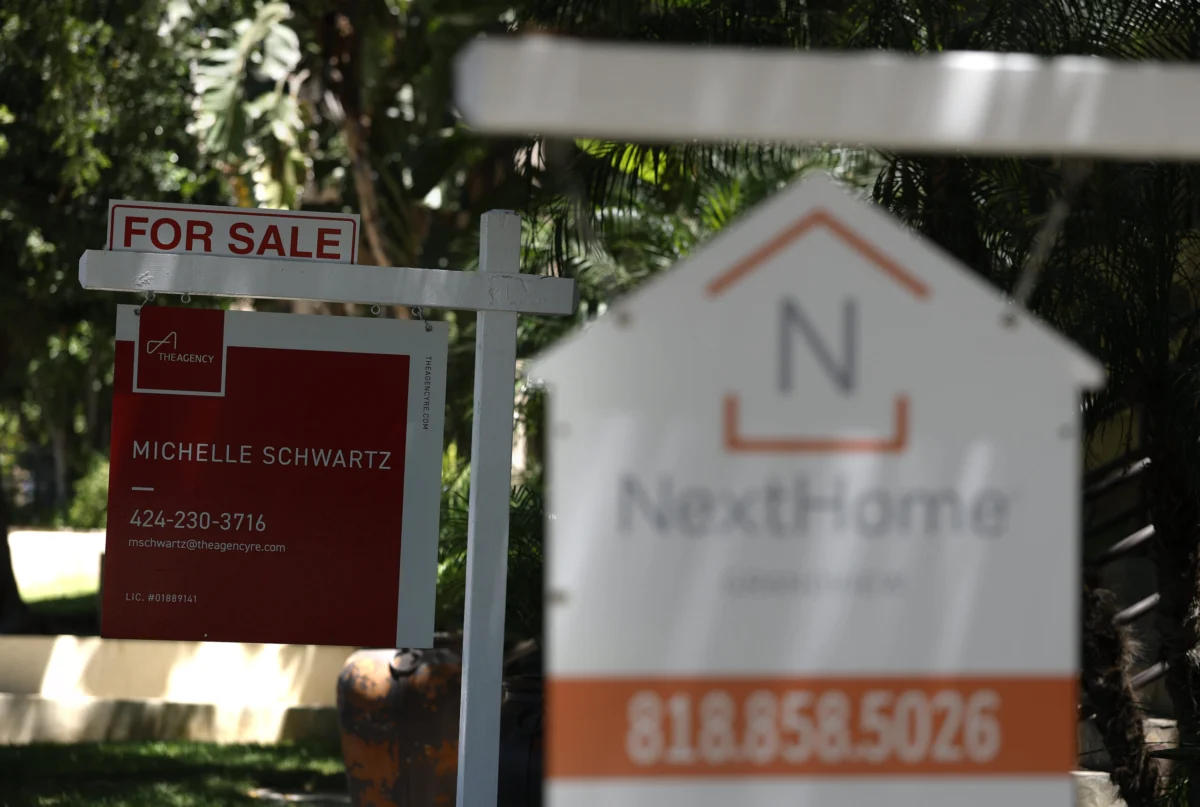
The direct consequence of these higher rates was a discernible pullback in the purchase market. Applications for a mortgage to buy a home plummeted by 7% from the preceding week, and perhaps more tellingly, were 2% lower than during the same period a year ago. This trend underscores the persistent challenges buyers face, primarily the dual burden of high home prices and a remarkably lean supply of affordable housing options. The image of "for sale" signs posted in front of condominiums in Los Angeles, California, on July 9, 2026, serves as a stark visual reminder of properties lingering on the market, potentially due to these affordability constraints.
Conversely, applications to refinance an existing home loan defied the general market sentiment, increasing by 4% for the week and standing 7% higher than the same week one year ago. This seemingly counterintuitive rise in refinance activity, given the higher rate environment, warrants closer examination. While last year’s rates were only marginally higher by 17 basis points, suggesting limited broad incentive for refinancing, the percentage gains are likely attributable to a smaller, more targeted pool of eligible borrowers. A significant driver appears to be cash-out refinances, where homeowners leverage substantial gains in home equity accumulated over recent years. This strategy allows them to access liquidity for various purposes, from home improvements to debt consolidation, without selling their property.
Joel Kan, vice president and deputy chief economist at the MBA, highlighted the specific segments driving this refinance surge. "Despite higher mortgage rates, refinance applications increased, led by FHA and VA refinance applications rising 9 and 10 percent, respectively," Kan stated in a release. This indicates that government-backed loan programs, often catering to first-time buyers or military personnel, are playing a crucial role in facilitating these refinance transactions, possibly offering more flexible terms or allowing for specific equity-tapping mechanisms that remain attractive even in a higher-rate environment. The refinance share of total mortgage activity consequently expanded to 43.2% from 40.6% the previous week, illustrating a noticeable shift in market composition.
Broader Economic Context and Influencing Factors
The recent escalation in mortgage rates is not an isolated event but rather a symptom of broader macroeconomic forces at play. According to a separate survey from Mortgage News Daily, mortgage rates continued their upward trajectory at the start of the week. Matthew Graham, chief operating officer at Mortgage News Daily, pinpointed a key contributor: "The key contributor to the recent spike has been the uptick in fuel prices in July combined with the fact that rates never made it any lower than 6.52% over the past 2 months." Graham further elaborated, "In other words, we were already in a high range and the uptick in fuel prices simply gave rates a push." This explanation underscores the sensitivity of bond markets, and by extension mortgage rates, to inflationary pressures, particularly those stemming from volatile energy costs. Higher fuel prices can signal broader inflationary trends, prompting investors to demand higher yields on bonds, which directly impacts mortgage rates.
However, the volatility of the market was immediately evident as rates experienced a slight recovery on Tuesday following the release of inflation data that came in much lower than anticipated. This rapid fluctuation illustrates the immediate and potent influence of economic indicators on financial markets, demonstrating how even slight deviations from expectations can trigger significant shifts in investor sentiment and, consequently, borrowing costs.
Timeline and Chronology of Rate Movements
The current surge in mortgage rates to 6.65% marks a critical point in the ongoing housing market narrative. This figure represents the highest level observed since August 2025, suggesting a period of sustained elevated rates over the past year. Throughout late 2024 and into 2025, the market grappled with the Federal Reserve’s aggressive monetary policy aimed at curbing inflation. Following a series of benchmark interest rate hikes, the 30-year fixed mortgage rate had often hovered in the 6% to 7% range, a stark contrast to the historically low rates seen during the pandemic-era housing boom of 2020-2021, when rates frequently dipped below 3%.
The summer of 2025 likely saw a brief respite or stabilization before the current upward trajectory. The period leading up to July 2026 has been characterized by persistent inflation concerns, often exacerbated by geopolitical events and supply chain disruptions. Fuel prices, as highlighted by Graham, have emerged as a significant variable, their volatility directly translating into bond market uncertainty. The interplay between inflation reports, Federal Reserve commentary, and global economic sentiment creates a dynamic and often unpredictable environment for long-term interest rates like mortgages. This recent spike in July 2026, driven by fuel costs, confirms that the battle against inflation, and its impact on borrowing costs, remains ongoing and susceptible to external shocks.
Detailed Analysis of Market Implications
The ramifications of sustained higher mortgage rates are far-reaching, affecting various segments of the housing market and the broader economy.
For Prospective Homebuyers: The primary impact is a significant erosion of purchasing power. A higher interest rate on a 30-year fixed mortgage translates directly into higher monthly payments for the same loan amount. For example, a $400,000 mortgage at 6.58% would have a monthly principal and interest payment of approximately $2,546. At 6.65%, this increases to about $2,564. While seemingly small on a monthly basis, over the life of a 30-year loan, this difference can amount to thousands of dollars. This further strains affordability, particularly in high-cost-of-living areas like Los Angeles, where median home prices already far outstrip median incomes. Many potential buyers, especially first-timers, are forced to either scale down their home search, save for a larger down payment, or postpone their homeownership dreams indefinitely. This "affordability crisis" is compounded by a persistent shortage of inventory, particularly in the entry-level and mid-range price points. Existing homeowners, often locked into much lower rates from previous years, are reluctant to sell, further constricting supply and keeping prices elevated.
For Existing Homeowners: The implications are mixed. Those with low fixed rates are largely insulated from the immediate impact of rising rates, benefiting from increased home equity. However, those on adjustable-rate mortgages (ARMs) or contemplating selling and buying a new home face significant challenges. The "rate lock-in" effect is powerful: homeowners with a 3% or 4% mortgage are highly disincentivized to sell and move if it means taking on a new mortgage at 6.65% or higher, even if they desire more space or a different location. This phenomenon contributes to the low inventory problem plaguing the market. For those opting for cash-out refinances, the higher rates mean their new, larger loan will carry a higher interest burden, but the immediate access to capital for home improvements, education, or debt consolidation may outweigh this cost for some, especially given the substantial equity gains many homeowners have realized.
For Real Estate Agents and Lenders: The shift in market dynamics requires adaptation. Real estate agents must contend with fewer active buyers and potentially longer listing times. Their strategies may need to pivot towards helping sellers understand current market realities and advising buyers on creative financing solutions or the long-term benefits of homeownership despite higher initial costs. Mortgage lenders, similarly, are adjusting their focus. While purchase applications have declined, the unexpected rise in refinance activity, particularly in FHA and VA segments, presents a new avenue for business. Lenders might intensify their marketing efforts towards specific refinance products or niche markets where demand remains robust.
Broader Economic Implications: The housing market is a significant component of the U.S. economy. A slowdown in home sales can impact related industries, from construction and home furnishings to moving services and financial institutions. Reduced consumer confidence due to affordability concerns can also dampen overall consumer spending, potentially impacting GDP growth. The Federal Reserve closely monitors housing market indicators as part of its assessment of economic health and inflationary pressures. While higher mortgage rates are a natural consequence of the Fed’s efforts to cool inflation, an overly aggressive tightening could risk a sharper economic downturn.
The Role of the Federal Reserve and Future Outlook
The Federal Reserve’s primary mandate is to maintain price stability and maximum employment. Its aggressive rate hikes over the past couple of years were a direct response to soaring inflation. Mortgage rates typically track the yield on the 10-year Treasury bond, which in turn is influenced by the Fed’s monetary policy and market expectations for future inflation and economic growth.
The current environment suggests that the Fed may be closer to the end of its tightening cycle, but the "higher for longer" narrative remains prevalent. This means that while steep rate hikes might be less likely, a significant reduction in interest rates is also not immediately anticipated. Future movements in mortgage rates will hinge on several critical factors:
- Inflation Trends: Persistent or re-accelerating inflation, particularly from energy or wage growth, would likely keep rates elevated or push them higher. Conversely, sustained evidence of disinflation could pave the way for future rate cuts.
- Economic Growth: A robust economy might encourage the Fed to maintain higher rates to prevent overheating, while signs of a significant slowdown or recession could prompt a more dovish stance.
- Labor Market Data: A tight labor market with strong wage growth can contribute to inflationary pressures, influencing the Fed’s decisions.
- Geopolitical Events: Global instability or supply chain shocks can introduce new inflationary pressures, as seen with the recent uptick in fuel prices.
The brief recovery in rates observed after lower-than-expected inflation data underscores the market’s sensitivity to these reports. Any indication that inflation is consistently moving towards the Fed’s 2% target could provide some relief to mortgage rates in the medium to long term. However, until a clear and sustained trend emerges, volatility is likely to remain a defining characteristic of the mortgage market.
In conclusion, the current landscape of the U.S. housing market is one of pronounced challenge and nuanced activity. The surge in mortgage rates to their highest levels in nearly a year is undeniably dampening homebuyer enthusiasm, exacerbating existing affordability issues, and compelling a re-evaluation of homeownership aspirations for many. While refinance activity provides a partial offset, driven by specific loan types and equity-rich homeowners, the broader market remains constrained by high prices and limited supply. The trajectory of mortgage rates will continue to be a critical barometer of the nation’s economic health, inextricably linked to the ongoing battle against inflation and the Federal Reserve’s carefully calibrated monetary policy.
