

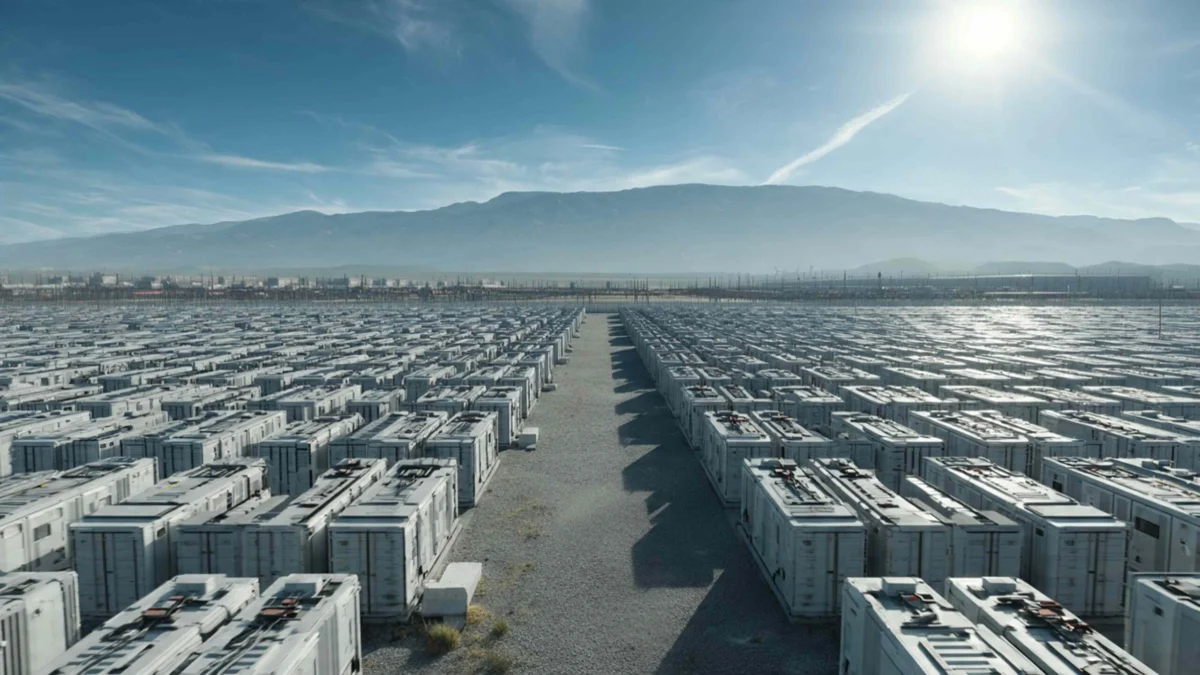
As the planet experiences more frequent and intense heat waves, the global energy transition is entering a critical new phase defined by the evolution of grid-scale storage. While renewable energy sources like wind and solar have seen record-breaking adoption over the last decade, the infrastructure required to manage their inherent intermittency is undergoing a profound transformation. Grid-scale batteries, once a niche component of the electrical system, have become the primary mechanism for balancing supply and demand, storing excess power during periods of high production and discharging it when the sun sets or the wind dies down. However, as the limitations of traditional lithium-ion technology become more apparent under the strain of extreme weather and surging industrial demand, a new generation of long-duration energy storage (LDES) technologies is moving from the laboratory to the front lines of the global power grid.
For nearly a century, the backbone of the electrical grid was defined by transmission lines—massive networks of copper and steel designed to carry power from centralized fossil fuel plants to distant consumers. Today, that model is struggling to keep pace with the electrification of transportation, the rise of energy-intensive artificial intelligence data centers, and the rapid rollout of renewable projects. Building new transmission infrastructure is a slow, expensive process often mired in regulatory hurdles and land-use disputes. In contrast, grid-scale batteries offer a more agile solution. They are cheaper to deploy, faster to construct, and can be situated strategically near points of high demand, such as electric vehicle factories or metropolitan hubs. Despite these advantages, the current dominance of lithium-ion batteries is being challenged by the need for duration. Most existing grid batteries are designed for short-term bursts of two to four hours, a capacity that is increasingly viewed as insufficient for a future where the grid must remain stable through multi-day weather events or prolonged periods of low renewable output.
The Limitations of Lithium-Ion and the Call for Duration
The global boom in grid battery capacity has been remarkable. Over the last five years, developers in the United States, China, Australia, Chile, and Canada have pushed for massive utility-scale projects to stabilize their respective grids. However, a report from the International Energy Agency (IEA) highlights a growing vulnerability: the degradation of battery lifespans due to extreme heat. Lithium-ion batteries, while highly efficient for short-term use, are sensitive to thermal stress. As global temperatures rise, the cooling requirements for these systems increase, potentially offsetting some of their environmental benefits and raising operational costs.
Furthermore, the "four-hour default" of lithium-ion technology creates a storage gap. To achieve a fully decarbonized grid, energy must be stored not just for hours, but for days or even weeks. This realization has sparked a surge in investment into long-duration energy storage. LDES technologies aim to provide ten or more hours of continuous discharge, providing a reliable "firming" of renewable energy that allows it to compete directly with baseload coal and gas plants. Several innovative technologies, including iron-air, compressed air, carbon dioxide, and sodium-ion systems, have now surpassed the pilot stage and are entering commercial deployment.
Iron-Air Batteries and the Reversible Rusting Revolution
One of the most promising contenders in the LDES space is the iron-air battery, pioneered by the U.S.-based company Form Energy. Unlike lithium-ion batteries, which rely on expensive and often scarce minerals like cobalt and nickel, iron-air batteries utilize one of the most abundant materials on Earth: iron. The technology operates on a principle known as "reversible rusting." During the discharge phase, the battery "breathes in" oxygen from the air, which reacts with the iron to create rust, releasing electrons in the process. When the battery is charged, an electrical current reverses this reaction, converting the rust back into metallic iron and "breathing out" oxygen.
This chemical simplicity allows for a significant edge in duration. Form Energy’s systems are capable of storing and discharging electricity for up to 100 hours, making them ideal for managing multi-day lulls in renewable production. The company has made significant strides in commercialization, opening its first high-volume manufacturing facility in West Virginia in October 2024. This facility, built on the site of a former steel mill, symbolizes the transition from the old industrial economy to the new energy era.
Form Energy’s momentum is further evidenced by a landmark partnership with Xcel Energy and Google. In a project slated for completion by 2028, Form Energy will deploy what is being described as the world’s largest battery by energy capacity to support a Google data center in Minnesota. By integrating 100-hour storage into the local grid, Google aims to ensure that its operations are powered by carbon-free energy even when local wind and solar assets are inactive. This project serves as a blueprint for how heavy energy users can achieve 24/7 carbon-free energy goals.
Advanced Compressed Air Energy Storage: Leveraging Geologic Potential
While iron-air batteries rely on chemical reactions, other companies are looking toward mechanical solutions. Compressed air energy storage (CAES) is a technology with roots dating back to the 17th century, but modern innovations have significantly increased its efficiency. Toronto-based Hydrostor has developed Advanced Compressed Air Energy Storage (A-CAES), a system that stores energy by compressing air and pumping it into purpose-built rock caverns.
The physics of the system are elegant: during periods of low energy demand, excess electricity powers a compressor that pushes air into an underground cavern. This process generates heat, which is captured and stored in a thermal management system. To maintain constant pressure, the air displaces water into a surface reservoir. When the grid requires power, the water flows back into the cavern, pushing the compressed air through a turbine to generate electricity. By utilizing the stored heat to reheat the air before expansion, A-CAES achieves high round-trip efficiency without the need for fossil fuel combustion.
Hydrostor’s facility in Goderich, Ontario, stands as the world’s first commercially contracted A-CAES project. Building on this success, the company is developing the Willow Rock Energy Storage Center in Kern County, California. In early 2026, Hydrostor signed a 50-megawatt offtake agreement with California Community Power, a coalition of non-profit energy agencies. Once operational, the facility will provide eight hours of continuous, emission-free discharge, helping California manage its "duck curve"—the phenomenon where solar production drops off just as evening demand peaks.
Carbon Dioxide as a Storage Medium: The Energy Dome Approach
In Milan, Italy, a company called Energy Dome is taking a different approach by utilizing carbon dioxide (CO2) in a closed-loop system. While CO2 is often discussed as a waste product to be sequestered, Energy Dome treats it as a highly efficient energy carrier. The technology relies on the phase change of CO2 between gas and liquid. When energy is abundant, the system compresses CO2 gas into a liquid state, storing the resulting heat. When energy is needed, the liquid CO2 is evaporated using the stored heat, and the expanding gas drives a turbine.
Because the CO2 is stored in a massive, flexible "dome" at atmospheric pressure when not in use, the system does not require the specific geologic formations needed for compressed air storage. This makes it highly versatile and deployable in various geographic locations. Furthermore, the system uses standard industrial components, such as compressors and turbines, which reduces costs and simplifies maintenance.
Energy Dome’s potential has caught the attention of major global players. In mid-2025, the company announced a strategic partnership with Google to provide carbon-free energy for the tech giant’s operations. Additionally, Energy Dome is expanding into the United States with a 200-megawatt-hour facility in Columbia County, Wisconsin, in partnership with Alliant Energy. Scheduled for completion in 2027, this project is expected to provide enough electricity to power 18,000 homes for 10 hours on a single charge, demonstrating the scalability of the CO2 battery concept.
Sodium-Ion and Zinc-Air: The Quest for Abundant Materials
While long-duration technologies tackle the "time" problem, other innovations are addressing the "material" problem. The reliance on lithium has created supply chain vulnerabilities and environmental concerns related to mining. China’s Contemporary Amperex Technology Co., Limited (CATL), the world’s largest battery manufacturer, is leading the charge into sodium-ion technology. Sodium is far more abundant and cheaper than lithium, and while sodium-ion batteries currently have a lower energy density than their lithium counterparts, they are better suited for stationary grid storage where weight is less of a concern. CATL expects its first sodium-ion energy storage systems to enter commercial deployment by late 2026, targeting a wide range of sectors including energy storage and commercial vehicles.
Simultaneously, Toronto-based e-Zinc is advancing zinc-air technology. Zinc is a globally abundant, inexpensive, and recyclable metal. e-Zinc’s electromechanical system stores energy in zinc metal, providing discharge durations ranging from 10 to 100 hours. The technology is particularly attractive because it can operate in extreme temperatures without the fire risks associated with lithium-ion. In 2024, e-Zinc secured $31 million in financing and opened a pilot facility in Mississauga, Ontario. The company is currently working with the California Energy Commission and Toyota Tsusho to validate its technology in commercial settings, positioning it as a viable replacement for diesel generators in remote microgrids and backup power applications.
Implications for the Global Energy Landscape
The transition from short-duration lithium-ion batteries to a diverse portfolio of long-duration storage technologies represents a fundamental shift in how the world approaches energy security. As these technologies move from pilot phases to gigawatt-hour scale, the economic landscape of the power sector will change. Long-duration storage has the potential to eliminate the need for "peaker" plants—natural gas facilities that only run during times of extreme demand—thereby significantly reducing grid emissions.
Moreover, the development of these technologies fosters a new industrial ecosystem. From iron-air plants in West Virginia to A-CAES caverns in California and CO2 domes in Wisconsin, the energy transition is creating high-tech manufacturing and construction jobs. The involvement of major corporations like Google and Xcel Energy indicates that the private sector views long-duration storage not just as an environmental necessity, but as a critical component of operational resilience.
In conclusion, while the challenges of climate change and grid instability are formidable, the rapid evolution of battery technology offers a path forward. By diversifying the materials and mechanisms used to store energy, the global community is building a more resilient, flexible, and sustainable electrical grid. The projects coming online between 2025 and 2028 will serve as the proving ground for these technologies, determining which will ultimately form the new backbone of the 21st-century energy system.
