

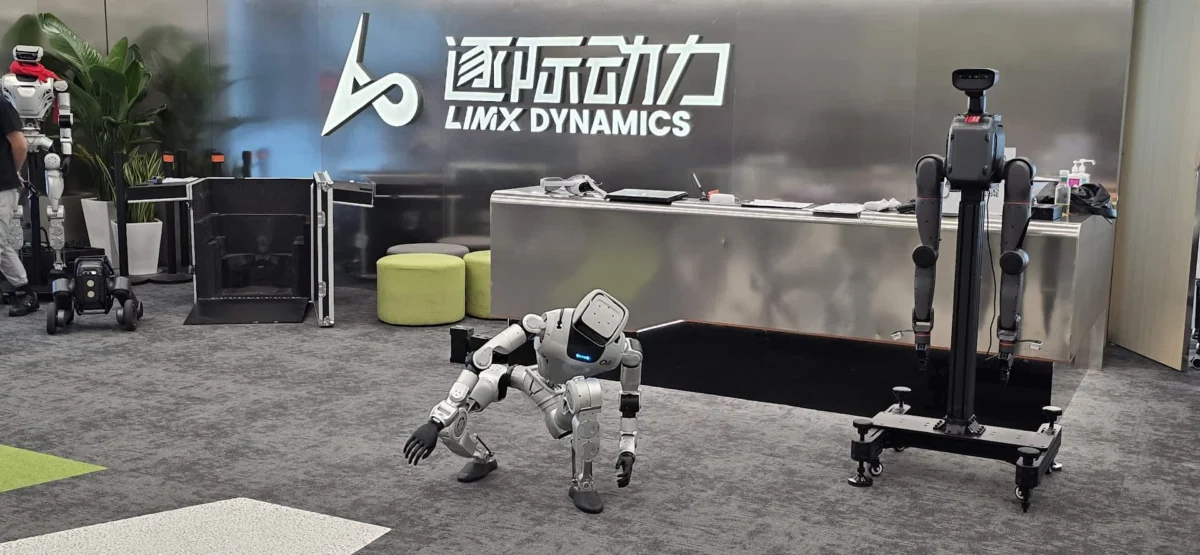
Beijing, China – LimX Dynamics, a rapidly ascending humanoid robot startup, has successfully closed a substantial $200 million pre-initial public offering (IPO) funding round, elevating its valuation to an impressive 15 billion yuan ($2.21 billion). This significant capital injection positions the Shenzhen-based company for a swift public listing, likely on the Hong Kong Stock Exchange, as it navigates a fiercely competitive landscape fueled by China’s aggressive national push for "embodied AI." The announcement, made on Tuesday, underscores a critical juncture for LimX Dynamics, founded just over four years ago amidst the global pandemic, as it prepares to capitalize on a burgeoning market for intelligent automation.
The Race to Public Markets: A Strategic Imperative
Will Zhang, founder of LimX Dynamics, articulated the strategic necessity of going public, drawing parallels to the trajectory of China’s leading electric vehicle manufacturers. "Listing is a must," Zhang stated, emphasizing the critical role of timing in securing a market advantage. His comments to reporters ahead of the pre-IPO announcement highlighted the lessons learned from pioneers like Nio, Xpeng, and Li Auto, which successfully listed in the U.S. between 2018 and 2020. Zhang warned against complacency, referencing the fate of WM Motor, an EV startup that struggled after failing to list promptly. "Once the technology is mature, if [the company] doesn’t list, then like WM Motor, it may disappear," he cautioned, a sentiment that resonates deeply within China’s fast-paced tech ecosystem where capital access and public visibility are paramount for survival and growth.
The urgency for LimX Dynamics to list is not merely a reflection of internal ambition but also a response to the hyper-competitive environment in China’s humanoid robotics sector. The nation currently hosts well over 100 companies dedicated to humanoid robotics, all operating under the broad umbrella of "embodied AI"—a national strategic priority aimed at developing intelligent systems capable of perceiving, understanding, and interacting with the physical world. This intense domestic competition, coupled with the global race in advanced robotics, creates a compelling impetus for companies like LimX to secure long-term funding and market credibility through an IPO.
Global and Domestic Investor Confidence
The pre-IPO funding round saw robust participation from a diverse group of investors, signaling strong confidence in LimX Dynamics’ technological capabilities and market potential. Notably, the round attracted significant overseas capital, including UAE-based Stone Venture, Italy-based GGG, and Germany-based Redstone VC, alongside prominent Chinese investors. Domestically, the financing was bolstered by contributions from precision parts giant Lens Technology, venture capital powerhouses IDG Capital and WestSummit Capital, Nio Capital (the investment arm of EV maker Nio), and Hefei Binhu Industry Development Group. This blend of international and domestic backing not only provides substantial financial resources but also lends considerable credibility to LimX Dynamics’ global aspirations and its position within China’s strategic technology landscape. The $2.21 billion valuation for a company founded during a period of global uncertainty underscores the perceived transformative potential of humanoid robotics.
LimX Dynamics confirmed that it is already in the advanced stages of preparing for its IPO, currently undergoing a confidential review process. While the exact timeline remains undisclosed, the company’s proactive stance suggests an accelerated path to public markets, aligning with the strategic imperative articulated by its founder. Hong Kong, a traditional hub for Chinese tech listings, appears to be the preferred venue, offering a gateway to international capital while maintaining proximity to mainland operations.
A Surge in "Embodied AI" Investment
The investment landscape for embodied AI in China has witnessed an unprecedented boom, reflecting both private sector enthusiasm and strong governmental backing. According to industry data provider Xiniu, investment in the sector reached an staggering 47.09 billion yuan ($6.95 billion) in the second quarter of the current fiscal year. This figure represents a dramatic increase, more than doubling the investment seen in the first quarter and surging over six times compared to the same period last year. Such explosive growth highlights the rapid maturation and increasing attractiveness of the humanoid robotics market, drawing substantial capital inflows in anticipation of future technological breakthroughs and widespread adoption.
This investment surge is not an isolated phenomenon but rather a direct consequence of China’s overarching strategic vision for technological self-sufficiency and global leadership in artificial intelligence. The government’s emphasis on "embodied AI" stems from a recognition that intelligent robots, capable of performing complex physical tasks in dynamic environments, will be foundational to future industries, from advanced manufacturing and logistics to healthcare and consumer services. This national imperative has catalyzed research, development, and commercialization efforts across the entire robotics ecosystem, creating a fertile ground for startups like LimX Dynamics to thrive.
The Broader IPO Landscape for Robotics
LimX Dynamics’ impending IPO comes amidst a broader wave of robotics companies seeking public listings, both in China and internationally. The Chinese government has actively fast-tracked the approval process for domestic robotics firms, exemplified by the rapid progress of humanoid company Unitree towards a listing in Shanghai. Meanwhile, the Hong Kong Stock Exchange is currently processing applications from over 500 companies across various sectors, indicating a robust appetite for new listings, particularly from high-growth technology firms.
Industry analysts are closely monitoring this trend. A recent report from Morgan Stanley underscored the intensifying competitive pressures within the sector, noting that "more industrial and collaborative robot companies potentially coming to IPO, competitive pressure is likely to persist." The report specifically mentioned other significant players like DeepRobot and Leju, which are also reportedly preparing for their own public debuts in the near future. This influx of robotics companies into public markets is expected to provide critical capital for scaling operations, accelerating research and development, and expanding market reach, but it will also intensify the competition for investor attention and market share.
Morgan Stanley’s outlook for China’s industrial robotics market remains bullish, forecasting an 18% growth this year. More significantly for LimX Dynamics, the firm projects shipments of 50,000 humanoids within China alone this year, illustrating the nascent but rapidly expanding demand for these advanced machines. This forecast provides a favorable backdrop for LimX Dynamics, which aims to become a leading provider of fully autonomous commercial service robots.
From Innovation to Productization: The "0 to 1" Barrier
LimX Dynamics’ product strategy focuses on developing fully autonomous commercial service robots designed for a wide range of applications. The company has already outlined an ambitious multi-year plan to ship thousands of its humanoids to the Middle East, a region rapidly investing in automation and smart city initiatives. Concurrently, LimX is actively delivering its entertainment-focused Luna humanoid to customers in South Korea, demonstrating an early capability to cater to diverse market segments and applications. The Luna humanoid, with its advanced mobility and interactive features, highlights LimX’s dual approach of pursuing both industrial and consumer-oriented robotics solutions.
Founder Will Zhang articulated a profound insight into the current state of humanoid robotics technology. He believes that the core technological hurdle, the "0 to 1" line of innovating from scratch, has largely been crossed. The fundamental science and engineering principles for creating highly capable humanoid robots are increasingly well-understood and implemented. The new frontier, according to Zhang, lies in overcoming the next barrier to entry: making a truly good product that effectively meets users’ needs and can be scaled for mass deployment. This shift in focus from pure technological innovation to practical product development, user experience, and cost-effective manufacturing is crucial for the commercial success of humanoid robots. It involves optimizing design, improving reliability, developing intuitive interfaces, and ensuring seamless integration into existing operational environments.
Chronology of a Rapid Ascent:
- Pandemic Era Founding: LimX Dynamics was founded just over four years ago, during the global pandemic, a period that paradoxically accelerated interest in automation and contactless technologies.
- Early Development & Product Launches: The company rapidly moved from foundational research to product development, showcasing early prototypes and developing its Luna humanoid for entertainment applications.
- Strategic Market Entry: LimX initiated a multi-year plan to penetrate the Middle Eastern market with its commercial service robots and began delivering Luna humanoids to South Korea, demonstrating early commercial traction.
- Investment Momentum: The company successfully attracted multiple rounds of funding from prominent domestic and international investors, culminating in the recent $200 million pre-IPO round.
- IPO Preparation: With substantial capital secured and a clear strategic vision, LimX Dynamics formally commenced its IPO preparations, entering a confidential review phase with an eye on the Hong Kong Stock Exchange.
Implications for the Future of Robotics
LimX Dynamics’ journey towards an IPO holds significant implications for the global robotics industry and China’s technological ambitions. A successful listing would provide the company with critical capital to accelerate its research and development, scale its manufacturing capabilities, and expand its market presence both domestically and internationally. This would further solidify China’s position as a global leader in advanced robotics, a sector deemed vital for future economic growth and national competitiveness.
The success of companies like LimX Dynamics also validates the "embodied AI" paradigm, demonstrating the commercial viability of intelligent robots beyond traditional industrial automation. As humanoids become more capable, versatile, and cost-effective, they are poised to revolutionize various sectors, from logistics and manufacturing to healthcare, retail, and even domestic assistance. The transition from proof-of-concept to mass-produced, user-centric products will define the next decade of robotics, and LimX Dynamics aims to be at the forefront of this transformation.
However, challenges remain. The path to widespread adoption for humanoid robots involves overcoming hurdles such as high production costs, complex maintenance, ensuring robust safety protocols, and achieving seamless human-robot interaction. Public acceptance and regulatory frameworks will also play a crucial role in shaping the market. Nevertheless, with significant capital, strategic vision, and a conducive national policy environment, LimX Dynamics appears well-positioned to navigate these challenges and contribute significantly to the unfolding era of intelligent automation. Its impending IPO is not just a corporate milestone but a bellwether for the accelerating future of human-robot collaboration.
