

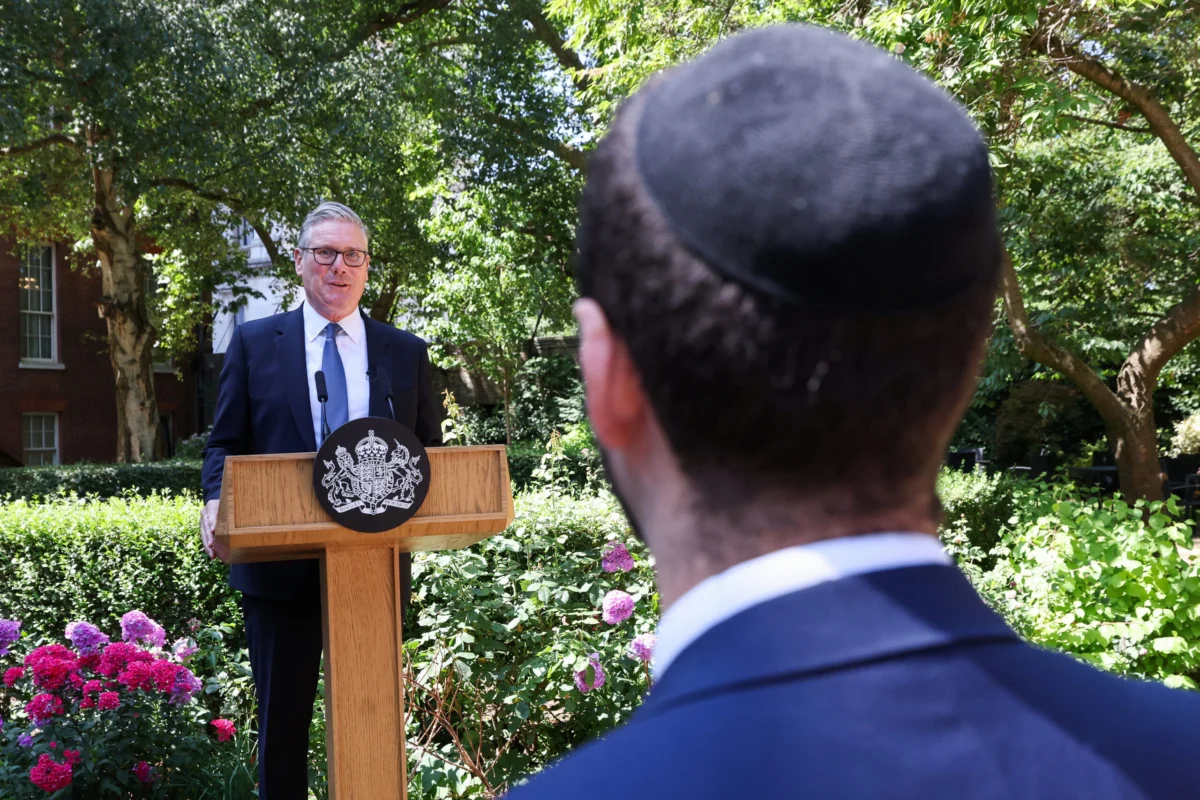
The British government has initiated a significant shift in its national security posture, leveraging newly enacted powers to designate foreign state-backed entities as threats, criminalizing support for them. This landmark move, announced earlier this week, targets Iran’s Islamic Revolutionary Guard Corps (IRGC), the Islamic Movement of Companions of the Right (IMCR), and Russia’s GRU Volunteer Corps. The designation comes in the wake of escalating concerns over hostile state activity on UK soil, particularly a series of anti-Semitic attacks that London explicitly links to the IRGC.
On Monday, the government declared its intention to submit draft regulations to the UK Parliament, paving the way for the formal banning of support for these organizations. This legislative action represents a robust attempt to "crack down on foreign state-backed activity in the UK," encompassing a wide spectrum of threats from "espionage, foreign interference in our democracy, sabotage and physical attacks." If approved by Parliament, as is widely expected later this week, the designations could come into force as early as Friday, marking a profound diplomatic and legal escalation.
The State Threats (National Security) Act: A New Era of Enforcement
The foundation for these unprecedented designations lies in the recently enacted State Threats (National Security) Act. Passed in late 2025 and coming into full effect in early 2026, this legislation was designed to bolster the UK’s defences against evolving threats from hostile states. Before this Act, the government’s powers to address such activities were often seen as fragmented or insufficient, requiring complex legal processes to establish direct links to foreign powers.
The Act introduces a "proscription-like" mechanism, allowing the Home Secretary to designate foreign state-backed entities deemed a direct threat to the UK’s national security. Crucially, it simplifies the prosecutorial burden: once a group is designated, prosecutors no longer need to explicitly establish a foreign power connection in cases involving the designated entities. This legal innovation streamlines the ability to bring charges against individuals or groups acting on behalf of hostile states, promising swifter and more effective enforcement.
The government statement underscored that the Act aims to deter and disrupt a range of malign activities, including those previously difficult to prosecute under existing laws. This includes, but is not limited to, intelligence gathering, disinformation campaigns, cyberattacks, and the direct or indirect orchestration of physical violence. The designation of the IRGC, IMCR, and GRU Volunteer Corps as the "first bodies designated under landmark new state threats powers" signals a decisive intent to operationalize this new legal framework immediately and forcefully.
Targeting the IRGC: Accusations of Anti-Semitism and Proxy Warfare
At the heart of the government’s decision is the explicit accusation that Iran’s Islamic Revolutionary Guard Corps has been actively engineering anti-Semitic attacks within the United Kingdom. The IRGC, a powerful branch of the Iranian armed forces established after the 1979 revolution, is well-known for its extensive influence both domestically and across the Middle East, often operating through a network of proxies.
The British government has stated that the IRGC possesses "a long history of using proxies and criminal networks to target people overseas – particularly the Jewish community and Iranian dissidents." This assertion aligns with broader international concerns about the IRGC’s activities, which have led to its designation as a foreign terrorist organization by the United States since 2019. While the UK has resisted a full proscription of the IRGC as a terrorist group, this new designation under the State Threats Act allows for similar legal consequences without fully adopting the terrorism designation.
The accusations against the IRGC are not abstract; they are directly linked to recent, tangible incidents. The government believes the IRGC has been orchestrating covert operations to intimidate and harm Jewish communities and Iranian opposition figures residing in the UK. This includes intelligence gathering, surveillance, and the potential instigation of physical violence, thereby undermining national security and fostering an environment of fear within specific communities.
The Islamic Movement of Companions of the Right (IMCR): Direct Link to Domestic Attacks
Further solidifying the government’s concerns, the Islamic Movement of Companions of the Right (IMCR) has been specifically named as an Iran-backed group that has claimed responsibility for a series of attacks on Jewish sites in the UK earlier this year. This designation highlights a direct and immediate threat emanating from foreign state-sponsored entities operating within British borders.
One of the most prominent and disturbing incidents attributed to the IMCR involved the torching of four ambulances belonging to a Jewish community charity in London in March 2026. This act of arson, which police investigated as an anti-Semitic hate crime, caused significant damage and instilled fear within the Jewish community. Following intensive investigations, three men were charged with arson in April 2026 in connection with these attacks, underscoring the severity and domestic impact of such foreign-backed operations.
The explicit linking of IMCR to the IRGC and these specific acts of violence provides compelling evidence for the government’s decision. It demonstrates a clear chain of command or influence from a foreign state entity (IRGC) to a proxy group (IMCR) carrying out disruptive and harmful activities on British soil. The designation makes it unequivocally clear that any form of support for the IMCR will now be a criminal offence, subject to severe penalties.
The GRU Volunteer Corps: Russian Hostile Activity in the UK
Beyond the Iranian threat, the UK government has simultaneously designated the GRU Volunteer Corps, an entity associated with Russia’s military intelligence agency. This move reflects the persistent and multifaceted nature of Russian hostile state activity targeting the UK and its allies. The government stated that Russia utilizes the GRU for "foreign intelligence collection and hostile covert operations and has a long record of targeting the UK and its allies."

The GRU (Main Intelligence Directorate) has a well-documented history of engaging in aggressive and destabilizing operations globally, including cyberattacks, disinformation campaigns, assassinations, and attempts to interfere in democratic processes. The UK has previously attributed major incidents, such as the 2018 Salisbury novichok poisoning, to the GRU, demonstrating a willingness to conduct dangerous operations on foreign soil. The designation of the "GRU Volunteer Corps" likely refers to a specific front or network utilized by the GRU to carry out its clandestine activities, allowing the UK to target individuals associated with these operations more directly.
This parallel designation underscores the UK’s broader national security strategy, which recognizes threats from multiple state actors. It signals a comprehensive approach to combating foreign interference, regardless of its origin, and reinforces the message that such activities will not be tolerated.
Legal Ramifications: Criminalizing Support and Imposing Severe Penalties
The implications of these designations are far-reaching and severe. Once the parliamentary approval is secured and the regulations come into force, it will become a criminal offence to:
- Invite support for, or express support for, the designated military organizations (IRGC, IMCR, GRU Volunteer Corps).
- Assist them in carrying out UK-related activities.
- Engage in conduct likely to materially assist them.
- Accept or retain material benefits provided by or on their behalf.
The legislation carries significant penalties. Home Secretary Shabana Mahmood warned, "If approved by Parliament later this week, those conducting acts of sabotage including arson on behalf of these groups could face life imprisonment." This potential for life imprisonment highlights the seriousness with which the UK government views these offences and the determination to impose maximum deterrents.
Caretaker Prime Minister Keir Starmer emphasized the practical impact, stating, "These new powers will make it easier to prosecute and lock up anyone carrying out their dirty work here in Britain." This sentiment was echoed by Home Secretary Mahmood, who added, "Iran and Russia are using proxies and thugs to do their dirty work on our shores. I have rapidly designated three groups so those working for them will be tracked down and put behind bars." The new legal framework thus aims to dismantle the support networks for these hostile entities by criminalizing a broad spectrum of activities that aid or abet their operations.
Diplomatic Fallout and Geopolitical Implications
The designations are expected to trigger significant diplomatic fallout, particularly with Iran. Al Jazeera’s Charlie Angela, reporting from London, noted that the move "is going to mark a further deterioration in the relationship between Iran and the UK." This prediction has already begun to manifest, with Foreign Secretary Yvette Cooper having summoned the Iranian ambassador to the Foreign Office to question him about the accusations. Such a high-level diplomatic summons is a clear signal of serious displeasure and typically precedes further punitive measures or reciprocal actions.
Iran, which maintains a consistent policy of denying the use of proxies in hostile activities and is currently in a state of geopolitical tension with the United States and Israel, is highly likely to issue a strong condemnation of the UK’s decision. Tehran may accuse London of baseless allegations, interference in its internal affairs, or aligning with its adversaries. This could lead to a downgrade in diplomatic relations, tit-for-tat expulsions of diplomats, or other forms of political and economic retaliation.
Similarly, the designation of the GRU Volunteer Corps will further exacerbate already severely strained UK-Russia relations. Relations between London and Moscow have been at an all-time low since the 2018 Salisbury attack and Russia’s full-scale invasion of Ukraine in 2022. Russia is expected to vehemently deny the allegations and may respond with its own retaliatory measures, such as sanctioning UK officials or further restricting diplomatic interactions.
Broader Impact and Future Challenges
The new legislation and subsequent designations represent a significant escalation in the UK’s counter-hostile state activities. They signal a more proactive and aggressive stance against foreign interference, moving beyond traditional espionage to tackle a wider range of threats, including physical attacks orchestrated by state-backed proxies.
One of the key implications is the potential impact on communities within the UK, particularly the Jewish community and Iranian diaspora, who have been identified as specific targets of IRGC activities. The government hopes that by criminalizing support for these groups and making it easier to prosecute their agents, it can provide greater security and reassurance to these communities.
However, challenges remain. Enforcing these new powers will require extensive intelligence gathering and investigative work by law enforcement agencies. Identifying individuals who "express support" or "materially assist" these designated groups can be complex and may raise questions about freedom of speech, though the legislation is focused on actions that directly aid hostile state entities.
The move also places the UK more firmly in alignment with countries like the United States, which has a longer history of designating foreign state entities and their proxies. This alignment could strengthen international cooperation in combating hostile state activities, but it also means the UK will be perceived as taking a more confrontational stance against certain regimes.
In conclusion, the UK’s deployment of its new State Threats Act to designate the IRGC, IMCR, and GRU Volunteer Corps marks a pivotal moment in its national security strategy. Driven by specific allegations of anti-Semitic attacks and broader hostile state activities, this legislative and diplomatic offensive underscores London’s determination to protect its citizens and sovereignty from foreign interference, setting the stage for a period of heightened geopolitical tension and robust enforcement measures.
