

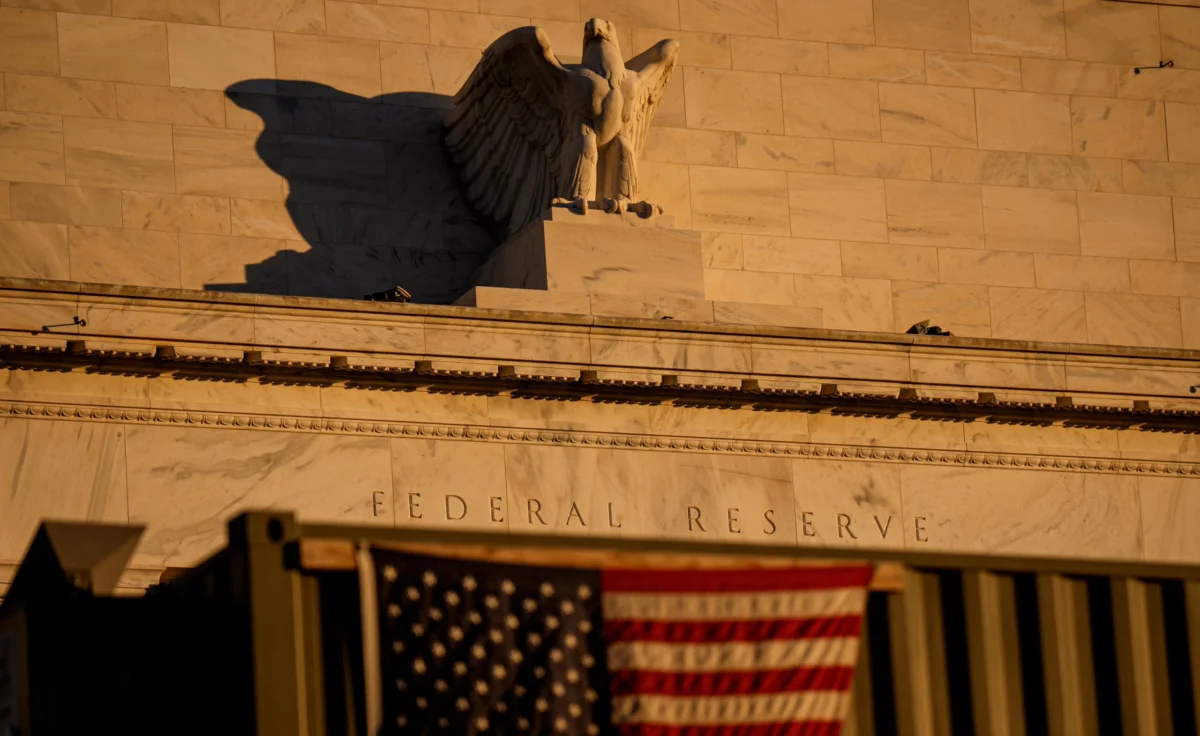
Renovation work continues on the Marriner S. Eccles Federal Reserve Board Building, the main offices of the Board of Governors of the Federal Reserve System, a constant backdrop to the intense economic deliberations unfolding within its walls in Washington, D.C. As July 29th approaches, futures traders and prediction markets are signaling a significant shift in expectations, moving away from a widely anticipated status quo and increasingly pricing in the likelihood of an interest rate hike by the U.S. central bank. While many analysts initially predicted the Federal Reserve would maintain its current stance, leaving interest rates unchanged once again, the situation has rapidly evolved into a close call, driven by a confluence of geopolitical developments and renewed inflationary concerns.
The probability of the Federal Reserve implementing a quarter-point interest rate hike has surged dramatically over the past 48 hours. According to CME’s FedWatch tool, the chances of a 25-basis-point increase climbed to 46.5% on Monday, a substantial jump from 34% just one day prior. Parallel to this, the prediction market platform Kalshi reflected a similar trend, with traders now assigning a 36% chance of a hike, up from under 20% on Sunday and a mere 10% earlier in the month. This rapid recalibration of market sentiment underscores the volatile and unpredictable nature of the current economic and geopolitical landscape facing policymakers.
The Geopolitical Catalyst: Strait of Hormuz Blockade and Toll
The primary catalyst for this sudden shift in market expectations can be traced directly to a significant geopolitical announcement made by President Donald Trump. On Monday, President Trump declared the reinstatement of a U.S. blockade of Iranian ports situated near the Strait of Hormuz. Furthermore, he announced the imposition of a substantial 20% toll on all cargo transiting through the critical passageway. This assertive move instantly reverberated through global energy markets, given the Strait of Hormuz’s unparalleled strategic importance.
The Strait of Hormuz is a narrow waterway that serves as the sole maritime passage from the Persian Gulf to the open ocean, making it one of the world’s most vital choke points for oil transport. Approximately one-fifth of the world’s total petroleum consumption, including crude oil, petroleum products, and liquefied natural gas (LNG), passes through this strait daily. Any disruption to this flow has immediate and profound implications for global energy prices and supply chains. Historically, tensions in the region, particularly involving Iran, have often led to spikes in oil prices due to fears of supply interruptions. Past incidents, ranging from tanker attacks to naval confrontations, have consistently demonstrated the vulnerability of global energy markets to instability in this crucial maritime corridor.
The immediate market response to President Trump’s declaration was sharp and decisive. U.S. oil prices, specifically West Texas Intermediate (WTI) crude, soared on Tuesday, jumping more than 5% and crossing the psychologically significant threshold of $75 per barrel. This sudden surge in energy costs directly fuels inflationary pressures across the economy. Higher oil prices translate into increased costs for transportation, manufacturing, and a wide array of consumer goods, inevitably pushing up the Consumer Price Index (CPI). The prospect of sustained elevated oil prices due to ongoing tensions in the Strait of Hormuz presents a formidable challenge to the Federal Reserve’s mandate of price stability.
The Federal Reserve’s Evolving Stance: Learning from Past Mistakes
Adding further weight to the hawkish shift in market sentiment were recent comments from Federal Reserve Governor Christopher Waller. Speaking on Tuesday, Governor Waller delivered a poignant warning, emphasizing that the central bank must not repeat the policy mistakes of 2021 and 2022. During that period, he argued, the Fed waited too long to initiate interest rate hikes in the face of rapidly rising inflation, allowing inflationary pressures to become entrenched. His remarks were interpreted by many as a clear signal that the Fed is now more acutely sensitive to the risks of inaction when inflation appears to be reigniting.
However, Waller also tempered his comments with a note of caution, stating that the bank should avoid overcorrecting and raising rates too quickly. This nuanced position highlights the delicate balancing act faced by the Federal Reserve. Policymakers must weigh the imperative to tame inflation against the risk of stifling economic growth and potentially tipping the economy into a recession. The Fed’s dual mandate requires it to achieve both maximum employment and stable prices. Navigating this path requires precise calibration, especially when external shocks, such as geopolitical energy disruptions, complicate the economic outlook.
The historical context of the Fed’s response to inflation is critical here. In the late 1970s and early 1980s, under Chairman Paul Volcker, the Fed aggressively raised interest rates to combat runaway inflation, a painful but ultimately successful campaign. Waller’s reference to 2021-2022 suggests a desire to avoid a similar prolonged period of high inflation, even if it means acting decisively. The memory of the "transitory inflation" narrative, which proved inaccurate, likely weighs heavily on the minds of current policymakers, making them more prone to preemptive action rather than delayed responses.
Inflationary Outlook: Beyond Energy and Anticipating Data
The rising odds of a rate hike are occurring even as June inflation was generally expected to show some signs of cooling. Economists surveyed by Dow Jones had largely anticipated that the annual inflation rate for June would register at 3.8%, a decrease from the 4.2% rate recorded in May. The Consumer Price Index (CPI) report for June is scheduled to be delivered on Tuesday, providing critical data that will undoubtedly inform the Fed’s final decision.
However, the inflation outlook has become significantly more complicated in light of the renewed conflict in the Strait of Hormuz and the subsequent surge in oil prices. Should energy prices continue their upward march, the anticipated cooling of inflation could be quickly reversed, or at least offset. Moreover, analysis from major financial institutions suggests that inflationary concerns are now extending far beyond solely energy prices.
A Barclays note published on Monday, authored by global chairman of research Ajay Rajadhyaksha, articulated this broader view. Rajadhyaksha argued that the pass-through effect of higher prices from previous oil shocks is still not fully dissipated throughout the economy. He further highlighted that a surprising lack of "demand destruction" from elevated energy prices has exacerbated the inflationary impact, suggesting that consumers and businesses have, to some extent, absorbed higher costs rather than significantly reducing consumption. This phenomenon indicates a deeper entrenchment of inflationary expectations.
Rajadhyaksha also pointed to emerging inflationary pressures from other sources, notably "AI-induced price hikes." While artificial intelligence is often touted for its potential to boost productivity and lower costs in the long run, in the short to medium term, the significant investment in AI infrastructure, specialized talent, and the premium associated with advanced AI services could contribute to rising input costs for businesses. This, coupled with potential shifts in competitive dynamics facilitated by AI, could lead to price increases in various sectors.
The combination of these factors — persistent energy cost pass-through, a lack of demand destruction, and new inflationary impulses from technological advancements — creates a challenging environment for the Federal Reserve. Rajadhyaksha concluded that this complex interplay of forces might compel the Fed to adopt an increasingly hawkish stance. "A data-dependent framework means you respond to inflation prints, as well as forecasts," he wrote. "And the prints, for the next few months, are not going to look good." This assessment suggests that even if June’s CPI shows some moderation, future inflation readings could be higher than previously expected, forcing the Fed’s hand.
Chronology of Recent Economic and Geopolitical Events (Leading to July 29, 2026 Decision):
- 2021-2022: Period of rapidly rising inflation, with the Federal Reserve initially maintaining an accommodative stance, later criticized for being slow to respond. This period serves as a critical backdrop for Governor Waller’s current warnings.
- Late 2022 – Early 2023: Federal Reserve embarks on a series of aggressive interest rate hikes to combat persistent inflation, bringing the federal funds rate to its highest level in decades.
- Mid-2025: Inflation shows signs of moderation, leading to a pause in the Fed’s rate-hiking cycle. Market expectations begin to coalesce around a prolonged period of rate stability.
- December 9, 2025: Renovation work continues on the Marriner S. Eccles Federal Reserve Board Building, symbolic of ongoing structural adjustments amidst economic shifts.
- May 2026: U.S. annual inflation (CPI) registers at 4.2%, indicating that price pressures, while down from peaks, remain above the Fed’s 2% target.
- Earlier July 2026: Market sentiment strongly favors the Fed maintaining status quo at its upcoming July meeting. Prediction markets, such as Kalshi, show less than a 10% chance of a rate hike.
- Sunday, July 2026: Odds of a rate hike begin to tick up slightly, with CME FedWatch at 34% and Kalshi below 20%.
- Monday, July 2026:
- President Donald Trump announces the reinstatement of a U.S. blockade of Iranian ports near the Strait of Hormuz and a 20% toll on cargo.
- CME FedWatch indicates a significant jump in hike probability to 46.5%.
- Kalshi traders raise hike probability to 36%.
- Barclays releases a note highlighting broader inflation concerns beyond energy and the potential for "AI-induced price hikes."
- Tuesday, July 2026:
- U.S. Oil prices (WTI crude) jump more than 5%, crossing $75 per barrel, in direct response to the Strait of Hormuz announcement.
- Federal Reserve Governor Christopher Waller states the Fed must avoid repeating 2021-2022 mistakes but also cautions against overcorrection.
- June CPI report is scheduled for release, offering crucial data on inflation trends.
- July 29, 2026: Federal Reserve is scheduled to announce its next decision on interest rates.
Broader Economic and Geopolitical Implications
The potential for a rate hike by the Federal Reserve carries significant implications for the U.S. and global economies. Domestically, higher interest rates would translate into increased borrowing costs for consumers and businesses. Mortgage rates, auto loans, and credit card interest rates would likely rise, potentially dampening consumer spending and investment. The housing market, which is particularly sensitive to interest rate fluctuations, could experience a slowdown. Businesses might defer expansion plans, impacting job creation and overall economic growth.
From a geopolitical standpoint, President Trump’s actions regarding the Strait of Hormuz escalate tensions in an already volatile region. The blockade and toll could be seen as an act of economic warfare, potentially provoking retaliatory measures from Iran. This could lead to further disruptions in global trade routes, higher shipping costs, and increased uncertainty for international commerce. The ripple effects could extend to global supply chains, affecting industries far beyond energy. Other major oil-producing nations and international bodies like OPEC will be closely monitoring the situation, as any prolonged disruption could necessitate coordinated responses to stabilize global energy markets.
For the Federal Reserve, the situation presents a profound test of its credibility and its ability to manage external shocks. A rate hike now, driven largely by geopolitical factors, would signal a strong commitment to its inflation-fighting mandate, even at the risk of potentially slowing economic growth. Conversely, maintaining rates could be interpreted as a willingness to tolerate higher inflation, which could further entrench inflationary expectations and make the eventual fight against rising prices even more challenging. The decision on July 29th will be one of the most closely watched monetary policy announcements in recent memory, with global markets poised to react swiftly to the Fed’s chosen path.
The disclosure that CNBC and Kalshi have a commercial relationship, including customer acquisition and a minority investment, is noted.
