

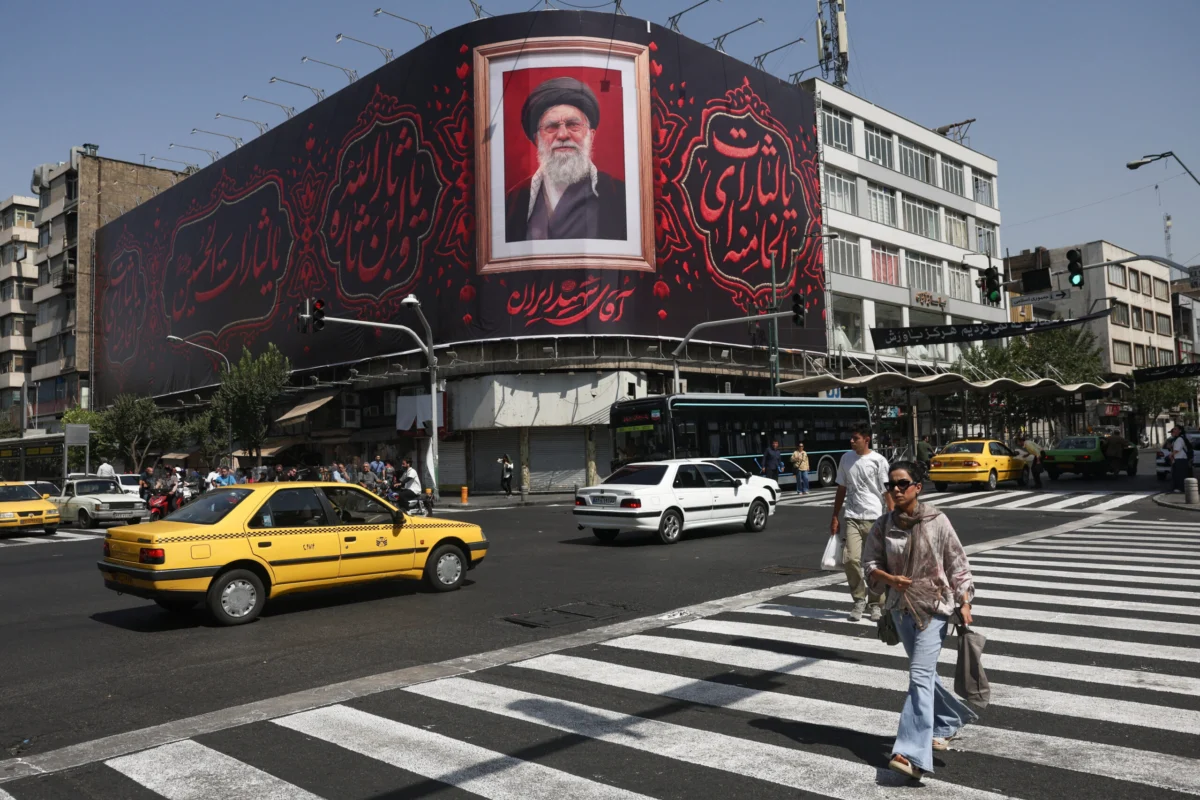
Air raid sirens have blared over Gulf nations as the United States and Iran have launched expansive attacks against each other again, escalating tensions dramatically as their fragile ceasefire, brokered just months ago, has unravelled over the past week. The resurgence of hostilities has sent shockwaves through the global economy, with oil prices spiking to unprecedented levels and international markets plunging after Tehran made the ominous move to shut down the Strait of Hormuz. This critical chokepoint, often referred to as the global energy kill switch, represents the biggest flashpoint in the ongoing conflict, underscoring the severe risks to international shipping and energy supply. As US President Donald Trump unequivocally declared the April ceasefire struck by the warring nations was "over," Iranian Supreme Leader Mojtaba Khamenei issued a stark pronouncement, stating, "Revenge is the will of the nation." The incendiary rhetoric and kinetic actions have left international observers and regional populations asking: Are the US and Iran back to a full-fledged war, echoing the intense fighting seen earlier this year?
A Fragile Peace Shattered: The Unraveling of the Islamabad Memorandum
The current resurgence of conflict follows a period of uneasy calm, established by the Islamabad Memorandum of Understanding (MoU) on April 7, 2026. This ceasefire agreement, mediated primarily by Pakistan and Qatar, had brought a temporary halt to the devastating hostilities that gripped the region in late February and March. That initial phase of conflict saw an unprecedented escalation, including widespread air campaigns across Iranian cities by the US and Israel, which tragically resulted in the death of then-Supreme Leader Ali Khamenei in Tehran on the first day of the war. The MoU was a testament to intense diplomatic efforts aimed at de-escalation, driven by international pressure and the catastrophic humanitarian and economic toll of the initial fighting. However, even at its inception, analysts noted the agreement’s inherent fragility, pointing to "glaring gaps" in its language regarding enforcement mechanisms, specific definitions of "hostilities," and a clear pathway to long-term conflict resolution. Both Washington and Tehran had, from the outset, offered differing readings and interpretations of the MoU’s contents, setting the stage for mutual accusations of violations that would eventually undermine the accord.
The initial ceasefire was hailed as a significant, albeit temporary, achievement. It mandated an end to hostilities on all fronts, including in Lebanon, where Beirut had entered a separate ceasefire with Israel requiring an Israeli military withdrawal from occupied lands in southern Lebanon. Despite these agreements, the underlying mistrust and strategic divergences between the US and Iran, coupled with regional proxy dynamics, ensured that the peace remained precarious. Economic pressures, exacerbated by the initial conflict’s impact on global supply chains and energy markets, were a key factor in pushing both sides to the negotiating table, alongside a desire to prevent further civilian casualties. Yet, without robust verification mechanisms and a shared understanding of adherence, the groundwork for renewed confrontation was implicitly laid. The withdrawal of Israeli forces from southern Lebanon, as stipulated by the MoU, was only partially observed, with reports of continued, albeit less frequent, Israeli incursions, further straining the fragile peace.
The Spark Ignites: A Detailed Chronology of Escalation
The meticulously constructed, yet ultimately fragile, ceasefire began to visibly unravel on July 6, 2026, with an audacious act of aggression attributed to Iran’s Islamic Revolutionary Guard Corps (IRGC). Three commercial vessels, including a Qatari liquefied natural gas (LNG) tanker, were struck off the coast of Oman in the Gulf of Oman. This incident, occurring in a vital shipping lane critical for global trade, immediately raised alarm bells internationally, signaling a direct challenge to the freedom of navigation and maritime security in the region. The attack on a Qatari vessel was particularly provocative, given Qatar’s previous role as a key mediator and its significant economic interests in LNG exports. The international maritime community swiftly condemned the assault, with calls from the United Nations for immediate de-escalation.

The United States responded swiftly and decisively. On July 7, the US Central Command (CENTCOM) announced it had carried out retaliatory strikes on multiple Iranian military targets. These strikes, reportedly involving precision air and drone assets launched from regional bases and naval vessels in the Arabian Sea, aimed at degrading Iranian naval capabilities responsible for the maritime attacks and sending a clear message of deterrence against further aggression. CENTCOM stated the targets included IRGC naval facilities, missile launch sites, and command-and-control centers along Iran’s southern coast. However, Tehran viewed these actions as a direct violation of the ceasefire and an unprovoked act of war.
Iran’s retaliation was comprehensive and immediate. Missile and drone attacks were launched against several military bases across the Gulf where US forces are deployed. While specific locations were not immediately confirmed by official sources, intelligence reports and regional media suggested targets included key facilities such as Al Udeid Air Base in Qatar, Camp Arifjan in Kuwait, Prince Sultan Air Base in Saudi Arabia, and Al Dhafra Air Base in the UAE. The intensity and breadth of these Iranian counterattacks underscored Tehran’s willingness to escalate and directly challenge US military presence in the region, demonstrating its advanced missile and drone capabilities. Intercepted projectiles led to debris falling in civilian areas in some Gulf nations, causing minor injuries and property damage, further heightening regional anxieties.
The escalating exchange culminated on Wednesday, when US President Donald Trump publicly declared the April ceasefire "over" via social media, effectively ending the formal diplomatic pause. This declaration was swiftly followed by Iran’s most impactful move: the IRGC announced the shutdown of the Strait of Hormuz. Tehran justified this drastic measure by accusing the US of "interfering in the waterway’s management" through its alleged facilitation of alternative transit routes for commercial shipping, an assertion Washington vehemently denied. The closure of the Strait, a passage for approximately one-fifth of the world’s total oil consumption and a significant portion of LNG, immediately triggered a global energy crisis.
Since then, the region has been caught in a relentless cycle of tit-for-tat attacks. Washington has reportedly conducted deadly strikes on multiple Iranian cities, with a notable concentration along the Strait of Hormuz in southern Iran, targeting what it describes as military infrastructure and IRGC assets. These strikes have reportedly caused significant damage to Iranian military installations but have largely avoided civilian population centers. In response, Iran has expanded its retaliatory strikes, attacking military facilities and strategic infrastructure in Bahrain, Kuwait, Oman, Jordan, and Qatar, and conducting further assaults on commercial and military vessels navigating the Strait of Hormuz, further exacerbating maritime insecurity and threatening international shipping lanes.
Economic Fallout and Global Repercussions
The renewed conflict and, critically, the closure of the Strait of Hormuz, have triggered severe economic repercussions globally. Oil prices surged dramatically, with Brent crude reaching over $120 per barrel and West Texas Intermediate (WTI) following suit, marking a nearly 20% increase in less than a week. This unprecedented spike immediately translated into higher gasoline prices for consumers worldwide and increased operational costs for industries reliant on fossil fuels, from transportation to manufacturing. Energy analysts warn that prices could continue to climb if the Strait remains closed, potentially pushing crude oil beyond $150 per barrel, a level not seen in decades.
Global financial markets reacted with sharp declines. Major stock indices across North America, Europe, and Asia experienced significant plunges, reflecting investor anxiety over geopolitical instability and the potential for a prolonged energy crisis. The Dow Jones Industrial Average dropped over 1,000 points in a single day, while European and Asian markets followed suit with similar losses. Sectors particularly vulnerable to rising oil prices, such as airlines, logistics, and heavy industry, were hit hardest, facing severe operational disruptions and decreased consumer demand. Shipping insurance premiums for vessels operating in the Gulf soared by an estimated 500%, making transit through the region prohibitively expensive for many, and forcing some shipping companies to reroute vessels via longer, more costly passages around Africa, further disrupting global supply chains and increasing delivery times.

Analysts warn that a sustained closure of the Strait of Hormuz could cripple the global economy, potentially triggering a deep recession. Nations heavily reliant on Middle Eastern oil and gas, particularly in Asia (e.g., China, India, Japan, South Korea) and parts of Europe, face immediate energy security challenges. Even countries with diversified energy sources are feeling the ripple effect of increased global energy costs, market volatility, and inflationary pressures. The situation highlights the precariousness of the global energy architecture and the outsized influence of a single, strategically vital waterway, underscoring the urgent need for international diplomatic intervention.
A Return to All-Out War? Strategic Shifts and Limited Engagements
Despite the alarming escalation, analysts suggest the conflict is currently evolving from pure tit-for-tat exchanges to sustained combat, albeit with more limited areas of engagement compared to the initial phase of the war in early 2026. Experts from institutions like Georgetown University in Qatar note that while the intensity is high, there are discernible differences in strategic focus and targeting.
In the first round of attacks that began on February 28, the US and Israel conducted a broad, sustained air campaign across Iranian cities, aiming for widespread degradation of Iran’s military and command structure, and pursuing a declared objective of "denuclearizing Tehran." This earlier campaign included devastating strikes, such as the attack on a primary school in Minab in Iran’s Hormozgan province on March 3, 2026, which killed 168 children – an event that drew widespread international condemnation and accusations of war crimes. Iran’s response then was equally fierce, targeting commercial hubs like Dubai, setting luxury hotels ablaze, and launching missiles near landmarks like the Burj Khalifa. Energy facilities across the Gulf were also bombed, and several international airports were forced to suspend operations, shattering the perception that the region’s commercial centers were insulated from major conflict.
By contrast, the latest round of US strikes is largely concentrated around the Strait of Hormuz, primarily targeting Iranian naval assets, missile launch sites, and IRGC bases directly linked to maritime operations. Iranian counterattacks, while broader in geographical scope across the Gulf, have primarily focused on military bases housing US personnel. While debris from intercepted missiles and drones has fallen elsewhere, causing injuries, the deliberate targeting of civilian or energy infrastructure has, for the most part, been avoided by both sides in this current phase. This restraint, relative to March, suggests a more focused, coercive strategy rather than an immediate return to indiscriminate, full-scale warfare. Both sides appear to be testing "red lines" without seeking total annihilation.
Shifting Objectives and Diplomatic Undercurrents
A crucial distinction in the current phase is the apparent shift in strategic objectives. Earlier, the US and Israel articulated broad goals of regime change (implicitly, through the death of the Supreme Leader) and denuclearization. The current fighting, however, appears to be primarily focused on each side coercing the other into backing down on the issue of the Strait of Hormuz. For the US, this means ensuring freedom of navigation and protecting its allies’ economic interests; for Iran, it’s about asserting control over its territorial waters and leveraging its geographic advantage as a deterrent against perceived US aggression.

Another significant difference is Israel’s role. When the war started in February, Israel was a main party to the conflict, with US Secretary of State Marco Rubio at one point suggesting that Israeli Prime Minister Benjamin Netanyahu’s government had "forced Washington’s hand" on starting the war, a claim President Trump denied. In the current round of fighting, Israel has not openly joined the US in the latest attacks on Iran. This absence could be attributed to a number of factors: internal political considerations within Israel, a changed strategic calculus following the earlier conflict, or perhaps international pressure to limit the scope of the conflict. However, Israel has not fully adhered to the agreements, continuing to wage attacks in southern Lebanon, albeit less frequently than before the April MoU, creating a separate but related point of regional instability.
Despite the kinetic exchanges, the possibility of diplomacy has not been entirely ruled out. Interestingly, in his social media post announcing the end of the ceasefire, President Trump noted that "both sides would continue to hold talks." This indicates a complex situation where military pressure is being exerted even as back-channel communications may persist. Qatar and Pakistan, instrumental in mediating the initial ceasefire, are reportedly working behind the scenes once again, attempting to contain the conflict and facilitate a path back to negotiations, although their task is now considerably more challenging given the direct military confrontations.
Paul Musgrave, an associate professor of government at Georgetown University in Qatar, observes that both countries are currently trying to ascertain each other’s "red lines." He notes a remarkable shift in strategic ambitions: "Iran’s objectives seem to have grown over the course of the conflict while the US’s have amazingly shrunk." Musgrave adds, "The US is no longer talking about regime change, but people in Tehran are starting to talk about something that looks like hegemony over the Gulf." This divergence in aspirations, he warns, will make it "extremely difficult to get back to diplomacy," as the fundamental objectives of the two adversaries appear more irreconcilable than ever.
Domestic Pressures and International Calls for De-escalation
For President Trump, the renewed conflict reignites significant domestic challenges, particularly concerning congressional authorization for the war on Iran. The War Powers Act stipulates that a president must secure congressional authorization within 60 days of initiating hostilities. Trump had previously circumvented this requirement by claiming the initial war was "terminated" when the April 7 ceasefire began, conveniently before the 60-day timeline on the first phase of the war expired. With hostilities unequivocally resumed, his administration now faces renewed scrutiny and potential legal challenges regarding its authority to conduct sustained military operations without legislative approval. This could lead to a constitutional crisis if Congress attempts to limit presidential war powers.
The war on Iran has been widely unpopular in the US, and this renewed escalation is expected to further erode public support. Trump’s approval ratings had already dropped significantly to the low 30s as polls indicated widespread voter dissatisfaction with his administration’s handling of inflation and soaring oil prices – issues that will only be exacerbated by the current crisis. The domestic political calculus adds another layer of complexity to Washington’s strategy, as the President approaches a potential re-election bid in November, with critics arguing the conflict distracts from pressing domestic concerns.
Internationally, there have been urgent calls for de-escalation from various global actors. The United Nations Secretary-General issued a statement expressing grave concern over the renewed hostilities and appealing to both parties to exercise maximum restraint and return to the negotiating table. European Union leaders, China, and Russia have also voiced their anxieties, emphasizing the potential for a wider regional conflagration and its devastating global consequences, including a humanitarian crisis. The international community largely views the closure of the Strait of Hormuz as a violation of international maritime law and a direct
