

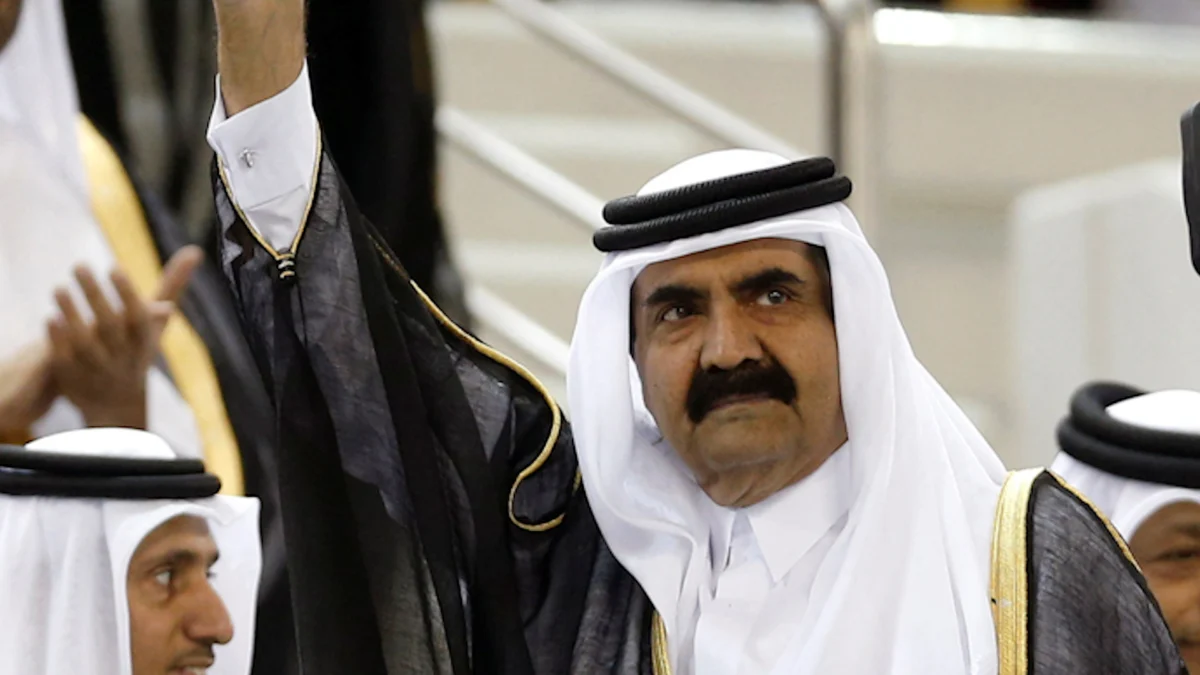
The State of Qatar has entered a period of official mourning following the announcement from the Diwan Emiri that the Father Emir, Sheikh Hamad bin Khalifa Al Thani, passed away on July 12, 2026, at the age of 74. Sheikh Hamad, who served as the Emir of Qatar from 1995 to 2013, is widely credited with the meteoric rise of the Gulf nation from a quiet peninsula into a central pillar of global energy markets, international diplomacy, and media influence. His death marks the end of an era for a leader whose vision fundamentally reshaped the geopolitical landscape of the Middle East and the economic trajectory of the world’s natural gas industry.
Flags have been lowered to half-mast across the country, and a three-day period of national mourning has been declared. Sheikh Hamad’s passing is being felt not only within the borders of Qatar but across the international community, where he was regarded as a transformative figure who defied the traditional constraints of a small state to exert outsized influence on the global stage.
The Architect of an Economic Superpower
When Sheikh Hamad bin Khalifa Al Thani assumed power in 1995, Qatar was a country with significant potential but limited infrastructure and a modest global presence. Recognizing that the nation’s future lay in its vast offshore reserves of natural gas, Sheikh Hamad pivoted away from a primary focus on oil to invest heavily in Liquefied Natural Gas (LNG) technology.
Under his leadership, Qatar partnered with international energy giants to develop the North Field, the world’s largest non-associated gas field. This strategic decision required immense capital and a tolerance for high-stakes risk, as the global market for LNG was still in its nascent stages. By the mid-2000s, these investments bore fruit, propelling Qatar to the position of the world’s leading LNG exporter. The wealth generated from this industry allowed the state to establish the Qatar Investment Authority (QIA) in 2005, a sovereign wealth fund that has since grown to manage hundreds of billions of dollars in assets, including significant stakes in Volkswagen, Barclays, and iconic real estate such as London’s Shard and Harrods.
Data from the era of his reign shows a staggering economic ascent. Between 1995 and 2013, Qatar’s Gross Domestic Product (GDP) grew from approximately $8 billion to over $200 billion. The per capita income of Qatari citizens rose to become one of the highest in the world, facilitating the development of world-class infrastructure, healthcare, and education systems.
A Legacy of Diplomatic Mediation and Media Innovation
Beyond economic metrics, Sheikh Hamad’s legacy is defined by his "independent" foreign policy. He sought to position Qatar as a neutral mediator in a region often polarized by conflict. Under his direction, Doha became a hub for international negotiations, hosting talks to resolve conflicts in Lebanon, Sudan (Darfur), and Yemen. Perhaps most notably, his administration facilitated communication between disparate groups, ranging from Western powers to the Taliban and various factions within the Palestinian territories.
In 1996, just a year after taking office, Sheikh Hamad provided the seed funding of $137 million to launch Al Jazeera. The network broke the monopoly of state-run media in the Arab world, providing a platform for debate and investigative journalism that was previously non-existent in the region. While the network often drew criticism from neighboring governments, it established Qatar as a media powerhouse and a champion of soft power.
Furthermore, Sheikh Hamad was the primary driver behind Qatar’s ambitious entry into the world of international sports. His vision culminated in the successful bid to host the 2022 FIFA World Cup, an achievement that brought the world’s most-watched sporting event to the Middle East for the first time. Although he had stepped down by the time the tournament took place, the foundations—the stadiums, the metro system, and the global branding—were all products of the strategic roadmap he initiated.
Chronology of a Transformative Life
The life of Sheikh Hamad bin Khalifa Al Thani is a timeline of the modern history of Qatar itself.
- 1952: Born in Doha, the son of Sheikh Khalifa bin Hamad Al Thani.
- 1971: Graduated from the Royal Military Academy Sandhurst in the United Kingdom and joined the Qatar Armed Forces.
- 1977: Appointed as the Crown Prince and Minister of Defense, beginning his formal involvement in the modernization of the military and the state’s administrative functions.
- 1995: Assumed power as the Emir of Qatar, initiating a series of rapid reforms in the economic and political sectors.
- 1996: Founded the Al Jazeera Media Network and established the Qatar Foundation for Education, Science and Community Development, chaired by his wife, Sheikha Moza bint Nasser.
- 2003: Appointed his fourth son, Sheikh Tamim bin Hamad Al Thani, as Crown Prince.
- 2005: Established the Qatar Investment Authority (QIA).
- 2010: Qatar won the bid to host the 2022 FIFA World Cup, a pinnacle of the Father Emir’s "soft power" strategy.
- 2013: In a rare move for a regional monarch, Sheikh Hamad voluntarily abdicated the throne, handing over power to his son, Sheikh Tamim. He was subsequently referred to as the "Father Emir."
- 2013–2026: Remained an influential figure in the background, focusing on philanthropic efforts and witnessing the realization of the "Qatar National Vision 2030."
Global Reactions and Tributes
The announcement of Sheikh Hamad’s passing has triggered a wave of condolences from world leaders, reflecting the breadth of his international relationships.
The Secretary-General of the United Nations issued a statement praising Sheikh Hamad as a "man of immense vision" who played a pivotal role in regional stability and international development. "His Highness was not only a leader for Qatar but a significant voice for the entire Arab world. His commitment to education and mediation has left an indelible mark on the international community," the statement read.
Leaders across the Gulf Cooperation Council (GCC) expressed their profound sadness. The Saudi Arabian leadership conveyed their condolences to Emir Sheikh Tamim, highlighting the deep-rooted historical ties between the two nations. In the United States, the White House released a statement acknowledging Sheikh Hamad’s role in strengthening the bilateral partnership, particularly in energy security and regional defense cooperation.
In Doha, the atmosphere is one of quiet reflection. Citizens and residents alike have taken to social media and public gatherings to share stories of how the Father Emir’s policies changed their lives. "He didn’t just build a city; he built a future for us," said one local businessman. "We went from being a small pearl-diving village in the memories of our grandfathers to the center of the world because of his courage."
Analysis: The Enduring Impact of the Hamad Era
The passing of the Father Emir provides an opportunity to analyze the long-term implications of his reign. Sheikh Hamad’s primary contribution was the decoupling of Qatar’s destiny from the fluctuations of regional hegemony. By building a unique niche as a "bridge-builder" and an energy titan, he ensured that Qatar’s voice would be heard in the halls of power in Washington, London, Beijing, and Moscow.
His domestic legacy is equally significant. Through the Qatar Foundation and the creation of "Education City," he brought prestigious international universities—such as Georgetown, Northwestern, and Weill Cornell—to Doha. This focus on human capital was designed to ensure that the nation’s wealth would transition from a resource-based economy to a knowledge-based one, a goal that remains the centerpiece of the Qatar National Vision 2030.
Analysts note that the voluntary transition of power in 2013 was perhaps one of his most strategic moves. By stepping down while he was still in good health, he ensured a seamless and stable succession, allowing Sheikh Tamim to consolidate his leadership with the guidance of the Father Emir available in the background. This stability has been a hallmark of Qatari politics over the last decade, even through regional diplomatic crises and global economic shifts.
Future Outlook for Qatar
While the loss of the Father Emir is a significant emotional event for the nation, the institutional frameworks he established are expected to maintain the country’s current trajectory. Emir Sheikh Tamim bin Hamad Al Thani has spent the last thirteen years building upon his father’s foundations, navigating the country through the 2017-2021 blockade and the successful hosting of the World Cup.
The "Hamad Model"—characterized by high-stakes investment, media influence, and diplomatic agility—is now deeply embedded in Qatar’s state identity. As the world transitions toward greener energy, Qatar’s continued expansion of its LNG capacity (the North Field East project) remains a testament to the Father Emir’s original 1990s strategy.
The funeral for Sheikh Hamad bin Khalifa Al Thani is expected to be attended by a vast array of international dignitaries, signifying his status as a world leader of the highest order. As the nation mourns, it also celebrates a legacy that transformed a desert landscape into a global metropolis. The Father Emir’s journey from a young Sandhurst graduate to the visionary of a modern state serves as a blueprint for how small nations can achieve greatness through strategic foresight and bold action. His influence will undoubtedly continue to resonate through the skyscrapers of West Bay, the classrooms of Education City, and the diplomatic corridors of the world for generations to come.
