

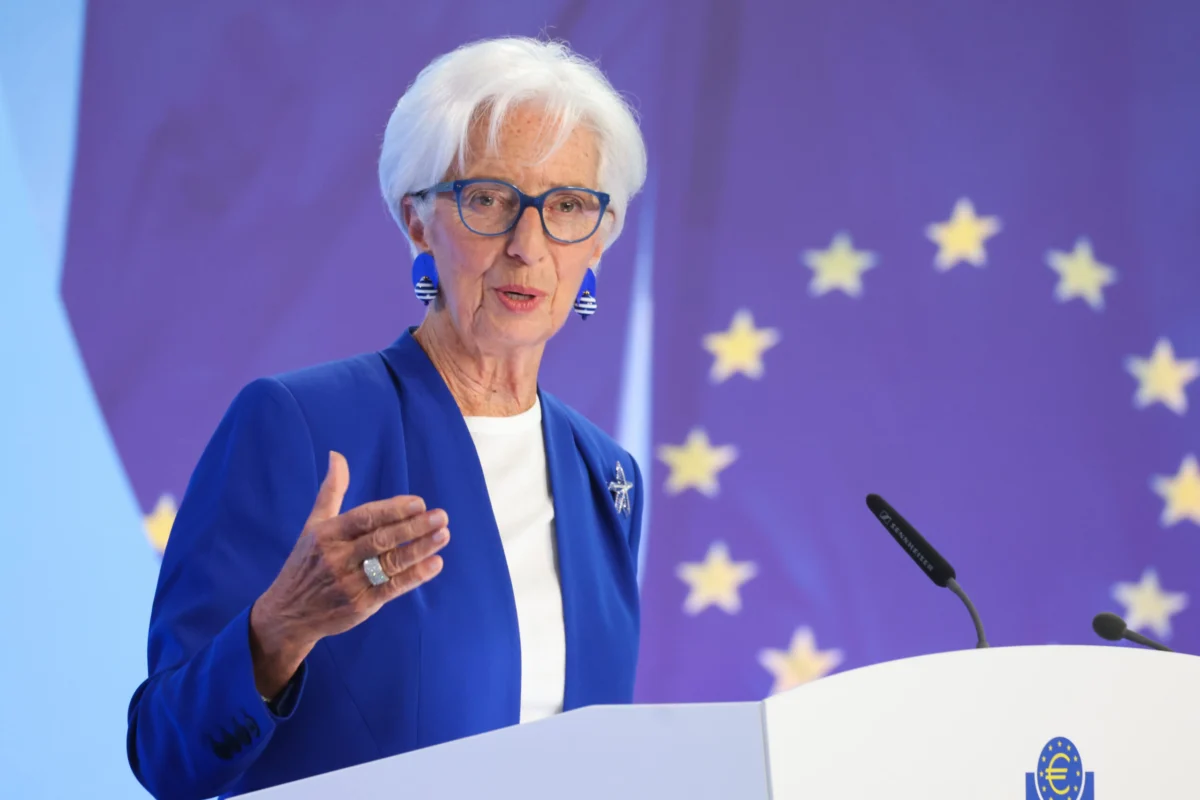
European Central Bank (ECB) President Christine Lagarde has opened the door to a potential early end to her tenure, a move that could significantly reshape both the future of European monetary policy and the French political scene. In a candid interview with the French financial newspaper Les Echos, Lagarde, whose current term as ECB President is set to conclude in October 2027, acknowledged the "possibility" of stepping down before her mandate expires, particularly in light of France’s upcoming presidential elections in the same year.
Lagarde articulated a profound concern for the nature of the discourse surrounding France’s role within the European Union, suggesting that her potential involvement would stem from a desire to ensure a "European voice" is heard in the French presidential debate. "If this debate were to present a perspective that diminishes France’s place within Europe, I think it would be necessary to explain why this would be a painful path for our country and our citizens," she stated. When directly questioned about the prospect of personal involvement in the French Presidential campaign, whether to support a candidate or even to run herself, Lagarde responded enigmatically, "I’m going to ask myself some questions."
This revelation comes at a pivotal moment for France, where the political landscape is undergoing a significant transformation. The current President, Emmanuel Macron, who first entered office in 2017, is constitutionally barred from seeking a third term and will not be running for re-election. Polls currently indicate Jordan Bardella, the leader of the far-right National Rally party, as the frontrunner to succeed Macron. The first round of voting is scheduled for April, with a subsequent runoff expected between the top two contenders if no candidate secures an outright majority. Macron himself has faced the National Rally, formerly known as the Front National, in the runoff stages of both the 2017 and 2022 presidential elections, underscoring the party’s growing influence.
Bardella has outlined an agenda that includes a significant reorientation of France’s relationship with the European Union, advocating for a return to a model where the European Commission and the EU serve the interests of individual nations, rather than the reverse. Such a policy shift could have profound implications for the cohesion and direction of the EU as a whole, a bloc heavily influenced by the economic and political weight of its member states, including France and Germany.
The mere suggestion of Lagarde’s potential early departure has already sent ripples through financial markets. In February, the euro experienced a sell-off following a report in the Financial Times that Lagarde was contemplating an early exit from the ECB. At the time, the ECB issued a statement clarifying that no such decision had been made. CNBC has reported that the ECB declined to comment on Lagarde’s latest remarks.
Navigating Economic Headwinds: Lagarde’s Commitment to the ECB
Despite her contemplation of future political involvement, Lagarde emphasized her unwavering commitment to her current role at the ECB in the short term. "My term ends in October 2027," she affirmed in the Les Echos interview. "And I believe my mission is to maintain price stability. As we are once again in a period of turbulence, I believe the captain of the ECB ship must remain on board." This statement suggests a deep-seated sense of responsibility towards steering the European economy through its current challenges, which include persistent inflation concerns and geopolitical uncertainties.
The ECB’s mandate to maintain price stability is crucial for the economic health of the Eurozone. Since the significant inflationary pressures that emerged post-pandemic, exacerbated by supply chain disruptions and the energy crisis stemming from the war in Ukraine, the ECB has undertaken a series of interest rate hikes to curb inflation. The effectiveness of these measures and the timing of any potential rate cuts are closely scrutinized by governments and businesses across the bloc. Lagarde’s continued leadership at the ECB is seen by many as a stabilizing factor during this delicate economic period.
The Urgent Need for Fiscal Rectitude in France
Lagarde’s potential foray into French politics is also taking place against a backdrop of significant fiscal challenges for France. The French government is currently grappling with the complex task of passing contentious budget cuts amounting to at least 4 billion euros ($4.6 billion). This fiscal consolidation is a crucial step in its broader objective to rein in public debt and reduce its budget deficit to the 3% of GDP benchmark mandated by the European Union, a target that must be met by 2029.

French Finance Minister Roland Lescure has recently reiterated the government’s commitment to achieving a 5% deficit-to-GDP ratio in the short term as part of its path towards this objective. Speaking to CNBC’s Charlotte Reed on Friday, Lescure stressed the importance of separating the immediate budgetary concerns from the broader political debates surrounding the 2027 presidential election. He articulated a vision where the focus remains on passing the current budget, even if it necessitates compromises that may not satisfy all political factions. "There’s a win-win one in which we focus on the budget, they let us pass it, we find a compromise that… [not all parties will be happy with], but at least that’s going to make sure we have a budget," Lescure explained. He added, "And on the other hand, the big debates about 2027 and beyond take place. We can decorrelate both, [but] if we don’t, and if one becomes the hostage of the other – the budget hostage to the campaign – it’s not going to work." Lescure concluded with a hopeful note, stating, "So hopefully reason will be well, we manage to decorrelate both. We’ll see."
A Fragmented Political Landscape and the Call for Truthful Discourse
The urgency for fiscal reform is compounded by France’s increasingly fragmented parliamentary landscape. Since President Macron’s re-election in 2022, the country has seen a rapid succession of five prime ministers, a clear indicator of the challenges in forming stable governing majorities and passing significant economic reforms. This political volatility makes the task of implementing necessary but often unpopular budgetary adjustments even more arduous.
Lagarde, in her interview with Les Echos, underscored the critical need for decisive action from French political leaders. "France will have to make courageous decisions on difficult issues," she asserted. "Presidential candidates have a duty to examine these issues and propose solutions." She also conveyed her belief that the French populace is well-informed and receptive to honest dialogue. "And, contrary to what I often hear from politicians, the French people are perfectly aware of the situation and they expect a discourse of truth and solutions," Lagarde added.
Broader Implications for the European Union
Lagarde’s potential shift from the ECB to French domestic politics carries significant implications for the European Union. As President of the ECB, she has been a key figure in shaping monetary policy for the 19-member Eurozone, a bloc representing a substantial portion of the global economy. Her deep understanding of economic intricacies and her commitment to European integration have been instrumental in navigating complex financial crises and policy challenges.
Should she transition to the French political arena, her influence could extend to shaping France’s stance on key European issues, including fiscal policy coordination, the future of the EU’s economic governance, and the bloc’s response to global economic shifts. Her emphasis on France playing a "decisive role" within Europe suggests a desire to bolster the nation’s influence and ensure its policies align with a strong European framework.
The rise of nationalist and populist movements across Europe, exemplified by the current polling strength of Jordan Bardella’s National Rally, presents a challenge to the established European order. Lagarde’s potential intervention in the French presidential debate could serve as a counter-narrative, advocating for continued European cooperation and integration at a time when such principles are being questioned by significant segments of the electorate. Her unique position, bridging the worlds of international finance and national politics, could offer a powerful platform for articulating the benefits of a united and economically stable Europe.
Historical Context: The ECB Presidency and Political Ambitions
The prospect of a high-ranking EU official transitioning into national politics is not unprecedented, though it remains a significant development. Christine Lagarde, a former Managing Director of the International Monetary Fund (IMF) before assuming the ECB presidency in November 2019, has a distinguished career in public service that has often intersected with national and international policy debates. Her leadership at the ECB has been characterized by a pragmatic approach, navigating the complexities of post-pandemic recovery, inflationary pressures, and the geopolitical fallout of the war in Ukraine.
The French presidential election of 2027 is shaping up to be a crucial juncture for both France and the European Union. With a vacancy at the Elysée Palace and a potential shift in leadership at the European Central Bank under consideration, the coming years will undoubtedly be a period of significant adaptation and strategic decision-making for the continent. Lagarde’s reflections suggest a deep sense of responsibility, whether she remains at the helm of the ECB or seeks to influence France’s future trajectory from within its own political system. The financial markets, governments, and citizens across Europe will be watching closely as these developments unfold.
