

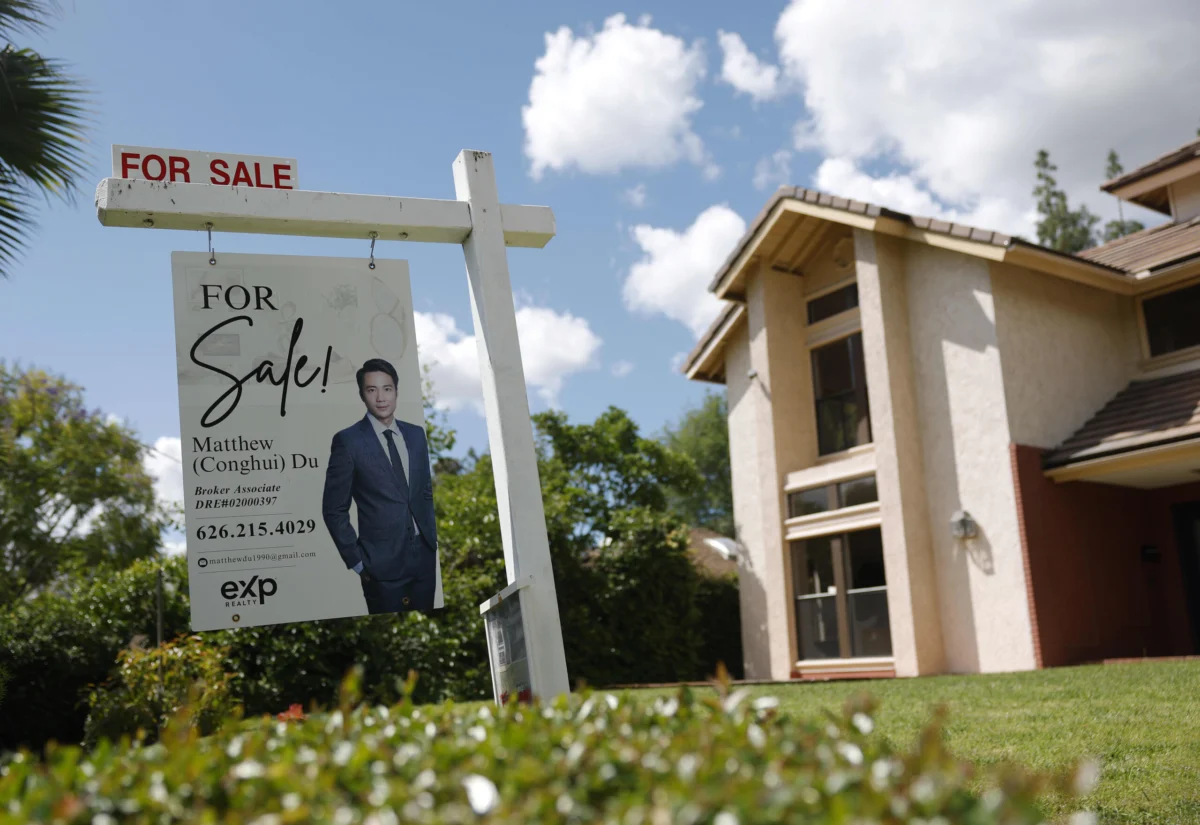
The American housing market experienced a notable slowdown in June, with sales of previously owned homes registering an unexpected decline, primarily driven by the persistent twin pressures of record-high prices and elevated mortgage rates. This contraction signals a market grappling with severe affordability constraints, challenging prospective homebuyers despite a relatively robust job market.
Detailed Sales and Price Figures Unveiled
According to the latest data released by the National Association of Realtors (NAR), sales of existing homes fell by 2.4% in June from the previous month, reaching a seasonally adjusted annual rate of 4.09 million units. This figure starkly contrasted with housing analysts’ predictions, who had largely anticipated a slight month-over-month gain. While the monthly dip painted a picture of cooling demand, June sales did show a modest increase of 2.8% when compared to the same month a year prior, offering a glimmer of resilience in a volatile landscape.
The median price for an existing home sold in June soared to an unprecedented $440,600. This represented an increase of 1.8% from the previous year, marking the highest median price ever recorded. Historically, June often stands as the strongest month for both sales volume and price appreciation, making the simultaneous dip in sales and record price a complex indicator of market dynamics. The continued upward trajectory of prices, even amidst slowing sales, underscores the profound imbalance between housing supply and demand.
The Affordability Squeeze: Mortgage Rates and Economic Context
The primary antagonist in the current housing narrative is undoubtedly the rapid escalation of mortgage rates. The original article notes that contracts closed in June were likely signed in May, a period when the average rate on the 30-year fixed mortgage was still climbing. This surge in borrowing costs can be traced back to early 2022, when the Federal Reserve embarked on an aggressive campaign of interest rate hikes to combat spiraling inflation. While the original text alludes to "the beginning of the Iran war" as a trigger for sharply rising rates in March, a more accurate and comprehensive understanding points to a confluence of global geopolitical uncertainties and, critically, the Federal Reserve’s robust monetary policy tightening aimed at reining in domestic inflation.
Beginning in March 2022, the Federal Reserve initiated a series of benchmark interest rate increases, which directly impacted the cost of borrowing across the economy, including mortgage rates. The 30-year fixed mortgage rate, which had hovered at historic lows below 3% for much of the pandemic era, surged dramatically, often surpassing 6% and at times even touching 7% or higher. This dramatic shift effectively priced out a significant segment of potential homebuyers, particularly those relying on financing to secure a purchase. For a buyer looking to finance a $400,000 home, even a one-percentage-point increase in mortgage rates can translate into hundreds of dollars more in monthly payments, severely impacting their debt-to-income ratio and overall affordability.
A Deeper Dive into Market Inventory
Adding another layer of complexity to the market’s challenges is the persistently lean housing inventory. At the close of June, the total housing inventory stood at 1.56 million units. This figure represented a marginal decrease of 0.6% from May, though it was 1.3% higher than the inventory recorded in June of the previous year. At the current sales pace, this level of inventory translates to a 4.6-month supply. For context, a market is generally considered balanced between buyers and sellers when there is approximately a six-month supply of homes available. The current deficit indicates that the market remains firmly in favor of sellers, allowing prices to remain elevated despite waning demand.
The chronic shortage of available homes stems from a variety of factors. Following the 2008 financial crisis, homebuilders significantly scaled back construction, leading to years of underbuilding relative to population growth and household formation. More recently, supply chain disruptions during the pandemic, coupled with rising costs for labor, materials, and land, have hampered new construction efforts. Furthermore, many existing homeowners, having secured historically low mortgage rates in recent years, are reluctant to sell and move, as doing so would mean trading their favorable rates for significantly higher ones on a new property. This "lock-in" effect further constrains the supply of homes coming onto the market.
Regional Disparities and Segmented Performance
The nationwide trend of declining sales was not uniformly distributed across the United States. Regionally, home sales experienced month-over-month decreases in June everywhere except the Northeast, which showed a degree of resilience. This regional variance can be attributed to localized economic conditions, differing levels of housing supply, and varying degrees of affordability pressures. For instance, the Northeast, with its often higher median incomes and robust job markets in major metropolitan areas, might exhibit a different demand elasticity compared to other regions.
A more pronounced segmentation was observed across different price tiers. The market continues to demonstrate a clear bifurcation, with the higher end performing significantly better than the lower and middle segments. Sales of homes priced below $100,000 saw a decline of 1.7% from a year ago, while sales of homes priced between $100,000 and $250,000 increased by less than 1%. In stark contrast, the luxury segment flourished: sales of homes priced between $750,000 and $1 million surged by nearly 14% from the previous year, and sales of properties above $1 million jumped by an impressive 18%. This disparity suggests that buyers in the higher price brackets are less sensitive to elevated mortgage rates, often possessing greater financial flexibility, larger down payments, or the ability to make all-cash purchases.
Demographic Shifts Among Buyers

The report also shed light on the evolving demographics of homebuyers. All-cash sales, a crucial indicator of investor activity and buyer financial strength, accounted for one-quarter of all transactions in June, a decrease from 29% a year prior. This dip could indicate a slight pullback from cash-rich investors or a greater reliance on financing even among affluent buyers, given the broader economic uncertainty.
Conversely, first-time homebuyers constituted 33% of all sales, an increase from 30% a year ago. While seemingly positive, this uptick should be viewed within the context of overall declining sales. It could reflect a renewed push by some first-time buyers to enter the market, perhaps fueled by job stability, or a slight easing of competition from investors. However, first-time buyers are typically the most vulnerable to affordability challenges, often requiring substantial financing and having smaller down payments. Their continued presence, albeit in a constrained market, highlights the enduring aspiration of homeownership.
Expert Perspectives and Industry Outlook
Lawrence Yun, the chief economist for the National Association of Realtors, offered critical insights into the market’s current state. He noted that "the back-and-forth in monthly home sales activity, driven by mild fluctuations in mortgage rates, shows how sensitive home buyers are to affordability conditions." Yun emphasized that despite these headwinds, "job gains—more than half a million since the beginning of the year—will continue to provide support for the housing market." This suggests that a strong labor market, which underpins consumer confidence and purchasing power, remains a mitigating factor against a more severe downturn.
However, Yun also issued a cautionary statement regarding the long-term outlook for affordability: "Progress on long-term housing affordability could be hampered if inventory growth continues to stall. Without consistent gains in inventory, home prices can accelerate. It is critical to introduce more supply to the market to widen the opportunity for homeownership." His remarks underscore the NAR’s consistent advocacy for policies that encourage new construction and alleviate supply constraints, such as zoning reforms and incentives for builders.
The Broader Economic Repercussions
The cooling housing market has far-reaching implications beyond just buyers and sellers. The real estate sector is a significant driver of economic activity, influencing industries ranging from construction and manufacturing (for building materials) to retail (for home furnishings and appliances), lending, and various professional services (real estate agents, lawyers, appraisers). A slowdown in sales volume, even if prices remain high, can translate into reduced commissions for agents, fewer loans originated by banks, and decreased demand for ancillary services.
Furthermore, the housing market’s health often serves as a bellwether for broader consumer confidence. When homeowners feel secure in their property values and potential buyers face insurmountable barriers, it can ripple through the economy, affecting spending habits and investment decisions. The challenges in the ownership market also exert pressure on the rental market, as individuals unable to purchase homes are forced to rent, driving up rental demand and, consequently, rental prices. This creates a dual affordability crisis, impacting both renters and aspiring homeowners.
Addressing the Supply-Side Challenge
The consensus among economists and real estate professionals is that the fundamental solution to long-term housing affordability lies in significantly increasing housing supply. This requires a multi-pronged approach involving various stakeholders. Local governments play a crucial role through zoning regulations, permitting processes, and land-use policies. Streamlining these processes, allowing for denser construction, and encouraging diverse housing types (e.g., townhouses, duplexes, accessory dwelling units) could help unlock more supply.
Federal and state governments can also contribute through infrastructure investments, tax incentives for affordable housing development, and programs that support first-time homebuyers or incentivize home builders. Addressing the rising costs of labor and materials, perhaps through innovation in construction techniques or training programs for skilled trades, is another vital component. Without a concerted effort to boost inventory, the cycle of high prices and constrained access to homeownership is likely to persist, exacerbating economic inequalities.
Looking Ahead: The Path to Market Rebalancing
The immediate outlook for the housing market remains cautiously optimistic, tempered by ongoing economic uncertainties. While mortgage rates have shown some signs of stabilization, they are expected to remain elevated compared to the pandemic-era lows, contingent on the Federal Reserve’s future monetary policy decisions and inflation trends. The job market’s strength provides a crucial buffer, but persistent inflation could necessitate further tightening, which would likely further dampen housing demand.
The coming months will be critical in determining whether the market moves towards a more balanced state. A significant increase in inventory, perhaps driven by a slight easing of the "lock-in" effect if rates begin to fall or by increased new construction, would be the most effective mechanism for moderating price growth and improving affordability. However, given the long lead times for construction and the reluctance of current homeowners to move, such a shift is unlikely to be swift. The housing market is navigating a complex period of adjustment, balancing the aspirations of buyers with the realities of economic conditions and structural supply deficits.
