

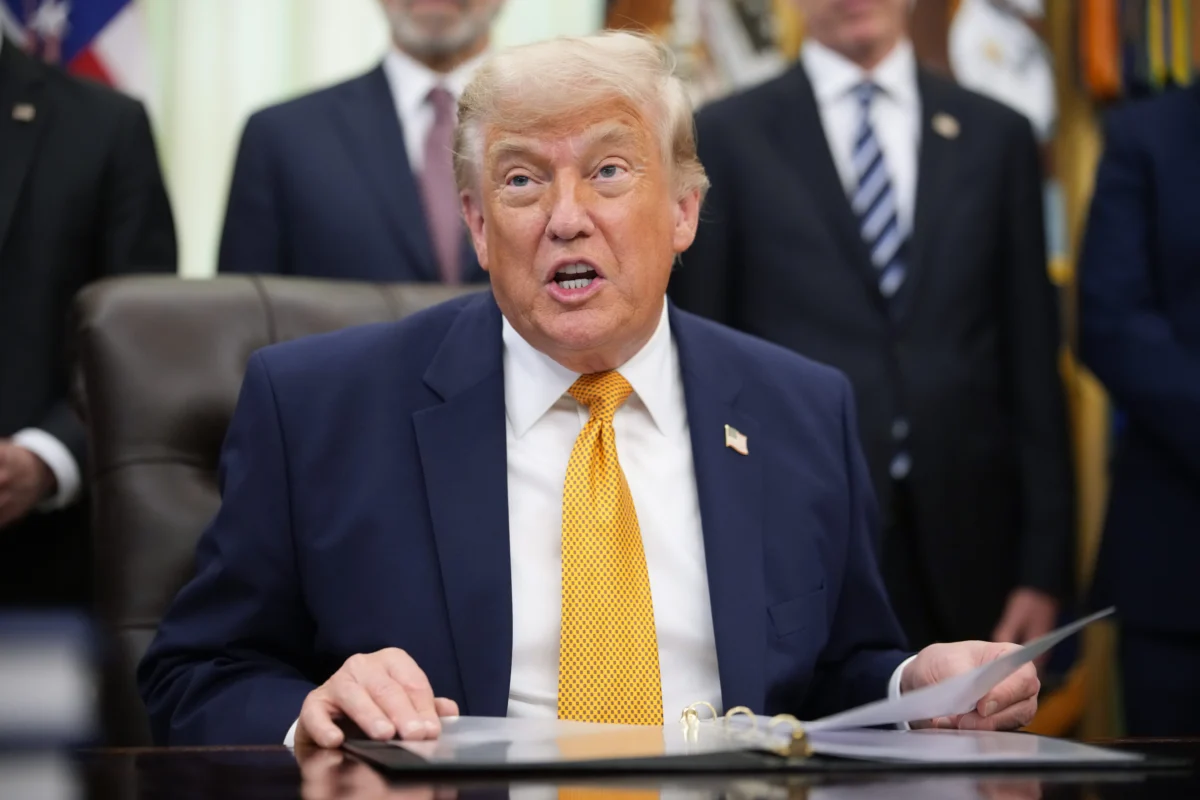
President Donald Trump on Wednesday abruptly canceled a highly anticipated Capitol Hill signing ceremony for a landmark bipartisan housing bill, delivering the news via his Truth Social platform just over an hour before the event was scheduled. The unexpected move plunged a widely celebrated legislative achievement into uncertainty and ignited a fresh wave of contention within Congress, particularly among Republican ranks. Trump declared the signing postponed until the passage of the "desperately needed SAVE AMERICA ACT," which he controversially labeled a "National Emergency."
The housing package, lauded by leaders from both major parties as a significant win, had navigated both chambers of Congress with overwhelming bipartisan support—a rare feat in the current sharply divided political landscape. House Speaker Mike Johnson, R-La., and Senate Majority Leader John Thune, R-S.D., had initially celebrated its passage and announced the president’s intent to sign it into law in the historic Statuary Hall at noon ET. However, those plans were dramatically derailed by Trump’s insistence on prioritizing his controversial election reform legislation.
The Unraveling of a Bipartisan Triumph
The housing bill represented a concerted effort to address the escalating housing affordability crisis gripping the nation. Its core objectives included increasing the overall housing supply, enhancing access to affordable homes, and imposing caps on the amount of single-family residences that large private equity firms and institutional investors could purchase. This measure was seen as a critical response to a growing national concern, with both Republican and Democratic members eager to campaign on solutions to affordability and cost-of-living issues ahead of the crucial 2026 midterm elections. The broad consensus around the bill underscored the pervasive nature of the housing crisis and the political imperative to tackle it.
However, any initial optimism surrounding the bill’s imminent enactment dissipated rapidly. Early Wednesday morning, Trump began signaling his reservations about the housing legislation in a Truth Social post, foreshadowing the dramatic cancellation that would follow. His subsequent post unequivocally stated: "Today’s Housing News Conference and Signing is hereby cancelled until such time as we pass the desperately needed SAVE AMERICA ACT, which I consider to be a National Emergency. Thank you for your attention to this matter!" This direct ultimatum immediately shifted the focus from a bipartisan victory to a renewed partisan standoff, leaving the future of the housing bill hanging in the balance.
A Deep Dive into the Housing Affordability Crisis
The bipartisan housing bill emerged against a backdrop of unprecedented challenges in the American housing market. Over the past decade, and particularly in the wake of the COVID-19 pandemic, the United States has experienced a severe shortage of affordable housing units, driving up both rental costs and home prices to historic highs. Data from various sources, including the National Association of Realtors and the Department of Housing and Urban Development, consistently highlight a significant gap between housing supply and demand. Median home prices have surged, making homeownership increasingly out of reach for first-time buyers and low-to-middle-income families. Rental markets have also seen steep increases, pushing many households to the brink of housing instability.
Exacerbating this crisis has been the increased presence of institutional investors and private equity firms in the single-family housing market. These entities, often able to make all-cash offers, have been criticized for driving up prices, reducing inventory for individual buyers, and converting homes into rental properties, thereby further straining the supply of ownership opportunities. The housing bill’s provision to cap these purchases aimed to level the playing field for ordinary Americans and restore a more equitable housing market. Supporters of the bill, such as Senator Elizabeth Warren, D-Mass., who co-led the legislation in the Senate, had emphasized its direct impact on alleviating the "cost squeeze" faced by American families, making Trump’s cancellation particularly jarring to advocates. The legislation was seen as a pragmatic, market-oriented approach to a complex problem, making its sudden deferral a significant setback for those working to ease economic burdens on constituents.
The ‘SAVE America Act’ Mandate: Background and Controversy
At the heart of Trump’s demand is the "SAVE America Act," a piece of legislation designed to curtail noncitizen voting in U.S. elections and implement nationwide voter identification laws. While the concept of noncitizen voting is a potent talking point in conservative circles, it is important to note that voting by noncitizens is already illegal in federal contests and occurs extremely rarely, as confirmed by numerous fact-checking organizations and election officials. Despite this, the narrative of widespread noncitizen voting has gained traction among certain segments of the electorate, fueling calls for more stringent election security measures.
The SAVE America Act, which passed the House of Representatives in February, enjoys broad popularity among Republicans. However, its path through the Senate remains effectively blocked. The Senate’s filibuster rule requires 60 votes to advance most legislation, a threshold the GOP currently falls well short of without Democratic support. Democrats and voting rights advocates strongly oppose the bill, arguing that its provisions, particularly the nationwide voter ID requirements, could disenfranchise eligible voters, especially minority groups, the elderly, and those with limited access to necessary identification documents. They view the legislation as an attempt to suppress votes rather than genuinely enhance election integrity.
Trump has consistently pressured Republicans to either abolish the filibuster—a long-standing Senate procedure that he has frequently criticized—or to attach the SAVE America Act to a larger, must-pass bill. His demand for the housing bill to be held hostage underscores his unwavering commitment to seeing this election measure enacted, viewing it as a critical component of his broader agenda for American governance.
Capitol Hill Encounters: Tensions and Divisions
Wednesday’s events were not confined to the dramatic cancellation; they also spilled over into a scheduled lunch meeting between Trump and Senate Republicans at the Capitol. Notably, the invitation for this meeting came from Sen. Rick Scott, R-Fla., rather than through the customary channels of GOP leadership, hinting at an unusual dynamic within the party.
The lunch quickly became a microcosm of the internal divisions and frustrations simmering within the Republican caucus. A particularly tense exchange unfolded between Trump and Sen. Bill Cassidy, R-La. Cassidy, who had recently lost his GOP primary after Trump endorsed his opponent, reportedly confronted the former president over an Iran memorandum of understanding. Cassidy and other Republicans have sharply criticized this memorandum, viewing it as a misguided foreign policy initiative. According to reports from MS NOW, citing a person familiar with the moment, Cassidy "yelled" at the president.
Following the meeting, Cassidy addressed reporters, stating, "I’m not going to be bullied when I feel like I’m asking a question the American people need to know. And so at that point it began to escalate." Other senators present offered varying characterizations of the heated discussion. Sen. Ted Cruz, R-Texas, described it as a "spirited discussion," while Sen. Jim Justice, R-W.V., deemed it "not super combative, but very passionate," noting that it ultimately ended respectfully.

Emerging from the meeting, Trump offered his own cryptic assessment to reporters: "We like our leader. … I don’t like a few people, but that’s OK. I think you know who they are." This thinly veiled jab highlighted ongoing tensions and the selective nature of his political alliances, even within his own party. The incident served as a stark reminder of Trump’s continued influence and his readiness to challenge those who deviate from his agenda, irrespective of their party affiliation.
Uncertainty Lingers for Key Legislation
The aftermath of Trump’s cancellation left the path forward for the bipartisan housing package shrouded in uncertainty. With the president having a mere 10 days to sign or veto a bill once it reaches his desk, Congress now faces a daunting challenge: either pass the SAVE America Act—a measure widely opposed by Democrats and voting rights advocates—within that tight window, or risk the housing bill effectively dying through a pocket veto or outright rejection.
Senate Majority Leader Thune, a key supporter of the housing package, voiced his disappointment to reporters, calling it "a great piece of legislation that increases the supply of housing and the availability of credit to afford homes, so it’s an affordability issue, and eventually I hope he finds a way to sign it." However, another supporter, Sen. John Husted, R-Ohio, indicated that the housing bill’s future was not even a significant topic of discussion during Trump’s meeting with senators, underscoring the shift in priorities imposed by the former president.
Speaker Johnson, while acknowledging the challenge, suggested that the only plausible route to enacting the SAVE America Act might be through budget reconciliation. This congressional process allows the Senate to bypass the filibuster and pass certain spending and budgetary measures with a simple majority. However, there are serious doubts about whether an election reform bill like the SAVE America Act would qualify under the strict rules governing reconciliation, particularly the Byrd Rule, which prohibits extraneous provisions. Even if it did qualify, the reconciliation process is notoriously long, complex, and often fraught with political battles, making its successful application within the housing bill’s deadline highly improbable.
Rep. French Hill, R-Ark., who chairs the House Financial Services Committee and spearheaded the housing bill in the House, expressed a resigned pragmatism. "Trump picked the day, and now he’s chosen to change the day. So we’ll let him do that, and we’ll see what he decides to do," Hill stated, reflecting the deferential stance many Republicans find themselves in.
A Pattern of Presidential Leverage
Wednesday’s events were not an isolated incident but rather the latest manifestation of a recurring strategy employed by Donald Trump to exert leverage and enforce his legislative demands. This marks the second time in a single week that Trump has disrupted congressional Republican priorities by conditioning his support—or, in this case, his signature—on the passage of the SAVE America Act.
Just last week, Trump utilized Truth Social to instruct Jay Clayton, his permanent nominee for Director of National Intelligence (DNI), not to appear for a scheduled Senate confirmation hearing. This directive, issued hours before the hearing, was aimed at fast-tracking Clayton’s nomination to prevent Bill Pulte, the Federal Housing Finance Agency head, from temporarily assuming the DNI role. Pulte, whose willingness to attack Trump’s opponents while leading the housing agency drew criticism from Democrats and some Republicans, was a contentious choice.
Trump’s intervention regarding the DNI nomination also entangled negotiations for an extension of Section 702 of the Foreign Intelligence Surveillance Act (FISA), a critical foreign surveillance provision that had lapsed earlier in the month. Democrats vowed to oppose any extension as long as Pulte remained a potential DNI. Trump then further complicated matters, posting on June 17: "[T]o add a slight bit of intrigue but, for the Good of the Nation, and the People of our Country, I will not approve FISA without THE SAVE AMERICA ACT going along with it." This pattern demonstrates a consistent tactic of linking disparate legislative items to force action on his primary political objectives, even at the cost of bipartisan progress or established congressional procedures.
Political Fallout and Public Perception
The immediate fallout from Trump’s actions has been significant. Congressional Republicans, particularly those who invested heavily in the bipartisan housing bill, find themselves in an unenviable position, their legislative efforts undermined by a figure who, despite not holding a formal office, wields immense influence over the party. This dynamic sets the stage for continued internal friction and complicates their ability to deliver on key policy promises ahead of the 2026 midterms.
Democrats, meanwhile, seized on the cancellation as evidence of Trump’s alleged indifference to the economic struggles of everyday Americans. Senator Elizabeth Warren articulated this sentiment forcefully on CNBC’s "Squawk on the Street," stating, "This just doesn’t make any sense, other than whatever it is he wants to do is a complete indifference to the cost squeeze on American families and to genuine efforts to do something about it." She added, "He could be over here trying to claim a victory lap. And instead he’s saying, no, no, he doesn’t want anything to do it. It’s because he really doesn’t care about American families."
This political messaging is likely to resonate as the 2026 midterm elections approach, with affordability and cost-of-living issues expected to dominate campaign narratives. Trump’s decision to prioritize a contentious election bill over a widely supported measure addressing a tangible economic concern provides potent fodder for his political opponents, allowing them to frame his actions as detached from the immediate needs of the populace.
The events of Wednesday underscore the unique and often disruptive influence Donald Trump continues to exert on American politics. His willingness to upend established legislative processes and sideline bipartisan achievements in pursuit of his specific agenda highlights a political strategy centered on leveraging his significant sway within the Republican party. The fate of the housing bill now hangs in the balance, entangled in a broader struggle over election integrity, legislative power, and the future direction of the Republican Party, promising continued legislative battles and political maneuvering in the weeks and months ahead.
