


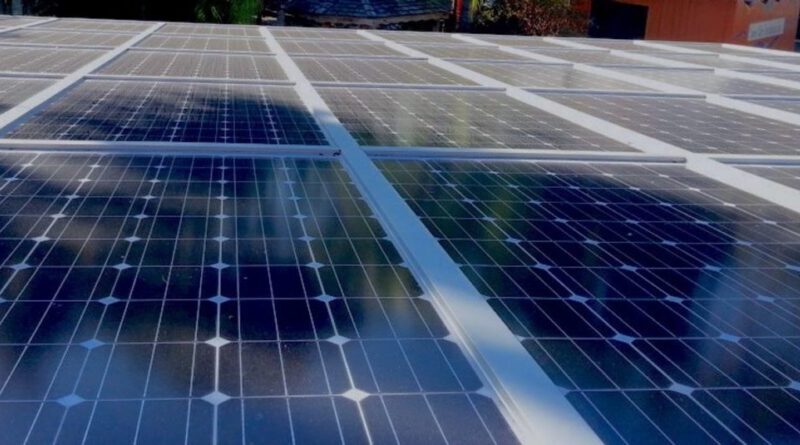
The Massachusetts Department of Energy Resources (DOER) has officially announced the allocation of $2.4 million in grant funding to ten nonprofit organizations across the Commonwealth, marking a significant step forward in the state’s efforts to democratize renewable energy access. This latest infusion of capital represents the third round of the Low-Income Services Solar Program (LISSP), a strategic initiative designed to alleviate the financial burden of energy costs for organizations serving vulnerable populations. By facilitating the installation of rooftop solar arrays, the program aims to redirect capital from utility expenses toward direct community services, effectively bridging the gap between environmental sustainability and social equity.
The rooftop solar systems funded under this round are projected to achieve a collective capacity of 612.3 kilowatts (kW). For the participating nonprofits, the transition to solar energy is expected to be transformative, with projected reductions in electricity bills ranging from 70% to 100%. On an aggregate scale, these ten organizations are poised to save approximately $275,000 annually in operational costs. These savings are not merely figures on a ledger; they represent a permanent increase in the financial capacity of these organizations to fulfill their core missions, whether in food security, housing assistance, or healthcare.
The Evolution of the Low-Income Services Solar Program
The Low-Income Services Solar Program is a cornerstone of Massachusetts’ broader strategy to integrate renewable energy into the social safety net. Managed in partnership with the Center for EcoTechnology (CET), the program provides technical assistance and direct funding to help nonprofits navigate the complexities of solar procurement and installation. The LISSP was established to address a specific market failure: while residential and commercial solar adoption has surged in Massachusetts, nonprofits—particularly those serving low-income communities—often lack the upfront capital or tax incentives (such as the federal Investment Tax Credit) necessary to make solar a viable option.
This third round of funding follows a successful second round in January 2024, where the Healey-Driscoll administration awarded $1.2 million to three major nonprofit entities. The rapid succession of these grants underscores the administration’s commitment to the "Clean Energy Era," a policy framework that prioritizes decarbonization while ensuring that no community is left behind in the energy transition. The chronology of these awards demonstrates a scaling of the program, moving from large-scale pilot projects to a more distributed model that reaches a wider variety of community-based organizations.
Strategic Impact and Technical Specifications
The technical impact of adding 612.3 kW of solar capacity to the Massachusetts grid is substantial. In terms of environmental benefits, this capacity is equivalent to offsetting hundreds of metric tons of carbon dioxide emissions annually. In the context of the Massachusetts Clean Energy and Climate Plan (CECP), which mandates a 50% reduction in greenhouse gas emissions by 2030 and net-zero emissions by 2050, these decentralized solar projects play a vital role. They reduce the demand on the centralized grid during peak hours and decrease the state’s reliance on fossil-fuel-burning "peaker" plants, which are often located in or near environmental justice communities.
Energy Resources Commissioner Elizabeth Mahony emphasized the dual benefits of the program during the announcement. "We are thrilled to award grants to this latest group of nonprofit organizations and add more than 600 kW of new solar energy to Massachusetts," Mahony stated. "Together, these organizations will pay almost $275,000 less in electricity costs each year, providing more financial resources for their important missions. The solar systems LISSP enables benefit communities by helping local organizations reach more people, and with cleaner air and improved public health."
The 70% to 100% reduction in electricity costs is achieved through a combination of direct generation and net metering. Under Massachusetts law, solar owners can receive credits on their utility bills for the excess energy they export back to the grid. For nonprofits, which often operate on thin margins, the virtual elimination of a major fixed cost like electricity provides long-term budgetary stability that is rarely found in the nonprofit sector.
Socioeconomic Implications for Massachusetts Nonprofits
The selection of the ten recipient organizations reflects a diverse geographical and mission-based cross-section of the state. While the specific list includes a range of service providers, the common thread is their service to low-income residents. By lowering the overhead of these facilities, the state is effectively subsidizing social services through energy policy.
For example, a homeless shelter or a community food bank that saves $25,000 a year on electricity can reinvest those funds into hundreds of additional meals or emergency beds. This "multiplier effect" makes solar energy one of the most efficient tools for long-term community development. Furthermore, the installation process itself supports the local green economy. The LISSP requires that projects be completed by qualified solar installers, thereby sustaining high-quality jobs within the Commonwealth’s burgeoning clean energy sector.
Contextualizing the Grant Within State Climate Goals
Massachusetts has long been a leader in solar policy, driven by the Solar Massachusetts Renewable Target (SMART) program and robust net metering regulations. However, the state has recently pivoted toward "Solar Equity." This shift recognizes that the benefits of the clean energy transition—lower bills, cleaner air, and increased property value—have historically been concentrated in wealthier, suburban enclaves.
The Healey-Driscoll administration has made environmental justice a pillar of its executive agenda. By focusing on rooftop solar for nonprofits, the DOER is targeting the "energy burden"—the percentage of household or organizational income spent on energy costs—which is disproportionately high in low-income areas. When a nonprofit facility in an urban center installs solar, it not only lowers its own costs but also serves as a visible beacon of the clean energy transition in neighborhoods that have historically been overlooked by green technology developers.

Challenges and Future Outlook
Despite the success of the LISSP, challenges remain in scaling rooftop solar for the nonprofit sector. Many nonprofit-owned buildings are older and may require structural reinforcements or roof replacements before solar panels can be installed. Additionally, the interconnection process—linking the solar array to the local utility grid—can be fraught with administrative delays and technical hurdles.
The $2.4 million awarded in this round is a significant investment, but the demand for such programs continues to outpace available funding. As the state moves toward its 2030 goals, policy analysts expect to see an expansion of programs like the LISSP, potentially integrated with battery storage initiatives to enhance grid resilience. Adding battery storage to these nonprofit sites would allow them to function as "resiliency hubs" during power outages, providing cooling, heating, or medical device charging for the communities they serve.
Conclusion
The allocation of $2.4 million to ten Massachusetts nonprofits represents a sophisticated intersection of energy policy and social welfare. By targeting the specific needs of organizations that serve the state’s most vulnerable residents, the Department of Energy Resources is ensuring that the transition to renewable energy yields tangible, localized benefits.
The 612.3 kW of new capacity and the $275,000 in annual savings serve as a proof of concept for a model that could be replicated nationwide. As these ten organizations begin the process of installing their rooftop arrays, the impact will be felt far beyond the reduction in carbon emissions. It will be seen in the expanded services, the stabilized budgets, and the improved public health of the communities they serve. Massachusetts continues to demonstrate that the path to a net-zero future is most effective when it is paved with equity and a commitment to the public good.
