

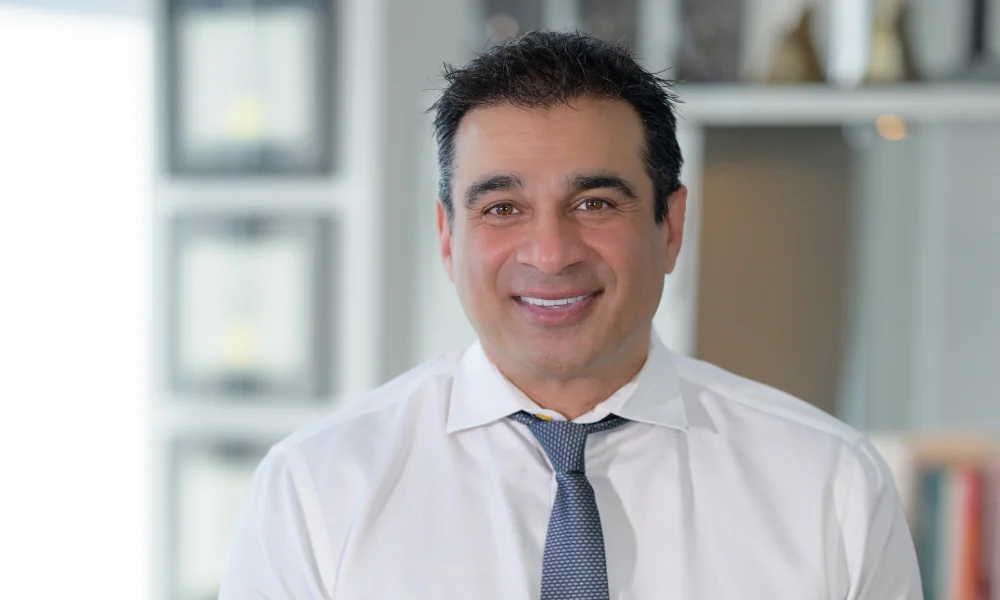
The transition into retirement is a profound life event, often marked by a complex interplay of financial planning and deep personal reflection. For Shafik Hirani, a Senior Investment Advisor at Shafik Hirani’s Private Wealth Management Practice of Aligned Capital Partners in Calgary, guiding clients through this significant shift involves addressing not only the practicalities of preserving wealth but also the more profound existential questions that arise when one’s professional identity dissolves. Hirani’s holistic approach acknowledges that retirement is a universal aspiration, yet it represents a journey into uncharted territory, fraught with potential stress and the need for careful preparation.
Hirani’s professional life is a vivid microcosm of the human experience. In a typical week, he may find himself attending the funeral of a long-standing client, celebrating the birth of a new child for another, witnessing a client’s child embark on their university education, and meticulously finalizing retirement plans for several individuals. This constant immersion in the diverse milestones of his clients’ lives provides him with a unique vantage point, enabling him to offer a nuanced perspective on the challenges and opportunities that retirement presents. He observes that many clients build their identities around their careers, and the cessation of work can trigger an identity crisis, a transition that skilled financial advisors can help to navigate proactively.
"When we’re going into retirement, it’s like driving into a snowstorm," Hirani explains. "If you can’t see with clarity, you get stressed. Your body will even release cortisol. So, to prepare for that, what we do is we go through an idea of what life is like. A lot of it boils down to the person’s introversion, extroversion, perspective. And the way to overcome that is to sort of paint a picture of what the other side of that snowstorm looks like. You end up motivationally interviewing them. Asking questions, like what does life look like? What is your time spent? Where’s your money going to be spent? Because you can’t travel every day, you can’t golf every day. Some people misinterpret retirement as a vacation."
Reconciling Retirement Realities with Financial Prudence
At the core of Hirani’s advisory philosophy lies a deep understanding of client cash flow and tax planning. He meticulously outlines the financial resources required for clients to live within their chosen retirement budgets, ensuring they have ample room to absorb unexpected financial shocks or the risks associated with an extended lifespan. This involves developing a strategic plan for drawing down various retirement income streams, aligning these withdrawals with clients’ aspirations for both their earlier and later retirement years.
However, the path to a comfortable retirement is not always linear. Hirani acknowledges that there are instances where difficult conversations about extending working years or returning to work become necessary. In such situations, his priority is to present clients with a comprehensive array of options focused on budgeting and expense management, aiming to mitigate the need for continued employment. Yet, he also recognizes that for some, a partial return to work can offer significant financial and psychological benefits, providing a sense of purpose and structure.
The trend of Canadians working beyond traditional retirement ages is a growing phenomenon. Statistics Canada data reveals a notable increase in this demographic, with 10% of Canadians in 2023 reporting they were working after retirement, up from 7% in 2019. While financial necessity drives a portion of this trend, a significant number of individuals are motivated by a desire for continued engagement, purpose, and fulfillment. This societal shift underscores the importance of adaptable retirement planning that can accommodate evolving life circumstances.
Hirani emphasizes that any discussion about continued employment must be integrated into a comprehensive retirement plan. This plan needs to account for long-term needs, projecting financial requirements at age 90 just as diligently as it addresses desires at age 60. While these conversations can be challenging, maintaining a clear focus on financial realities is paramount in fostering the clarity and confidence necessary for a successful transition.
The Advisor’s Pivotal Role in Retirement Preparation
Beyond the quantifiable aspects of financial planning, Hirani leverages his extensive client-facing experience to educate individuals on the qualitative elements of retirement readiness. He likens this educational process to teaching someone to swim, beginning with theoretical understanding and relatable anecdotes to help clients reconcile their idealized vision of retirement with the practical realities they may encounter. To bridge this gap, he advocates for trial periods, extended leaves, and, where feasible, full-year sabbaticals. These experiential opportunities allow clients to gain a tangible sense of what life in retirement might entail before making a permanent transition.
Simultaneously, Hirani employs a sophisticated suite of financial tools to illustrate the cost of clients’ goals and dreams. He meticulously maps out spending capacity and potential risks associated with deviating from their financial plans. This detailed, year-by-year projection of cash flow and budget throughout retirement serves as a critical foundation for a smooth and successful transition, empowering clients with a clear vision of their financial landscape.
"In order to get to a certain point," Hirani states, "you need to practice it in theory and in action." This philosophy underscores his commitment to preparing clients not just financially, but also psychologically and experientially, for the profound life change that retirement represents.
Broader Implications for Retirement Planning
The insights provided by Shafik Hirani highlight a critical evolution in how financial advisors approach retirement planning. The traditional focus on accumulating assets is now being complemented by a deeper understanding of the behavioral and psychological aspects of this significant life transition. As lifespans increase and career trajectories become more fluid, advisors must adopt a more dynamic and personalized approach.
The increasing trend of Canadians working past retirement age suggests that retirement is no longer a singular event but rather a continuum. This necessitates a flexible financial framework that can accommodate evolving income streams and lifestyle choices. Furthermore, the psychological preparedness for retirement, as emphasized by Hirani, is as crucial as financial solvency. An identity crisis or a lack of purpose can significantly detract from the quality of life in retirement, even for those who are financially secure.
The data from Statistics Canada, indicating a rise in individuals working post-retirement, points to a societal redefinition of what retirement means. It suggests a growing recognition that engagement, purpose, and continued contribution can be integral components of a fulfilling later life. Financial advisors who can facilitate this holistic view, integrating financial strategies with personal aspirations and psychological well-being, will be instrumental in helping clients navigate this new landscape.
The implications of Hirani’s approach extend beyond individual client success. It signals a broader shift within the financial advisory industry towards a more client-centric and life-stage-focused model. By addressing the existential questions and providing practical tools for experiential preparation, advisors can foster greater confidence and reduce anxiety among their clients, ultimately contributing to more successful and fulfilling retirement experiences for a growing segment of the population. The ability to "paint a picture of what the other side of that snowstorm looks like" is becoming an indispensable skill for advisors aiming to guide clients through one of life’s most significant transformations.
Shafik Hirani is a Senior Investment Advisor with Aligned Capital Partners Inc. (“ACPI”). The opinions expressed are those of the author and not necessarily those of ACPI. This material is provided for general information and the opinions expressed and information provided herein are subject to change without notice. Every effort has been made to compile this material from reliable sources however no warranty can be made as to its accuracy or completeness. Before acting on the information presented, please seek professional financial advice based on your personal circumstances.
