

Bitcoin, the world’s leading cryptocurrency, demonstrated a remarkable recovery on Monday, surging into positive territory after an unexpected and enthusiastic endorsement from President Donald Trump. The digital asset, often hailed as "digital gold," had earlier plunged towards the critical $60,000 mark following news that Strategy Inc., a prominent corporate holder and long-time evangelist of Bitcoin, had executed its second significant sale of the token this year. This confluence of events underscored the volatile and increasingly complex landscape of the cryptocurrency market, where political rhetoric and institutional actions exert considerable influence. By day’s end, Bitcoin was trading at $63,853.85, marking a 1.8% gain, a stark reversal from its earlier more than 2% decline.
The Presidential Pivot: Trump’s Embrace of Cryptocurrency
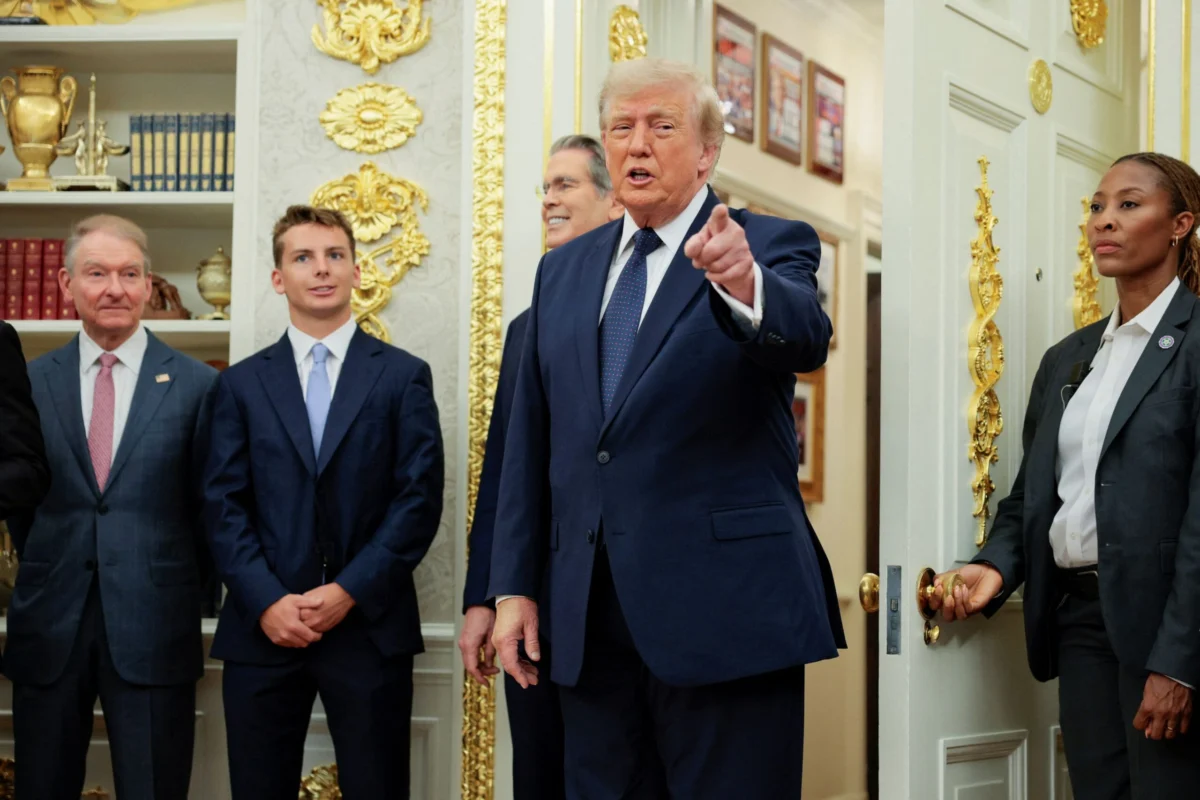
The turning point for Bitcoin’s Monday session came during a news conference where President Donald Trump declared, "Well… I’ve become a big crypto guy." His comments were made in response to a direct inquiry about the potential inclusion of Bitcoin within the recently launched "Trump Accounts." These tax-advantaged 503A accounts, which went live over the preceding holiday weekend, are designed to enable children to accumulate long-term savings throughout their lifetimes. Positioned as a vehicle to foster generational wealth, the accounts are structured to channel investments into a diverse range of broad-market exchange-traded funds (ETFs), predominantly focusing on U.S. equities. While not explicitly confirming Bitcoin’s immediate inclusion, the President’s public affirmation of cryptocurrency represented a significant shift in his public stance and provided a much-needed morale boost for crypto investors.
Historically, Donald Trump had expressed skepticism, and at times, outright disdain for cryptocurrencies, famously stating in 2019 that he was "not a fan" of Bitcoin and other digital assets, preferring the U.S. dollar as the world’s reserve currency. His more recent comments signal a pragmatic evolution, potentially recognizing the growing economic and political influence of the crypto sector. This pivot is particularly noteworthy given the impending presidential election cycle, as candidates increasingly vie for the support of various voter blocs, including the burgeoning cryptocurrency community. The establishment of Trump Accounts itself has been interpreted by some analysts as a strategic move to engage with a younger demographic and promote long-term financial planning, an initiative that could be further amplified by an embrace of digital assets.
Strategy’s Unprecedented Sales: A Challenge to the "Never Sell" Mantra
The positive momentum generated by President Trump’s remarks helped to counteract the lingering apprehension caused by Strategy Inc.’s recent Bitcoin sales. Strategy, formerly known as MicroStrategy, under the leadership of co-founder and executive chairman Michael Saylor, had become synonymous with a steadfast, "Bitcoin-only" corporate treasury strategy. Saylor, a vocal and ardent proponent of Bitcoin, had previously articulated a corporate philosophy centered on the continuous accumulation of the cryptocurrency, often asserting that the company would "never sell" its holdings. This unwavering commitment positioned Strategy as a unique institutional investor, transforming its stock (MSTR) into a de facto proxy for Bitcoin exposure on traditional markets.
However, a significant policy shift announced in May marked a departure from this long-held stance. Strategy disclosed on Monday, via a regulatory filing, that it had executed multiple sales of Bitcoin totaling a combined $216 million. This follows an earlier sale of over $2 million in Bitcoin on June 1st, which was the company’s first such transaction since 2022. The recent sales occurred in two distinct tranches: approximately $80.8 million worth of Bitcoin was sold at an average price of $59,256 per token between June 29 and 30, followed by an additional $135.5 million in a separate series of transactions from July 1 to 5.
This strategic pivot has sent ripples through the market, challenging the "digital gold" narrative that Saylor himself had largely championed. Barclays analyst Ajay Rajadhyaksha highlighted the impact of this reversal, stating in a client note, "Strategy’s entire investment thesis was built on a public promise never to sell. When they sold — even a minuscule amount — and then announced a new policy framework allowing further sales for ‘capital allocation purposes,’ it was a significant hit to sentiment." Indeed, for many investors who viewed Strategy as the ultimate HODLer (a crypto term for holding assets for the long term), these sales represent a psychological blow, raising questions about the conviction of even the most dedicated institutional players.
Despite these sales, Strategy’s Bitcoin treasury remains substantial. As of the time of writing, the company’s holdings amounted to 843,775 Bitcoin, valued at approximately $52.1 billion. However, the company’s average cost-per-token now stands at $75,476, indicating that recent sales were executed at a loss relative to its overall average acquisition cost. This detail further underscores the strategic complexities and potential financial pressures influencing Strategy’s decisions.
A Volatile Market: Bitcoin’s Recent Trajectory
The period surrounding Strategy’s sales and Trump’s comments has been characterized by heightened volatility for Bitcoin. Since the initial announcement of Strategy’s policy shift and its first sale on June 1st, Bitcoin has largely traded within a range of $60,000 to $70,000. However, on June 24th, the asset briefly dipped to approximately $59,000, marking its lowest level since October 10, 2024. This downward pressure was exacerbated by a confluence of factors, including broader macroeconomic uncertainties, fluctuating interest rate expectations, and a general cooling of risk appetite among investors. The news of Strategy’s continued sales, an entity that had been a net buyer for years, undoubtedly contributed to this negative sentiment, prompting concerns about sustained institutional selling pressure.
The immediate rebound following Trump’s comments illustrates the powerful influence of high-profile endorsements in a market still highly sensitive to news and sentiment. While institutional adoption through Bitcoin ETFs has provided a more regulated and accessible pathway for investment, the market remains susceptible to external catalysts, whether they be regulatory developments, technological breakthroughs, or the pronouncements of influential figures.
Navigating Shareholder Interests: Strategy’s Intricate Balancing Act
For Strategy, the decision to sell Bitcoin is not merely a reflection of its outlook on the cryptocurrency but also a complex maneuver to balance the interests of its diverse shareholder base. Shares of Strategy (MSTR) rose 1% on Monday, while its preferred stock, STRC, gained almost 3%. Despite this bump, STRC continues to trade below its $100 par level, a situation that has likely put pressure on the company’s management.
Cantor analyst Ramsey El-Assal provided insight into this dynamic, suggesting that Strategy’s Bitcoin sales are primarily an effort to shore up its preferred stock, which he described as the company’s "center of gravity," rather than a commentary on the cryptocurrency itself. "We fully expect the company to do whatever it takes to lift STRC to par, and we believe the Street should expect frequent, periodic actions," El-Assal noted in a client communication.
El-Assal elaborated on the intricate balancing act Strategy faces, serving three distinct constituencies: preferred stockholders, common stockholders, and Bitcoin investors. He argued that protecting one of these groups might inadvertently harm another. The analyst concluded that "The company rightly understands something that bears miss: where STRC goes, MSTR common shares follow." This perspective suggests that Strategy’s management is prioritizing the stability and valuation of its preferred stock, understanding that its health is intrinsically linked to the performance and perception of the common shares, and by extension, the company’s overall market standing. This strategy could involve future sales of Bitcoin, provided they align with the goal of optimizing capital allocation and enhancing shareholder value across the board.
Broader Implications and the Future Landscape
The events of Monday, July 7, 2026, collectively paint a picture of a cryptocurrency market at a pivotal juncture. President Trump’s explicit endorsement, while not a direct policy change, signals a growing mainstream acceptance and potential political alignment that could pave the way for more favorable regulatory environments. This could accelerate the integration of digital assets into traditional financial systems, particularly if similar sentiments are echoed by other political leaders or translated into concrete legislative action. The potential inclusion of Bitcoin or other cryptocurrencies in future iterations of initiatives like the Trump Accounts could unlock vast new pools of capital, further legitimizing the asset class in the eyes of the general public.
Conversely, Strategy’s decision to liquidate a portion of its Bitcoin holdings, a move previously considered anathema to its corporate philosophy, underscores the evolving maturity and inherent volatility of even the most established digital assets. It highlights that even the staunchest proponents may need to adapt their strategies based on market conditions, corporate financial health, and the complex demands of multiple stakeholder groups. This shift could prompt other institutional investors to re-evaluate their own "hold-forever" strategies, potentially leading to increased liquidity and more dynamic trading patterns in the Bitcoin market.
The intertwining of political rhetoric, corporate strategy, and market dynamics suggests that the cryptocurrency space is moving beyond its early, speculative phase into a more integrated, albeit still volatile, segment of the global financial system. As the market continues to mature, it will undoubtedly face ongoing scrutiny from regulators, traditional financial institutions, and the broader public. The convergence of these powerful forces will shape Bitcoin’s trajectory and define its role in the financial future.
Chronology of Key Events:
- May 2026: Strategy (formerly MicroStrategy) announces a strategic policy shift, allowing for the sale of Bitcoin for "capital allocation purposes," breaking from its long-held "never sell" mantra.
- June 1, 2026: Strategy executes its first Bitcoin sale since 2022, liquidating over $2 million worth of the cryptocurrency.
- June 24, 2026: Bitcoin briefly dips to approximately $59,000, reaching its lowest level since October 2024, amid general market apprehension.
- June 29-30, 2026: Strategy sells approximately $80.8 million worth of Bitcoin at an average price of $59,256 per token.
- July 1-5, 2026: Strategy sells an additional $135.5 million worth of Bitcoin in a separate series of transactions.
- Holiday Weekend (Early July 2026): The tax-advantaged 503A "Trump Accounts" are officially launched.
- July 7, 2026 (Monday):
- Bitcoin initially dives towards $60,000 following Strategy’s disclosure of recent sales.
- President Donald Trump states, "I’ve become a big crypto guy," during a news conference, responding to questions about Bitcoin’s potential inclusion in Trump Accounts.
- Bitcoin stages a recovery, turning positive and trading at $63,853.85, up 1.8% on the day.
- Strategy shares (MSTR) rise 1%, while its preferred stock (STRC) gains almost 3%.
These developments collectively underscore the dynamic nature of the cryptocurrency market, where institutional strategies, political endorsements, and macroeconomic factors continue to exert significant influence on asset valuations and investor sentiment. The interplay between these forces will remain a critical area of observation for market participants and analysts alike.
