

The landscape of the global electric vehicle market in mid-2026 has become a study in industrial endurance, and perhaps no company exemplifies this more than Lucid Group, Inc. Having entered the year on the heels of prestigious awards and the launch of its luxury SUV, the Gravity, the California-based manufacturer now finds itself at a critical juncture. The company is currently executing a high-stakes pivot, attempting to bridge the gap between its status as a boutique luxury manufacturer and its ambition to become a high-volume global player. This transition is being spearheaded by a new leadership regime, a significant contraction of its domestic workforce, and a deepening reliance on the sovereign wealth of Saudi Arabia.
The transition began in earnest on June 1, 2026, when Silvio Napoli officially assumed the role of Chief Executive Officer. Unlike his predecessors, who often leaned into the Silicon Valley ethos of disruptive innovation and rapid capacity expansion, Napoli arrives with a pedigree rooted in traditional industrial discipline. His extensive tenure at the Schindler Group, a global leader in elevators and escalators, provided him with decades of experience in managing complex, international supply chains and manufacturing footprints. Napoli’s appointment signaled a shift in Lucid’s corporate philosophy: the era of "growth at any cost" has been replaced by a mandate for operational efficiency and fiscal survival.
A Radical Restructuring and the "Napoli Reset"
Upon taking the helm, Napoli did not hesitate to implement a "serious reset" of the company’s internal structure. In one of his first major actions, Lucid announced the layoff of approximately 1,500 employees, representing roughly 18 percent of its total workforce. This move followed a 12 percent reduction earlier in the year, meaning that nearly one-third of the company’s staff has been let go within the first half of 2026. The restructuring also saw the elimination of the second production shift at the company’s Advanced Manufacturing Plant (AMP-1) in Casa Grande, Arizona, a move necessitated by production figures that have consistently outpaced delivery rates.
The leadership structure underwent an equally drastic consolidation. Marc Winterhoff, who had served as interim CEO, did not return to his previous executive role, and the position of Chief Operating Officer was abolished entirely. By centralizing operational authority directly under the CEO, Napoli has sought to eliminate bureaucratic layers and accelerate decision-making processes. Internal sources describe the current atmosphere as one of intense focus, with the company recalibrating every aspect of its business to ensure it has the financial runway to reach the launch of its next-generation vehicle platform.
Financial Performance and the Delivery Gap
The urgency of Napoli’s restructuring is underscored by Lucid’s first-quarter 2026 financial results. While the company reported a 20 percent year-over-year increase in revenue, reaching $282.5 million, it simultaneously posted a staggering net loss of approximately $1 billion. The core of the financial strain lies in the disconnect between production and demand. During the first quarter, Lucid manufactured 5,500 vehicles but delivered only 3,093. This accumulation of inventory represents significant tied-up capital and suggests that the market for six-figure electric sedans and SUVs may be reaching a point of saturation or facing increased competition from established luxury marques.
Further complicating the financial outlook was a series of operational setbacks. In February 2026, a supplier defect forced a nearly month-long halt in the delivery of the Gravity SUV. This was followed in April by a recall of 4,500 Gravity units, which damaged consumer confidence and added to the company’s warranty expenses. Perhaps most significantly for the investment community, Lucid suspended its full-year production guidance. The original projection of 25,000 to 27,000 vehicles for 2026 is now under formal review, leading analysts at firms like Cantor Fitzgerald and Canaccord to slash their price targets. As of mid-2026, Lucid’s stock (LCID) sits nearly 99 percent below its 2021 peak, reflecting a market that is skeptical of the company’s path to profitability.
The Saudi Pillar: AMP-2 and Vision 2030
While Lucid faces headwinds in the United States, its operations in Saudi Arabia have become the company’s strategic bedrock. The Public Investment Fund (PIF) of Saudi Arabia, which holds a majority stake in Lucid, has invested more than $9 billion in the company since 2018. This partnership was further solidified in late June 2026 with a fresh $750 million capital injection intended to support Napoli’s restructuring efforts.
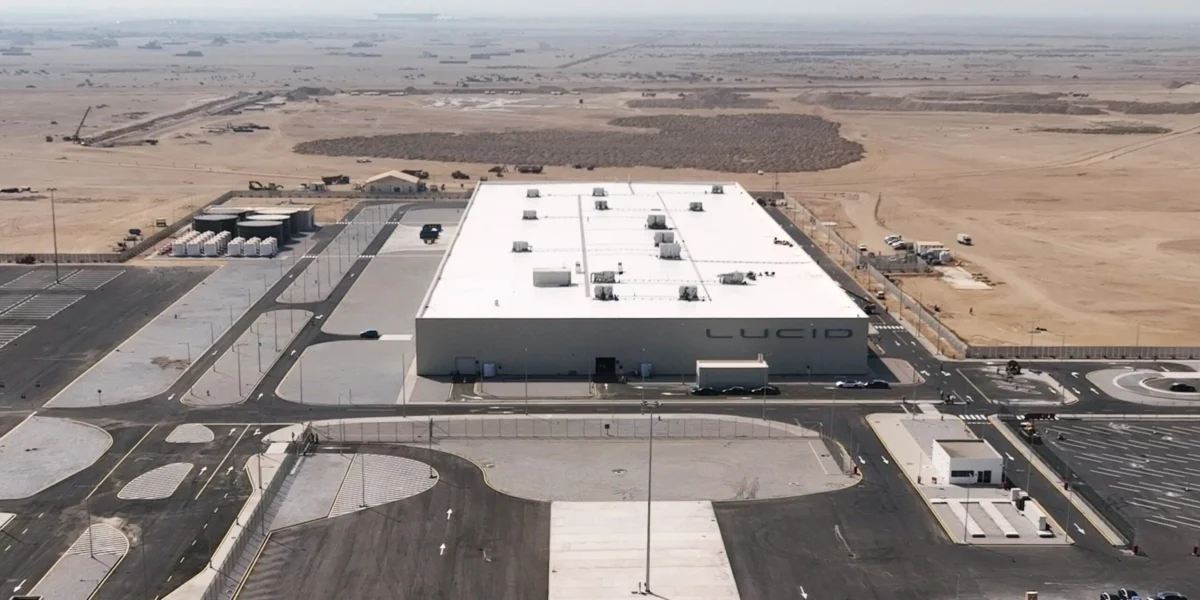
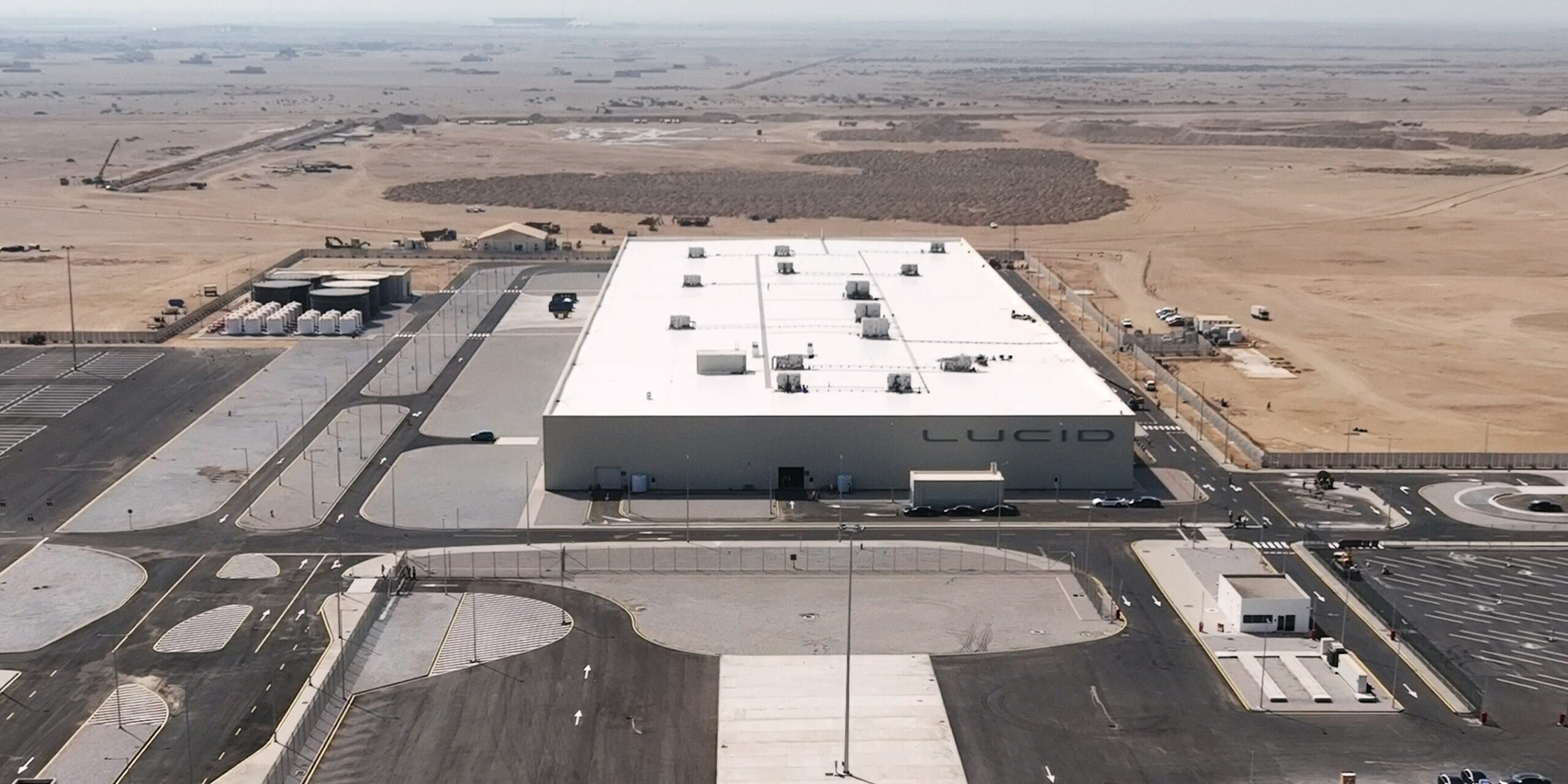
Lucid is no longer merely a startup; it is a vital component of Saudi Arabia’s "Vision 2030," a national initiative to diversify the Kingdom’s economy away from petroleum and toward advanced technology and manufacturing. The centerpiece of this effort is the Advanced Manufacturing Plant 2 (AMP-2), located in the King Abdullah Economic City (KAEC). As the first automobile manufacturing facility in Saudi history, AMP-2 represents a major milestone for the region. The plant is currently operational and is projected to reach an annual capacity of 155,000 vehicles by 2029.
The Saudi government has backed this industrial project with a commitment to purchase up to 100,000 Lucid vehicles over the next decade. To date, 50,000 of these vehicles are already under contract, providing Lucid with a guaranteed baseline of demand that few other EV startups possess. Furthermore, the strategic focus of the company is shifting toward the Middle East. AMP-2 is slated to be the primary launch site for the "Lucid Cosmos," a midsize EV priced below $50,000. In a reversal of the company’s original strategy, manufacturing of the Cosmos is expected to begin in Saudi Arabia six to twelve months before it commences in Arizona.
Geopolitical Risks and Supply Chain Stability
The decision to center manufacturing in Saudi Arabia is not without significant risk. The Middle East remains a region of heightened geopolitical volatility. Escalating tensions involving regional powers and the United States have periodically disrupted commercial shipping through the Strait of Hormuz and the Red Sea. Because AMP-2 currently operates primarily by assembling semi-knockdown (SKD) kits shipped from the United States, any disruption in global logistics directly threatens the plant’s output.
In recent regulatory filings, Lucid acknowledged that regional conflict could materially affect its operations. While the company is working toward full-scale manufacturing in Saudi Arabia—which would involve sourcing more components locally—the current reliance on international shipping lanes leaves it vulnerable to external shocks. Ironically, these same tensions often drive up global oil prices, which historically increases the consumer appeal of electric vehicles. However, for Lucid to capitalize on this, it must first ensure that its supply chain can withstand the very instability that drives the market.

The Cosmos: A Make-or-Break Prospect
The "Lucid Cosmos" is widely regarded as the company’s most important project to date. While the Lucid Air and Gravity have established the brand’s credentials in the luxury and performance sectors, they lack the volume necessary to achieve economies of scale. The Cosmos, aimed at the $40,000 to $50,000 price bracket, is intended to compete directly with the Tesla Model 3 and Model Y, as well as upcoming offerings from European and Chinese manufacturers.
The technology underpinning the Cosmos remains a point of strength. Lucid continues to lead the industry in powertrain efficiency, utilizing 900-volt architecture and compact, high-output motors that allow for greater range with smaller, less expensive batteries. If Lucid can successfully translate this technological advantage into a mass-market vehicle while maintaining the industrial discipline championed by Napoli, the Cosmos could provide the volume required to reach break-even. However, with production not expected to reach meaningful levels until late 2026 or early 2027, the company must manage its remaining liquidity—pro forma at approximately $4.7 billion—with extreme care.
Broader Implications and the Path Forward
Despite the current turbulence, Lucid retains several competitive advantages. The Lucid Gravity was recently named the 2026 World Luxury Car of the Year, affirming that the company’s engineering remains world-class. Its partnership with Uber, which involves the deployment of 35,000 vehicles, provides a significant entry into the ride-sharing and fleet markets. Furthermore, the company’s recent permit for robotaxi operations in California suggests that it is continuing to invest in autonomous driving software through its DreamDrive 2 Pro system.
However, the path to 2027 is fraught with difficulty. The "Napoli Reset" is a recognition that the company cannot continue to operate as a high-burn technology startup in an environment of high interest rates and cooling EV demand. The next eighteen months will determine if Lucid can successfully transition from an "unfinished story" into a sustainable industrial powerhouse.
The company’s survival depends on a delicate three-way balancing act: maintaining the confidence of the Saudi Public Investment Fund, successfully launching the Cosmos at a competitive price point, and navigating the treacherous geopolitical waters of the Middle East. If Silvio Napoli can instill the necessary industrial rigor, Lucid may yet emerge as the primary challenger to the established order of the automotive industry. If not, it risks becoming a cautionary tale of how even the most brilliant technology can be undone by the harsh realities of global manufacturing and finance. For now, the automotive world watches as Lucid attempts to navigate its way out of the "valley of death" and into a future of scalable, profitable production.
