


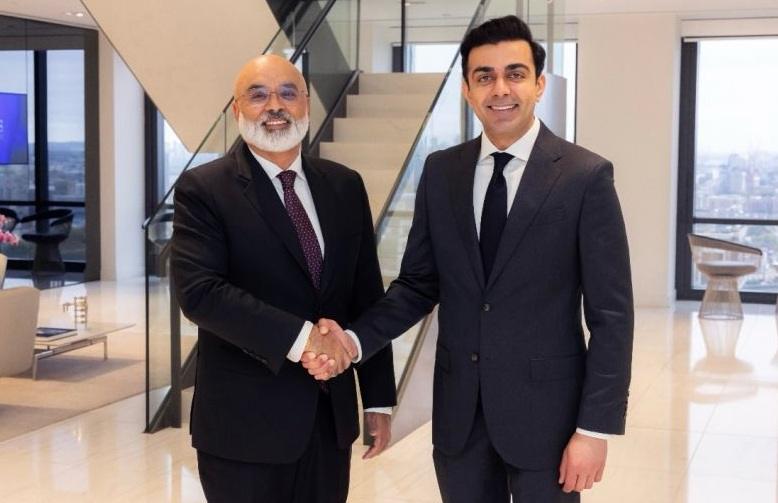
In a move that underscores the escalating energy requirements of the artificial intelligence revolution, Brookfield Asset Management and Bloom Energy have announced a massive expansion of their strategic partnership. Brookfield has committed $25 billion to finance the global deployment of Bloom Energy’s proprietary fuel cell technology, specifically designed to meet the intensive power demands of AI data centers and related infrastructure. This commitment represents a fivefold increase from the previous $5 billion agreement established in October 2025, signaling a rapid acceleration in the shift toward decentralized, high-reliability power solutions for the technology sector.
The capital for this multi-billion-dollar initiative will be drawn from Brookfield’s AI Infrastructure Fund. Launched in November 2025 with an ambitious target of $100 billion, the fund was created to address the physical bottlenecks of the AI boom: namely, the scarcity of specialized real estate, high-performance computing hardware, and, most critically, stable energy sources. With the global power grid increasingly strained by the dual pressures of aging infrastructure and skyrocketing demand from hyperscale data centers, the collaboration between Brookfield and Bloom Energy seeks to bypass traditional grid limitations through on-site power generation.
The Evolution of a Strategic Alliance
The partnership between the Canadian investment giant and the California-based fuel cell pioneer has evolved rapidly over a short period. In late 2025, the companies initially collaborated on a $5 billion pilot program aimed at proving the viability of solid oxide fuel cells (SOFC) for large-scale data center operations. The success of those initial deployments, coupled with a surge in demand from major technology firms—often referred to as hyperscalers—necessitated a significantly larger financial framework.
The timeline of this partnership highlights the urgency of the energy crisis facing the AI industry:
- October 2025: Brookfield and Bloom Energy sign an initial $5 billion deal to integrate fuel cells into North American data centers.
- November 2025: Brookfield officially launches its $100 billion AI Infrastructure Fund, identifying energy as the primary constraint for future AI growth.
- July 2026: The partnership is expanded to $25 billion, with a mandate to deploy Bloom’s technology across Brookfield’s global portfolio of infrastructure assets.
This expansion reflects a broader trend in the private equity and infrastructure sectors, where the focus has shifted from software and chip design to the "hard" assets required to keep those chips running. As AI models grow in complexity, the electricity required to train and run them has surpassed the capacity of many local utility grids, leading developers to seek "behind-the-meter" solutions that can be deployed quickly without waiting for traditional utility upgrades.
Technical Foundation: Why Fuel Cells?
Bloom Energy, founded in 2001 and headquartered in San Jose, California, has spent over two decades refining its solid oxide fuel cell technology. Unlike traditional combustion-based power plants, Bloom’s Energy Servers produce electricity through an electrochemical process. By combining fuel (such as natural gas, biogas, or hydrogen) with oxygen, the cells generate power with significantly lower carbon emissions than conventional coal or gas turbines.
For AI infrastructure developers, the primary appeal of Bloom’s technology lies in its reliability and speed of deployment. Traditional grid connections for new data centers can often take five to seven years to secure in major tech hubs like Northern Virginia or Dublin. In contrast, Bloom’s modular fuel cells can be installed on-site in a fraction of that time. Furthermore, the technology offers "five-nines" availability (99.999% uptime), which is essential for AI clusters that cannot afford even a momentary dip in power without risking data loss or hardware damage.
Bloom Energy’s solid oxide platform is also future-proofed for the transition to a hydrogen economy. While many current units run on natural gas, they are designed to be hydrogen-ready. This allows data center operators to meet immediate power needs using existing gas infrastructure while maintaining a clear pathway toward zero-carbon operations as green hydrogen becomes more commercially available.
Addressing the "Power Gap" in the AI Era
The rapid expansion of the Brookfield-Bloom partnership comes at a time when the technology industry is grappling with a widening "power gap." Estimates from the International Energy Agency (IEA) and various industry analysts suggest that data center electricity consumption could double by 2030, driven largely by the energy-intensive nature of Graphics Processing Units (GPUs) used in AI training.
Aman Joshi, Chief Commercial Officer of Bloom Energy, emphasized the unique position of the company in this landscape. "Bloom is uniquely positioned to address the urgent need for clean, reliable power to support the rapid growth of AI," Joshi stated. "We are pleased with our partnership with Brookfield and look forward to deepening our collaboration on large projects."
The "large projects" Joshi refers to are increasingly becoming the norm. Where data centers once required 20 to 50 megawatts of power, the new generation of AI "megacampuses" often requires 500 megawatts to over a gigawatt. Providing this level of power through traditional utility companies has become nearly impossible in many jurisdictions due to regulatory hurdles and the physical limits of transmission lines. By utilizing Brookfield’s capital to deploy Bloom’s onsite generation at scale, developers can create self-sustaining energy ecosystems that operate independently of the local grid.

Brookfield’s Strategic Vision for AI Infrastructure
For Brookfield Asset Management, the $25 billion commitment is a calculated move to dominate the physical layer of the AI economy. With over $900 billion in assets under management, Brookfield has the scale to finance the massive capital expenditures required for the energy transition.
Sikander Rashid, Head of AI Infrastructure at Brookfield Asset Management, noted that the deal is a cornerstone of the firm’s broader strategy. "Scaling our commitment with Bloom Energy reflects both the strength of this partnership and the conviction behind our broader AI infrastructure strategy, including integrated compute," Rashid said.
The concept of "integrated compute" is central to Brookfield’s approach. Rather than simply acting as a landlord for data centers, Brookfield is moving toward a model where they provide a turnkey solution: the land, the building, the cooling, the chips, and the power. By controlling the power source through Bloom Energy’s technology, Brookfield can offer hyperscalers guaranteed uptime and predictable energy costs, which are critical variables in the high-margin world of AI services.
Market Context and Industry Reactions
The market has reacted positively to the news, viewing it as a validation of Bloom Energy’s business model. Bloom has already proven its capability through partnerships with industry giants. The company has deployed hundreds of megawatts of fuel cell technology to data centers operated by Equinix and Oracle, and has a major supply agreement with American Electric Power (AEP) to bolster grid stability.
Industry analysts suggest that the Brookfield deal will provide Bloom with the long-term financial visibility needed to scale its manufacturing operations. To meet the $25 billion demand, Bloom will likely need to significantly expand its production facilities in California and Delaware, potentially creating thousands of high-tech manufacturing jobs.
Furthermore, the deal sets a precedent for how the energy transition will be funded in the private sector. By bypassing public utilities and creating private power networks, Brookfield and Bloom are demonstrating a new model for industrial decarbonization. While the fuel cells currently provide a "lower-carbon" alternative to the grid, the ultimate goal is a shift to 100% renewable fuel sources, a transition that Brookfield’s capital is intended to accelerate.
Implications for the Global Energy Landscape
The implications of this $25 billion partnership extend far beyond the balance sheets of the two companies involved. It represents a significant shift in how global energy infrastructure is planned and executed. As AI continues to permeate every sector of the global economy, the demand for "always-on" power will only grow.
However, the reliance on fuel cells also raises questions about the long-term sustainability of the AI boom. While Bloom’s technology is cleaner than traditional fossil fuel combustion, it still relies on gas infrastructure in the short term. Environmental advocates will be watching closely to see how quickly the partnership transitions to green hydrogen.
Despite these challenges, the Brookfield-Bloom agreement provides a roadmap for solving one of the most pressing problems of the modern age: how to power the digital future without breaking the physical world. By combining the financial might of a global asset manager with the technical innovation of a clean-energy pioneer, the partnership aims to ensure that the progress of artificial intelligence is not stalled by a lack of electricity.
As the $25 billion is deployed across the globe over the coming years, the results will likely define the standard for AI infrastructure. The move confirms that in the race for AI supremacy, the most valuable currency may not be data or algorithms, but the reliable, scalable, and sustainable power required to run them.
