

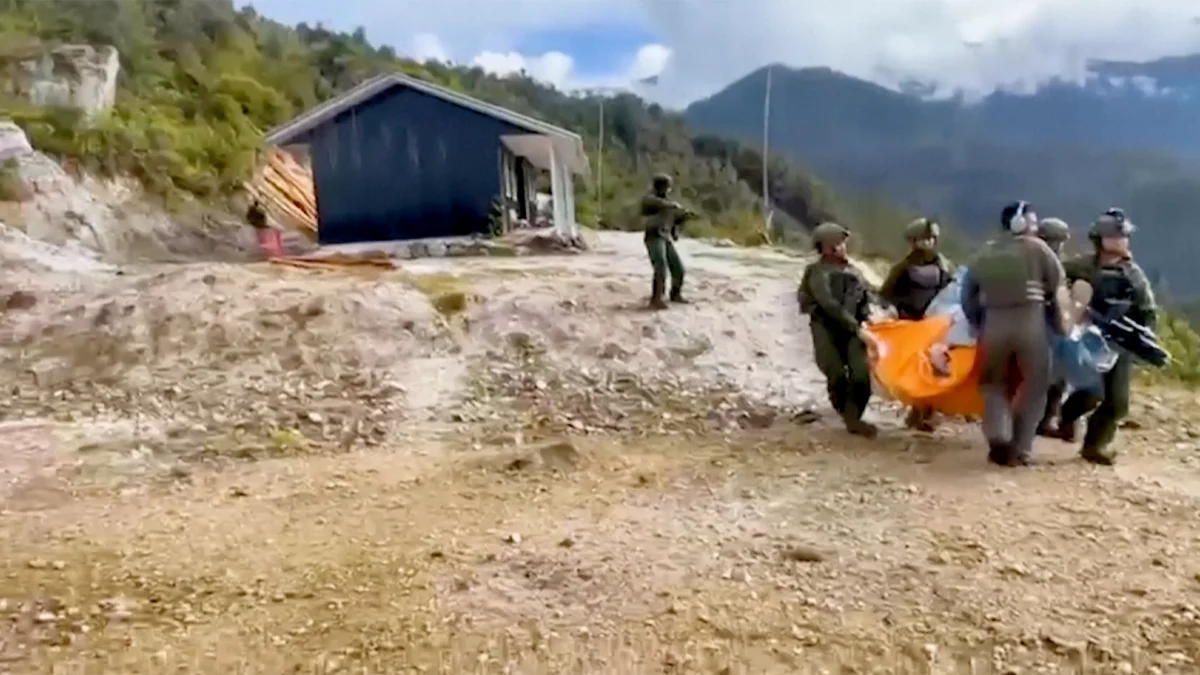
Indonesian military forces have successfully recovered the body of American pilot Nicholas Goselin from the remote and volatile Papua region, approximately one week after his aircraft was reportedly brought down by elements of the West Papua National Liberation Army (TPNPB-OPM), the armed wing of the Free Papua Movement (OPM). The complex recovery operation, which concluded on July 5, 2026, involved a highly specialized 10-member team and the deployment of three helicopters, underscoring the extreme logistical and security challenges inherent in operating within Papua’s rugged and contested territories. Goselin’s death marks a somber escalation in the long-running conflict between Indonesian authorities and Papuan separatist groups, drawing international attention to the persistent instability in Indonesia’s easternmost provinces and the increasing risks faced by civilian operators in the region.
The recovery mission was initiated shortly after reports emerged of Goselin’s aircraft, believed to be a light cargo or charter plane, crashing in a remote highland area. Initial search efforts were hampered by the dense jungle terrain, treacherous weather conditions, and the palpable threat of further engagements with the separatist fighters. The Indonesian Army (TNI AD) deployed elite special forces units, known for their expertise in jungle warfare and search and rescue operations, to secure the crash site and retrieve the pilot’s remains. The use of three helicopters was critical for reconnaissance, troop insertion, and ultimately, the extraction of the recovered body, navigating through an operational environment where the risk of ambush from ground-based insurgents is ever-present. The successful conclusion of this perilous mission brings a degree of closure to Goselin’s family and highlights the TNI’s operational capabilities in extremely challenging circumstances.
The Perilous Recovery Operation
The operation to retrieve Nicholas Goselin’s body was a testament to the Indonesian military’s resolve and the inherent dangers of the Papuan landscape. Following the downing of Goselin’s aircraft, believed to have occurred in the rugged highlands of Puncak Jaya or Intan Jaya regencies, a multi-agency task force was quickly assembled. Intelligence gathering suggested the crash site was deep within territory frequently patrolled or controlled by the TPNPB-OPM, necessitating an approach that balanced speed with extreme caution. The 10-member recovery team, comprising highly trained special forces personnel, underwent rigorous preparation before deployment. Their mission was not merely to locate the body but to secure the area, process the scene, and extract the remains, all while operating under the constant threat of hostile engagement.
The deployment of three helicopters played a crucial role. One helicopter was primarily used for aerial reconnaissance and providing overwatch, scanning the dense canopy for signs of movement or potential threats. A second helicopter facilitated the insertion of the ground team into a secure landing zone as close as safely possible to the estimated crash site. The third was held in reserve for emergency extraction or to transport the recovered remains. The logistical complexity was compounded by the notorious Papuan weather, which can shift rapidly from clear skies to torrential rain and thick fog, severely limiting visibility and flight operations. Furthermore, the high altitude and unpredictable air currents in the mountainous regions present significant challenges for helicopter operations. Upon reaching the crash site, the team meticulously secured the perimeter before commencing the grim task of recovery, working swiftly to minimize exposure to potential attacks. The successful extraction of Goselin’s body without further casualties on the Indonesian side was a significant operational achievement.
Chronology of the Incident
The tragic sequence of events leading to Nicholas Goselin’s death began in late June 2026. While the precise details of his flight and its purpose remain under investigation, it is understood that Goselin, an experienced pilot, was operating a small, single-engine aircraft, a common mode of transport for cargo, personnel, and humanitarian aid across Papua’s vast and roadless interior. Such flights are vital lifelines for remote communities, connecting them to provincial capitals and essential services.
Reports indicate that on or around June 28, 2026, Goselin’s aircraft was en route between two remote airstrips when it was targeted by elements identified by Indonesian authorities as the TPNPB-OPM. While the exact method of attack is still being confirmed, separatist groups in Papua have previously claimed responsibility for downing aircraft using small arms fire or, in some instances, have been suspected of employing more sophisticated weaponry. The aircraft subsequently crashed in a densely forested, mountainous area, making immediate rescue efforts extremely difficult.
Initial distress signals, if any, were sporadic, and the remote location meant that confirmation of the crash and the pilot’s fate took several days. Indonesian authorities launched an immediate search and rescue (SAR) operation, involving both military and civilian agencies. However, the discovery of wreckage and subsequent intelligence pointed to the involvement of separatist elements, transforming the SAR mission into a sensitive recovery operation within an active conflict zone. Throughout the first week of July, the focus shifted from finding survivors to retrieving Goselin’s body, culminating in the successful extraction on July 5, 2026, and the official announcement of the recovery.
Background to the Papuan Conflict
The conflict in Papua is one of Asia’s longest-running insurgencies, rooted in a complex history of decolonization, self-determination aspirations, and resource exploitation. After centuries of Dutch colonial rule, Papua (then Dutch New Guinea) was incorporated into Indonesia in 1969 following a controversial United Nations-backed "Act of Free Choice" (PEPERA). Many Papuans and international observers have long contested the legitimacy of this vote, arguing it was conducted under duress and lacked genuine democratic participation.
Since then, various Papuan independence movements have emerged, coalescing under the broader banner of the Free Papua Movement (OPM), with its armed wing, the TPNPB-OPM, being the most active. Their struggle is driven by a desire for self-determination, concerns over human rights abuses by Indonesian security forces, and grievances regarding the perceived exploitation of Papua’s vast natural resources – including the world’s largest gold mine and significant copper deposits – with little benefit accruing to the indigenous Papuan population. The Indonesian government, on the other hand, views Papua as an integral part of its sovereign territory and considers the OPM a criminal separatist organization. Jakarta has invested heavily in infrastructure development and special autonomy status for the provinces of Papua and West Papua, aiming to improve living standards and quell separatist sentiments.
However, sporadic violence persists, particularly in the central highlands. The TPNPB-OPM frequently targets Indonesian military and police personnel, as well as civilians perceived as collaborators or symbols of Indonesian authority, including teachers, health workers, and construction workers involved in government projects. The conflict is characterized by low-intensity guerrilla warfare, ambushes, kidnappings, and occasional armed clashes, often taking place in extremely remote and challenging terrain. The presence of foreign nationals, particularly those involved in humanitarian work, mining, or other civilian operations, has occasionally drawn them into the crossfire, leading to tragic consequences like the death of Nicholas Goselin.
The Role of Civilian Aviation in Papua
Given Papua’s unique geography – characterized by vast, impenetrable rainforests, towering mountain ranges, and a severe lack of road infrastructure – civilian aviation plays an indispensable role in daily life. Small propeller aircraft are not a luxury but a necessity, serving as the primary means of transport for goods, medical supplies, personnel, and connecting remote villages to larger towns and cities. Missionary organizations, aid agencies, mining companies, and local businesses heavily rely on these air services to sustain operations and deliver vital services.
Pilots operating in Papua face extraordinary challenges. Beyond the technical demands of flying in unpredictable weather through treacherous mountain passes, they navigate an environment where political instability can turn a routine flight into a life-threatening ordeal. Airstrips are often rudimentary, unpaved, and located in isolated areas, making them vulnerable. Over the years, there have been numerous incidents involving civilian aircraft in Papua, ranging from accidents caused by weather or mechanical failure to targeted attacks by separatist groups. Pilots and their passengers have been taken hostage, aircraft have been burned, and lives have been lost, underscoring the extreme risks associated with flying in this conflict-ridden region. The death of Nicholas Goselin tragically reinforces the precarious position of those who provide these essential aerial lifelines.
Official Responses and Condemnations
The recovery of Nicholas Goselin’s body has elicited strong reactions from both Indonesian and United States authorities. General Andika Perkasa, Chief of Staff of the Indonesian Army (Kasad), extended his deepest condolences to Goselin’s family and condemned the attack as a barbaric act of terrorism. He reiterated the Indonesian military’s unwavering commitment to maintaining security and protecting all citizens and foreign nationals within Indonesia’s sovereign territory. “This cowardly act by separatist criminals will not deter our efforts to bring peace and development to Papua,” General Perkasa stated in a press briefing following the recovery, also promising a thorough investigation into the incident to bring the perpetrators to justice. The Indonesian Ministry of Foreign Affairs also issued a statement, emphasizing that the Indonesian government would take all necessary measures to ensure the safety of foreign citizens and called for international understanding and support in addressing the complex security challenges in Papua.
From the United States, the State Department confirmed the death of an American citizen in Papua and expressed profound condolences to Goselin’s family. A spokesperson for the U.S. Embassy in Jakarta acknowledged the cooperation of the Indonesian authorities in the recovery effort and called for a comprehensive investigation into the circumstances surrounding Goselin’s death. The Embassy also took the opportunity to reiterate its travel advisory for Papua, urging U.S. citizens to exercise extreme caution or reconsider travel to certain areas due to security risks, including armed conflict and civil unrest. While avoiding direct political condemnation of Indonesia’s internal affairs, the U.S. government’s measured response underscores the diplomatic sensitivities involved, balancing the need to protect its citizens with maintaining strong bilateral relations with Indonesia. International aviation safety organizations are also expected to review the incident, potentially issuing updated advisories for flights operating in high-risk zones globally.
Broader Implications and Future Outlook
The killing of Nicholas Goselin and the subsequent recovery operation carries significant broader implications for the security, foreign relations, and humanitarian landscape of Papua. Regionally, the incident is likely to prompt a heightened military presence and more intensive security operations by Indonesian forces, particularly in the central highlands where the TPNPB-OPM maintains strongholds. This could lead to an escalation of conflict, potentially increasing the risk of collateral damage and human rights concerns for the indigenous Papuan population. The Indonesian government will likely face renewed pressure to demonstrate effective control over its territory and protect its citizens and foreign residents.
Diplomatically, while the U.S. response has been cautious, the death of an American citizen in a conflict zone invariably brings increased scrutiny. It could lead to a more sustained focus from Washington on the human rights situation in Papua and the broader dynamics of the conflict, potentially influencing future aid packages or military cooperation between the two nations. The incident also serves as a stark reminder to international organizations, businesses, and individuals of the inherent dangers of operating in Papua, which could impact foreign investment, humanitarian aid delivery, and the willingness of skilled expatriates to work in the region.
Looking ahead, the tragedy of Nicholas Goselin’s death underscores the urgent need for a comprehensive and sustainable solution to the Papuan conflict. Beyond military operations, there is an ongoing call from various stakeholders for dialogue, addressing historical grievances, promoting equitable economic development, and ensuring respect for human rights. Without such holistic approaches, the cycle of violence and instability is likely to persist, continuing to claim lives and hinder the development of one of Indonesia’s most resource-rich yet impoverished regions. The global community will be watching closely as Indonesia navigates these complex challenges in the wake of this latest tragic incident.
