

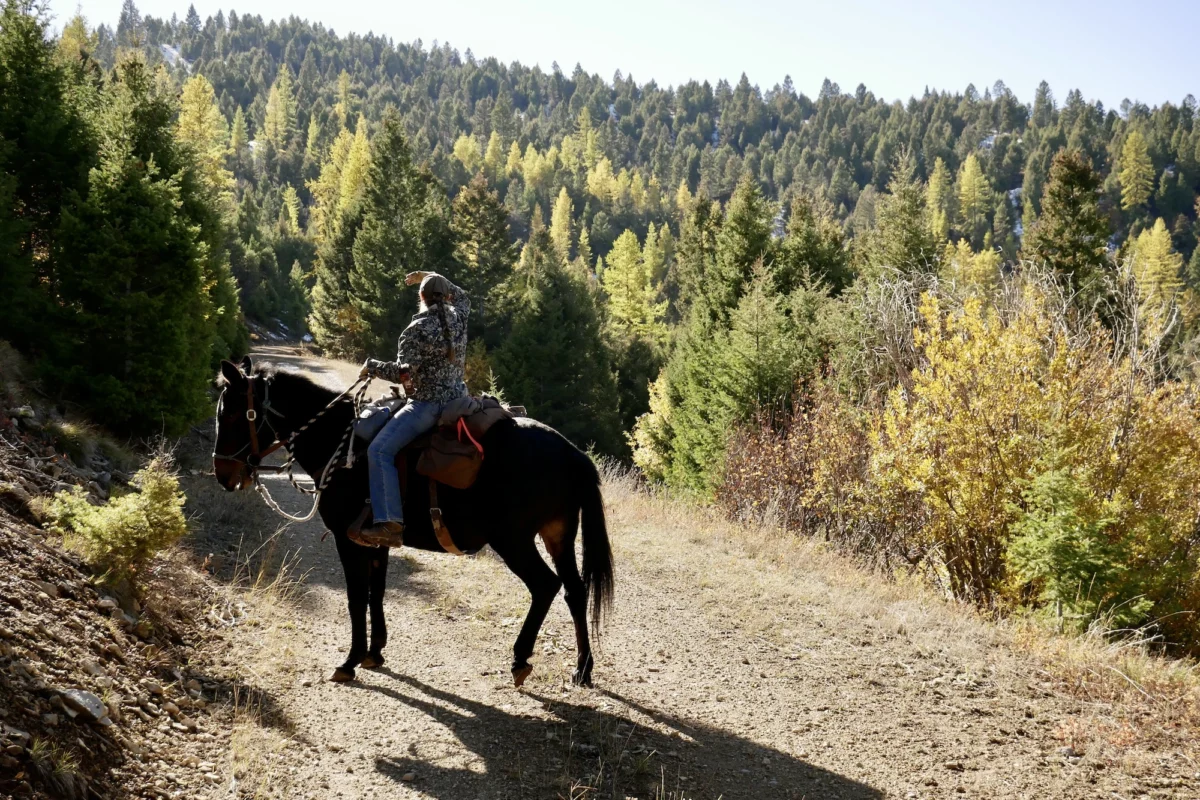
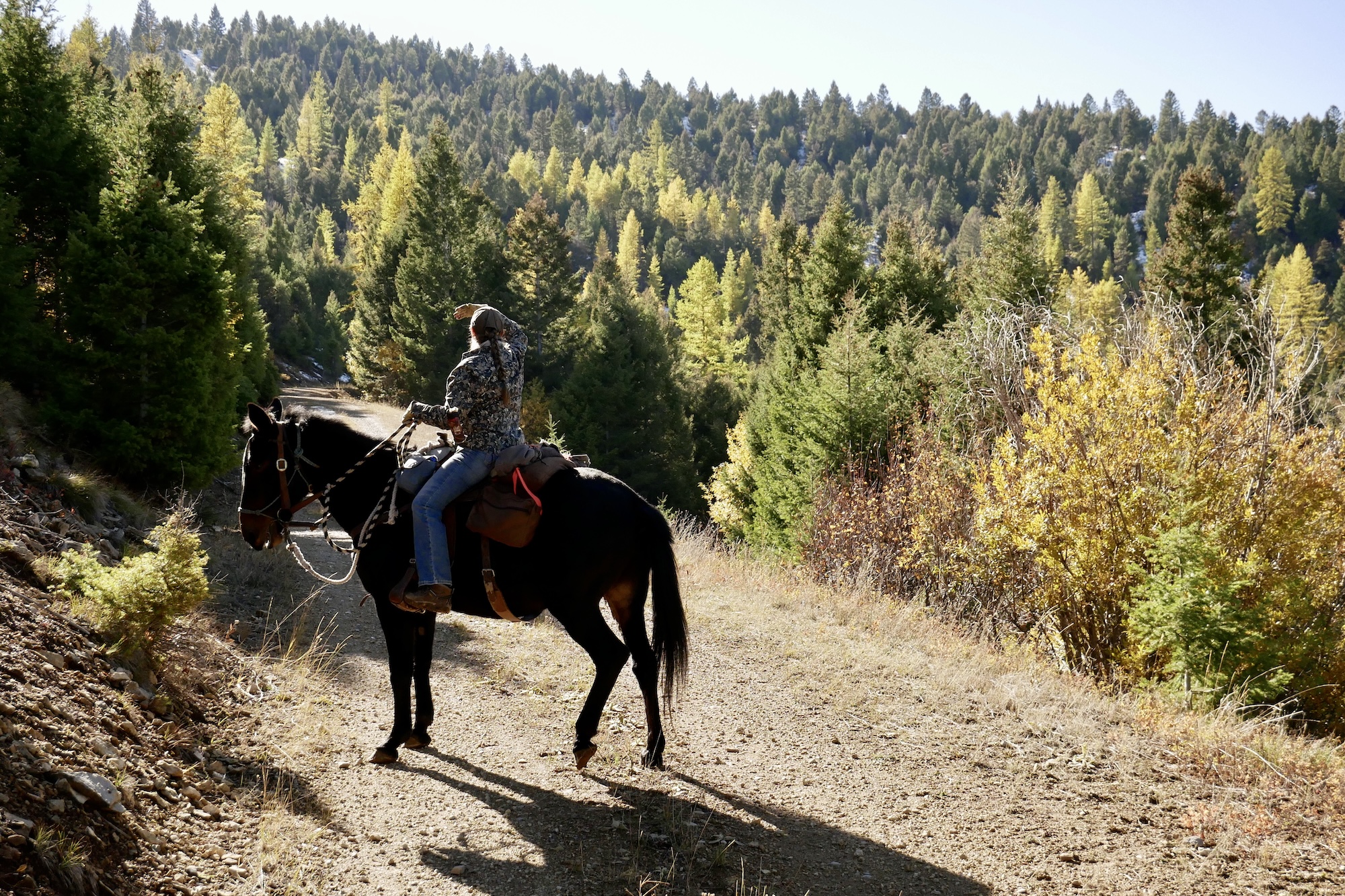
In the muted light of a Montana dawn, range rider Sigrid Olson and her horse, Jake, navigate a rugged Forest Service road tracing a high ridge in the Blackfoot Valley. Olson’s focus is sharp; she scans the muddy earth for the distinctive claw marks of a grizzly bear or the splayed paw prints of a wolf pack. Below her, in a densely timbered enclave, a herd of cattle grazes. Her mission is to ensure these animals remain accounted for and safe from the apex predators that have increasingly reclaimed this landscape. This daily vigil is part of a sophisticated, community-led effort to manage the friction between traditional ranching and the successful recovery of some of North America’s most formidable carnivores.
The Blackfoot Valley has become a global testbed for human-wildlife coexistence. As development encroaches on formerly wild spaces, the intersection of human activity and animal habitat has become a flashpoint for conflict. In Montana, this tension is being addressed by reviving an 1800s-era profession—the range rider—and augmenting it with 21st-century technology and collaborative social frameworks. These "conservation cowboys" are no longer just guardians of livestock; they are stewards of a delicate ecological and cultural balance.
The Evolution of the American West: From Eradication to Recovery
The history of the American West is defined by a shifting relationship with the natural world. During the era of Westward Expansion in the 19th century, the "open range" was a theater of survival. Stockmen moved vast herds across unclaimed territories, employing range riders to protect their investments from theft and predation. However, as the frontier was carved into private parcels, highways, and townships, the philosophy of the landscape changed. Predators were viewed as impediments to progress. Through state-sponsored bounty systems, poisoning campaigns, and intensive trapping, apex predators were nearly wiped out.
By the mid-20th century, the ecological consequences of these eradication efforts became undeniable. The gray wolf had lost approximately 95 percent of its historic range in the lower 48 states. Grizzly bear populations plummeted, with the Greater Yellowstone Ecosystem serving as one of their last strongholds; by the 1970s, as few as 30 breeding females remained in that region.
The tide began to turn with the passage of the Endangered Species Act (ESA) in 1973. This landmark legislation mandated federal and state intervention to prevent extinction. Both wolves and grizzly bears were listed as protected species within two years of the act’s inception. Decades of conservation efforts have since yielded a remarkable biological recovery. The Northern Continental Divide Ecosystem, which flanks the Blackfoot Valley, now hosts the largest grizzly population in the lower 48 states, with numbers more than doubling since the recovery efforts began. Similarly, gray wolf populations have expanded across 15 states, with wild populations now exceeding 10,000 individuals.
The Rising Global Crisis of Human-Wildlife Conflict
The success of predator recovery in Montana mirrors a broader global trend of increasing interactions between humans and wildlife. A 2023 World Bank report indicated that over 70 percent of countries surveyed have experienced a rise in human-wildlife conflict. This surge is driven by habitat loss, land-use changes, and climate-induced competition for resources.
The manifestations of this conflict vary by geography but share a common thread of economic and physical risk. In Japan, bear sightings and attacks have reached record highs, with 238 incidents reported in 2023 alone, largely attributed to bears moving into urban areas in search of food. Across Africa and Asia, agricultural expansion into elephant corridors has led to devastating results; interactions with wild Asian elephants result in approximately 700 human deaths annually.

In the United States, the return of large carnivores to ranching landscapes poses a direct threat to the livelihoods of rural communities. The loss of a single calf can represent a significant financial hit to a family-run operation. Beyond the immediate economic loss, the constant threat of predation creates a climate of stress and resentment that can undermine conservation goals.
The Blackfoot Challenge: A Model of Collaborative Conservation
To address these challenges, the Blackfoot Valley turned to a model of community-led conservation known as the Blackfoot Challenge. Established in 1993, this nonprofit organization brings together ranchers, biologists, and government agencies to find practical solutions to shared problems. The organization’s range rider program, which has been active for over a decade, is a cornerstone of this effort.
The program operates on the principle that a consistent human presence is one of the most effective non-lethal deterrents to predation. Range riders like Sigrid Olson provide this presence from May to October, the peak season for livestock grazing in predator-heavy backcountry. When a rider identifies a predator’s presence or discovers a carcass, the information is immediately relayed to the rancher and the Blackfoot Challenge.
"In my mind, our two most ancient tools are the best, and those are livestock guardian dogs and people," says Julie Young, a professor of ecology at Utah State University who specializes in conflict reduction.

The Blackfoot Challenge complements these "analog" tools with modern innovations:
- GPS Collars: Cattle are fitted with tracking devices to help riders locate strays and monitor herd movement in real-time.
- Electrified Bear Mats: These portable mats are placed around grain sheds and attractants to deliver a non-lethal shock to bears, discouraging them from approaching human structures.
- Carcass Removal Programs: To prevent predators from being drawn to ranches, the organization coordinates the swift removal of livestock that die of natural causes.
- Proactive Fencing: The installation of permanent and temporary electric fencing protects vulnerable areas, such as calving grounds.
Tragedy and Adaptation: The Ovando Incident
The resilience of the Blackfoot model was tested in 2021 when a grizzly bear killed a bicyclist near the town of Ovando, Montana. The incident sent shockwaves through the community and made national headlines. In many regions, such a tragedy might have led to a reactionary demand for the mass removal of predators.
Instead, the Blackfoot community focused on risk mitigation and communication. Seth Wilson, wildlife biologist and executive director of the Blackfoot Challenge, emphasizes the importance of focusing on "interests versus positions." The shared interests in this case were human safety and the maintenance of rural livelihoods. Following the attack, the community constructed an electric fence around Ovando Park to provide a secure camping area for cyclists and visitors, directly addressing the safety concern without advocating for the eradication of the local bear population.
Rancher Denny Iverson, who has operated in the valley for decades, notes that living with predators requires a fundamental shift in mindset. "I tell my kids, ‘You can’t do it like grandpa did, or even like I did,’" Iverson says. "To live with these predators, you have to understand them."

Economic Safeguards and Legislative Support
Recognizing that the burden of conservation often falls on the shoulders of private landowners, Montana has established mechanisms to offset the costs of predation. The Montana Livestock Loss Board, a division of the Department of Livestock, provides financial compensation to ranchers for animals confirmed to have been killed by wolves, grizzlies, or mountain lions.
This program is vital for maintaining the "social license" for predator presence. By decoupling the biological success of a species from the financial ruin of a rancher, the state creates a more sustainable environment for coexistence. Data collected by range riders and wildlife services not only facilitates these payments but also informs broader management strategies, allowing agencies to identify "conflict hotspots" where additional resources may be needed.
Global Influence and Future Outlook
The success of the Blackfoot Valley’s collaborative approach has not gone unnoticed. In 2023, wildlife officials from Colorado consulted with the Blackfoot Challenge to prepare for the reintroduction of gray wolves in their state. The Montana model serves as a blueprint for how to build trust between skeptical agricultural communities and conservationists.
The influence has even extended across the Pacific. Last summer, a Japanese television crew visited Montana to document the Blackfoot Valley’s bear-management techniques. Japan has since begun experimenting with its own technological adaptations, including the use of drones equipped with bear spray to deter "problem" bears in a non-lethal manner.

As 2026 approaches, the Blackfoot Valley plans to field three range riders to cover high-priority areas. The program continues to evolve, driven by the belief that the "open landscape" of the West is worth preserving. This requires more than just biological management; it requires the preservation of the human communities that work the land.
"It’s important, if we’re going to live with predators, to keep this landscape open," Denny Iverson reflects. "We need people that are on the land, that own the land, and that are working the land that are participating in the community."
The resurgence of the range rider signifies a sophisticated synthesis of history and science. By valuing both the apex predator and the rural producer, the Blackfoot Valley is demonstrating that the "Wild West" does not have to be a place of conflict, but can instead be a frontier for a new kind of stewardship—one where the howl of a wolf and the lowing of cattle are both parts of a healthy, functioning ecosystem.
