

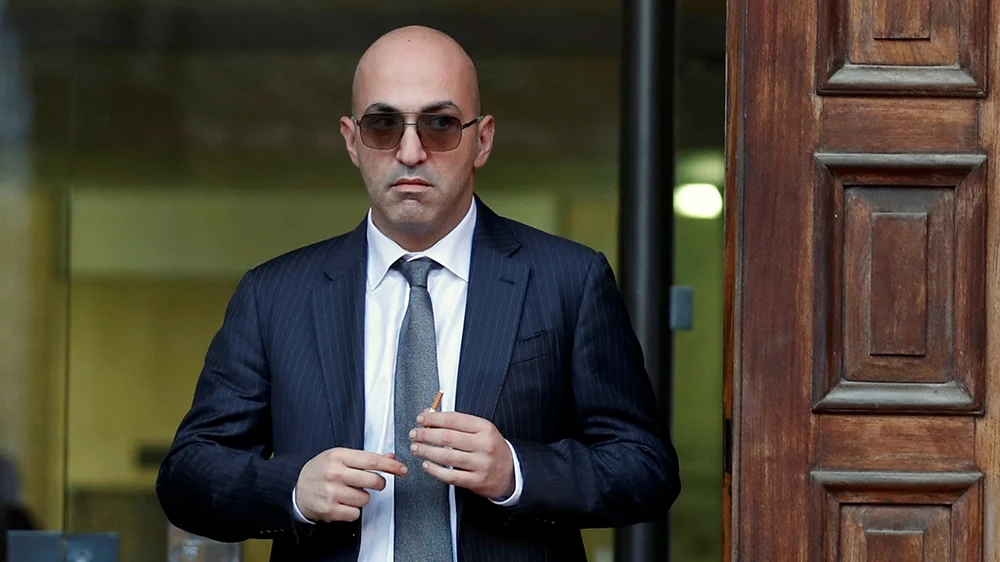
A prominent Maltese businessman, Yorgen Fenech, 44, has gone on trial in Malta, seven years after the 2017 assassination of investigative journalist Daphne Caruana Galizia. Fenech, an heir to a powerful business empire, stands accused of orchestrating the car bombing that killed the 53-year-old journalist, whose work exposed widespread corruption at the highest levels of the island nation’s political and economic establishment. His arrest in November 2019 on a yacht off Malta, which prosecutors described as an escape attempt, marked a pivotal moment in an investigation that has shaken the country’s political landscape and drawn intense international scrutiny.
The Accused: Yorgen Fenech and the Shadowy ’17 Black’
Yorgen Fenech’s name became inextricably linked to the Caruana Galizia murder through his alleged ownership of an offshore company known as "17 Black." At the time of her killing, Caruana Galizia was meticulously investigating corruption and kickback allegations involving this mysterious entity. Her reports, published on her widely read blog "Running Commentary," suggested that 17 Black was intended to pay large sums to secret Panama companies owned by high-ranking Maltese officials. Following her death, it was revealed that Fenech was indeed the owner of 17 Black, a discovery that sent shockwaves through Malta and intensified calls for accountability. Fenech hails from one of Malta’s most influential business families, known for their interests in hotels, energy, and gaming, further amplifying the perceived audacity and power behind the alleged plot. Prosecutors contend that Fenech commissioned the murder to silence Caruana Galizia and prevent her from exposing his alleged illicit financial dealings and their connections to government figures. He has consistently denied all charges against him.
Daphne Caruana Galizia: A Voice Against Corruption
Daphne Caruana Galizia was not merely a journalist; she was a relentless force against corruption and a fierce critic of Malta’s political elite. Her "Running Commentary" blog, established in 2008, became a critical platform for exposing alleged money laundering, bribery, and nepotism within the government and business sectors. She was a key figure in the Maltese investigation into the Panama Papers revelations, uncovering links between Maltese politicians and offshore companies. Her work frequently targeted powerful individuals, including then-Prime Minister Joseph Muscat’s inner circle, particularly his chief of staff Keith Schembri and former energy minister Konrad Mizzi, who were alleged to have connections to companies that would benefit from projects linked to 17 Black. Caruana Galizia’s uncompromising approach earned her both widespread admiration and numerous libel suits, along with threats that foreshadowed her tragic end. Her reporting was characterized by its detailed sourcing and fearless confrontation of entrenched power structures, making her a symbol of press freedom globally.
The Assassination and the Unfolding Investigation: A Timeline of Justice
The morning of October 16, 2017, irrevocably altered Malta’s history. Daphne Caruana Galizia was killed when a powerful bomb, placed in her Peugeot 108, detonated as she drove away from her Bidnija home in rural Malta. The explosion ripped through her vehicle, scattering debris across a field and leaving a gaping crater. The brazenness of the attack, targeting a journalist within the European Union, ignited immediate international condemnation and sparked outrage across Malta.
- December 2017: Just weeks after the murder, three men – brothers George and Alfred Degiorgio, and Vince Muscat – were arrested and charged with carrying out the bombing. They were apprehended in a series of raids across the island, marking the initial breakthroughs in the investigation.
- November 2019: The investigation took a dramatic turn with the arrest of Melvin Theuma, a former taxi driver, who was identified as the alleged middleman between the orchestrators and the hitmen. Theuma’s cooperation with authorities proved crucial. He confessed to hiring the three men to carry out the bombing and, in exchange for a presidential pardon, provided extensive testimony implicating Yorgen Fenech as the mastermind who allegedly paid him €150,000 (approximately $170,000 at the time) for the murder. Theuma’s testimony became a cornerstone of the prosecution’s case against Fenech.
- November 2019: Days after Theuma’s arrest, Yorgen Fenech was apprehended on his luxury yacht, the "Gio," attempting to leave Maltese waters. Prosecutors argued this was a clear attempt to flee the country as the net closed in. His arrest led to charges of complicity in murder and criminal conspiracy.
- March 2021: Vince Muscat, one of the three alleged hitmen, pleaded guilty to Caruana Galizia’s murder and was sentenced to 15 years in prison. His reduced sentence came in return for providing information about the plot, including details on the bomb’s origin and the involvement of others.
- October 2022: George and Alfred Degiorgio, the other two alleged hitmen, pleaded guilty to Caruana Galizia’s murder at the start of their trial, avoiding a jury trial. They were each sentenced to 40 years in prison. Their guilty pleas confirmed the physical execution of the bombing.
- February 2023: Two other men, Robert Agius and Jamie Vella, were sentenced to 40 years in prison each for supplying the bomb that killed Caruana Galizia. These convictions further cemented the chain of events leading to the journalist’s death.
This meticulous, albeit protracted, legal process has slowly pieced together the criminal conspiracy, moving from the direct perpetrators to the alleged middleman, and now to the man accused of commissioning the heinous act.
Political Fallout and the "Atmosphere of Impunity"
The assassination of Daphne Caruana Galizia triggered an unprecedented political crisis in Malta. The revelations from the investigation, particularly the alleged links between Fenech and high-ranking government officials, led to widespread public anger and mass protests calling for accountability.
- Resignation of Joseph Muscat: In December 2019, then-Prime Minister Joseph Muscat announced his resignation, stepping down in January 2020, following mounting pressure over his government’s perceived mishandling of the murder investigation and the proximity of his chief of staff, Keith Schembri, to Yorgen Fenech. Schembri himself was arrested and questioned in connection with the murder but has consistently denied wrongdoing. Muscat’s departure, after years of leading the Labour Party to significant electoral victories, underscored the severity of the crisis.
- Public Inquiry Findings: A landmark public inquiry, established in 2019 and publishing its findings in July 2021, delivered a damning indictment of the Maltese state. The inquiry concluded that the state "shouldered responsibility" for Caruana Galizia’s murder by creating an "atmosphere of impunity" for powerful individuals. This atmosphere, the inquiry found, fostered a sense that politically connected individuals could act outside the law without consequences, making vulnerable those who sought to expose corruption. The report specifically criticized the lack of proper checks and balances, the blurring of lines between business and politics, and the government’s failure to adequately protect journalists. It recommended fundamental reforms to strengthen the rule of law and protect press freedom.
These events severely damaged Malta’s international reputation, prompting concerns from the European Union, the Council of Europe, and numerous international bodies regarding the rule of law and media freedom in the country.
International Scrutiny and Calls for Justice
The Caruana Galizia case has resonated far beyond Malta’s shores, becoming a symbol of the dangers faced by investigative journalists globally. Media freedom watchdogs and international organizations have consistently monitored the progress of the investigation and trials.
Reporters Without Borders (RSF), a prominent media freedom advocacy group, issued a strong statement at the commencement of Fenech’s trial: "Nine years after my mother’s murder, the man accused of commissioning it stands trial," journalist’s son, Paul Caruana Galizia, wrote on social media on Wednesday. "This historic trial must expose the truth about the despicable criminal plot and the deadly chain of events that led to the execution of a journalist within the European Union." RSF and other organizations, including the Committee to Protect Journalists (CPJ) and the European Federation of Journalists (EFJ), have repeatedly called for full justice, emphasizing that justice for Caruana Galizia is crucial for upholding press freedom and combating impunity for crimes against journalists worldwide. The European Parliament has also maintained a keen interest in the case, passing resolutions and sending delegations to Malta to assess the rule of law situation.
The Trial of Yorgen Fenech: A Pivotal Moment
The trial of Yorgen Fenech is expected to be a complex and lengthy process, anticipated to last for several weeks, if not months, given the intricate web of evidence and the high stakes involved. Fenech has pleaded not guilty to the charges of complicity in murder and criminal conspiracy. The prosecution will rely heavily on the testimony of Melvin Theuma, the pardoned middleman, as well as forensic evidence, phone records, and other circumstantial evidence gathered during the extensive investigation. The defense, meanwhile, is expected to challenge the credibility of witnesses and the evidentiary chain, asserting Fenech’s innocence.
This trial represents a pivotal moment for Malta. For the family of Daphne Caruana Galizia, it is the culmination of years of relentless campaigning for justice, offering the prospect of holding the alleged mastermind accountable. For Malta as a nation, it is an opportunity to demonstrate its commitment to the rule of law and to begin healing the deep wounds inflicted by the assassination. The outcome will be closely watched not only by its citizens but also by the international community, serving as a critical test of Malta’s justice system and its resolve to protect fundamental democratic principles, including the freedom of the press. The implications of this trial extend beyond the individual verdict; it holds the potential to redefine the fight against corruption and impunity in a nation grappling with its recent past.
