

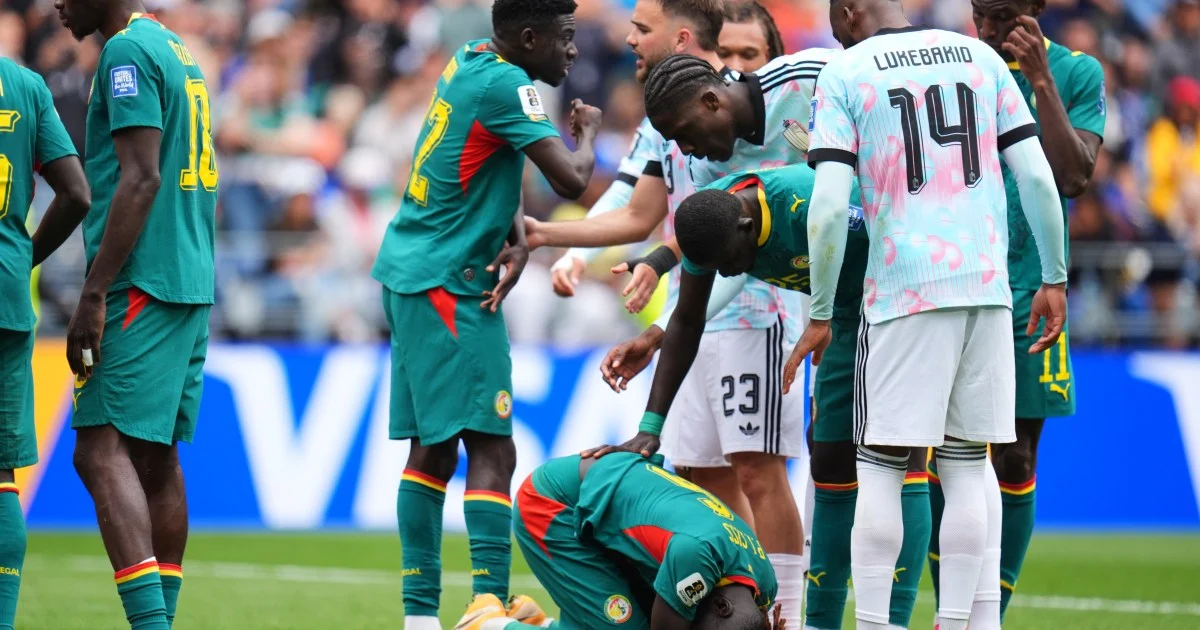
The football world was gripped by a maelstrom of controversy on Wednesday, July 1, 2026, as a contentious VAR-awarded penalty in the dying moments of extra time led to Senegal’s agonizing 3-2 defeat against Belgium in the FIFA World Cup Round of 32. The "Lions of Teranga," having held a commanding 2-0 lead for much of the match, saw their dreams of progressing to the quarter-finals shattered in a harsh turn of events that has sparked widespread debate over the integrity of refereeing decisions and the application of Video Assistant Referee technology in critical tournament stages.
The Dramatic Match Unfolds: From Dominance to Despair
The highly anticipated clash, held in Seattle, pitted Senegal, a beacon of African football, against Belgium, often hailed for its "Golden Generation" of talent. From the outset, Senegal demonstrated tactical discipline and offensive prowess, stunning their European opponents. The African champions asserted themselves early, finding the back of the net through Habib Diarra, whose celebration with Ismail Jakobs encapsulated the team’s early elation. This was followed by a second goal, establishing a formidable 2-0 lead that sent their fans into raptures and seemed to place them firmly on course for the Round of 16. For 85 minutes, Senegal appeared to have the measure of Belgium, controlling the tempo and nullifying the Red Devils’ attacking threats. Their performance was a testament to their preparation and determination, showcasing the vibrant and dynamic football that has earned them admiration globally.
However, the tide began to turn in the final minutes of regular time. Belgium, known for their resilience, mounted a late comeback. A goal in the 86th minute injected renewed hope into their ranks, narrowing the deficit to 2-1 and setting up a tense finish. This late strike shifted the psychological momentum, transforming Senegal’s comfortable lead into a precarious advantage. As the match spilled into extra time, the pressure on both sides intensified. Belgium, buoyed by their late goal, pressed harder, and in the second period of extra time, they found an equalizer, leveling the score at 2-2. The dramatic turnaround left Senegalese players visibly shaken, as the prospect of a penalty shootout loomed, a lottery that neither team truly desired.
The Controversial VAR Intervention: A Decision Under Scrutiny
With the score tied 2-2 and the clock ticking towards the end of the second period of extra time, an incident inside Senegal’s penalty area brought the game to a grinding halt. Honduran referee Said Martinez initially waved play on after a challenge involving Senegal’s Lamine Camara and Belgian captain Youri Tielemans. However, the VAR system flagged the incident for review, prompting Martinez to consult the pitchside monitor. After a lengthy deliberation, Martinez pointed to the spot, awarding a penalty kick to Belgium.
The decision sent shockwaves through the stadium and across social media platforms. Replays, which were immediately scrutinized by pundits and fans alike, appeared to show Tielemans extending his foot into Camara’s path as the Senegalese defender attempted to clear the ball. This contact, deemed sufficient for a penalty by the referee after VAR review, became the focal point of the controversy. Belgian captain Youri Tielemans stepped up and calmly converted the penalty, securing Belgium’s third goal and an improbable 3-2 victory, thus sealing Senegal’s dramatic and heartbreaking exit from the tournament.

Expert Analysis and the "Clear and Obvious Error" Principle
The "Archivo VAR" platform, a widely respected authority specializing in the analysis of refereeing decisions, quickly weighed in on the incident. Via its official account on "X" (formerly Twitter), the platform vehemently stated that VAR’s intervention was "excessive" and unwarranted. According to their detailed analysis, it was Tielemans who initiated the contact by extending his foot in front of Camara, rather than Camara committing a foul. The platform emphasized that the situation did not meet the stringent criteria of a "clear and obvious error" – the fundamental principle governing VAR interventions – which is necessary to overturn an on-field decision.
The "clear and obvious error" standard was introduced with VAR to prevent trivial interventions and ensure that only genuinely incorrect decisions are corrected. Its misapplication, as alleged by "Archivo VAR" and many others, undermines the system’s credibility and the flow of the game. Critics argue that such subjective interpretations, especially in high-stakes moments, erode trust in the officiating process and can unfairly alter the course of major tournaments. This incident reignited long-standing debates about the subjectivity of refereeing, even with technological assistance, and the need for greater consistency and transparency in VAR application.
A Wave of Fury: Public and Media Reaction
The penalty decision triggered an immediate and furious backlash across social media and traditional media outlets. Fans, journalists, and former players expressed outrage, with many labeling the decision a "robbery" and accusing the officiating of bias. One fan’s viral post declared, "This is 100% robbery. Senegal have been robbed. How is this a penalty? Belgium do not deserve to go through corruption." Sports content creator Sneako went further, explicitly blaming the result on "match rigging," exclaiming, "Rigged! Senegal should storm the pitch right now. Leave the pitch and go home. This is rigged!" Another commentator echoed these sentiments: "I’m sorry, but this was never a penalty. Camara went to clear the ball, but it was Tielemans who got in his way. Senegal was robbed, and it should have been Belgium going out."
The controversy transcended national boundaries. Spanish sports journalist Manolo Lama, a prominent voice in European football, commented trenchantly, "They stole the Africa Cup of Nations from them, and now they’re stealing all the solidarity with Senegal at the World Cup too." This statement highlighted a perceived pattern of injustice against African teams in major tournaments, connecting the World Cup incident to previous grievances.
Egyptian journalist Mohamed Saeed drew an even more direct parallel, linking the incident to the contentious 2025 Africa Cup of Nations final between Senegal and Morocco. He wrote, "You can feel that the penalty awarded against Senegal in the final seconds was a harsh lesson and a difficult test. After the scenes from the Africa Cup of Nations final, I think that if it weren’t for the change in the rules around the withdrawal incident, this scene could have repeated itself." This reference to a "withdrawal incident" alludes to a highly charged situation where a team might have threatened to leave the field in protest, suggesting that the stakes of the World Cup might have prevented a similar, more extreme reaction from Senegal.
Fares Ahmed, another sports fan, elaborated on this connection, stating that football "teaches lessons" and that the World Cup outcome painfully recalled Senegal’s experience in Morocco. He noted, "They took advantage of the tournament’s vulnerable position and the host’s need to make it a success, and used that to impose their pressure. Today, the scene was almost repeated against Belgium – a penalty in the final minutes, objections, and disbelief over the decision – but this time there was no threat of withdrawal, because you can’t risk penalties like that in a tournament the size of the World Cup."

The sentiment was further underscored by a follower on "X" who wrote, "When there was a clear penalty in the Morocco final, they rebelled against the decision and tarnished the reputation of African football, just because the tournament was in Morocco. But when an unclear penalty came along that eliminated them from the World Cup, they stayed silent, because this time it was in the West." This comment touches on a sensitive issue of perceived double standards and the power dynamics within global football, suggesting that reactions to controversial calls might differ based on the geographic location or political context of the tournament.
Player Reactions and Disappointment
The Senegalese players, visibly distraught after the final whistle, struggled to come to terms with their elimination. Defender Krepin Diatta, reflecting on the team’s promising start, lamented, "We were at the heart of writing the beautiful pages of the history of our football in this world. And we have to accept that we failed at our mission." His words conveyed a profound sense of missed opportunity and the weight of national expectation.
Midfielder Habib Diarra, who had scored Senegal’s first goal, expressed the raw pain of the defeat. "We had a good first half, but it wasn’t enough. A match lasts 90 minutes, and we’re devastated. It’s very tough. I don’t know what to say. When you’re on the pitch, you have to give your all, and that’s not what we did. We’ve only got ourselves to blame," he stated, seemingly referring to the team’s inability to hold onto their two-goal lead rather than the penalty decision itself. This self-reproach, while noble, highlighted the crushing disappointment of letting a winning position slip away. Pathe Ciss, another Senegalese player, was captured kneeling on the pitch in disbelief, a poignant image of the team’s collective despair.
The Broader Context: VAR’s Evolving Role in Football
The VAR system, introduced to football with the aim of reducing clear errors and enhancing fairness, has been a constant source of debate since its widespread adoption. While it has undoubtedly corrected numerous egregious mistakes, it has also introduced new layers of controversy, particularly regarding subjective calls like penalties, handballs, and offsides. FIFA and other governing bodies have continually refined VAR protocols, but incidents like the one in Seattle underscore the persistent challenges.
Statistics from previous major tournaments show a fluctuating acceptance of VAR. While the number of incorrect red cards and offside goals has decreased, the time taken for reviews and the perceived inconsistency in applying the "clear and obvious error" threshold remain significant concerns for fans and players alike. In the 2022 World Cup, for instance, there were multiple instances where VAR decisions sparked heated discussions, with some being lauded for accuracy and others criticized for over-intervention or misinterpretation of the rules. The incident involving Senegal and Belgium will undoubtedly add to this growing dossier of contentious VAR moments, fueling calls for even greater clarity and perhaps a fundamental re-evaluation of how the technology is deployed in the game’s most critical junctures.
Senegal’s World Cup Journey and Aspirations
Senegal’s journey to the Round of 32 was marked by high expectations, following their recent triumphs in African football. As reigning Africa Cup of Nations champions, they carried the hopes of a continent, aiming to surpass their previous best World Cup performance – a quarter-final appearance in 2002. Their squad, boasting a blend of experienced European-based professionals and exciting young talent, was considered one of the strongest African representatives. The early lead against Belgium showcased their potential to challenge even the most formidable European giants. Their elimination, particularly in such a contentious manner, is a significant blow to their national pride and their aspirations on the global stage. It highlights the fine margins in elite football and how a single decision, however disputed, can irrevocably alter a team’s destiny.

Belgium’s Path Forward and the "Golden Generation" Narrative
For Belgium, the dramatic victory represented a remarkable escape and a vital continuation of their World Cup campaign. The "Red Devils," often referred to as a "Golden Generation" due to their wealth of individual talent, have consistently performed well in recent international tournaments but have yet to claim a major trophy. This comeback victory, while controversial, demonstrates their resilience and fighting spirit. Advancing to the quarter-finals keeps their World Cup dream alive, though the manner of their progression will likely be scrutinized and debated for days to come. The win, however, provides a crucial psychological boost as they prepare for their next challenge, maintaining their status as one of the tournament’s contenders.
Implications for African Football
The Senegal-Belgium match and its controversial ending hold significant implications for African football. Many fans and commentators from the continent view such incidents through a lens of historical disadvantage, perceiving a systemic bias against African teams in major international competitions. The repeated linking of this World Cup incident to the 2025 Africa Cup of Nations final suggests a deep-seated frustration and a feeling that African teams are often subjected to harsher scrutiny or less favorable decisions. This sentiment can affect morale, trust in international governing bodies, and the broader narrative surrounding African football’s quest for global recognition and success. It underscores the ongoing challenge of achieving true equity and fairness in a sport with complex power dynamics.
Looking Ahead: Calls for Clarity and Consistency
In the aftermath of such a high-profile and controversial decision, there will undoubtedly be calls for greater transparency and consistency in VAR application. FIFA and its refereeing committees may face pressure to review the incident, not necessarily to overturn the result – which is almost unprecedented after a match – but to provide clarification on the interpretation of the "clear and obvious error" principle. This incident serves as a stark reminder that while technology can aid officiating, the human element of interpretation remains paramount, and with it, the potential for error and controversy. The debate ignited by Senegal’s agonizing exit will likely resonate throughout the remainder of the 2026 World Cup and beyond, influencing future discussions on how football’s most impactful decisions are made.
The emotional rollercoaster experienced by Senegal, from the heights of a two-goal lead to the depths of a VAR-induced elimination, encapsulates the cruel beauty and inherent drama of the FIFA World Cup. While Belgium moves on, the echoes of controversy and the heartbreak of the "Lions of Teranga" will undoubtedly linger as a potent reminder of the fine margins that define victory and defeat on football’s grandest stage.
