

A significant shift in global energy markets, catalyzed by a diplomatic breakthrough between the United States and Iran, has dramatically altered the inflation outlook, with prediction market traders now signaling a strong belief that the peak of inflationary pressures is behind us. The dramatic decline in oil and gas prices, directly linked to the recent detente, has sent ripples through the economic landscape, prompting economists and investors alike to reassess the trajectory of consumer prices.
Speculators on the prominent prediction market platform Kalshi are expressing a pronounced confidence in this disinflationary trend. Current sentiment on Kalshi indicates only a 28% chance that headline inflation for the entire year 2026 will climb above 4.2%. This figure stands in stark contrast to the annual rate of increase in the Consumer Price Index (CPI) recorded in May, which stood at 4.2%. The upcoming June CPI report, meticulously compiled by the Bureau of Labor Statistics (BLS), is eagerly anticipated for release on July 14, and traders are already pricing in a significant deceleration, even a contraction, in monthly price levels.
The Genesis of Easing Inflation: A Geopolitical and Economic Confluence
The primary catalyst for this newfound optimism regarding inflation has been the rapid reversal in energy prices. For months, surging oil and gas costs had acted as the dominant engine of inflationary pressure, impacting everything from transportation to manufacturing. This energy crisis reached its apex following the outbreak of the U.S.-Iran conflict in late February 2026, a geopolitical flashpoint that saw oil prices skyrocket well past the $100 per barrel mark. The subsequent closure of the Strait of Hormuz, a critical chokepoint for global oil shipments, exacerbated the supply crunch and sent shockwaves through international markets.
However, the tide began to turn dramatically in late June 2026 with the unexpected announcement of a detente between the U.S. and Iran. This diplomatic breakthrough, following a period of intense threats and escalating tensions—including reported attacks in Kuwait and Bahrain and President Trump’s strong rhetoric—paved the way for a partial reopening of the strategically vital waterway. The immediate market response was palpable: crude oil prices, which had been a persistent source of concern, began a steep retreat.
As of the latest data, average national gasoline prices have fallen to $3.84 per gallon, a substantial decrease from their peak of over $4.50. This consumer relief at the pump directly mirrors the weakened state of U.S. crude oil prices, which have now comfortably fallen below $70 per barrel for the first time since the onset of the conflict. The direct link between energy costs and broader inflation was starkly evident in the May 2026 CPI report, where energy prices alone accounted for a staggering 60% of the month-over-month increase in the index. The current decline in these pivotal prices is now leading Kalshi traders, and indeed many Wall Street analysts, to anticipate a significant shift: a consensus forecast predicts that the June CPI report will show a monthly decline of 0.2% compared to May.
A Detailed Chronology of Market Volatility and Diplomatic Shifts
The economic narrative of early to mid-2026 has been defined by a series of interconnected geopolitical and market events, creating a volatile environment that profoundly influenced inflation.
- Late February 2026: Conflict Erupts and Strait of Hormuz Closure: Tensions between the U.S. and Iran, simmering for months, escalated into open conflict. This led to the immediate closure of the Strait of Hormuz, a narrow maritime passage through which a significant portion of the world’s oil supply transits. The global energy market reacted with extreme alarm.
- Early March 2026: Oil Prices Soar Past $100: Within days of the conflict’s outbreak and the Strait’s closure, Brent and WTI crude oil benchmarks surged past $100 per barrel. This spike triggered widespread fears of a global recession, as businesses faced spiraling input costs and consumers grappled with exorbitant fuel prices.
- March-May 2026: Sustained High Energy Prices and Broad Inflation: For several months, energy prices remained elevated, feeding into broader inflation across goods and services. Supply chains, already stressed by previous disruptions, were further constrained by increased shipping costs.
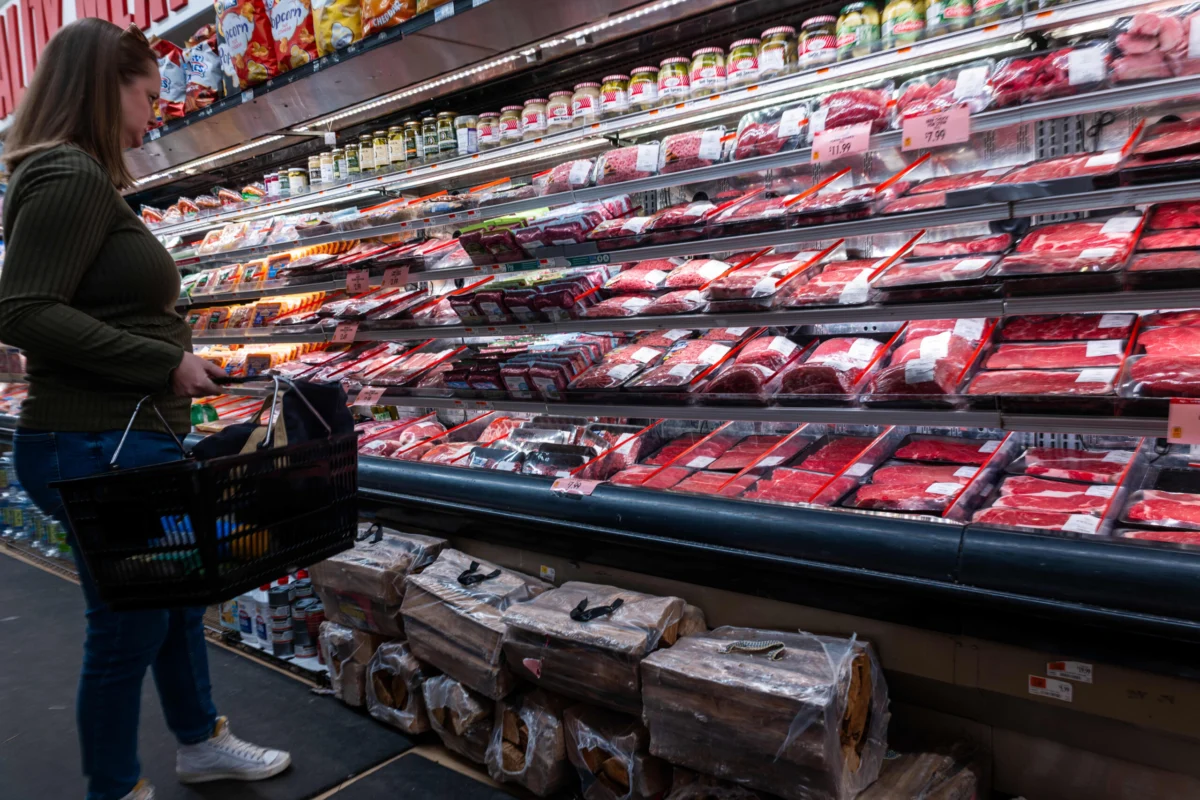
- May 12, 2026: Snapshot of Consumer Impact: A photograph capturing red meat displayed at a Brooklyn grocery store serves as a visual reminder of the inflationary pressures impacting everyday consumer goods, with food prices also experiencing upward trends during this period.
- June 10, 2026: May CPI Report Release: The Bureau of Labor Statistics released the CPI data for May, revealing an annual headline inflation rate of 4.2%. Crucially, the report highlighted energy’s disproportionate contribution, accounting for 60% of the month-over-month increase. This underscored the vulnerability of the overall inflation figure to energy market fluctuations.
- Late June 2026: Diplomatic Breakthrough and Strait Reopening: Following intense, undisclosed diplomatic efforts, a detente between the U.S. and Iran was announced. This pivotal development led to the partial reopening of the Strait of Hormuz, easing fears of an enduring oil supply shock.
- June 24, 2026: Oil Prices Tumble Below $70: The news of the detente and the reopening of the Strait immediately triggered a sharp sell-off in the oil markets. Both WTI and Brent crude futures fell below the critical $70 per barrel threshold, marking a significant psychological and economic turning point.
- Early July 2026: Sustained Price Declines: The downward trend in energy prices continued, translating into lower costs at the pump for consumers. National average gasoline prices settled around $3.84, offering a tangible sign of easing inflationary pressures.
- July 14, 2026: Anticipated June CPI Report: The economic community now eagerly awaits the release of the June CPI data, which is expected to reflect the impact of the late-June energy price declines, with many predicting a negative month-over-month change.
The Mechanics of Prediction Markets: Kalshi’s Influence
Kalshi, a regulated U.S. prediction market platform, has emerged as a significant barometer of market sentiment for various economic and political events. Unlike traditional polling or expert forecasts, prediction markets allow individuals to trade contracts on the outcome of future events, with prices reflecting the collective probability assigned by participants. For instance, a contract on Kalshi asking if headline inflation will exceed 4.2% in 2026 trading at $0.28 implies a 28% chance, according to the market.
The platform gained prominence by democratizing access to speculative trading, initially attracting a large number of individual traders, as highlighted by a CNBC report in June 2026. However, its accuracy and growing liquidity have increasingly drawn the attention of institutional investors and Wall Street analysts who view its aggregated sentiment as a valuable, real-time indicator of market expectations, often preceding or confirming shifts in broader economic consensus. Kalshi’s contracts are structured around specific data releases, such as the monthly CPI reports from the BLS, ensuring clear resolution points for traders. The current bearish sentiment on Kalshi regarding future inflation underscores the market’s conviction that the energy-driven inflation spike is now receding.
Beyond Energy: Dissecting Broader Inflationary Components
While energy prices have been the primary driver of recent inflation and its subsequent moderation, a comprehensive understanding requires examining other core components of the CPI.
- Core Inflation (Excluding Food and Energy): This measure is often preferred by central banks as it smooths out the volatile fluctuations of energy and food prices, providing a clearer picture of underlying inflationary trends. Analysts will be closely watching if the disinflationary impulse from energy is also translating into a cooling of core inflation, particularly in services and shelter costs, which tend to be stickier. Data from the May CPI report showed that while energy dominated, shelter costs, including rent and owners’ equivalent rent, continued to contribute significantly, albeit at a slightly slower pace than previous months.
- Food Prices: Although not directly addressed by the detente, food prices remain a critical concern for consumers. Global supply chain improvements, lower transportation costs due to cheaper fuel, and favorable agricultural conditions could contribute to a moderation in food inflation. However, factors such as adverse weather events or geopolitical disruptions in key agricultural regions could still pose risks. Anecdotal reports from grocery chains suggest that while some input costs are falling, the pass-through to consumer prices for items like meat and produce can take longer to materialize.
- Supply Chains: The easing of energy prices has a beneficial ripple effect on global supply chains. Lower fuel costs for shipping, trucking, and air freight reduce the overall cost of moving goods, potentially alleviating some of the supply-side pressures that contributed to inflation earlier in the year. However, persistent labor shortages in certain sectors or lingering geopolitical tensions elsewhere could still create bottlenecks.
- Labor Market Dynamics: Wage growth remains a critical factor in the inflation equation. A tight labor market, characterized by low unemployment and high demand for workers, can lead to upward pressure on wages, which businesses may then pass on to consumers in the form of higher prices. Recent BLS reports indicate a gradual cooling in wage growth, but it remains elevated compared to pre-pandemic levels. The Federal Reserve will be closely monitoring this dynamic to ensure that disinflation is not coming at the expense of a significant rise in unemployment.
Expert Reactions and Monetary Policy Implications
The developing inflation narrative has drawn a range of reactions from economists, financial institutions, and central bank officials.
"This detente is a game-changer for the inflation outlook, at least in the short to medium term," commented Dr. Eleanor Vance, Chief Economist at Meridian Global Investments. "Energy prices have been the dominant headache for central banks, and their rapid decline removes a significant inflationary impulse. We are now seeing a very real possibility of a negative month-over-month CPI print for June, which would be a welcome sign of progress." Dr. Vance cautioned, however, that "sticky inflation in services, particularly housing, remains a concern, and the Federal Reserve will need to see sustained evidence of disinflation across the board before considering any significant policy shifts."
Analysts at major Wall Street firms largely align with Kalshi’s sentiment, with many revising down their year-end inflation forecasts. A consensus among economists surveyed by Reuters projects annual inflation to fall to around 3.5% by the end of 2026, assuming current energy price trends hold. The projected -0.2% month-over-month decline for June CPI is seen as a crucial first step in confirming this trend.
The implications for monetary policy, particularly for the U.S. Federal Reserve, are profound. The Fed has been aggressively hiking interest rates to combat persistent inflation, balancing its dual mandate of price stability and maximum employment. A sustained period of disinflation, driven by falling energy prices, could provide the central bank with much-needed breathing room.
"While the recent developments are encouraging, the Federal Reserve remains data-dependent," stated a senior Fed official, speaking on background. "Our mandate is clear: to restore price stability. We will need to see several months of declining inflation, alongside a robust labor market, before we can confidently assess the appropriate path for monetary policy. Prematurely declaring victory against inflation could be a costly mistake." This suggests that while rate hikes might be paused in upcoming Federal Open Market Committee (FOMC) meetings, such as the one scheduled for late July, a pivot to rate cuts is likely still some way off, contingent on more consistent disinflationary evidence. The Fed’s preferred inflation gauge, the Personal Consumption Expenditures (PCE) price index, which tends to be less volatile than CPI, will also be closely watched for similar trends.
Government Responses and Broader Economic Impact
The U.S.-Iran detente and the resulting fall in energy prices represent a significant foreign policy and economic win for the incumbent administration. President Trump, who had previously issued strong warnings to Iran, could potentially claim a diplomatic victory that has tangible benefits for American consumers and businesses. Lower gasoline prices alleviate a major burden on household budgets, potentially boosting consumer confidence and discretionary spending, which in turn could support broader economic growth.
The Treasury Department, through official statements, has underscored the importance of stable energy markets for global economic stability. "The recent detente and its positive impact on oil prices are crucial for fostering a more predictable economic environment," a Treasury spokesperson noted. "Lower energy costs reduce inflationary pressures, support business investment, and ultimately enhance the purchasing power of American families."
For businesses, particularly those in the transportation, logistics, and manufacturing sectors, the decline in fuel costs translates directly into lower operating expenses. This could lead to improved profit margins, stimulate investment, and potentially temper price increases for end consumers. Airlines, trucking companies, and shipping firms, which had faced substantial headwinds from high fuel costs, are expected to see significant relief.
Globally, reduced energy price volatility decreases economic uncertainty and risk premiums, potentially benefiting international trade and emerging markets that are highly sensitive to oil price fluctuations. The partial reopening of the Strait of Hormuz restores a degree of predictability to global supply lines, which is vital for multinational corporations and international commerce.
Potential Headwinds and the Path Forward
Despite the current wave of optimism, economists caution against complacency. Several potential headwinds could still derail the disinflationary trend:
- Renewed Geopolitical Tensions: While the U.S.-Iran detente is a positive step, the Middle East remains a volatile region. Any resurgence of conflict or new geopolitical crises could quickly reverse the gains made in energy markets.
- Supply Shocks: Unforeseen disruptions to global supply chains, perhaps due to natural disasters or new trade conflicts, could reignite inflationary pressures.
- Persistent Core Inflation: If inflation in services, housing, or wage growth proves to be more persistent than currently anticipated, it could keep overall inflation elevated even with lower energy prices.
- Strong Demand Rebound: A stronger-than-expected rebound in consumer demand, potentially fueled by increased disposable income from lower gas prices, could put upward pressure on prices for other goods and services.
- Fiscal Policy: Future government spending or taxation policies could also influence the inflationary outlook, either by stimulating demand or impacting supply.
The path to achieving the Federal Reserve’s long-term inflation target of 2% remains complex. While the recent developments offer a significant reprieve, the central bank and economic policymakers will need to remain vigilant, adapting monetary and fiscal strategies to evolving data. The June CPI report on July 14 will serve as a critical checkpoint, providing the first concrete data reflecting the impact of the U.S.-Iran detente and the subsequent plunge in energy prices. Its findings will undoubtedly shape the immediate economic narrative and influence market expectations for the remainder of 2026. The cautious optimism currently permeating financial markets hinges heavily on this disinflationary trend proving to be not just a temporary dip, but a sustainable reversal.
