

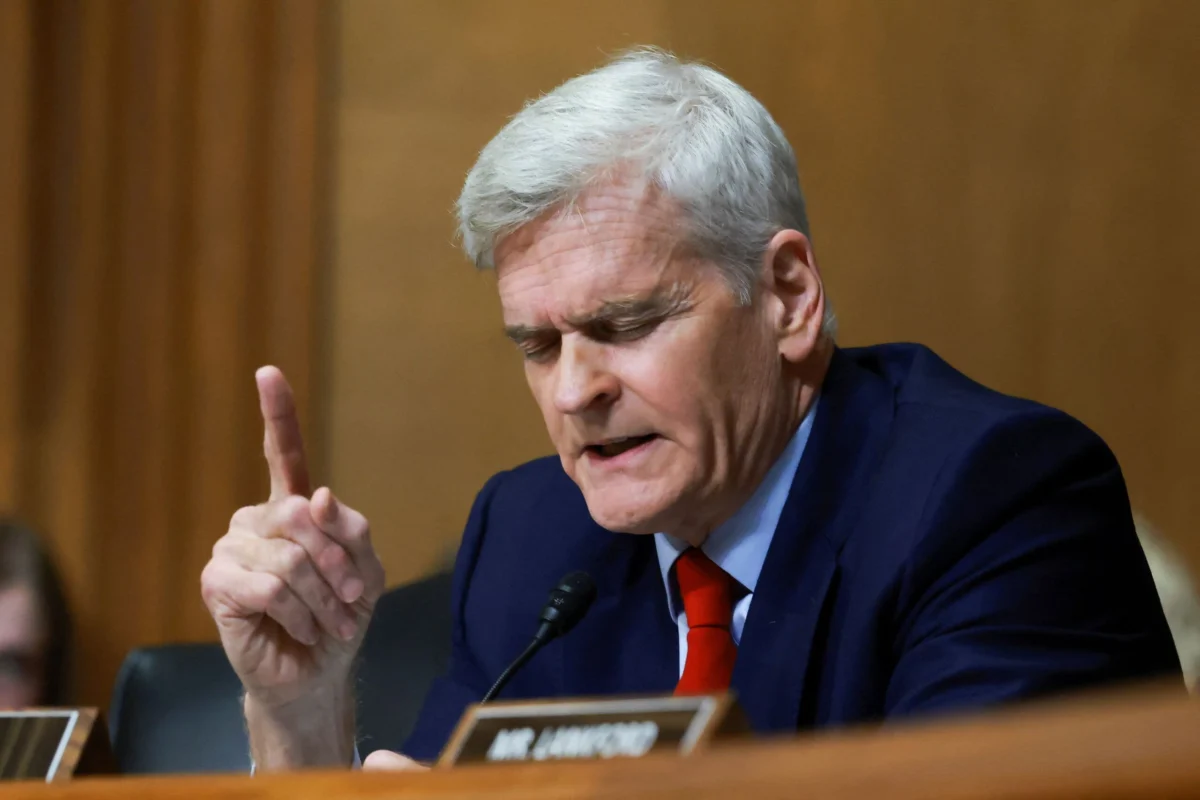
The appointment of Bill Pulte, currently serving as chief of the Federal Housing Finance Agency (FHFA), as the acting Director of National Intelligence (DNI) has ignited a fierce debate within Washington, drawing sharp criticism from members of his own Republican party. Outgoing Senator Bill Cassidy (R-LA) publicly questioned Pulte’s qualifications for the pivotal intelligence role, articulating a sentiment of disbelief among his colleagues following the announcement. The move, occurring amidst a broader political landscape shaped by former President Donald Trump’s continued influence on GOP primaries, underscores ongoing tensions between the executive branch and Congress regarding critical national security appointments.
Senator Cassidy, speaking during an interview at CNBC’s CEO Council Summit on a Tuesday in early June 2026, did not mince words regarding his assessment of Pulte. "Nothing here suggests he’s competent in the job for which he’s been appointed," Cassidy stated unequivocally, adding, "That’s just kind of the kind of conversation with my colleagues, like OMG." His concerns stemmed from Pulte’s apparent lack of pertinent experience, noting, "He has no military background, no intelligence background, he’s going to … keep his other job, and he’s not even sure he has a security clearance." This candid assessment from a Republican senator highlights a significant rift within the party, particularly given the backdrop of recent primary elections where Trump’s endorsements have played a decisive role. Cassidy himself recently failed to qualify for a runoff in Louisiana’s Republican primary after President Donald Trump endorsed one of his challengers, Rep. Julia Letlow, R-La, a factor that some analysts suggest may embolden his willingness to speak out.
The Critical Mandate of the Director of National Intelligence
To fully grasp the gravity of the concerns raised by Senator Cassidy and others, it is essential to understand the immense responsibilities vested in the Director of National Intelligence. Established by the Intelligence Reform and Terrorism Prevention Act of 2004, in the wake of the September 11th attacks and the subsequent 9/11 Commission Report, the DNI serves as the principal advisor to the President, the National Security Council, and the Homeland Security Council on intelligence matters related to national security. The DNI’s office is tasked with overseeing and coordinating the efforts of the 18 agencies that comprise the U.S. Intelligence Community (IC), a vast network including entities like the CIA, NSA, DIA, and the intelligence branches of the military services.
The DNI’s core functions include integrating intelligence collection, analysis, and dissemination across the IC, developing and executing the National Intelligence Program budget, and ensuring the protection of intelligence sources and methods. The position demands a unique blend of strategic acumen, deep understanding of complex geopolitical dynamics, extensive experience in intelligence operations or national security, and proven leadership capabilities within a highly sensitive and specialized environment. Historically, individuals appointed to this role, such as James Clapper, Dan Coats, and Avril Haines, have possessed extensive backgrounds in military service, intelligence operations, foreign policy, or national security leadership, often culminating decades of public service in these demanding fields. The DNI is not merely an administrator but a critical strategist responsible for synthesizing disparate intelligence streams into actionable insights for the nation’s highest decision-makers, all while navigating a complex web of domestic and international threats.
Bill Pulte’s Unconventional Path to Intelligence Leadership
Bill Pulte’s professional background presents a stark contrast to the traditional profile of a DNI. Prior to his current role as chief of the Federal Housing Finance Agency (FHFA), Pulte built a career primarily in real estate and philanthropy. Known for his family’s legacy in homebuilding, Pulte has also cultivated a significant social media presence, leveraging platforms for philanthropic endeavors and engaging in public discourse. While his tenure at the FHFA involved overseeing critical aspects of the U.S. housing finance system, including Fannie Mae and Freddie Mac, these responsibilities are distinctly different from the intricate world of global intelligence gathering, espionage, and counter-terrorism.
The leap from managing housing finance entities to coordinating the entire U.S. intelligence apparatus has been widely perceived as unprecedented and deeply problematic by intelligence community veterans and political analysts alike. Critics point out that the skills required to navigate complex financial markets and regulatory frameworks, while valuable in their own right, do not directly translate to the expertise needed to assess threats from state and non-state actors, manage covert operations, or foster critical intelligence-sharing relationships with international partners. The absence of military or intelligence command experience, a deep understanding of intelligence tradecraft, or even a confirmed security clearance at the time of his acting appointment raises fundamental questions about his immediate readiness and capacity to effectively lead such a sensitive and vital branch of government.
A Chronology of Contention: From Primaries to Presidential Appointments
The controversy surrounding Pulte’s acting DNI appointment unfolds within a specific political timeline, offering crucial context to the criticisms voiced by Senators Cassidy and Cornyn.
- Pre-2026 Political Landscape: Donald Trump’s return to the presidency (implied by the "President Donald Trump’s 2026 health care agenda" in the article’s source) marked a period of continued executive appointments and a focus on loyalty within his administration.
- Early 2026 Primary Season: Both Senator Bill Cassidy of Louisiana and Senator John Cornyn of Texas faced challenging primary elections. In a significant display of presidential influence, President Trump publicly endorsed challengers to both incumbent senators. For Cassidy, this was Representative Julia Letlow, R-La, leading to his failure to qualify for a runoff in Louisiana’s Republican primary. Senator Cornyn also experienced a contested primary, which he ultimately lost, further illustrating Trump’s potent sway over the Republican base and congressional composition. These primary outcomes highlight a growing tension within the Republican Party, where adherence to the former president’s agenda and endorsements increasingly dictated political survival.
- Late May/Early June 2026: Pulte’s Acting DNI Appointment: The White House announced the appointment of Bill Pulte as the acting Director of National Intelligence. This decision, made without a formal nomination requiring Senate confirmation, allowed Pulte to assume the role immediately, albeit for a limited statutory period.
- Early June 2026: Congressional Backlash: Promptly following the announcement, senior Republican senators, including Cassidy and Cornyn, voiced their strong objections. Cassidy’s interview at the CNBC CEO Council Summit on a Tuesday in early June became a focal point for the criticism, echoing broader concerns within the intelligence community and among congressional oversight committees. Senator Cornyn, in a separate statement earlier the same day, also publicly stated his belief that Pulte was unqualified for the role.
This sequence of events suggests a confluence of factors: a president asserting executive prerogative in appointments, a congressional Republican faction willing to challenge those decisions, and the high stakes involved in national security leadership. The timing of the appointments, coming shortly after high-profile primary contests influenced by the president, could be interpreted as both a strategic move by the White House and a catalyst for dissent from those feeling the brunt of presidential political maneuvering.
The Peril of "Acting Forever": Bypassing Senate Oversight
A significant procedural concern raised by Senator Cassidy, shared by many congressional watchdogs, revolves around the potential for an "acting" official to remain in a critical role indefinitely, thereby circumventing the Senate’s constitutional "advice and consent" role. "The problem with acting is sometimes people act forever," Cassidy warned, drawing a parallel to the situation of Julie Su, who served as acting Labor Secretary during the Biden administration for an extended period without successful Senate confirmation.
The Vacancies Reform Act of 1998 governs the temporary filling of vacant executive agency positions. While it allows the president to designate an acting officer for a limited time (typically 210 days, or longer if a nomination is pending), extended use of acting officials, especially for roles as crucial as the DNI, raises fundamental questions about accountability, transparency, and the balance of power between the executive and legislative branches. When an individual serves in an acting capacity, they are not subjected to the rigorous vetting process of Senate hearings, which includes detailed scrutiny of their background, qualifications, policy positions, and potential conflicts of interest. This process is designed to ensure that appointees to high-level positions are not only competent but also align with the nation’s best interests and possess the public trust necessary for their roles.
Allowing an acting DNI to serve for an extended duration without Senate approval could set a dangerous precedent, weakening congressional oversight and potentially enabling the executive branch to install individuals based on loyalty rather than proven expertise and broad consensus. This scenario is particularly troubling for the DNI position, where bipartisan confidence and a demonstrated commitment to objective, unpoliticized intelligence are paramount for national security. The concern is that an acting DNI, lacking the full mandate of Senate confirmation, might be more susceptible to political pressures, undermining the independence and integrity of the intelligence community.
Broader Republican Dissent and Intelligence Community Alarm
The criticisms from Senators Cassidy and Cornyn are not isolated incidents but reflect a broader unease within the Republican Party and the intelligence community itself. Senator Cornyn, R-Texas, a long-serving member of Congress who also lost his primary last month, echoed Cassidy’s sentiments, stating he did not believe Pulte was qualified. This intra-party dissent is notable, particularly from senators who have generally supported presidential appointments but now find themselves at odds with the White House’s decision. Their willingness to speak out, especially after their own political setbacks in primaries influenced by the president, suggests a deep-seated concern that transcends typical partisan lines.
Beyond Capitol Hill, intelligence community veterans have vociferously warned about the risks associated with Pulte’s appointment. These seasoned professionals, many of whom have dedicated their careers to safeguarding national security, argue that Pulte is ill-prepared for the immense responsibilities of the DNI. Their primary fears center on two critical aspects:
- Risk to the Quality of U.S. Intelligence: An unqualified DNI could compromise the rigorous standards of intelligence collection, analysis, and dissemination. Misjudgments, lack of understanding of complex intelligence operations, or an inability to effectively manage the diverse agencies could lead to intelligence failures, leaving the nation vulnerable to threats.
- Politicization of Intelligence: There is a significant apprehension that an acting DNI without a strong independent background could be pressured to tailor intelligence to political narratives, rather than presenting unvarnished facts. The intelligence community’s credibility, both domestically and internationally, relies heavily on its perceived objectivity. Any hint of politicization could erode public trust, damage morale within the agencies, and jeopardize crucial intelligence-sharing relationships with allied nations, who depend on the impartiality and accuracy of U.S. intelligence assessments.
These warnings from experts underscore the high stakes involved. The DNI’s role requires a profound understanding of geopolitical complexities, technological advancements in surveillance, cybersecurity threats, and the delicate balance of human intelligence and signals intelligence. Critics fear that a DNI lacking this foundational knowledge could inadvertently expose critical sources and methods, misprioritize intelligence efforts, or fail to adequately prepare the nation for emerging threats.
Implications for National Security and Governance
The debate surrounding Bill Pulte’s acting DNI appointment carries significant implications for national security, executive-legislative relations, and the future of governance.
From a national security perspective, the appointment of an individual perceived as unqualified for the DNI role during a period of global instability raises serious concerns. The international landscape is fraught with challenges, including persistent threats from terrorism, rising tensions with adversarial states, complex cyber warfare, and the proliferation of weapons of mass destruction. An effective DNI is crucial for navigating these threats, ensuring that the President and other senior policymakers receive timely, accurate, and comprehensive intelligence to make informed decisions. A compromised or inexperienced DNI could weaken the nation’s intelligence posture, potentially leading to delayed responses or misinterpretations of critical threats.
In terms of executive-legislative dynamics, this situation further strains the relationship between the White House and Congress, even within the same party. The president’s decision to bypass the Senate confirmation process for such a critical position, especially after a period of intense political maneuvering in primaries, can be seen as an assertion of executive power that potentially undermines the constitutional role of the legislative branch. This could lead to increased congressional scrutiny of future appointments and a more confrontational approach to executive actions.
Furthermore, the controversy contributes to broader concerns about the politicization of key governmental institutions. When loyalty appears to supersede expertise in high-level appointments, it erodes public trust in the independence and integrity of essential agencies. This trend can have long-lasting effects on the morale of dedicated civil servants within the intelligence community, potentially leading to an exodus of talent or a chilling effect on objective analysis.
In conclusion, the appointment of Bill Pulte as acting Director of National Intelligence has ignited a contentious debate, with prominent Republican senators and intelligence community veterans expressing profound concerns over his qualifications and the procedural implications of his acting tenure. The situation highlights the critical importance of the DNI role, the complexities of presidential appointments, and the enduring tension between executive prerogative and congressional oversight. As the nation navigates a complex global threat environment, the leadership of its intelligence community remains paramount, making the current controversy a matter of significant national interest and ongoing scrutiny.
