

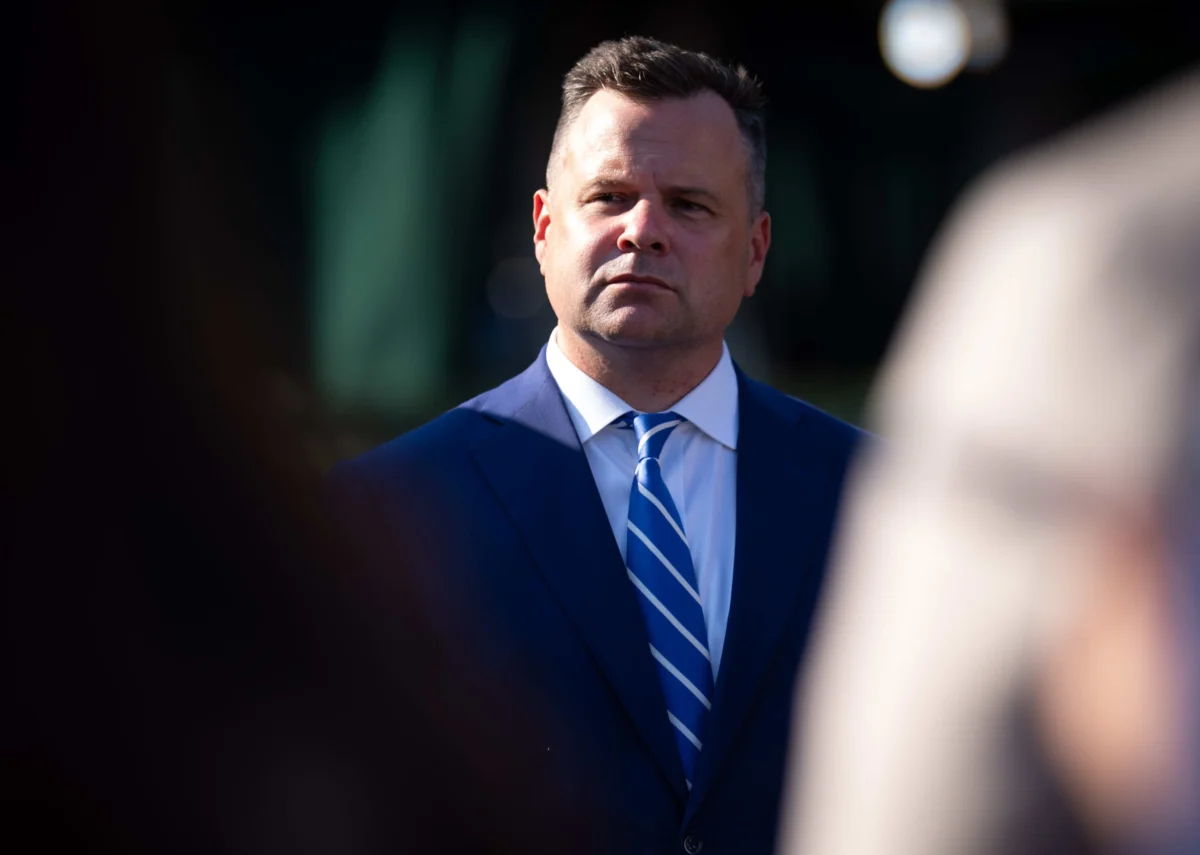
President Donald Trump’s recent designation of Bill Pulte, currently the director of the Federal Housing Finance Agency (FHFA), as the acting Director of National Intelligence (DNI) has triggered widespread alarm among intelligence analysts, former government officials, and federal lawmakers. The appointment, announced on Tuesday, July 22, 2026, places an individual with no prior experience in national intelligence at the helm of the sprawling U.S. intelligence community, granting him access to the nation’s most closely guarded secrets. Critics fear this move could exacerbate the politicization of the DNI office and severely undermine the integrity and effectiveness of U.S. intelligence-gathering operations.
Pulte, an investor and former executive at the homebuilding company PulteGroup before joining government service, will succeed Tulsi Gabbard, who resigned as DNI on May 22, 2026. His elevation from overseeing housing finance agencies like Fannie Mae and Freddie Mac to coordinating the 17 agencies and organizations that comprise the U.S. intelligence apparatus has been met with immediate and forceful condemnation, primarily due to his perceived lack of relevant qualifications and a contentious history of using government data to target political opponents.
The Genesis and Critical Mandate of the Director of National Intelligence Role
To fully grasp the profound implications of Pulte’s appointment, it is essential to understand the historical context and critical mandate of the Director of National Intelligence. The position was not an original fixture of the U.S. intelligence architecture but was created in response to a pivotal moment in American history: the intelligence failures that preceded the September 11, 2001, terrorist attacks. The 9/11 Commission Report, a comprehensive investigation into the attacks, starkly revealed a critical lack of coordination, communication, and information sharing among various intelligence agencies. This systemic breakdown prompted widespread calls for a central figure and office to unify and streamline the vast, often disparate, U.S. intelligence enterprise.
Consequently, the DNI position was established by the Intelligence Reform and Terrorism Prevention Act of 2004. Its primary responsibility is to serve as the principal intelligence advisor to the President, the National Security Council, and the Homeland Security Council. This involves a complex array of duties, including overseeing and directing the implementation of the National Intelligence Program, ensuring that intelligence information is integrated and disseminated effectively across the entire intelligence community, and providing objective, unbiased assessments to policymakers. The DNI is meant to be the independent arbiter of intelligence, presenting unvarnished truth to power, irrespective of political considerations.
The DNI’s authority extends over a vast network of intelligence components, including but not limited to the Central Intelligence Agency (CIA), the National Security Agency (NSA), the Defense Intelligence Agency (DIA), the Federal Bureau of Investigation (FBI), the National Geospatial-Intelligence Agency (NGA), the National Reconnaissance Office (NRO), and intelligence elements within the Departments of State, Treasury, Energy, and Homeland Security, as well as the military services. Given the sheer scope and sensitivity of this role, the statutory requirements for the DNI explicitly state that the individual "shall have extensive national security experience and management expertise." This crucial criterion, designed to safeguard the integrity and professionalism of the nation’s intelligence apparatus, is one that many critics argue Bill Pulte demonstrably lacks.
Bill Pulte’s Controversial Tenure at the FHFA: A Precedent for Concern
A significant and immediate source of apprehension surrounding Pulte’s new role stems directly from his prior actions as director of the Federal Housing Finance Agency. During his tenure, Pulte gained a reputation not merely as a housing regulator but as an assertive figure willing to leverage his official position and access to sensitive personal financial information for purposes that critics allege were overtly political. Specifically, he used his oversight of mortgage records from government-sponsored enterprises like Fannie Mae and Freddie Mac to initiate investigations and refer high-profile political adversaries of President Trump for prosecution. These actions have been widely condemned as an unprecedented and alarming weaponization of a regulatory agency for partisan ends.
One prominent example involves New York Attorney General Letitia James, a Democrat who had previously pursued numerous legal actions against President Trump and his business empire. Pulte’s office referred James for prosecution on charges of bank fraud, a move that critics saw as a retaliatory measure. Although the charges were subsequently dismissed, the incident raised serious questions about the appropriate use of government power and data.
Another contentious referral targeted Federal Reserve Governor Lisa Cook on similar allegations related to her mortgage records. This highly unusual intervention by a housing agency director into the affairs of a Federal Reserve governor prompted President Trump to attempt to fire Cook, an action that led to a significant legal battle still pending before the Supreme Court. These incidents fueled allegations that Pulte was selectively leveraging his authority and access to sensitive financial data to undermine critics and political opponents of the administration, thereby blurring the lines between regulatory oversight and political retribution.
Larry Pfeiffer, a former senior director of the White House Situation Room and chief of staff to former Central Intelligence Agency Director Michael Hayden, now director of the Hayden Center for Intelligence at George Mason University, articulated these fears with stark clarity. "We’ve seen what Pulte was willing to do with sensitive personal mortgage information by both disclosing it and weaponizing it against the president’s opponents," Pfeiffer stated. "Do we really now want to give this guy access to all of our nation’s deepest, most sensitive national security secrets? I don’t think so." Pfeiffer further emphasized the vast power of the DNI, who gains access to "any and all intelligence produced by the United States intelligence community," including the "most powerful surveillance tools of any nation in the world." While these tools are typically used against foreign adversaries, Pfeiffer warned, "there’s nothing technically that stops you from pointing them to American citizens," highlighting the potential for misuse if the office were politicized.
Expert Analysis: The Peril of Politicization and Erosion of Trust
The combination of Pulte’s lack of intelligence experience and his contentious history has led many national security experts to predict severe consequences for the U.S. intelligence community, both domestically and internationally. Brett Bruen, a former diplomat and National Security Council official under the Obama administration, who now runs the firm Global Situation Room, characterized the appointment as "the latest example of some of the amateurish, absurd assignments that Trump has made in the second term." He warned of "the very real possibility we could see our intelligence structures and systems further eroded, and the role of intelligence used in more inappropriate and even illegal ways."
Bruen highlighted the significant leap in the sensitivity and scope of information Pulte would now command. From what he termed "cafeteria-type sensitive information" at FHFA, Pulte would now be privy to "the crown jewels of our most protected secrets." This includes intimate details of highly sensitive intelligence collection efforts, the identities and methods of human intelligence sources (HUMINT), and the technical capabilities of advanced surveillance tools. The core concern is not merely about the potential for direct misuse, but also the broader risk that intelligence assessments could be subtly or overtly tailored to fit political narratives rather than objective reality. This would fundamentally compromise the intelligence community’s mission to provide unbiased, factual information, regardless of whether it aligns with current administration policy.
A former CIA station chief, who requested anonymity to discuss intelligence concerns freely, echoed these sentiments, stating that appointing a "lapdog is emblematic that he doesn’t have any respect or need for DNI." This perspective suggests a broader pattern where the DNI role, initially conceived as an independent coordinator and truth-teller, might be perceived by the administration as a political tool rather than a critical national security function requiring impartiality and deep expertise. Such a perception could demoralize career intelligence professionals, who pride themselves on their apolitical service, and ultimately undermine their ability to effectively safeguard national security.
White House Defense and Official Stance
Despite the widespread outcry and expert warnings, the White House has steadfastly defended President Trump’s choice. White House spokesperson Davis Ingle issued a statement via email, asserting, "The President chooses the best and most talented people to serve in his Cabinet. That is why this Administration has achieved record successes for the American people. Bill Pulte is a great selection and he will do a great job on behalf of the American people." This official response, however, largely sidestepped the specific concerns regarding Pulte’s qualifications in national intelligence and the potential for politicization. Instead, it offered a general defense of the administration’s appointment philosophy, emphasizing loyalty and perceived effectiveness rather than specific relevant experience for the DNI role.
Capitol Hill’s Alarmed Reactions Across the Aisle
The appointment has generated a swift and largely negative reaction on Capitol Hill, underscoring bipartisan unease with the decision. As an acting director, Pulte can serve for a maximum of 210 days without Senate confirmation. Should President Trump decide to nominate him for the full-time position, Pulte would face a rigorous and almost certainly contentious confirmation process, signaling a looming battle.
Senate Majority Leader John Thune (R-S.D.) offered a notably "frosty reaction" to the news, indicating significant Republican apprehension. When pressed by reporters about concerns that Pulte might weaponize intelligence against domestic opponents, Thune stated plainly, "We don’t need a weaponized DNI, we need professionals there." He further indicated that he would be seeking more information from the White House regarding their intentions for the position and cautioned that if Pulte were to be nominated for a permanent role, he would face a "lengthy road ahead of him" in the Senate. This statement from the top Senate Republican leader suggests substantial resistance to a permanent appointment for Pulte within his own party.
Senator John Cornyn (R-Texas), who recently lost his Senate primary election after President Trump endorsed his opponent, also expressed profound skepticism. He told reporters at the Capitol, "I see no evidence of any qualification for the job." Cornyn’s remarks highlight a segment of the Republican party that appears unwilling to rubber-stamp the President’s more controversial appointments, particularly those perceived as lacking the necessary professional credentials.
Democrats, meanwhile, have been unsparing in their condemnation. Senate Intelligence Committee Vice Chairman Mark Warner (D-Va.) issued a scathing statement, arguing that President Trump had "chosen an official who has demonstrated not just willingness but eagerness to use the authorities of government to pursue political retribution." Warner explicitly referenced the statutory requirement for the DNI to possess "extensive national security experience," a criterion he emphasized was established after the profound intelligence failures of 9/11. He concluded that Pulte "appears to have been selected precisely because the White House believes he will provide the narrative it wants, not the intelligence we need," encapsulating the core fear of political manipulation overriding objective intelligence analysis.
Legal and Procedural Challenges and the 210-Day Window
The legal framework governing acting appointments and DNI qualifications presents a complex landscape. The law creating the Office of the Director of National Intelligence mandates specific qualifications for a permanent director, emphasizing "extensive national security experience and management expertise." While the President has broad authority to make acting appointments, the spirit of the law and the critical, apolitical nature of the DNI role weigh heavily on these decisions. The statute also specifies that the principal deputy director, currently Aaron Lukas, "shall act for, and exercise the powers of, the Director of National Intelligence during the absence or disability of the Director of National Intelligence or during a vacancy in the position of Director of National Intelligence." This statutory provision raises pertinent questions about why Pulte, rather than Lukas—who presumably possesses greater experience within the intelligence community—was designated as acting DNI.
The possibility of legal challenges to Pulte’s appointment has been discussed among legal scholars and former officials, but experts remain skeptical about their immediate efficacy. Larry Pfeiffer suggested that while someone "could take [Trump] to court over this appointment? Possibly," he warned that Pulte’s 210-day acting period would likely expire before any such case could reach a definitive resolution. He thus concluded that such a legal challenge would be an "ineffective tool" for immediate removal. This highlights the limited avenues available to Congress or other entities to prevent an acting DNI from exercising the full powers of the office, at least in the short term, underscoring the urgency of the political and ethical concerns.
Broader Implications for U.S. National Security and Global Standing
The appointment of Bill Pulte as acting DNI carries profound implications for U.S. national security, both domestically and on the global stage. Domestically, the perception of a politicized intelligence apparatus could have far-reaching negative effects. It risks eroding public trust in the objectivity of intelligence assessments, potentially making it more difficult for intelligence agencies to attract and retain top talent who value integrity and non-partisanship, and fostering internal dissent and demoralization within the ranks of career intelligence professionals. The foundational principle that intelligence must be an objective, apolitical endeavor is paramount to its utility and legitimacy in a democratic society.
Internationally, the appointment could send a troubling signal to allies and adversaries alike. For allies, it might suggest that U.S. intelligence assessments are subject to political influence, potentially impacting the willingness of partner nations to share sensitive intelligence and engage in collaborative efforts against global threats. Trust is the bedrock of international intelligence cooperation, and any perceived breach of impartiality could severely damage these vital relationships. Adversaries, conversely, could exploit any perceived weakening of U.S. intelligence integrity for their own strategic advantage, potentially by sowing disinformation or testing vulnerabilities based on a belief that U.S. intelligence capabilities or resolve have been compromised by internal political machinations. The stability and credibility of the DNI role are thus paramount to maintaining the global standing and effectiveness of American intelligence operations.
The Road Ahead: Scrutiny and Uncertainty
As Bill Pulte embarks on his tenure as acting DNI, he will operate under intense scrutiny from Congress, the media, the intelligence community itself, and international partners. His every move, particularly concerning sensitive intelligence matters, will be viewed through the lens of his controversial past and the pervasive fears of politicization. The 210-day window presents a critical period for the administration to either prepare for a potentially arduous confirmation battle for Pulte or seek an alternative candidate with more conventional intelligence credentials. The decision President Trump ultimately makes regarding a permanent DNI nominee will undoubtedly shape the future trajectory of the DNI office and, by extension, the integrity and efficacy of U.S. national security intelligence for years to come. The correction to the original story regarding the length of the acting capacity (210 days, not 180) emphasizes the precise legal timelines that will govern this unfolding, high-stakes situation.
