

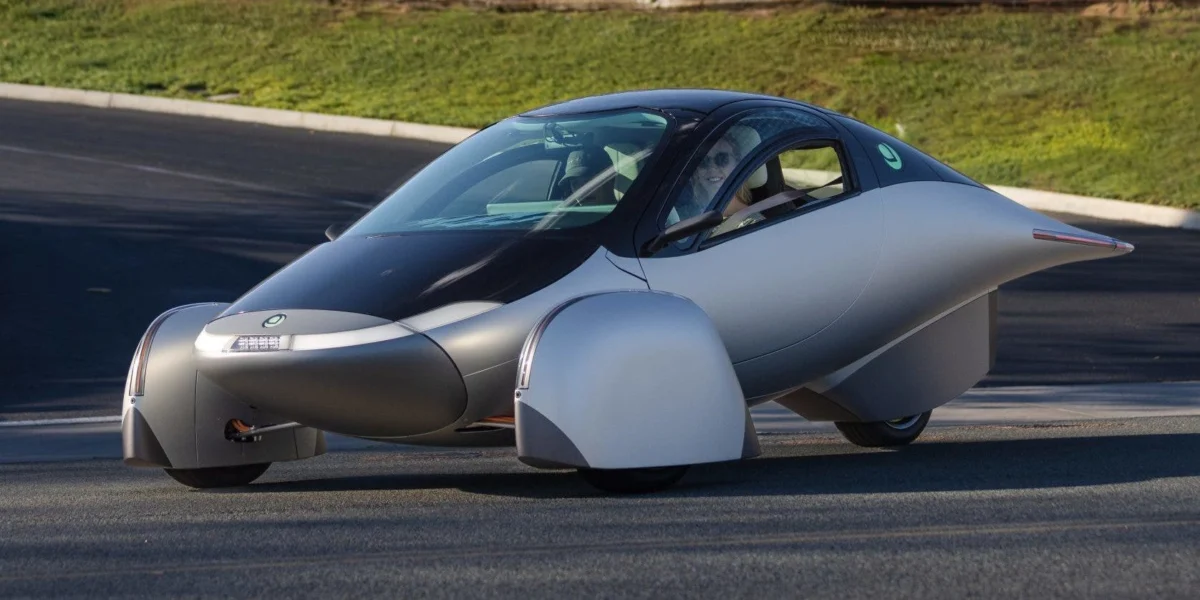
The pursuit of a "never-charge" electric vehicle has reached a significant technical milestone as Aptera Motors, the San Diego-based startup, recently concluded a series of solar harvesting tests with its latest validation vehicle, nicknamed "Atlas." According to data released by the company and subsequent technical analysis, the vehicle successfully demonstrated its ability to harvest energy directly from the sun using integrated solar cells, reaching a peak daily yield of 4.6 kilowatt-hours (kWh) under optimized conditions. This achievement serves as a critical proof of concept for the company’s proprietary solar technology, which utilizes curved solar panels and a custom-engineered solar charge controller designed to maximize energy intake throughout the day.
While the 4.6 kWh figure represents a peak achieved by repositioning the vehicle to follow the sun’s path—a method used to establish the upper limits of the system’s capability—the vehicle also met internal targets for stationary solar intake. These results validate the real-world functionality of Aptera’s "Never Charge" technology, which aims to provide enough daily solar range to cover the average American’s commute without ever plugging into the electrical grid. However, harvesting the energy is only the first half of a complex engineering equation; the second half relies on unprecedented vehicle efficiency to convert that energy into meaningful mileage.
The Engineering Challenge of Ultra-High Efficiency
To fulfill the promise of 40 miles of solar-generated range per day, Aptera must achieve a design target of 100 watt-hours per mile (Wh/mi), or 10 miles per kilowatt-hour. This efficiency target is significantly more ambitious than that of current market-leading electric vehicles. For comparison, the Tesla Model 3 and the Lucid Air—two of the most efficient mass-produced EVs currently available—typically achieve between 3.5 and 4.5 miles per kWh. To more than double the efficiency of the industry’s best performers, Aptera has focused on two primary pillars of automotive physics: aerodynamics and mass reduction.
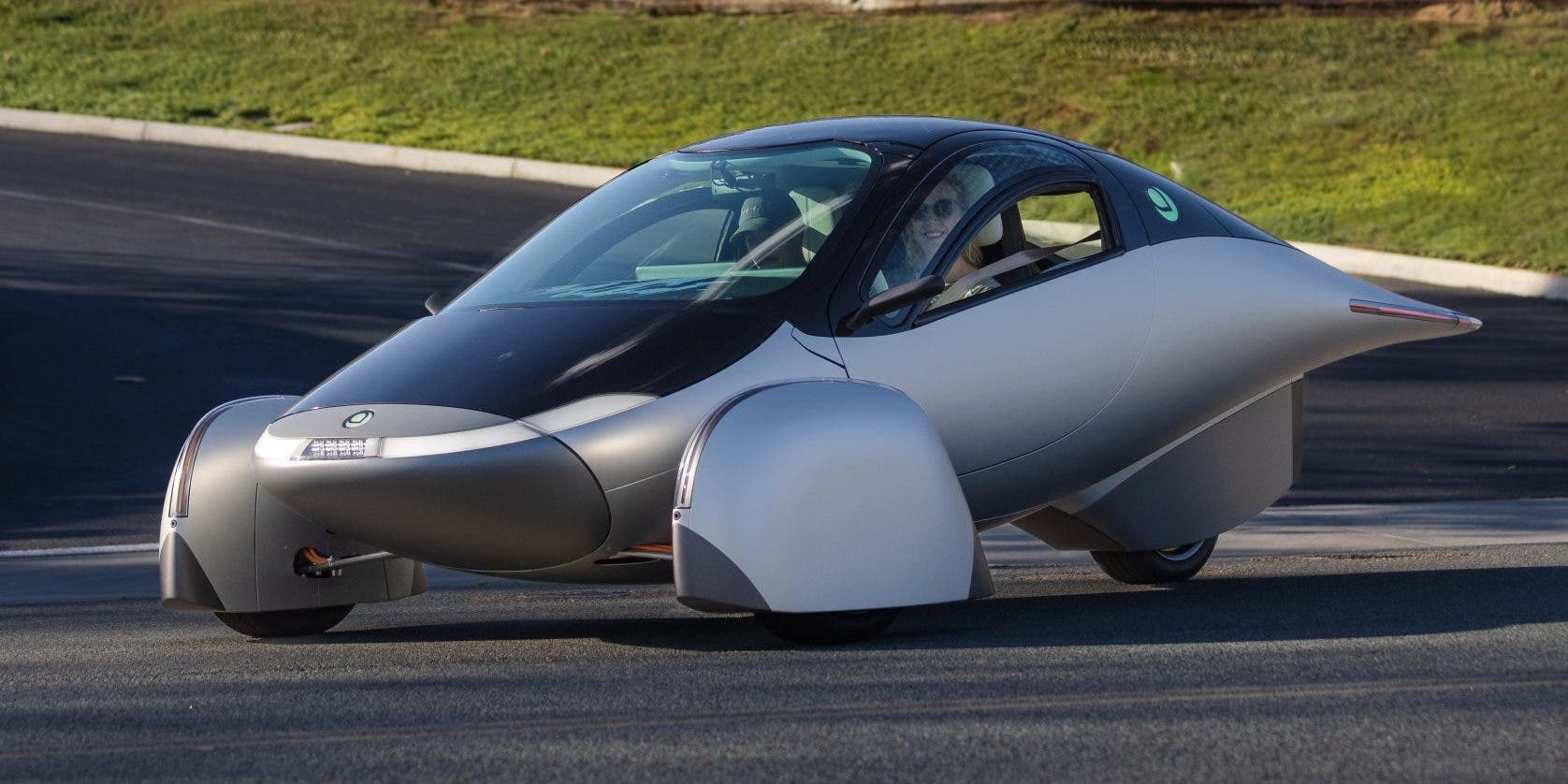
Aerodynamic drag is the most significant consumer of energy at highway speeds. Most modern sedans maintain a coefficient of drag ($C_d$) between 0.20 and 0.24. Aptera’s three-wheeled autocycle design utilizes a teardrop shape, a form factor widely recognized in fluid dynamics as the most efficient shape for moving through a medium. By eliminating the flat rear surface found on traditional cars, Aptera prevents the formation of a low-pressure vacuum zone that effectively "pulls" a vehicle backward. The company’s simulations suggest a $C_d$ as low as 0.13, a figure that would make it the most aerodynamic production vehicle in history.
In addition to air resistance, rolling resistance plays a crucial role in energy consumption. By utilizing a three-wheel configuration, Aptera reduces the friction points with the road by 25% compared to a traditional four-wheeled vehicle. Furthermore, the use of lightweight composite materials for the chassis and body—specifically a "Body in Carbon" (BinC) approach—allows the vehicle to remain significantly lighter than conventional EVs, which are often burdened by the weight of massive battery packs.
Chronology of Development and Testing
The path to the current Atlas validation vehicle has been marked by several years of iterative prototyping and testing. Following the company’s relaunch in 2019, Aptera moved through several alpha and beta stages before unveiling the "Gamma" prototype, which showcased the finalized interior and exterior design. The Atlas vehicle represents the "Production Intent" phase, where engineering theories are tested against the realities of manufacturing and daily operation.
In early 2024, Aptera conducted a series of "coastdown" tests, a standard industry procedure used to measure the total drag forces acting on a vehicle. During these tests, the vehicle is brought to a specific speed and then allowed to coast to a stop in neutral gear. Aptera reported that its validation vehicle took over three minutes to decelerate from 60 mph to a complete stop on a flat track, even demonstrating the ability to maintain momentum on slight inclines. These results provide empirical evidence that the vehicle’s mechanical and aerodynamic losses are exceptionally low.
The solar harvesting tests conducted in June 2024 focused on the "Solar Program," evaluating the efficiency of the Maxeon-sourced solar cells integrated into the vehicle’s skin. Engineers monitored the system’s performance across different latitudes and weather conditions to ensure the custom charge controller could handle fluctuating voltages and temperatures. The successful harvest of 4.6 kWh in a single day confirms that the solar array can provide the necessary "fuel" for the vehicle’s high-efficiency powertrain.
Upcoming Validation and Independent Testing
The next critical phase for Aptera is scheduled for July 2024, when the company intends to undergo third-party validation. Independent testing is a standard requirement for verifying manufacturer claims regarding range, safety, and efficiency. Following this validation, Aptera’s engineering team plans to conduct a "full-depletion" range test. Unlike simulations or short-distance extrapolations, this test will involve driving the vehicle from a 100% state of charge down to 0% to confirm real-world efficiency across the entire voltage range of the battery pack.
The results of these tests will be pivotal for the company’s "Launch Edition" vehicles. If the drive cycle confirms the 100 Wh/mi target, the 4.6 kWh harvested in the solar tests would translate to roughly 46 miles of range. This would exceed the company’s marketing claim of 40 miles of solar range per day, providing a buffer for drivers in less sunny climates or those with less efficient driving habits.
Broader Implications for EV Adoption and Infrastructure
The success of the Aptera SEV (Solar Electric Vehicle) model could address one of the most significant barriers to electric vehicle adoption: charging infrastructure. While the Biden-Harris administration and private entities have committed billions to expanding the DC fast-charging network, a substantial portion of the population remains "charging-challenged." This group includes apartment dwellers, those who rely on street parking, and residents of rural areas where the electrical grid may not support high-speed charging.

A vehicle capable of gaining 20 to 40 miles of range simply by being parked outdoors transforms the ownership experience for these demographics. By reducing the frequency of required plug-in sessions, Aptera lowers the total cost of ownership and mitigates "range anxiety" and "charger anxiety." From a grid-management perspective, solar-integrated vehicles act as decentralized energy generators, reducing the overall load on the utility grid during peak daytime hours.
Furthermore, the Aptera project represents a shift in the philosophy of EV design. Most manufacturers have responded to range concerns by installing larger, heavier battery packs, which in turn require more energy to move, creating a cycle of diminishing returns. Aptera’s focus on "efficiency first" suggests a more sustainable path forward, utilizing smaller battery packs (ranging from 25 kWh to 100 kWh) to achieve ranges that exceed those of vehicles with much larger capacities.
Market Context and Competitive Landscape
Aptera is not alone in the pursuit of solar integration, though it is currently the most prominent survivor in a challenging sector. Previous attempts by companies like Lightyear and Sono Motors faced significant financial and technical hurdles. Lightyear’s first model, the Lightyear 0, featured impressive solar capabilities but carried a price tag of approximately $250,000, leading to the company’s insolvency and subsequent restructuring. Sono Motors attempted to integrate solar into a more traditional hatchback form factor but ultimately pivoted to B2B solar integration for buses and trucks after failing to secure enough capital for passenger car production.
Aptera has managed to maintain momentum through a combination of crowdfunding, government grants—including a $21 million grant from the California Energy Commission—and a highly engaged community of over 45,000 reservation holders. By positioning the vehicle as an "autocycle," Aptera also benefits from a different regulatory framework than traditional four-wheeled passenger cars, allowing for more radical aerodynamic choices while still meeting stringent safety standards.
Conclusion
As Aptera moves into the final stages of validation for its Atlas vehicle, the automotive industry is watching closely to see if the company can bridge the gap between experimental physics and mass-market viability. The recent solar harvesting results are a promising indicator that the technology is maturing as expected. If the upcoming July tests confirm the 100 Wh/mi efficiency target, Aptera will have effectively redefined the parameters of electric mobility, proving that the sun can indeed provide a primary source of fuel for the modern commuter.
The implications extend beyond the individual driver. In an era where energy independence and grid resilience are increasingly prioritized, the emergence of a vehicle that operates largely outside the traditional refueling infrastructure represents a paradigm shift. For residents in high-insolation regions like the American Southwest, the Aptera could represent the first truly autonomous vehicle—not in terms of steering, but in terms of energy. As the company prepares for its final efficiency trials, the goal of a 1,000-mile range vehicle powered by the sun moves one step closer to the production line.
