


The forthcoming wave of ultra-high-net-worth individuals and families in Latin America is exhibiting a pronounced shift towards international engagement, moving beyond their ancestral business ties and embracing a more global perspective. This evolving landscape is significantly reshaping family office strategies and investment patterns across the region, according to insights shared by Mario Cavalieri, founder of the Brazil Family Office Club and a partner at BTG Pactual, Latin America’s largest investment bank.
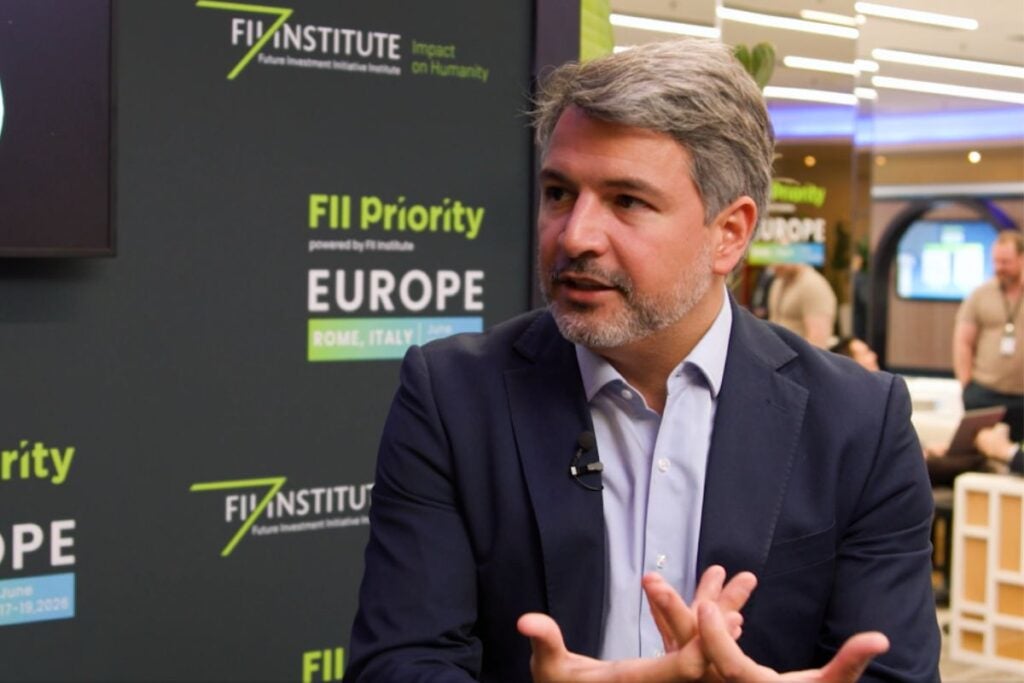
Cavalieri articulated this trend during an interview at FII Priority Europe, a prominent forum held in Rome. "We see the next generation in LATAM becoming much more global," he stated. "The second and third generations have been living abroad, studying abroad, and possess a broader network – and are thinking less about the specific business where the family originated." This departure from traditional family business structures signifies a deeper philosophical and operational transformation for many of the region’s most affluent families.
A New Era of Entrepreneurship and Global Ambition

The burgeoning international outlook of younger family members is leading many to pursue independent career paths before potentially re-engaging with family enterprises. Cavalieri noted that these individuals are increasingly drawn to roles as entrepreneurs, venture capitalists, or investment managers, often within prominent global financial institutions rather than exclusively within their family’s legacy businesses. "We see much more second and third-generation becoming entrepreneurs, venture capitalists, or investment managers – not for the family, but for big banks, asset managers, hedge funds," he explained.
This pursuit of independent achievement is not necessarily a rejection of family legacy but rather a deliberate strategy to forge their own identities and build distinct accomplishments. "They want to build their own kind of legacy and their own history, and then later be able to come back to the family," Cavalieri elaborated, typically assuming positions in executive leadership, family governance, or on boards and committees. This suggests a sophisticated approach to succession planning, where individual growth and experience are valued as crucial precursors to contributing to the family’s enduring success.
BTG Pactual’s European Foothold and Strategic Advantage
BTG Pactual, headquartered in São Paulo, has been actively cultivating its presence in Europe for nearly two decades. This strategic expansion serves a dual purpose: catering to the substantial European investments of its Latin American clientele and extending its services to a growing cohort of "global citizens" through an acquired bank in Luxembourg. Cavalieri highlighted the bank’s competitive edge in this arena. "We compete with the global, huge European banks, but I would say we have an edge in treating emerging markets clients more equally than the developed banks," he asserted. This approach underscores BTG Pactual’s commitment to providing tailored and equitable services to a diverse international client base, differentiating itself from more traditional, Western-centric financial institutions.

The bank’s operational reach extends beyond Europe, with a regional headquarters established in Riyadh, Saudi Arabia. This strategic outpost, according to Cavalieri, is designed to "bridge the gap" between Latin America and the Middle East, facilitating access to Gulf capital for Latin American companies and opening up Brazilian and broader Latin American markets to Middle Eastern investors. This initiative reflects a broader trend of increasing economic ties and investment flows between these historically distinct regions, facilitated by institutions adept at navigating both cultural and financial complexities.
The Brazil Family Office Club: A Hub for Regional Wealth
Cavalieri’s role as founder of the Brazil Family Office Club further illustrates his deep understanding of the Latin American wealth management landscape. Established in 2018, the club has grown from an initial group of five founding families to over 100 members, representing a significant portion of Brazil’s wealthiest families. Notably, it includes approximately 95% of Brazil’s top 50 billionaire families as recognized by the Forbes list. This network serves as a crucial platform for knowledge sharing, collaboration, and the development of best practices among the region’s leading family offices.
The club’s membership composition offers a compelling snapshot of the concentrated wealth within Brazil. The fact that BTG Pactual advises an estimated 95% of the largest single- and multi-family offices in Brazil and Latin America, totaling over 115 clients, underscores the bank’s dominant position in serving this elite segment. This concentration also suggests a degree of homogeneity in the challenges and opportunities faced by these entities, making a collective approach through the club particularly valuable.
Shifting European Investment Strategies and Perceived Challenges
Historically, Latin American families’ European investments were primarily concentrated in Switzerland. However, post-2015, there has been a noticeable diversification, with an increasing allocation to markets like Portugal, Luxembourg, and Liechtenstein. Cavalieri observed that these portfolios often exhibit a strategic placement at the extremes of the risk spectrum, with conservative allocations to bonds and fixed income, and more aggressive investments in real estate and private equity. This contrasts with the US market’s more pronounced emphasis on listed equities.
Despite this growing engagement, a significant concern voiced by clients regarding European investments is the perceived slowness of governmental policy implementation, particularly concerning technology and business development. Cavalieri attributes this partly to the complexities arising from navigating 27 distinct national jurisdictions within the European Union, a challenge he contrasts with the more unified policy environments found in the United States or China. "They fear maybe missing out on one thing or another related to local policies, local economy, which you don’t have in the US, for example, or China," he stated. This sentiment highlights a potential barrier to investment and innovation within Europe, as perceived by sophisticated global investors accustomed to more streamlined regulatory frameworks.
Brazil’s Strategic Position in a Shifting Global Economy

Looking ahead, Cavalieri expressed optimism about Brazil’s potential to benefit from the ongoing global trade realignments. The country’s abundant natural resources, including agricultural products, metals, minerals, oil, and gas, present significant opportunities. However, Brazil has historically faced challenges in adding value to these commodities before export. "Now we’re trying to invest and create our own kind of environment to be able to sell these commodities to the world with value added," Cavalieri explained, signaling a strategic pivot towards industrialization and higher-margin export products.
Furthermore, Brazil’s geopolitical positioning is seen as a distinct advantage. Its ability to maintain positive relationships with both the United States and China, while geographically proximate to the former, offers a degree of neutrality in an increasingly polarized global landscape. "This neutrality of Brazil, I think, is an edge for us," he concluded, suggesting that this diplomatic flexibility could translate into economic benefits and attract diverse international partnerships.
Broader Implications for Global Wealth Management
The observations from Cavalieri and BTG Pactual offer a compelling narrative of transformation within the Latin American wealth management sector. The increasing internationalization of the next generation signifies a departure from insular, regionally focused wealth preservation and growth. Instead, it points towards a more dynamic, globally integrated approach to investment, entrepreneurship, and philanthropic endeavors.

For family offices, this trend necessitates a re-evaluation of traditional governance structures, succession planning, and investment mandates. The emphasis on independent career development, the pursuit of entrepreneurial ventures, and the embrace of global networks suggest a need for greater flexibility and a willingness to support the evolving aspirations of younger family members.
The strategic implications for financial institutions like BTG Pactual are substantial. Their ability to cater to this increasingly globalized clientele, offering expertise across diverse markets and navigating complex regulatory environments, will be crucial for sustained growth. The bank’s emphasis on treating emerging market clients with parity to developed market clients could prove to be a significant differentiator in attracting and retaining this influential segment of global wealth.
Moreover, the challenges identified with European policy-making and the opportunities presented by Brazil’s strategic neutrality underscore the complex interplay of geopolitical, economic, and regulatory factors that shape global investment flows. As the world order continues to evolve, understanding these dynamics will be paramount for families and institutions alike seeking to preserve and grow their wealth across generations and continents. The rise of the globally-minded Latin American inheritor marks a significant chapter in the ongoing evolution of international finance and family enterprise.
