

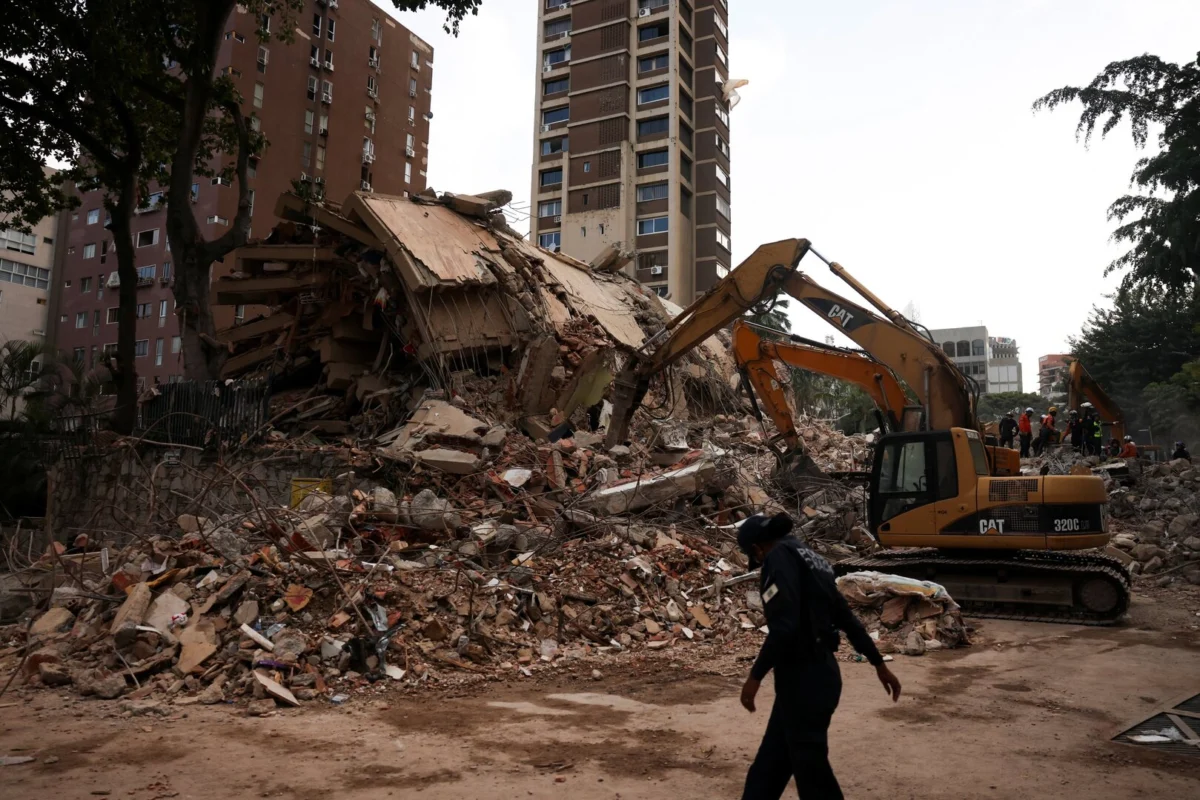
Rescue teams across Venezuela are locked in a desperate battle against time, meticulously sifting through mountains of rubble as the critical 72-hour “golden window” for finding earthquake survivors rapidly approaches. As search operations enter their second harrowing day, the hopes of locating those still alive beneath collapsed structures dim with each passing hour, yet the resolve of responders remains undeterred. From the heart of the disaster zone in Caracas, Al Jazeera’s Noris Soto reports on the urgent, painstaking efforts to unearth any signs of life.
A Nation Under Rubble: The Immediate Aftermath
The devastating earthquake, striking at approximately 4:37 AM local time on June 25, 2026, registered a formidable magnitude of 7.1 on the Richter scale, with its epicenter located roughly 20 kilometers northwest of Caracas at a shallow depth of 15 kilometers. This combination of high magnitude and shallow depth proved catastrophic, amplifying the seismic waves and unleashing immense destructive power across the densely populated capital and surrounding states including Miranda, La Guaira, and Aragua. The early morning tremor caught most residents asleep, leaving little time for evacuation and resulting in widespread building collapses, particularly in older, less resilient structures and informal settlements that dot the hillsides of Caracas.
Initial reports from the Ministry of Interior, Justice, and Peace indicate a rapidly escalating humanitarian crisis. While official casualty figures are still being compiled amidst the chaos, preliminary estimates suggest hundreds of fatalities and thousands injured. Hospitals, already strained by years of economic hardship, are overwhelmed with the influx of trauma victims, many suffering from severe crush injuries, fractures, and respiratory issues from dust inhalation. Communication networks have been severely disrupted, with power outages affecting vast swathes of the affected region, complicating rescue efforts and the dissemination of vital information. Major arteries leading into and out of Caracas have sustained significant damage, hampering the movement of emergency personnel and aid supplies.
The Crucial 72 Hours: A Race Against Hope
The scientific consensus on disaster response identifies the first 72 hours post-earthquake as the "golden window" – the period during which the vast majority of survivors trapped under debris are typically found. Beyond this timeframe, survival rates plummet dramatically due to factors such as dehydration, injuries, lack of oxygen, and the sheer weight of the rubble. As Venezuela enters the second full day of search operations on June 26, 2026, this critical window is narrowing, intensifying the urgency for every rescue worker on the ground.
Teams of Venezuelan civil protection personnel, firefighters, and military units, bolstered by highly specialized international Urban Search and Rescue (USAR) teams, are deploying advanced equipment. This includes acoustic listening devices capable of detecting faint sounds of life, thermal imaging cameras to locate heat signatures, and search and rescue dogs trained to pinpoint human scent amidst the debris. Heavy machinery is being used cautiously to clear larger sections of rubble, while human chains painstakingly remove smaller pieces, often by hand, to avoid further collapse and injury to potential survivors. The psychological toll on these responders, working ceaselessly under immense pressure, cannot be overstated as they navigate a landscape of devastation, often encountering heartbreaking scenes.
Chronology of Catastrophe: How Events Unfolded
The unfolding disaster has followed a grim, yet tragically familiar, pattern for major seismic events.
-
The Earth Trembles: Day One – June 25, 2026
The earthquake struck at 4:37 AM, instantly plunging Caracas and its environs into chaos. Residents reported being violently jolted awake, followed by the terrifying sound of cracking concrete and collapsing buildings. Within minutes, the first desperate calls for help began, though many telecommunication lines were already down. By sunrise, the scale of the destruction became horrifyingly clear, revealing widespread structural failures, particularly in older apartment blocks and multi-story buildings. President Nicolás Maduro, addressing the nation from Miraflores Palace, declared a national state of emergency, activated the National Risk Management System, and called for international assistance. Initial rescue efforts were spearheaded by local emergency services and volunteers, often working with rudimentary tools in the immediate hours following the quake. By late afternoon, the first international USAR teams from neighboring Colombia and Mexico, renowned for their expertise in seismic disasters, began arriving, setting up command centers and coordinating with Venezuelan authorities. The day concluded with continued aftershocks, exacerbating the instability of damaged structures and forcing intermittent pauses in rescue work. -
Intensified Efforts: Day Two – June 26, 2026
Day two dawned with a renewed sense of urgency. With more international aid personnel and equipment arriving, search operations intensified across designated priority zones in Caracas, including the heavily affected neighborhoods of Catia, El Valle, and La Pastora, and coastal areas in La Guaira. The focus shifted from immediate chaos response to systematic search and rescue, with teams working in rotating shifts to maintain continuous operations. Medical professionals set up field hospitals and triage centers near collapsed sites to provide immediate care to those rescued. The government released its first official, albeit preliminary, casualty report, confirming over 200 fatalities and more than 1,500 injured. Thousands were confirmed displaced, seeking refuge in makeshift shelters, sports complexes, and with relatives. The looming 72-hour mark became the central theme of all operational briefings, pushing responders to their absolute limits. Al Jazeera’s Noris Soto’s reports highlighted the sheer scale of the coordinated effort, with rescue dogs barking through the debris and the quiet, focused determination of search teams. -
Approaching the Threshold: Day Three and Beyond
As the article is published on June 26, 2026, the next 24 hours will be pivotal. The evening of June 27 will mark the grim 72-hour threshold. While hope for finding live survivors diminishes significantly after this point, rescue efforts typically do not cease entirely. Specialized teams may continue targeted searches based on credible leads or known locations of individuals, but the overall operational posture begins to transition towards recovery, debris removal, and humanitarian aid distribution. The coming days will also see a more comprehensive assessment of the damage, paving the way for long-term reconstruction planning.
Seismic Vulnerability and Urban Challenges
Venezuela is situated in a highly seismically active region, straddling the boundary between the South American and Caribbean tectonic plates. The complex interaction of these plates, particularly along major fault systems like the Boconó Fault and El Pilar Fault, makes the country prone to frequent seismic activity. Caracas itself has a tragic history of devastating earthquakes, notably the 1812 quake that flattened much of the city and the 1967 earthquake that caused significant casualties and structural damage.
Despite this known seismic risk, the enforcement of stringent building codes has been inconsistent over decades, exacerbated by periods of rapid urbanization and economic instability. Many older buildings were constructed before modern seismic standards were widely adopted, and informal settlements, often built on unstable hillsides with substandard materials, are particularly vulnerable. The recent earthquake has exposed these critical vulnerabilities, with many of the collapsed structures being residential buildings from the mid-20th century or informal constructions. The high population density of Caracas, home to millions, amplifies the potential for human loss and infrastructure damage during such events. Experts have long warned about the catastrophic potential of a major earthquake striking the capital, and these warnings have now become a devastating reality.
The Global Response: Aid Pours In
In the wake of the disaster, the international community has responded with swift offers of assistance, recognizing the scale of the humanitarian crisis and Venezuela’s limited internal resources.
-
Government Mobilization and Appeals
President Maduro reiterated his government’s commitment to prioritizing rescue and relief efforts, urging national unity. He announced the deployment of over 5,000 military personnel to assist civil protection units and established a national emergency fund. While Venezuela’s economic challenges have limited its capacity for large-scale disaster response, the government has appealed directly to the United Nations and friendly nations for specialized aid, medical supplies, and heavy equipment. Vice President Delcy Rodríguez held emergency meetings with ambassadors from various countries, outlining specific needs and coordinating the arrival of international assistance. -
International Solidarity
The United Nations Office for the Coordination of Humanitarian Affairs (UN OCHA) has activated its rapid response mechanisms, deploying assessment teams to Caracas to evaluate needs and coordinate international aid. Several countries have already dispatched USAR teams, including Mexico, Chile, and Spain, all with extensive experience in urban disaster response. The United States, despite political tensions, offered humanitarian assistance through USAID, though the modalities of delivery are still being discussed. The European Union announced an emergency aid package and deployed experts from its Civil Protection Mechanism. The International Federation of Red Cross and Red Crescent Societies (IFRC) has launched an emergency appeal, mobilizing its local network to provide first aid, shelter, and psychological support to affected communities. Cuba, a close ally, has sent medical brigades and construction engineers. -
Logistical Hurdles and Resource Scarcity
Despite the outpouring of international goodwill, significant logistical challenges persist. The damaged infrastructure, particularly roads and bridges, complicates the transport of heavy equipment and supplies from major entry points like Simón Bolívar International Airport in La Guaira. Fuel shortages, a chronic issue in Venezuela, threaten to impede ground operations. Furthermore, the country’s complex political landscape, while temporarily set aside for disaster response, could present long-term challenges for sustained international cooperation and reconstruction efforts. The coordination of diverse international teams with local authorities, often operating in a resource-scarce environment, requires meticulous planning and effective communication to maximize efficiency.
Humanitarian Crisis: Beyond the Rubble
The immediate aftermath of the earthquake has plunged tens of thousands of Venezuelans into a severe humanitarian crisis. Beyond the confirmed fatalities and injuries, an estimated 50,000 to 100,000 people have been displaced, their homes either destroyed or rendered uninhabitable. These individuals are now seeking shelter in temporary camps, public buildings, or with relatives, often lacking access to basic necessities.
Access to clean water, food, and sanitation facilities is a paramount concern, raising fears of outbreaks of waterborne diseases. The existing healthcare system, already under immense pressure with shortages of medicines, equipment, and personnel, is struggling to cope with the surge in demand. Many injured individuals require complex surgeries and long-term rehabilitation, putting an extraordinary strain on limited resources. Children, in particular, are highly vulnerable, facing trauma, displacement, and disruption to their education. Psychosocial support is urgently needed for survivors grappling with loss, fear, and uncertainty. The World Health Organization (WHO) has dispatched emergency medical supplies and is working with local health authorities to bolster response capacity.
Long-Term Implications: Rebuilding a Nation
The long-term implications of this earthquake for Venezuela are profound and far-reaching, touching upon economic, social, and political spheres.
- Economic Impact: The cost of reconstruction will be astronomical, potentially running into billions of dollars. Repairing damaged infrastructure – roads, bridges, power grids, water systems – will require massive investment. The disruption to economic activity, particularly in Caracas, the country’s economic hub, will have a ripple effect on national productivity. The housing crisis will be exacerbated, requiring extensive rebuilding and resettlement programs.
- Social Fabric: The psychological trauma inflicted on the population will endure for years. Entire communities have been shattered, and the process of healing and rebuilding social cohesion will be arduous. The displacement of families and the loss of livelihoods will contribute to increased poverty and social instability.
- Political Landscape: The government’s handling of the crisis will be under intense scrutiny, both domestically and internationally. Effective and transparent disaster response and reconstruction efforts could potentially foster national unity, while perceived failures could exacerbate existing political tensions. The need for international aid could also open avenues for increased dialogue and cooperation with countries that have historically been critical of the Venezuelan government.
- Infrastructure Resilience: This disaster serves as a stark reminder of the urgent need for improved infrastructure resilience. Enforcing modern seismic building codes, retrofitting existing vulnerable structures, and investing in early warning systems must become national priorities to mitigate the impact of future seismic events.
The Human Spirit Amidst Despair
Amidst the devastation, stories of incredible resilience and humanity continue to emerge. Neighbors are helping neighbors, volunteers are flocking to donation centers, and the sheer determination of rescue workers, often operating with minimal rest, serves as a testament to the enduring human spirit. While the odds of finding survivors dwindle, the collective effort to save lives and support those affected paints a picture of a nation united in grief but also in unwavering resolve.
Looking Ahead: Preparedness and Resilience
As the rescue phase inevitably transitions into recovery and reconstruction, Venezuela faces an immense challenge. This catastrophic event must serve as a catalyst for a comprehensive reassessment of national disaster preparedness strategies. This includes not only enhancing emergency response capabilities but also prioritizing investments in resilient infrastructure, urban planning that considers seismic risks, and public education campaigns on earthquake safety. The international community’s sustained support, coupled with internal reforms and transparent governance, will be crucial in helping Venezuela rise from the rubble and build a more resilient future. The memories of June 25, 2026, will forever be etched in the nation’s history, a somber reminder of nature’s power and humanity’s enduring struggle for survival and recovery.
