

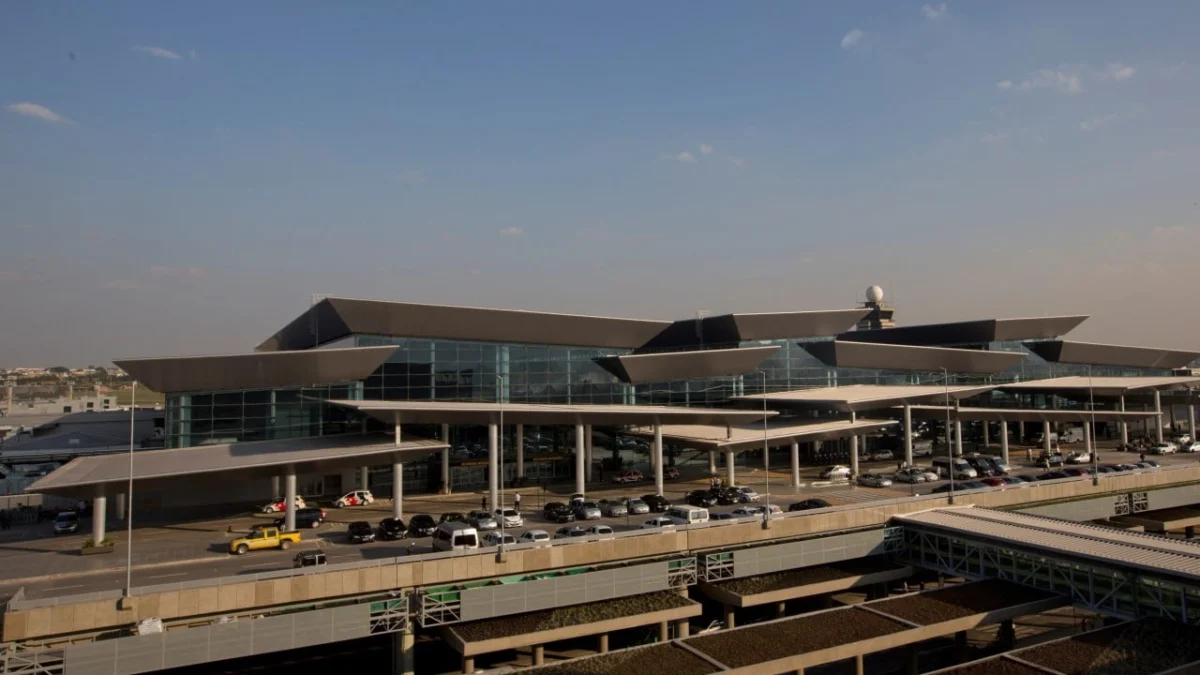
Brazil’s Federal Police took a Spanish national into custody on Wednesday at the Guarulhos International Airport in São Paulo, marking the latest enforcement of the country’s increasingly stringent anti-racism statutes. The arrest occurred following a domestic flight operated by LATAM Airlines, which had arrived from São Luis, the capital of the northeastern state of Maranhão. The incident, involving alleged racial abuse directed at ground staff, underscores a growing trend of Brazilian authorities exercising a zero-tolerance policy toward discriminatory behavior, particularly involving foreign visitors.
According to official statements from the Federal Police, the intervention was requested by the flight crew of the LATAM aircraft immediately upon landing. The suspect, whose identity has not been officially released in accordance with privacy protocols during the early stages of investigation, allegedly directed racially charged insults at workers responsible for unloading baggage from the aircraft. Witnesses reported that the aggression occurred in a public area of the tarmac or baggage handling zone, leading to an immediate halt in operations while security personnel were summoned. The individual was detained as she disembarked and was subsequently escorted to the Federal Police station within the airport for formal processing.
The Legal Framework of Anti-Racism in Brazil
Brazil maintains some of the most rigorous anti-racism legislation in the Western Hemisphere. The nation’s legal approach to discrimination underwent a significant transformation in early 2023 when President Luiz Inácio Lula da Silva signed a law that equated "racial injury" (injúria racial) with the crime of racism. Under the previous legal framework, racial injury—insulting someone based on their race, color, ethnicity, or national origin—was often treated as a lesser offense with lighter penalties and the possibility of bail.
The new legislation, however, classifies racial injury as a crime that is non-bailable and not subject to a statute of limitations. Penalties for these offenses now range from two to five years of imprisonment, accompanied by substantial fines. Furthermore, the law stipulates that the penalty can be doubled if the crime is committed by two or more people or if it occurs in the context of sporting or cultural events. This legal shift reflects a broader societal movement in Brazil to address deep-seated systemic inequalities and to protect its citizens from public and private displays of prejudice.
The arrest at Guarulhos is a direct application of these updated statutes. By detaining a foreign national, the Brazilian government is signaling to the international community that sovereign laws regarding human rights and dignity apply to all individuals within its borders, regardless of their citizenship or tourist status.
Chronology of Recent High-Profile Incidents
The detention of the Spanish citizen is not an isolated event but part of a series of high-profile arrests that have drawn international attention to Brazil’s judicial rigor.
In January 2024, a significant incident occurred in Rio de Janeiro involving Agostina Paez, an Argentine citizen. Paez was arrested after being filmed at a nightclub making monkey gestures and sounds at a waiter—a widely recognized and derogatory racial slur. The video of the incident went viral on social media platforms, sparking national outrage and leading to her immediate detention.
The Paez case became a diplomatic talking point. Initially barred from leaving Brazil while the judicial process commenced, she was eventually permitted to return to Argentina in April 2024. Upon her arrival in Buenos Aires, she was seen meeting with Senator Patricia Bullrich, a prominent political figure and ally of President Javier Milei. This meeting highlighted the friction that can arise when domestic criminal matters intersect with international political affiliations, though the Brazilian judiciary maintained that the legal process followed standard protocols for crimes of this nature.
Another catalyst for Brazil’s heightened sensitivity and legal reform was the repeated racial abuse suffered by Brazilian soccer star Vinicius Junior while playing for Real Madrid in Spain. The lack of immediate and severe consequences for offenders in Europe prompted the Brazilian government to take a proactive stance. In 2023, the "Vini Jr. Law" was enacted in several Brazilian states, which allows for the suspension or termination of sporting events in the event of racist behavior and mandates educational campaigns within stadiums. The international outcry over Vinicius Junior’s treatment served as a rallying cry for Brazilian legislators to ensure that similar behavior within Brazil would be met with the full force of the law.
Corporate Responsibility and Official Responses
LATAM Airlines, the carrier involved in Wednesday’s incident, released a formal statement condemning the actions of the passenger. The company emphasized its commitment to the safety and dignity of its employees, stating that there is "no justification for aggression directed at its workers." The airline further reiterated its policy of zero tolerance for any form of racism or discrimination, noting that it fully cooperated with the Federal Police to ensure the suspect was apprehended.
The role of the flight crew in this incident is particularly noteworthy. In many jurisdictions, verbal abuse is often de-escalated or handled through administrative bans. However, the decision of the LATAM crew to involve federal law enforcement immediately upon landing demonstrates a shift in corporate culture in Brazil, where employees are increasingly empowered to report crimes of prejudice as serious legal infractions rather than mere customer service disputes.
The Federal Police have indicated that the investigation will include testimony from the baggage handlers who were targeted, as well as other ground crew members who witnessed the exchange. Under Brazilian law, the "flagrante" (red-handed) nature of the arrest allows for a streamlined initial process, though the suspect will have the right to a legal defense as the case moves toward a potential trial.
Data and Statistical Context of Racial Crimes in Brazil
Brazil’s census data indicates that more than 50 percent of the population identifies as Black or mixed-race (pardo), making it the country with the largest African-descendant population outside of Africa. Despite this demographic reality, the country has long struggled with "cordial racism"—a term used by sociologists to describe a society where discrimination is pervasive but often denied or minimized.
Data from the Brazilian Public Security Forum shows a marked increase in the reporting of racial crimes over the last three years. In 2022, the number of registered cases of racial injury grew by over 30 percent compared to the previous year. Experts suggest this increase does not necessarily indicate more frequent racism, but rather a higher propensity for victims to report these crimes and a more efficient recording system by police departments.
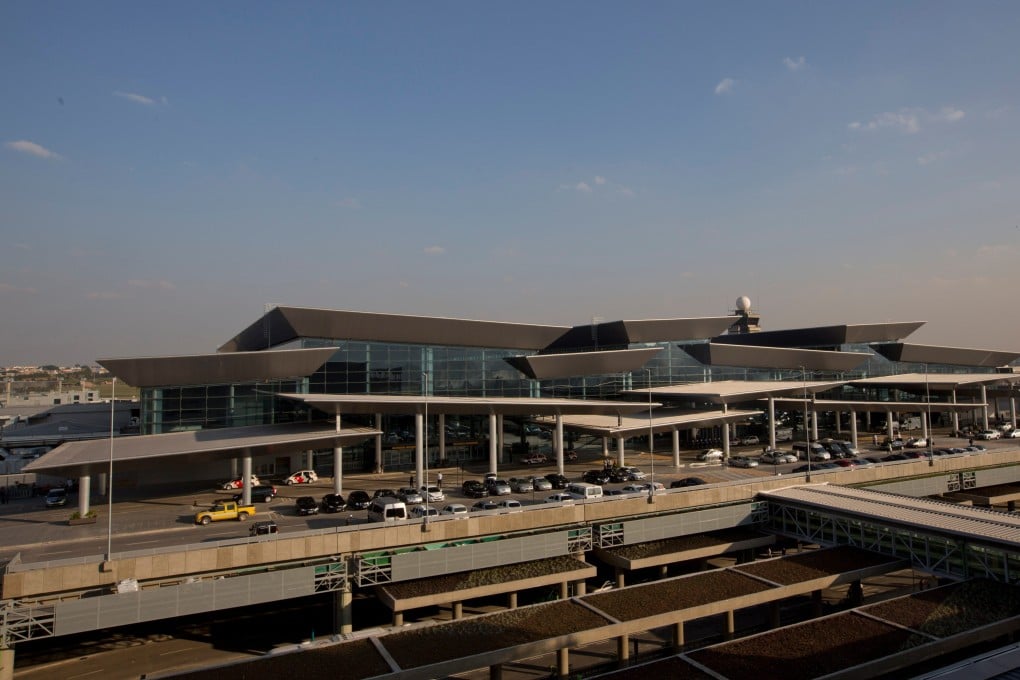
The concentration of these arrests at international gateways like Guarulhos—the busiest airport in South America—is significant. It serves as a primary point of entry for millions of foreign visitors annually. The high visibility of these arrests serves as a deterrent and an educational tool, informing travelers that the legal consequences for discriminatory speech in Brazil are far more severe than in many other nations.
Implications for International Relations and Tourism
The arrest of foreign nationals for racism poses unique challenges for Brazilian diplomacy. While the government remains steadfast in its enforcement of domestic law, these incidents often require coordination with foreign consulates. In the case of the Spanish national, the Spanish Consulate in São Paulo is expected to provide standard consular assistance, which includes ensuring the detainee has access to legal representation and that her basic rights are respected during her time in the Brazilian prison system.
However, Brazilian officials have made it clear that diplomatic status or foreign citizenship does not provide immunity from anti-racism laws. This stance has been lauded by human rights organizations within Brazil, who argue that for decades, foreign tourists often acted with a sense of impunity, believing that "minor" insults would be overlooked to preserve tourism revenue.
The Ministry of Tourism and the Ministry of Racial Equality have recently discussed joint initiatives to provide "behavioral guidelines" for international visitors. These guidelines aim to educate tourists on Brazil’s strict social and legal codes regarding race, emphasizing that what might be considered a "joke" or a "lapse in judgment" in another country is a felony in Brazil.
Analysis of the Broader Impact
The detention of the Spanish citizen at Guarulhos is a microcosm of a larger national effort to redefine Brazilian identity and justice. By treating racial abuse with the same gravity as violent crimes, Brazil is attempting to dismantle the "myth of racial democracy"—the long-held belief that the country was free of racial tension due to its history of miscegenation.
This legal trend also places pressure on other Latin American nations to harmonize their laws. As Brazil takes the lead in penalizing discrimination, neighboring countries are observing the social and political outcomes. The intersection of labor rights and anti-racism is also evident here; the victims in this latest case were essential workers (baggage handlers), a group that historically has been vulnerable to abuse from wealthier domestic and international travelers.
As the case of the Spanish national moves through the Brazilian judicial system, it will likely serve as another benchmark for the effectiveness of the 2023 legal reforms. If convicted, the individual faces a prison sentence that cannot be commuted to a fine alone, ensuring that the penalty carries a significant weight of rehabilitation and social signaling.
The message from the Brazilian authorities remains unequivocal: the nation’s airports, stadiums, and public spaces are no longer environments where discriminatory behavior can be practiced without consequence. For the workers at Guarulhos and across the country, these enforcement actions represent a long-awaited recognition of their right to work in an environment free from racial hostility. For the international community, it serves as a stark reminder of the importance of respecting the dignity and legal standards of the host nation.
