

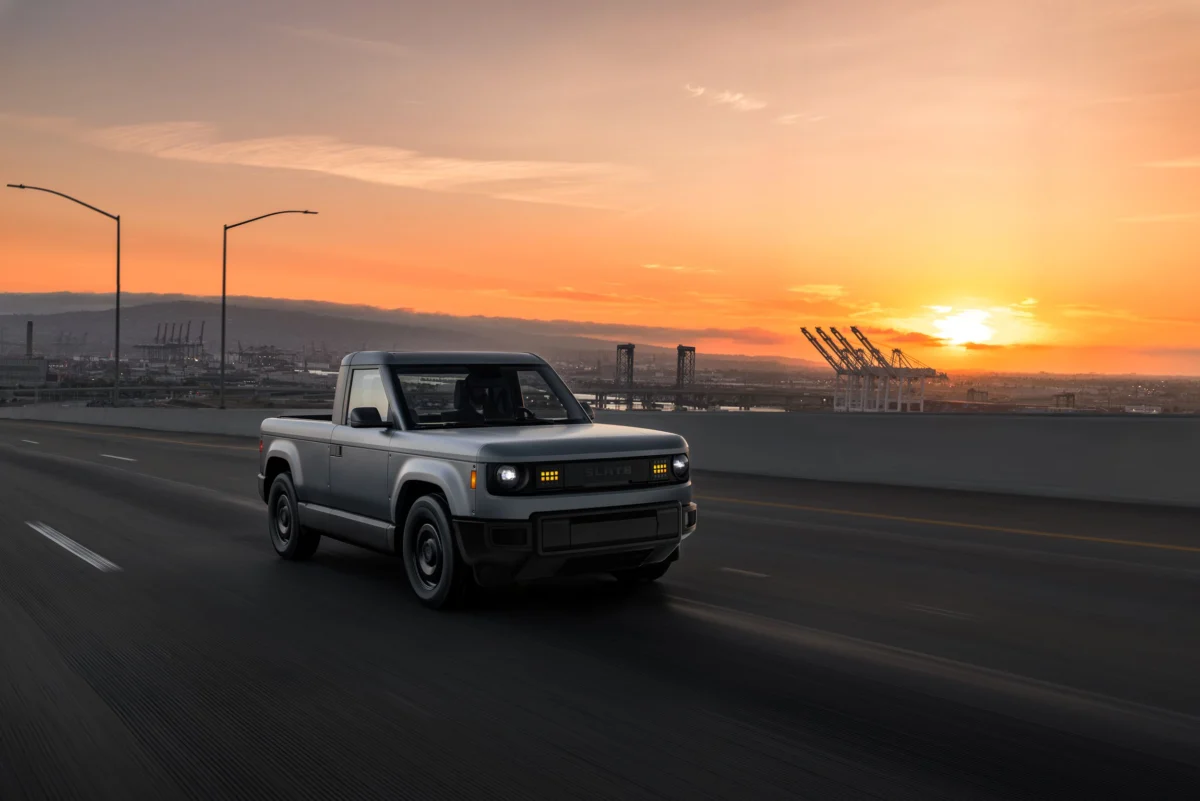
The American automotive landscape is currently undergoing a significant transformation as the initial wave of high-priced, luxury electric vehicles (EVs) gives way to a new era of pragmatism and affordability. In a market where the average new car transaction price has surged past $50,000, a new contender named Slate is challenging the status quo with a sub-$25,000 electric pickup truck. This strategic pivot comes at a critical juncture for the industry, following the high-profile recalibration of legacy manufacturers like Ford, which recently moved away from its full-sized electric flagship to focus on smaller, more cost-effective platforms. As Slate prepares for its first deliveries, its entry represents more than just a new product; it is a litmus test for whether the American consumer is ready to trade digital frills for mechanical utility in the transition to electrification.
The Evolution of the Electric Truck Market
The journey toward a viable electric pickup truck began with grand ambitions and premium price tags. In May 2021, Ford Motor Company captured global attention with the announcement of the F-150 Lightning. At its launch, the Lightning promised to bridge the gap between traditional workhorses and future technology, offering an entry-level Pro trim at just under $40,000. However, as supply chain pressures mounted and luxury-oriented consumers dominated early adoption, prices escalated rapidly. The top-tier Platinum trim eventually eclipsed the $90,000 mark, placing the vehicle out of reach for the average American household and many small business owners.
By December 2025, the market reality forced a major strategic shift. Ford officially "pulled the plug" on the existing F-150 Lightning framework in favor of a more diversified hybrid approach and a secretive "skunkworks" project dedicated to developing a smaller, more affordable electric platform. This transition highlighted a growing realization within the industry: while large, powerful electric trucks demonstrated the capability of EV technology, their high costs and energy requirements created a ceiling for mass-market penetration.
In the wake of this shift, a new category of "downsized" electric pickups has emerged. This segment is characterized by a focus on efficiency, urban maneuverability, and lower entry costs. Alongside Ford’s upcoming affordable EV, companies like Telo are readying the MT1, a "mini" electric truck designed for tight city environments. However, it is Slate—a startup partially backed by Amazon founder Jeff Bezos—that has positioned itself as the most aggressive player in the race for affordability.
Slate: The $24,950 Proposition
Slate’s approach to the electric truck market is defined by radical simplification. The company’s base model, aptly named the "Blank Slate," carries a starting price of $24,950. To achieve this price point in an era of rampant inflation, Slate has systematically removed the "frills" that have become standard in modern vehicles. The interior lacks a built-in touchscreen, replacing it with a simple mounting clip for the driver’s smartphone—a move that acknowledges the superior processing power and interface of personal mobile devices while reducing manufacturing costs.
The vehicle’s physical construction further reflects this minimalist philosophy. The Slate features manual window winders and is available in only one standard color: a signature gray tone that is molded directly into the composite body panels. This eliminates the need for expensive paint booths and reduces the environmental impact of the manufacturing process. By focusing on the essentials, Slate aims to provide a "pure" truck experience that prioritizes utility over aesthetics.
Despite its budget-friendly positioning, Slate has reported significant consumer interest. The company claims to have received approximately 180,000 reservations to date. If even 50% of these reservations convert into final sales, Slate would immediately surpass the delivery volumes of more expensive competitors like the Tesla Cybertruck, which has faced its own share of production and pricing challenges. For a $300 deposit (or $250 for early reservation holders), Slate is offering a tangible alternative to the $60,000-plus electric trucks currently dominating the market.
Technical Specifications and Performance
The "Blank Slate" is powered by a rear-wheel-drive, single-motor configuration and a 65-kWh lithium iron phosphate (LFP) battery pack. LFP chemistry is increasingly favored for budget-conscious EVs due to its lower cost, enhanced safety profile, and longer cycle life compared to traditional nickel-cobalt-manganese (NCM) batteries.
Recent pre-production testing has led Slate to increase its estimated range to 205 miles per charge, a 37% improvement over its initial projections of 150 miles. While this range is lower than that of premium electric trucks, it is designed to meet the daily requirements of the "work-at-home" or "local utility" demographic. The truck offers a 2,000-pound towing capacity and a 1,550-pound payload rating, figures that are modest but sufficient for DIY projects, light landscaping, and urban deliveries.
Performance metrics are equally pragmatic:

- 0-60 mph: 8 seconds
- Top Speed: 90 mph
- DC Fast Charging: 120 kW (20% to 80% in 30 minutes)
- Level 2 Home Charging: Up to 17 hours for a full charge
The vehicle’s dimensions place it in the "compact" category. At 175 inches long, it is shorter than the Ford Maverick, yet it manages to offer a 60-inch cargo bed—six inches longer than the Maverick’s bed. This "bed-first" design philosophy ensures that the vehicle remains a capable hauler despite its small footprint.
Modularity and the Accessory Ecosystem
One of Slate’s most innovative features is its modular body design. While it launches as a two-seat pickup, buyers can choose to configure it as an SUV in two distinct styles: the "Squareback" or the "Fastback," starting at $29,950. The company’s engineering allows for the pickup to be converted into an SUV at a later date, providing a level of flexibility rarely seen in the automotive industry.
To supplement its low base price, Slate has developed an ecosystem of over 200 accessories. Most are priced under $500 and include items such as roof racks, specialized stereo systems, and protective covers for seats and lights. To address the "only gray" color limitation, the company offers a full-vehicle color wrap system. Starting at under $500, these wraps allow owners to choose from over 100 hues, with an application process that reportedly takes only a few hours. This strategy allows Slate to maintain a streamlined assembly line while still offering personalization to the consumer.
Manufacturing and Maintenance Strategy
Slate has selected Warsaw, Indiana, as its manufacturing hub. The company plans to invest nearly $400 million into a "reindustrialized" factory in the region, leveraging Indiana’s existing automotive supply chain and workforce expertise. This investment is seen as a major boost for the local economy and a signal of Slate’s commitment to domestic production.
The company’s approach to maintenance is as unconventional as its design. The Slate is engineered with fewer than half the parts of a typical internal combustion engine pickup, theoretically reducing the number of potential failure points. To empower owners, the company has launched "Slate U," a comprehensive DIY repair guide that encourages self-service for minor issues. For more complex repairs, Slate has established a partnership with over 3,000 RepairPal-certified shops across the United States, ensuring that owners have access to professional service without the need for a traditional dealership network. The powertrain and battery are backed by a 10-year or 110,000-mile warranty, providing a safety net for those concerned about the longevity of the new technology.
Market Analysis: The $25,000 Gamble
The success of Slate depends on its ability to capture a segment of the market that many analysts believe is disappearing. Data from Edmunds indicates a stark decline in the availability of affordable vehicles. In 2019, nearly 21% of new vehicles sold in the U.S. were priced at $25,000 or less. By 2025, that figure is projected to drop below 5%.
Ivan Drury, Edmunds’ director of insights, suggests that Slate is taking a significant risk by betting on simplicity. "Our data shows the market walked away from that price years ago," Drury noted. "This is a real test of how much affordability still matters. The base pricing is the headline, but it is paired with an unconventional build and a powertrain that is proven harder to sell today. The real question is whether the enticing price alone can overcome that."
The "powertrain" challenge Drury refers to is the current cooling of the EV market. While early adopters were eager to pay a premium for cutting-edge technology, the "early majority" of consumers is more concerned with charging infrastructure, range anxiety, and resale value. Slate’s 205-mile range—based on internal approximations of the EPA cycle rather than official ratings—may be a sticking point for those accustomed to the 400-plus mile range of gasoline trucks.
Broader Implications for the Industry
The emergence of Slate and the downsizing of electric trucks represent a "course correction" for the industry. For the past decade, the narrative has been that EVs must be faster, more luxurious, and more technologically advanced than their gasoline counterparts to justify their existence. Slate is arguing the opposite: that the true path to electrification lies in making EVs simpler and more affordable than traditional vehicles.
If Slate succeeds, it could force legacy automakers to accelerate their own "skunkworks" projects and rethink their reliance on high-margin luxury EVs. It also highlights the role of private capital and high-profile backing—such as the involvement of Jeff Bezos—in disrupting established markets. By focusing on a "tool" rather than a "status symbol," Slate is attempting to bring the electric vehicle to the working class, a demographic that has largely been ignored during the first decade of the EV revolution.
As the first Slate trucks move toward production in Indiana, the automotive world will be watching closely. If the 180,000 reservation holders follow through, it will prove that there is a massive, untapped demand for basic, functional transportation. In an era of $1,000 monthly car payments and over-engineered cockpits, the "Blank Slate" may be exactly what the American market needs to finally move the needle on electric adoption.
