

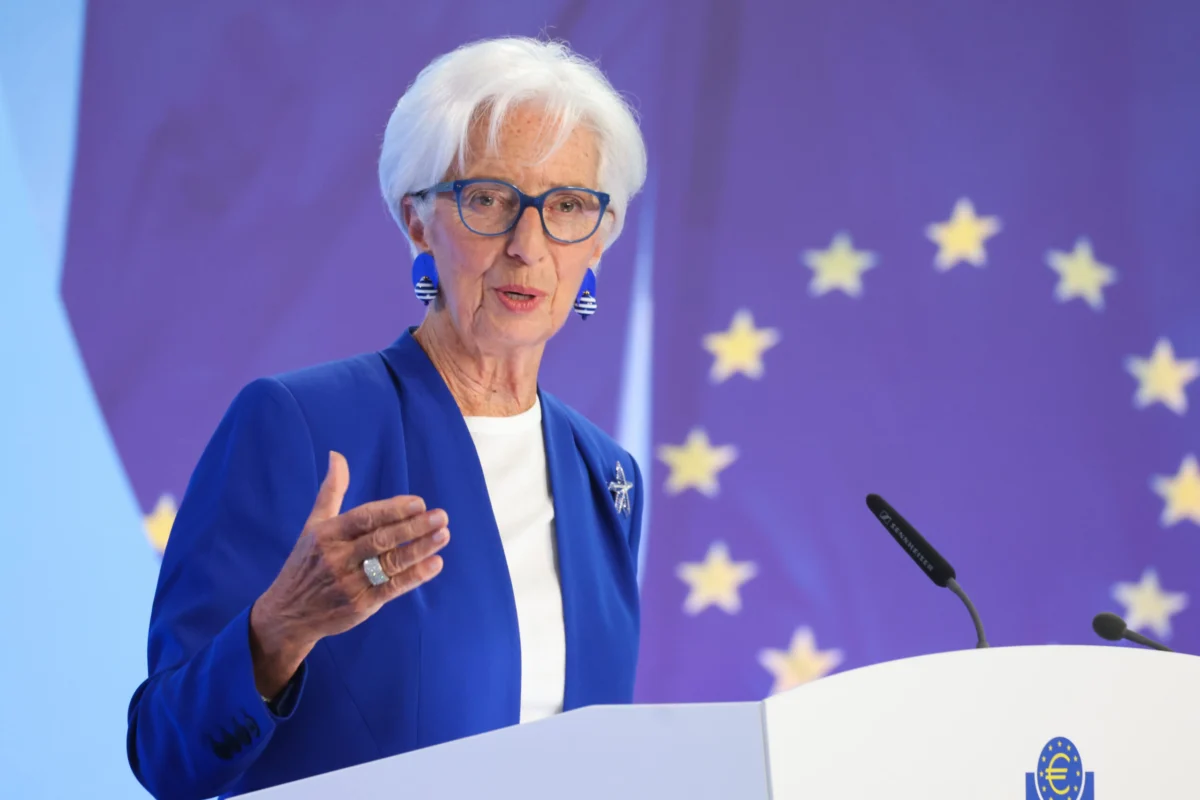
The European Central Bank announced a quarter-point rate hike on Thursday, June 11, 2026, bringing its key interest rate to 2.25% as the ongoing conflict between Iran and its adversaries continues to exert significant upward pressure on inflation across the euro zone. This move marks a pivotal moment for the central bank, signaling a more assertive stance in combating persistent price increases that have been exacerbated by geopolitical instability in the Middle East.
Governing Council’s Decision and Rationale
The decision by the ECB’s Governing Council was widely anticipated, with financial markets having priced in a near-100% probability of a rate increase of at least 25 basis points ahead of the June meeting, according to data from LSEG. The primary driver behind this hawkish policy adjustment is the escalating inflation, directly linked to the burgeoning war in the Middle East.
In its official statement, the ECB explicitly stated that the rate hike was implemented "in a bid to ward off inflationary pressures generated by the U.S.-Iran war." The central bank underscored the gravity of the situation, noting that "the war in the Middle East is generating inflation pressures, and the decision to raise rates is robust across a range of scenarios mapping out how the shock might evolve and affect the medium-term outlook for the euro area." This statement highlights a proactive approach by the ECB, acknowledging the potential for a prolonged and multifaceted impact of the conflict on the economic landscape.
Revised Inflation and Growth Forecasts
Accompanying the rate decision, the ECB also revised its inflation forecasts upward. The central bank now anticipates headline inflation in the euro zone to average 3% for the entirety of 2026. This figure represents a notable increase from previous projections, reflecting the sustained impact of the conflict. The forecast suggests a gradual cooling of inflation, with an expected average of 2.3% in 2027, before potentially settling at the ECB’s target of 2% in 2028.
The upward revision in inflation forecasts is largely attributed to expectations of persistently higher energy prices. These elevated energy costs are projected to have a ripple effect, feeding into the prices of essential goods, food items, and a wide array of services, thereby contributing to broader inflationary pressures.
Conversely, the ECB has revised its economic growth forecasts downward for both the current year and the next. The central bank now projects euro zone growth to average 0.8% in 2026, a moderation from earlier expectations. Growth is anticipated to pick up slightly to 1.2% in 2027 and further to 1.5% in 2028.
Officials explained that the trimming of growth outlooks was a direct consequence of recognizing "a more pronounced impact of the war on commodity markets, real incomes and confidence." The economic repercussions of the conflict are evidently being factored into the central bank’s forward-looking assessments, indicating a cautious outlook for economic expansion in the near to medium term.
President Lagarde’s Commentary and Outlook
Speaking to reporters following the announcement, ECB President Christine Lagarde reiterated the central bank’s assessment of the war’s inflationary impact. She emphasized the prevailing uncertainty surrounding the economic outlook, characterizing it as having "upside risks for inflation, and downside risks for economic growth."
Lagarde also stressed the ECB’s commitment to data-dependency and flexibility, stating, "We are not pre-committing to a particular rate path." This suggests that future monetary policy decisions will be contingent on incoming economic data and the evolving geopolitical landscape.
She further elaborated on the complexities of the situation, noting, "The full implications of the war for medium-term inflation and growth will depend on the intensity and duration of the energy price shock, as well as the scale of its indirect and second-round effects." This statement underscores the interconnectedness of the energy shock, its direct impact on prices, and its potential to influence wages and consumer behavior, leading to broader inflationary spirals.
Chronology of the Iran War and its Economic Impact
The Iran war, which recently surpassed the 100-day mark, has become a significant catalyst for global economic disruption, particularly concerning energy markets. The conflict has led to a severe energy price shock, primarily driven by the disruption of critical shipping routes, most notably the Strait of Hormuz. The waterway’s closure, coupled with the reported destruction of energy production facilities in the Middle East, has created substantial supply constraints for oil and gas.
While a fragile ceasefire is currently in place, tensions between Washington and Tehran have demonstrably escalated in recent days, according to reports from June 10, 2026. This heightened geopolitical friction continues to cast a long shadow over energy market stability and investor confidence.
The ECB’s Governing Council acknowledged its preparedness to navigate this complex environment. The statement affirmed that the council "remains well positioned to navigate the uncertainty caused by the war," and pledged to "closely monitor the situation." However, the reiterated emphasis on officials "not pre-committing to a particular rate path" signals a deliberate strategy of maintaining policy flexibility in the face of unpredictable events.
Recent Economic Data and Market Reactions
Recent economic indicators from the euro zone paint a picture of an economy grappling with inflationary pressures and subdued growth. Flash data released earlier in June indicated that euro zone inflation surged to 3.2% in May, primarily driven by the escalating costs of energy. This figure significantly exceeds the ECB’s 2% target, underscoring the urgency of the central bank’s policy response.
In terms of economic activity, the euro zone economy displayed sluggish growth in the first quarter of 2026, expanding by a mere 0.1%. This tepid performance further complicates the ECB’s balancing act between curbing inflation and supporting economic expansion.
Expert Analysis and Market Perspectives
The ECB’s rate hike has garnered considerable attention from economists and market analysts, who are scrutinizing its potential implications. Mark Wall, Chief European Economist at Deutsche Bank, described the decision as "a significant moment." He highlighted that this is not only the first ECB rate hike since 2023 but also the first by a major global central bank in direct response to the current energy shock.
Wall’s analysis suggests that the ECB is moving away from a "look through" strategy, which typically involves allowing temporary price shocks to pass without aggressive policy intervention. He posits that the current tightening cycle may not extend significantly, forecasting, "Not far, is our answer. There is upside risk to inflation, but there is also downside risk to growth. One more hike in September and that’s it." This perspective suggests a limited scope for further aggressive rate increases, given the dual challenges of inflation and growth.
Neil Birrell, Chief Investment Officer at Premier Miton, deemed the ECB’s decision "unsurprising given the inflation backdrop." He noted that the central bank’s assessment of minimal risk to GDP, despite already muted growth expectations, is "encouraging." However, Birrell also indicated that further rate hikes this year are likely, contingent on incoming data, but cautioned that "it’s hard to think this is the end of the policy move." This implies a potentially extended period of monetary tightening, albeit with a cautious approach.
Market Movements and Broader Implications
In the immediate aftermath of the ECB’s announcement, market reactions were somewhat muted. The yield on the 10-year German bund, a key benchmark for the euro zone, was observed to be 2 basis points lower by 2:50 p.m. in Frankfurt. The euro remained flat against the dollar and the British pound, suggesting that the rate hike was largely priced in by market participants.
The ECB’s decision to raise rates in response to a geopolitical conflict-induced energy shock has broader implications for global monetary policy. It signals a potential shift in how central banks perceive and react to supply-side driven inflation, especially when such shocks are rooted in international conflicts. The challenge for the ECB, and indeed for other central banks, will be to navigate the delicate balance between taming inflation and avoiding a significant economic downturn, a task made all the more complex by the unpredictable nature of the ongoing war in the Middle East. The coming months will be crucial in determining the efficacy of these policy measures and the trajectory of the euro zone economy amidst these unprecedented challenges.
