

The global banking sector significantly increased its financial commitment to the fossil fuel industry in 2025, providing $906 billion in lending and underwriting to oil, gas, and coal companies. This figure represents a nearly 8% increase from 2024 levels and marks the second consecutive year of rising financial support for a sector that continues to expand despite global climate commitments. These findings were detailed in the 17th annual Banking on Climate Chaos (BOCC) report, a collaborative effort by eight major environmental organizations, including the Rainforest Action Network, the Sierra Club, and BankTrack. The report serves as the primary benchmark for tracking the flow of capital from the world’s 65 largest banks into the fossil fuel industry, offering a stark look at the divergence between corporate sustainability rhetoric and actual capital allocation.
Since the adoption of the Paris Agreement in late 2015, the report estimates that the world’s leading financial institutions have funneled a staggering $8.7 trillion into fossil fuel ventures. Analysts behind the study argue that this capital represents a massive lost opportunity; had these trillions been redirected toward the renewable energy sector over the last decade, the global energy landscape would likely be characterized by greater price stability, increased national security, and a more resilient infrastructure capable of withstanding the accelerating impacts of climate change. Instead, the 2025 data suggests a "re-carbonization" of banking portfolios, driven by geopolitical instability and the surging energy demands of the modern digital economy.
A Surge Driven by Infrastructure Expansion and Digital Demand
A defining characteristic of the 2025 financing landscape is the heavy emphasis on new infrastructure. Of the $906 billion provided, more than half—approximately $508 billion—was specifically earmarked for expansion projects. This represents a 27% increase in expansion-related financing compared to the previous year. These funds are primarily supporting the development of new oil and gas pipelines, liquefied natural gas (LNG) export terminals, and gas-fired power plants.
Geographically, the United States remains the epicenter of this expansion. The rapid build-out of LNG facilities along the Gulf Coast is intended to meet sustained demand from Europe and Asia, particularly as nations seek to diversify away from traditional pipeline dependencies. Furthermore, a significant and relatively new driver of fossil fuel demand is the proliferation of massive data centers. As artificial intelligence and cloud computing require unprecedented levels of baseload power, utilities in the U.S. are increasingly turning to new gas-fired plants to stabilize the grid, often bypassing cleaner alternatives in favor of rapid deployment.
While the U.S. leads in gas expansion, the report highlights that coal infrastructure remains a focus in other regions. In China, banks continue to provide substantial underwriting for coal-fired power plants, illustrating the persistent challenge of phasing out the world’s most carbon-intensive fuel source in rapidly industrializing economies.
The Geopolitical Catalyst: Conflict and Supply Disruptions
The rebound in fossil fuel financing to near-peak levels is inextricably linked to a series of global crises that have redefined energy security. After reaching a low of $727 billion in 2023, financing began to climb in response to the prolonged conflict in Ukraine and heightened tensions in the Middle East. However, the 2025 surge was exacerbated by even more acute disruptions, including the recent invasion of Iran and the subsequent closure of the Strait of Hormuz.
According to the International Energy Agency (IEA), these events have triggered the largest energy supply disruption in human history. The closure of the Strait of Hormuz, a vital chokepoint through which a significant portion of the world’s oil and gas flows, has sent shockwaves through global markets, pushing prices to multi-year highs. In this environment of scarcity and volatility, banks have prioritized short-term energy security, often at the expense of long-term climate targets. Niko Lusiani, the climate and energy research director for the Rainforest Action Network, notes that this reliance on fossil fuels is increasingly counterproductive, stating that the current system is "no longer reliable, no longer affordable, and no longer actually secure."
Concentration of Capital: The Rise of the Fossil Fuel Oligopoly
The BOCC report identifies a growing concentration of fossil fuel financing among a small group of elite institutions, primarily based in the United States and Japan. In 2025, the top 12 banks accounted for $474.3 billion of the total financing—nearly 40% of the global aggregate. This concentration has led critics to describe the current financial landscape as an "oligopoly" that is increasingly insulated from broader market trends toward decarbonization.
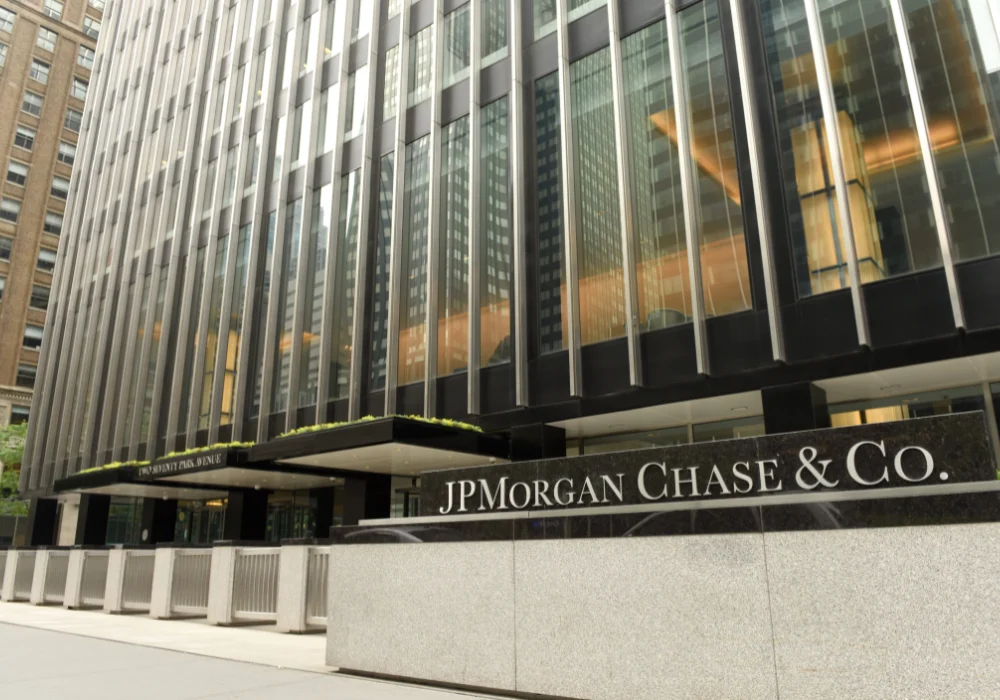
JPMorganChase remains the world’s leading financier of the fossil fuel industry. In 2025, the New York-based giant extended $58.2 billion in financing, a 12.5% increase from its 2024 levels. The bank alone was responsible for 4.7% of all global fossil fuel financing tracked in the report. Other major players in this "top tier" include Bank of America ($47.3 billion), Citigroup ($45.3 billion), and Wells Fargo ($42.5 billion). Outside the U.S., Japanese firms Mitsubishi UFJ Financial ($47.0 billion) and Mizuho Financial ($46.5 billion) took the third and fourth spots, respectively, while the Royal Bank of Canada ranked seventh with $36.6 billion.
In response to these findings, JPMorganChase has defended its strategy, emphasizing the need for a balanced approach to energy. A spokesperson for the bank stated that they support a "full range of energy solutions" with a focus on reliability and security. The bank also highlighted its commitment to finance $1 trillion in climate initiatives by 2030, noting that its current "energy-supply financing ratio" stands at 1.13:1, meaning it provides $1.13 to clean energy for every $1 it provides to fossil fuels.
The Transatlantic Divide in Banking Strategy
While North American and Japanese banks ramped up their support for oil and gas, the 2025 data reveals a deepening divide between them and their European counterparts. Twenty-six of the 65 banks analyzed in the report reduced their fossil fuel exposure last year. This group was led by European institutions such as La Caixa Group, Commerzbank, Groupe BPCE, and BNP Paribas.
The most notable outlier was La Banque Postale of France, which reported zero fossil fuel financing in 2025, adhering to a strict policy of total divestment. In Canada, some shifts were also observed, with CIBC, Bank of Montreal, and Toronto-Dominion Bank all reducing their oil and gas financing compared to the previous year. This divergence suggests that while the "oligopoly" is doubling down on traditional energy, a significant portion of the banking world is beginning to view fossil fuels as a high-risk, declining asset class.
Economic Implications: Debt, Inflation, and the Consumer
The massive influx of bank capital into fossil fuel infrastructure is not just an environmental concern; it is increasingly an economic one. The BOCC report argues that the high levels of debt being taken on by natural gas distributors and pipeline companies are creating a "debt trap" that eventually impacts the general public.
As these companies borrow billions to fund expansion, they must generate significant profits to service that debt. This pressure often leads to price volatility and contributes to "heat or eat" scenarios for low-income households. In many regions, the costs of building new gas-fired utilities are being passed directly to electricity customers through higher utility rates. Lusiani warns that this dynamic creates a cycle of inflation in energy prices that disproportionately affects those least able to afford it.
The Risk of Stranded Assets and Public Bailouts
Perhaps the most significant long-term risk identified in the report is the potential for "stranded assets." As renewable energy becomes cheaper and more efficient—with clean-energy investment expected to reach $2.2 trillion in 2026—the multibillion-dollar fossil fuel projects being financed today may become economically unviable before they are even completed.
The collapse of the Net-Zero Banking Alliance (NZBA) last year is cited as a troubling sign that voluntary industry commitments are failing. The BOCC report calls for a shift from voluntary pledges to mandatory regulation. Recommendations include:
- Requiring banks to provide comprehensive disclosures of climate-related risks.
- Increasing capital requirements for loans extended to high-carbon sectors to reflect their true risk profile.
- Mandating the implementation of robust climate transition plans.
Without such intervention, experts worry that the public may eventually be forced to foot the bill. If the current expansion of LNG and pipeline infrastructure leads to a financial collapse of these heavily indebted companies, the resulting economic fallout could necessitate government bailouts. "They are so over their skis," Lusiani warned, suggesting that the scale of current borrowing is fundamentally unsustainable in a world that must eventually transition away from carbon-intensive energy.
As the global energy crisis continues to unfold, the 2025 Banking on Climate Chaos report serves as a reminder that the financial sector remains the engine room of the fossil fuel economy. While some banks are steering toward a greener future, the world’s largest lenders appear to be betting on a prolonged era of oil and gas, setting the stage for a high-stakes confrontation between financial interests and global climate goals.
