

For decades, the global financial landscape has leveraged futures markets as indispensable tools for mitigating uncertainty across vital industries. Airlines routinely hedge against the volatile price of jet fuel, farmers secure their agricultural yields against market fluctuations, and manufacturers lock in prices for essential metals. Now, in a paradigm-shifting development, a pioneering startup is poised to extend this sophisticated financial machinery to the burgeoning realm of artificial intelligence, seeking to stabilize the unpredictable costs associated with its rapid expansion.
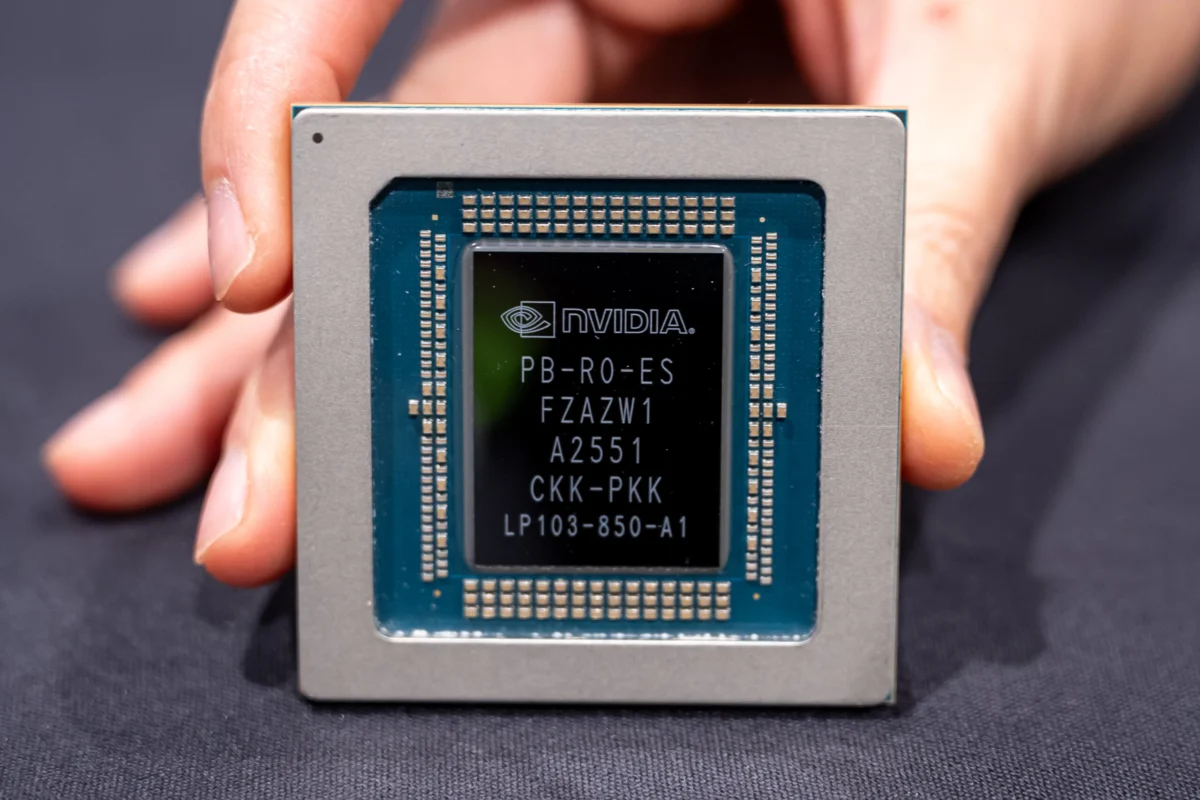
Silicon Data, an innovative company renowned for its granular tracking of pricing across diverse cloud providers and GPU marketplaces, has forged a strategic partnership with CME Group, one of the world’s leading derivatives marketplaces. This collaboration aims to introduce what could become the world’s inaugural futures contracts specifically tied to the computational power — predominantly in the form of Graphics Processing Units (GPUs) — essential for training and operating advanced AI models. These groundbreaking contracts, currently awaiting crucial regulatory approval from bodies like the Commodity Futures Trading Commission (CFTC), represent a bold step towards enabling companies to hedge against the inherent volatility in AI compute expenses.
The Genesis of a New Commodity: AI Compute as the "New Oil"
The analogy of "GPU power as the new oil" has gained significant traction in recent years, underscoring the critical and increasingly scarce nature of high-end computational resources in the age of artificial intelligence. Carmen Li, Founder and CEO of Silicon Data, articulates this vision with striking clarity. In a recent interview, Li posited that the market for AI compute futures could eventually eclipse even some of the world’s largest commodity markets, including oil futures. "I think it will be larger" than oil futures, Li stated, projecting that the energy demand required to power artificial intelligence systems will ultimately surpass the combined energy consumption of all other uses. This audacious forecast highlights not only the anticipated scale of AI’s energy footprint but also the immense economic value now being attributed to its foundational infrastructure.
The foundational idea for these futures contracts stems from a straightforward yet profound observation: AI companies are becoming as dependent on readily available and predictably priced computational power as airlines are on jet fuel. Unlike traditional enterprises that might own their core physical assets, most AI developers and researchers do not possess the vast arrays of specialized, high-end GPUs necessary for their operations. Instead, they typically lease access to these powerful processors through a complex ecosystem of established cloud providers—such as Amazon Web Services, Microsoft Azure, and Google Cloud—and a growing network of specialized "neoclouds."
The current market for AI compute is characterized by intense demand and often unpredictable supply, leading to significant fluctuations in rental costs. This volatility presents a formidable challenge for businesses trying to forecast expenses, budget for ambitious AI projects, and ensure the long-term viability of their research and development efforts. Seoyoung Kim, a distinguished finance professor at Santa Clara University, underscores this uncertainty. "Right now we’re at a high point of uncertainty," Kim observed, noting that both AI companies struggle to predict their future compute needs, and suppliers face difficulties in planning their GPU acquisitions and capacity expansions. This ripple effect extends to manufacturers like Nvidia, who grapple with accurately gauging future production requirements. The introduction of a futures market aims to inject much-needed predictability into this dynamic, allowing market participants to lock in future prices and manage risk.
Building the Financial Infrastructure: Silicon Data’s Benchmarks
Central to the viability of any futures market is the establishment of a robust and widely accepted benchmark. Just as West Texas Intermediate (WTI) crude oil serves as a critical reference for energy derivatives, Silicon Data has diligently constructed a series of GPU price indexes. These indexes meticulously track the hourly rental cost of specific GPU chips across various providers, accounting for factors such as chip model, memory configuration, networking capabilities, utilization rates, and even data center location. The company envisions these comprehensive benchmarks as the bedrock upon which the entire AI compute futures market will be built.
Like any mature futures market, the proposed compute contracts will necessitate a vibrant ecosystem of both buyers and sellers. Companies apprehensive about potential spikes in compute costs would enter the market as buyers, seeking protection from higher future prices by locking in a rate today. Conversely, providers with substantial GPU capacity, including cloud giants and neoclouds, could act as sellers, hedging against the risk of declining prices and ensuring a predictable revenue stream for their infrastructure investments.
The credibility of Silicon Data’s benchmarks is already gaining traction within the industry. Notably, high-profile corporate disclosures have begun referencing the company’s data. For instance, SpaceX, a prominent leader in aerospace innovation and satellite internet, reportedly cited Silicon Data’s GPU rental-rate data in its prospectus to go public, highlighting the growing recognition of these benchmarks as authoritative indicators of market conditions.
The Role of Speculators and Investor Enthusiasm
While hedging is a primary driver for futures markets, another critical component is the participation of speculators. These traders, who may have no direct operational need for GPU capacity, instead bring their market insights to bear, betting on the future direction of compute prices. Proponents of futures markets argue that speculators play an indispensable role by enhancing liquidity, which makes it easier for hedgers to enter and exit positions, and by contributing to more efficient price discovery. By taking on the risk that hedgers wish to offload, speculators help to ensure a dynamic and responsive market. Critics, however, often express concerns that excessive speculation can amplify market volatility and potentially decouple prices from the underlying supply and demand fundamentals.

Carmen Li, echoing the conventional wisdom of financial markets, firmly believes in the necessity of speculators. "Speculators are a very important piece of the ecosystem as well," Li stated. "You need natural hedgers. You need market makers. You need speculators. They have opinion. They want to express their opinion, which is perfectly fine." The Harvard MBA emphasized that traders who possess unique insights into future supply and demand dynamics should be empowered to express these views through market participation, thereby collectively contributing to the establishment of more accurate and transparent prices for the broader AI industry.
The early signs of investor interest are remarkably robust, underscoring the market’s anticipation for this new asset class. Within days of Silicon Data’s announcement with CME Group, prominent asset managers, including ProShares and Rex Shares, swiftly filed proposals for exchange-traded funds (ETFs) that would be tied to the proposed contracts. These filings even included plans for leveraged and inverse products, signaling that some investors already perceive AI compute as a potentially tradable asset class in its own right, rather than merely a technological input cost. These financial instruments, contingent on the regulatory approval of the underlying futures market, suggest a burgeoning belief in the financialization of AI infrastructure.
Navigating the Complexities of Standardization and Regulation
Establishing a futures market for AI compute presents unique challenges, particularly concerning standardization. Unlike a barrel of West Texas Intermediate crude oil, which is a relatively uniform physical commodity, AI compute is inherently heterogeneous. Silicon Data acknowledges this complexity, noting that there are over 50 distinct configurations of Nvidia’s H100 chip alone, with prices varying not only based on the core processor but also on memory specifications, networking capabilities, utilization rates, and even the geographical location of the data center.
For the proposed futures market to function effectively and garner the trust of traders, there must be absolute confidence that a single, meticulously constructed benchmark can accurately represent these myriad variations. Li elaborated on Silicon Data’s approach: "What we do is normalize the prices coming to our platform every day to a base H100 case." This involves a sophisticated and intricate normalization process, which occurs even before the index calculation step, designed to create a comparable and consistent metric across diverse offerings.
Professor Kim from Santa Clara University highlights that standardization has historically been a significant hurdle for all futures markets. For example, corn futures contracts precisely specify the exact grade of corn that can be delivered. Similarly, the nascent compute markets face the daunting task of precisely defining what buyers and sellers are trading. The Commodity Futures Trading Commission (CFTC), the primary regulatory body overseeing futures markets in the United States, is expected to conduct an exhaustive review. Kim anticipates that the CFTC "is going to want to know exactly what the product is." Contract specifications, detailed settlement procedures, and the rigorous construction of the underlying benchmark are all likely to face intense scrutiny before regulatory approval can be granted and the market can officially launch. This meticulous oversight is crucial to ensure market integrity, protect investors, and prevent manipulation.
Broader Implications and Future Outlook
The potential launch of AI compute futures contracts carries profound implications for the entire artificial intelligence ecosystem and beyond. For AI developers, predictable compute costs could significantly de-risk innovation, allowing for more stable budgeting and long-term planning for model training and deployment. This could accelerate the pace of AI development, foster greater investment in cutting-edge research, and democratize access to powerful computational resources by making their costs more transparent and manageable.
For cloud providers and neoclouds, these futures could offer a mechanism to manage their own vast GPU inventories, hedge against potential dips in demand, and potentially offer more stable pricing models to their enterprise clients. This could lead to a more efficient allocation of these critical resources across the industry.
Furthermore, the "new oil" analogy extends to the energy sector. The soaring demand for AI compute directly translates into increased energy consumption, primarily from data centers. The financialization of compute power through futures contracts could indirectly highlight the growing energy footprint of AI, potentially driving innovation in energy efficiency, sustainable computing, and the development of greener data center technologies. It could also create new investment opportunities in infrastructure related to sustainable power generation for AI.
While the path to regulatory approval and widespread market adoption will undoubtedly be complex, the partnership between Silicon Data and CME Group marks a pivotal moment. It signifies the maturation of AI infrastructure from a purely technological expense into a distinct, tradable asset class with its own economic dynamics. As artificial intelligence continues its relentless march into every facet of society, the ability to manage its foundational costs through sophisticated financial instruments could prove to be as transformative as the technology itself, laying the groundwork for a more stable, predictable, and ultimately, more expansive future for AI.
Charlotte Morabito of CNBC contributed to this report.
