

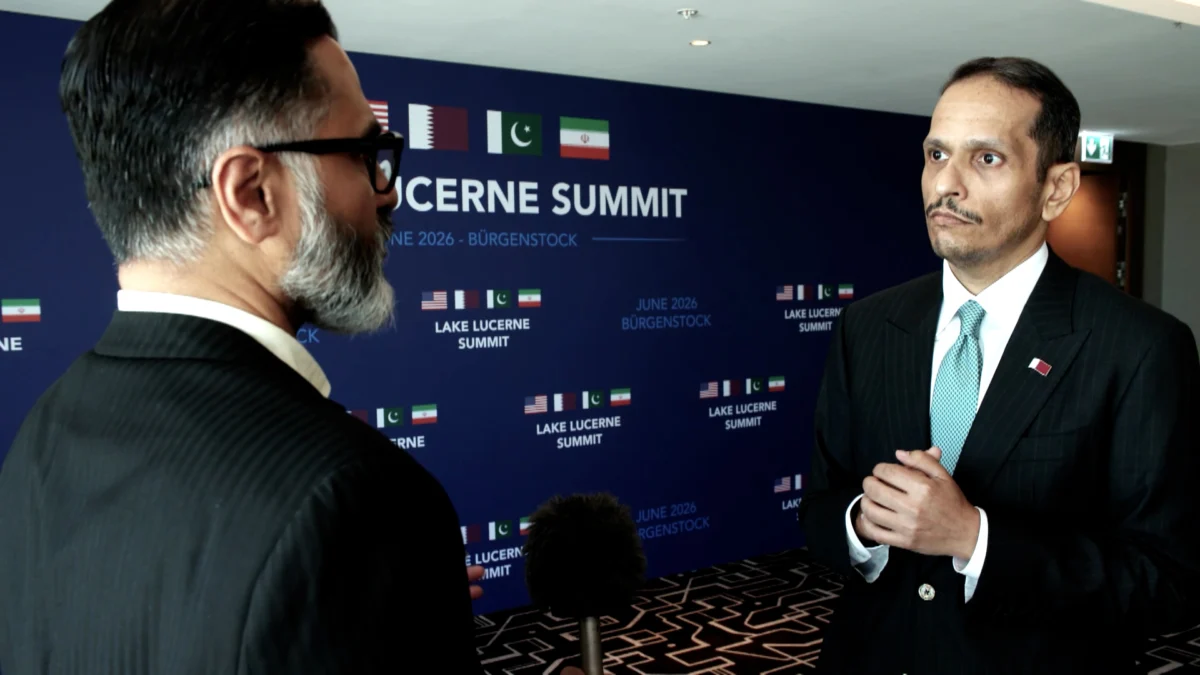
Doha, Qatar – In a significant diplomatic development, Qatar’s Prime Minister and Minister of Foreign Affairs, Sheikh Mohammed bin Abdulrahman Al Thani, revealed that indirect discussions between the United States and Iran in Switzerland, co-mediated by Qatar and Pakistan, have successfully laid the essential groundwork for a potential final agreement. Speaking exclusively to Al Jazeera on June 22, 2026, Sheikh Mohammed highlighted the constructive nature of the engagement, noting that eighteen hours of intensive discussions had concluded, with technical teams now poised to advance the complex negotiations. This disclosure signals a cautious yet palpable sense of optimism in the protracted efforts to de-escalate tensions and potentially resolve key contentious issues between Washington and Tehran.
The announcement by the Qatari Premier underscores the painstaking behind-the-scenes diplomacy that has been unfolding, aimed at bridging the profound chasm separating the two nations. For years, the relationship between the United States and Iran has been characterized by acute mistrust, economic sanctions, regional proxy conflicts, and a lingering dispute over Iran’s nuclear program. The very act of engaging in such prolonged talks, even if indirect, represents a notable step forward, testament to the persistent diplomatic efforts of the mediating nations.
The Diplomatic Breakthrough: Qatar’s Pivotal Role
Sheikh Mohammed bin Abdulrahman Al Thani’s statement on Al Jazeera provided the first concrete indication of substantive progress in these latest rounds of US-Iran negotiations. Qatar, a nation that has increasingly positioned itself as a crucial mediator in various international disputes, played a central role in facilitating these discussions. Its strategic location, extensive diplomatic network, and balanced foreign policy have enabled it to maintain channels of communication with both Washington and Tehran, even during periods of heightened animosity. The Qatari Prime Minister emphasized his nation’s unwavering commitment to fostering regional stability and reducing escalatory risks through dialogue, viewing these talks as a vital component of broader regional security architecture.
Qatar’s involvement is not new; it has a track record of mediating sensitive negotiations, including prisoner swaps between the US and Iran and facilitating dialogue in other critical geopolitical arenas, such as between the Taliban and the United States. Its ability to host such sensitive engagements, often involving "proximity talks" where delegations remain in separate rooms and mediators shuttle between them, is a cornerstone of its diplomatic strategy. This approach allows for direct communication of positions and counter-positions without the political optics of direct face-to-face encounters, which can be politically challenging for both sides domestically.
A Complex History: The US-Iran Impasse
The current diplomatic overtures are set against a backdrop of decades of strained relations, particularly since the 1979 Iranian Revolution. More recently, the relationship deteriorated significantly following the United States’ unilateral withdrawal from the Joint Comprehensive Plan of Action (JCPOA), commonly known as the Iran nuclear deal, in May 2018 under the Trump administration. The JCPOA, signed in 2015 by Iran and the P5+1 group (China, France, Germany, Russia, the United Kingdom, and the United States), had placed stringent limits on Iran’s nuclear program in exchange for sanctions relief.
Following the US withdrawal, Washington reimposed and expanded a robust "maximum pressure" campaign of economic sanctions on Iran, targeting its oil exports, financial sector, and other key industries. In response, Iran progressively scaled back its commitments under the JCPOA, increasing its uranium enrichment levels and developing advanced centrifuges, raising alarms among international observers and signatories to the original deal. This cycle of escalation led to a series of regional incidents, including attacks on oil tankers in the Gulf, drone strikes, and heightened tensions in the Strait of Hormuz, a critical global oil transit choke point.
The core disagreements remain multifaceted: the scope of Iran’s nuclear program, the extent and timing of sanctions relief, Iran’s ballistic missile program, and its regional activities through various proxy groups. For Washington, the objective is to prevent Iran from acquiring nuclear weapons and to curb its destabilizing regional influence. For Tehran, the primary demand is the complete lifting of US sanctions, which have severely crippled its economy, and guarantees against future US withdrawal from any new agreement.
The Road to Switzerland: A Chronology of Engagement
The path to these indirect talks in Switzerland has been long and arduous, marked by numerous fits and starts. Following the US withdrawal from the JCPOA, efforts to revive the deal began in earnest in Vienna in April 2021 under the Biden administration. These talks, also indirect, lasted for several rounds but ultimately stalled in August 2022 due to persistent disagreements on key issues, including Iranian demands for guarantees that a future US administration would not again abandon the deal, and US insistence on addressing non-nuclear issues.
Since the suspension of the Vienna talks, diplomatic engagement has largely shifted to indirect channels, often facilitated by neutral third parties. Oman, another Gulf state with strong ties to both Washington and Tehran, has also played a crucial role in maintaining open lines of communication and facilitating back-channel discussions, sometimes involving prisoner exchanges. The current Switzerland talks represent a renewed push, signaling that despite the public rhetoric, both sides recognize the imperative of avoiding further escalation and exploring diplomatic solutions.
The 18 hours of discussions reported by Sheikh Mohammed suggest a highly concentrated period of engagement, likely involving multiple sessions over several days. The choice of Switzerland as a venue further emphasizes the need for neutrality and discretion. Switzerland has historically served as a diplomatic hub for sensitive negotiations, particularly due to its robust diplomatic infrastructure and its representation of US interests in Iran since 1980.
Mediators on the Global Stage: Qatar and Pakistan’s Influence
The joint mediation by Qatar and Pakistan highlights a concerted effort from key regional and international actors to facilitate peace. Pakistan, with its long-standing diplomatic ties to Iran and its strategic relationship with the United States, brings a unique perspective and leverage to the table. Islamabad has historically sought to balance its relationships with both Riyadh and Tehran, often advocating for de-escalation in the broader Middle East. Its involvement underscores the regional imperative to find common ground and prevent conflicts that could destabilize the wider Asian continent.
Both Qatar and Pakistan stand to gain from a more stable and predictable US-Iran relationship. For Qatar, reduced tensions translate into greater security for its vital energy exports and a more conducive environment for its ambitious economic diversification plans. For Pakistan, a peaceful resolution reduces the risk of spillover instability on its western border and supports its broader foreign policy goals of regional peace and connectivity. Their combined diplomatic weight and credibility with both Washington and Tehran are proving instrumental in keeping the dialogue alive.
The Architecture of Negotiation: 18 Hours of Intensive Discussions
The reported 18 hours of discussions indicate a significant investment of time and diplomatic capital. Such "proximity talks" typically involve a meticulous process where mediators carry proposals, counter-proposals, and clarifications between the two delegations. This method allows each side to maintain its official stance of not directly negotiating with the other, while still engaging in substantive dialogue. The sheer duration suggests that complex and detailed points were being debated, likely touching upon the core issues of sanctions relief mechanisms, verification protocols for Iran’s nuclear activities, and potential confidence-building measures.
"Laying the groundwork for a final deal" implies that preliminary agreements have been reached on foundational principles or a framework for a more comprehensive accord. This could involve defining the scope of what a "final deal" would encompass, agreeing on a timeline for phased implementation, or identifying key technical and political hurdles that need to be overcome. It is probable that the discussions focused on identifying areas of convergence, even if limited, and delineating the specific technical details that would require further expert deliberation.
Technical Teams Take the Helm: The Path Forward
The transition of negotiations to "technical teams" is a standard and often crucial phase in complex international agreements. This indicates that the political principals and senior diplomats have identified broad areas of agreement or pathways, and now require specialists to iron out the intricate details. Technical teams would typically comprise experts in nuclear physics, sanctions law, financial mechanisms, and verification technologies. Their mandate would be to translate political understandings into precise, actionable clauses and ensure the feasibility and enforceability of any potential agreement.
This phase is often fraught with its own challenges, as technical experts may uncover complexities or ambiguities that require further political guidance. However, it also signifies a move towards tangible, verifiable commitments. For instance, Iranian technical teams would likely focus on the specifics of sanctions removal, including timelines, banking access, and oil export quotas. US technical teams would scrutinize verification mechanisms for Iran’s nuclear program, including IAEA access, monitoring technologies, and enrichment levels. The successful navigation of this technical phase will be paramount to building a robust and durable agreement.
Stakeholder Reactions and Regional Implications
While official statements from Washington and Tehran remain cautiously guarded, the announcement from Doha is likely to elicit a range of reactions. From the US perspective, any progress towards curbing Iran’s nuclear program through diplomatic means would be welcomed, albeit with a strong emphasis on comprehensive verification and addressing broader regional concerns. US officials have consistently reiterated that while they seek a diplomatic resolution, all options remain on the table.
Iran, for its part, would likely underscore its commitment to a peaceful nuclear program and reiterate its demand for the full and verifiable lifting of sanctions. Any agreement would need to be perceived domestically as a victory for Iranian sovereignty and economic relief.
Regional powers, particularly Gulf states such as Saudi Arabia and the UAE, alongside Israel, will be watching these developments with keen interest and a degree of apprehension. These nations have historically expressed deep concerns about Iran’s regional influence, its ballistic missile program, and the potential for a nuclear-armed Iran. Their reactions would likely range from cautious optimism, if the deal addresses their security concerns, to skepticism if they perceive it as insufficient. They would likely advocate for a comprehensive agreement that extends beyond just the nuclear issue to include regional behavior and missile capabilities.
International bodies like the International Atomic Energy Agency (IAEA) would welcome any progress that enhances transparency and oversight of Iran’s nuclear activities. The United Nations and other global powers would also view these talks as a positive step towards de-escalation in a volatile region.
Beyond the Nuclear Deal: Broader Geopolitical Ramifications
The successful conclusion of a comprehensive deal, even if initially focused on the nuclear program and sanctions, could have far-reaching geopolitical implications. It could pave the way for broader dialogue on regional security architecture, potentially leading to reduced tensions in hotspots like Yemen, Iraq, and Syria. A de-escalation of US-Iran rivalry could alter alliance dynamics in the Middle East, potentially opening avenues for greater regional cooperation on economic and security fronts.
Economically, the lifting of sanctions would allow Iran to significantly increase its oil exports, potentially impacting global energy markets. It would also open Iran’s substantial market to international investment, offering opportunities for companies in various sectors. For the global economy, this could mean increased stability in energy supply and potentially downward pressure on oil prices, depending on the extent of Iranian production reintegration.
However, the path to a final accord is fraught with challenges. The deep-seated mistrust between the US and Iran, domestic political considerations in both countries, and the complex interplay of regional interests mean that negotiations will remain delicate. The definition of "final deal" itself is subject to interpretation – whether it means a full revival of the JCPOA, a new and expanded agreement, or a more limited understanding.
Challenges and Prospects for a Final Accord
Despite the reported progress, significant hurdles remain. The issue of guarantees against future US withdrawal, Iran’s ballistic missile program, and its regional proxy network are all areas where substantial gaps persist. Furthermore, the political will on both sides to make the necessary concessions, particularly in the face of domestic opposition, will be continuously tested.
Nevertheless, the fact that indirect talks have progressed to the point where technical teams are engaged suggests a genuine commitment from both Washington and Tehran to explore a diplomatic off-ramp. The active and sustained mediation by Qatar and Pakistan underscores the international community’s desire for a peaceful resolution. The coming weeks and months, as technical teams delve into the specifics, will be critical in determining whether this groundwork can indeed support the edifice of a durable and comprehensive agreement, bringing a measure of stability to one of the world’s most volatile regions. The world watches with cautious anticipation, hoping that these renewed efforts can finally chart a course towards a more peaceful future.
