

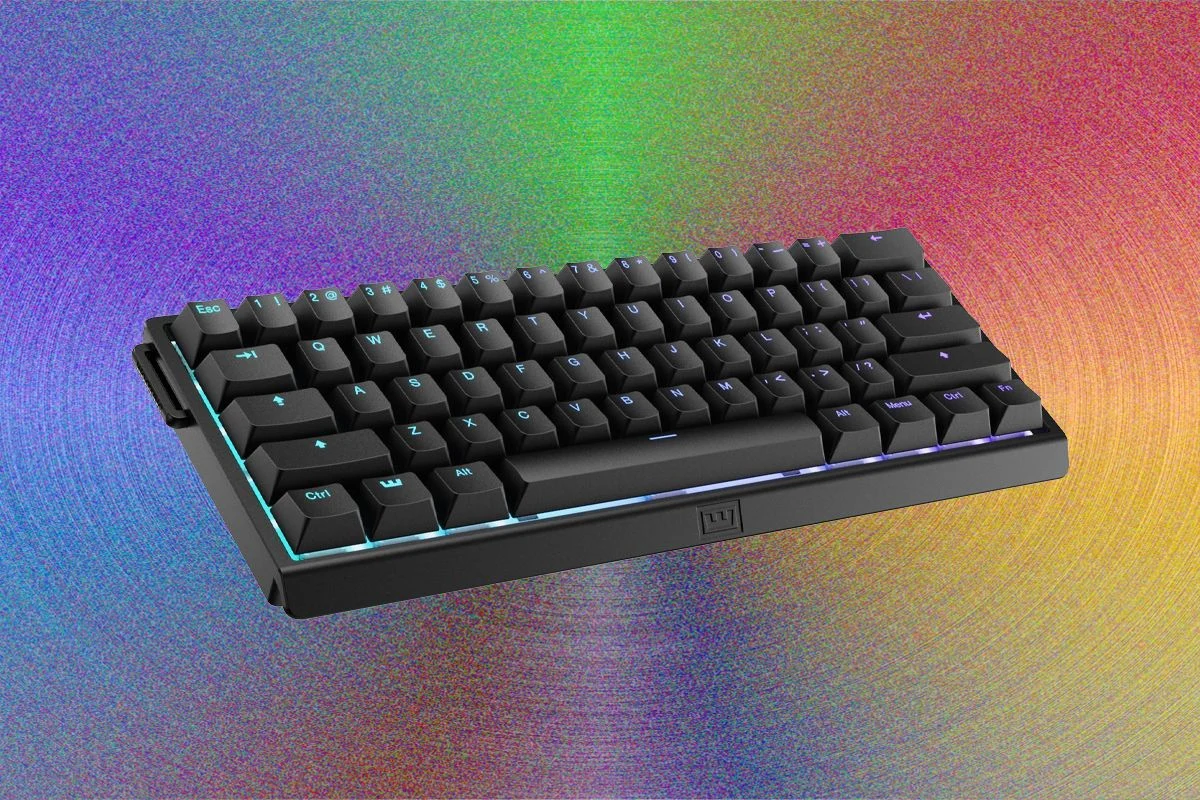
The Wooting 60HE v2 has officially entered the high-performance peripheral market, positioning itself as a pivotal development in the evolution of analog gaming keyboards. As the successor to the original 60HE, which revolutionized the industry with its implementation of Hall Effect sensors, the v2 iteration refines the hardware architecture while introducing software features that have sparked significant debate within the professional esports community. By focusing on a combination of extreme customizability, modular repairability, and near-zero latency, Wooting aims to maintain its lead in a market now crowded with offerings from established giants such as Razer, SteelSeries, and ASUS.
The Mechanics of SOCD and Competitive Integrity
At the center of the Wooting 60HE v2’s feature set is Simultaneous Opposing Cardinal Direction (SOCD) customization. In traditional mechanical keyboards, pressing two opposing directional keys—such as "A" (left) and "D" (right)—simultaneously results in either both inputs being registered, causing the character to stand still, or the hardware prioritizing the first key pressed. Wooting’s implementation allows for sophisticated "Last Input Priority" logic, where the keyboard automatically overrides the previous directional input in favor of the most recent one without requiring the user to release the first key.
This functionality is particularly transformative for tactical shooters like Counter-Strike 2 and Valorant, where "counter-strafing" is a fundamental skill. Counter-strafing involves tapping the opposite direction key to come to a dead stop instantly, allowing for accurate firing. The SOCD feature on the 60HE v2 effectively automates the timing of this maneuver, reducing the human error associated with the transition between movements.
However, the advantage provided by SOCD has not gone without scrutiny. In August 2024, Valve Corporation, the developer of Counter-Strike 2, issued a definitive ban on hardware-based automation features that circumvent traditional movement mechanics, specifically targeting SOCD-like features (referred to by competitors as "Snap Tap"). Valve’s stance is that such features blur the line between manual skill and automated assistance. Despite these bans in specific competitive environments, the feature remains a centerpiece for enthusiasts and players in titles where such restrictions have not yet been implemented, highlighting a growing tension between hardware innovation and competitive fair play.
The Evolution of Hall Effect Technology
The 60HE v2 utilizes Lekker switches, which are based on Hall Effect technology rather than traditional physical contact points. Standard mechanical switches rely on a metal leaf making contact to complete an electrical circuit. In contrast, Hall Effect switches use a permanent magnet attached to the stem and a sensor on the printed circuit board (PCB) that measures the strength of the magnetic field.
This design offers several distinct advantages:
- Adjustable Actuation: Users can define exactly how far a key must be pressed (from 0.1mm to 4.0mm) before an input is registered.
- Rapid Trigger: This allows a key to reset the instant it begins to move upward, rather than needing to pass a fixed reset point. This enables significantly faster repeated inputs, which is critical in rhythm games and fast-paced shooters.
- Durability: With no physical contact points to wear down or corrode, the lifespan of the switches is theoretically much higher than that of traditional mechanical alternatives.
While early Hall Effect keyboards from competitors were often criticized for a "mushy" or inconsistent typing feel, the Lekker switches in the v2 have been engineered to bridge the gap between analog utility and the tactile satisfaction expected by mechanical keyboard enthusiasts. The switches are noted for their smoothness and consistency, providing granular control that traditional digital inputs cannot replicate.
Hardware Architecture and the GH60 Standard
A significant aspect of the Wooting 60HE v2’s appeal is its adherence to the GH60 form factor. The GH60 is a long-standing community standard for 60% keyboards, ensuring that the internal components—the PCB and plate—are compatible with a wide array of third-party cases. This decision reflects Wooting’s commitment to the "enthusiast" market, allowing users to move the high-performance internals into premium aluminum or wood cases.

The internal stack of the v2 is designed for "Peak Repairability." The assembly consists of a top plate, the Lekker switches, a silicone dampening layer, and the PCB. The PCB itself features rubber feet on the underside and a user-selectable sound-dampening layer. This modularity allows the device to be disassembled in seconds, facilitating easy cleaning, part replacement, or customization.
One point of contention among hardware purists is the placement of the USB-C port. Following the GH60 standard, the port is located on the left side of the PCB. While modern trends in custom keyboards often favor a centered port on a separate "daughterboard" to prevent stress on the main PCB and allow for more aesthetic case designs, Wooting has opted for the integrated left-side port to maintain maximum compatibility with existing aftermarket cases.
Market Context and Chronology
The trajectory of Wooting as a company represents a shift in the peripheral industry. Founded as a small startup, Wooting gained prominence with the original Wooting One and Two, but it was the 60HE that propelled the brand to the forefront of the esports scene.
- 2022: The original Wooting 60HE is released, introducing the "Rapid Trigger" feature that would eventually be copied by almost every major gaming brand.
- 2023-2024: Major manufacturers like Razer (Huntsman V3 Pro), SteelSeries (Apex Pro), and ROG (Falchion RX Low Profile) release their own Hall Effect keyboards to compete with Wooting’s software-lead advantage.
- Mid-2024: Razer introduces "Snap Tap," a version of SOCD. Wooting responds by fast-tracking its own SOCD implementation via a firmware update (dubbed "Snappy Tappy").
- Late 2024: The 60HE v2 is launched, featuring improved internal materials, better switch compatibility (KS-20 design), and refined PCB engineering to address minor flaws in the original version.
The 60HE v2 now supports a broader range of switches. While competitors like Razer or ASUS often lock users into their proprietary switch ecosystems, the 60HE v2’s PCB is compatible with the KS-20 design. This allows users to install switches from Gateron, Geon, and other boutique manufacturers, significantly increasing the customization potential.
Software Integration: The Wootility Ecosystem
Hardware is only half of the Wooting equation. The "Wootility" software is widely regarded as one of the most user-friendly and powerful configuration tools in the industry. Unlike the bloated software suites of many major corporations, Wootility is available as a web-based application, requiring no permanent installation on the user’s operating system.
The software allows for per-key RGB customization, which, while leaning slightly blue in its default state, can be calibrated to a true white (203/192/180) or any other color with high precision. More importantly, it provides a visual interface for setting actuation points and Rapid Trigger sensitivity. The ability to save profiles directly to the keyboard’s onboard memory ensures that a player’s settings persist across different computers, a vital feature for tournament players.
Broader Implications for the Esports Industry
The release of the Wooting 60HE v2 and the rise of SOCD technology signify a new era in gaming peripherals where the "input ceiling" is being pushed to its physical limits. Analysts suggest that we are reaching a point of diminishing returns in terms of raw latency, shifting the focus toward "intelligent" inputs that interpret user intent.
The $240 price point of the 60HE v2 places it in the premium tier of gaming peripherals. Despite this, and the fact that the device is frequently backordered due to high demand, its success indicates a strong market appetite for specialized, high-performance tools. The move toward repairability and standardization also sets a positive precedent for the industry, countering the "planned obsolescence" often seen in consumer electronics.
As esports leagues and game developers continue to navigate the ethics of hardware-level assistance, the Wooting 60HE v2 stands as a testament to the rapid pace of innovation. It offers a glimpse into a future where the boundary between the player and the machine is increasingly seamless, provided the rules of the game can keep pace with the capabilities of the hardware. For now, the 60HE v2 remains the benchmark against which all other competitive gaming keyboards are measured, combining enthusiast-grade build quality with industry-leading analog performance.
