

In a significant legal rebuke to the current administration’s expedited removal strategies, a federal judge in Massachusetts ruled on Wednesday that the Department of Homeland Security (DHS) violated a standing court injunction by deporting a group of migrants to third countries without providing them the legal opportunity to contest the move. District Court Judge Brian Murphy declared that the administration’s actions were "unquestionably violative" of a judicial order issued in March, which was designed to prevent the government from sending individuals to nations other than their home countries without a rigorous screening for fears of persecution or torture.
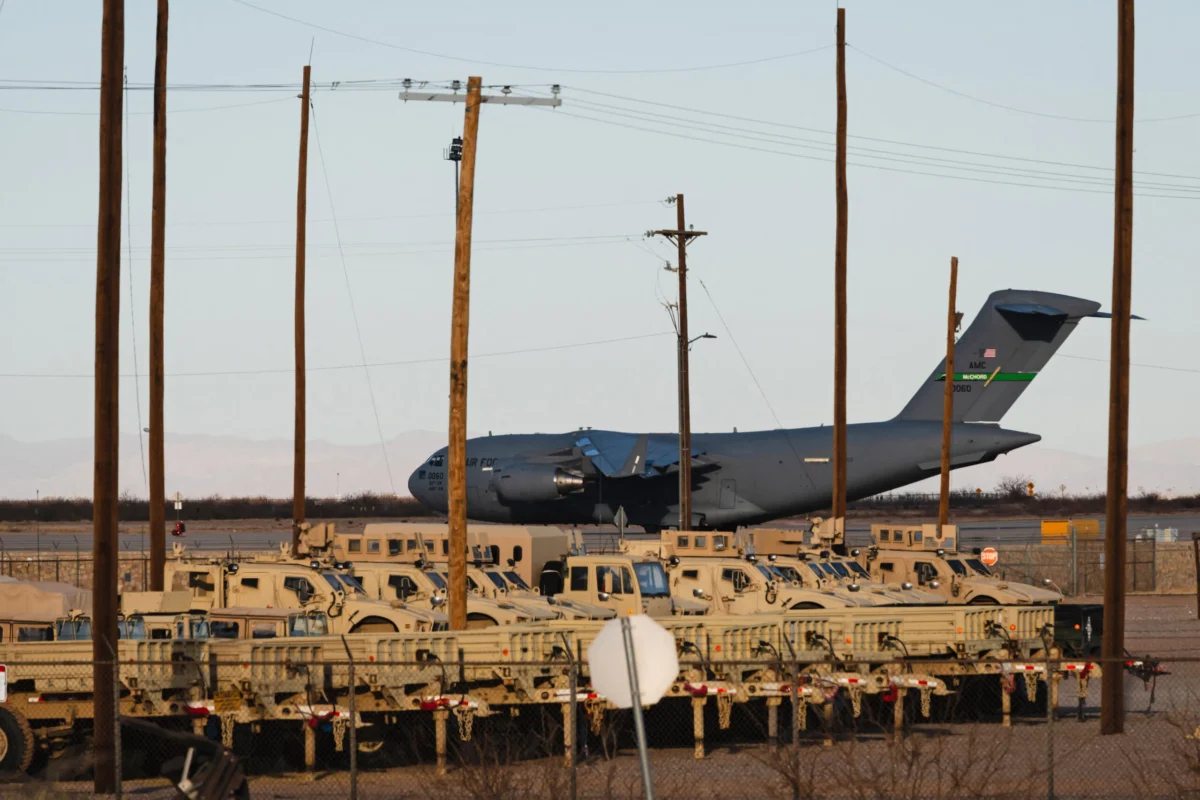
The ruling follows a chaotic 48-hour window in which a Boeing C-17 transport aircraft, operated by the United States Air Force, was utilized to transport eight migrants from an ICE facility in Texas toward South Sudan. The group included individuals originally from Myanmar, Laos, Vietnam, Cuba, Mexico, and South Sudan. While the DHS asserted that many of the deportees held convictions for violent crimes—including murder and sexual assault—the court focused specifically on the procedural shortcuts taken by the government, which Judge Murphy characterized as a direct circumvention of the rule of law.
The Legal Conflict and the March Injunction
The core of the legal dispute centers on an injunction issued by Judge Murphy in March 2025. That order was established to ensure that the U.S. government adheres to international and domestic "non-refoulement" obligations. Under these laws, the United States is prohibited from returning individuals to countries where they face a high likelihood of being subjected to torture or persecution.
The March injunction specifically mandated that if the government intended to deport a person to a "third country"—a nation that is not the individual’s country of citizenship or last habitual residence—the government must provide that individual with a meaningful opportunity to raise a "reasonable fear" claim. This process is a safeguard intended to prevent the U.S. from inadvertently sending refugees or migrants into active war zones or under the control of hostile regimes.
During Wednesday’s hearing, Judge Murphy expressed frustration with the administration’s timeline. He noted that the migrants were only notified of their destination on Monday evening, well outside of standard business hours. By 10:00 a.m. the following morning, they were already being loaded onto a flight. This narrow window, the judge argued, made it "impossible" for the individuals to consult with legal counsel, contact their families, or file the necessary emergency motions to stay their removal based on safety concerns.
A Timeline of the Deportation Operation
The events leading to the court’s ruling began over the weekend as ICE officials prepared for a high-profile deportation flight. According to court records and government briefings, the sequence of events unfolded as follows:
- Monday Evening: Migrants held at an ICE facility in Texas were officially notified that they would be deported to South Sudan. This notification occurred after 5:00 p.m., limiting the ability of immigration attorneys to access the court system or communicate with their clients.
- Tuesday Morning (8:00 a.m. – 10:00 a.m.): The eight migrants were transported to Biggs Army Airfield at Fort Bliss in El Paso, Texas. They were boarded onto a Boeing C-17, a military heavy-lift aircraft often used for high-security transport.
- Tuesday Midday: Immigration attorneys, realizing their clients had been moved, filed emergency motions with Judge Murphy’s court, alleging that the government was attempting to bypass the March injunction.
- Wednesday Morning: The Department of Homeland Security held a press briefing confirming that the flight had departed and that the individuals—whom they identified as "violent criminals"—were no longer on U.S. soil.
- Wednesday Afternoon: Judge Murphy convened a hearing, which included 30 minutes of sealed proceedings to discuss sensitive security and location data. Following the closed session, he issued his ruling from the bench, condemning the government’s lack of transparency and its failure to uphold due process.
Geopolitical Risks in South Sudan
One of the most contentious aspects of the case is the choice of South Sudan as a destination for migrants from diverse backgrounds, such as Vietnam and Mexico. South Sudan is currently classified by the U.S. State Department under a "Level 4: Do Not Travel" advisory, the highest level of danger. The advisory cites rampant crime, kidnapping, and ongoing armed conflict.
In March 2025, the State Department ordered the departure of non-emergency U.S. government employees from South Sudan due to the deteriorating security situation. The country, which saw a fragile peace deal in 2018 between President Salva Kiir and Vice President Riek Machar, is reportedly on the verge of another full-scale civil war. Violent clashes between various factions have intensified in recent months, leading to widespread displacement and human rights abuses.
Sending migrants from Southeast Asia or the Caribbean to such a volatile environment without a "fear of return" interview is, according to human rights advocates, a violation of the UN Convention Against Torture. "The government is acting as if due process is a privilege that can be revoked for those they deem ‘unpopular,’" said Jonathan Ryan, a San Antonio-based immigration attorney. Ryan represents Nyo Myint, a migrant from Myanmar who was among those on the flight. Ryan told the court that his client has essentially been "disappeared," as the government has refused to provide his exact coordinates or confirm if he was successfully diverted to his home country.
The Government’s Justification: Criminality and Sovereignty
The Department of Homeland Security has defended its actions by emphasizing the criminal backgrounds of the deported individuals. During the Wednesday morning briefing, DHS officials provided the names and photos of the eight men, including Enrique Arias-Hierro and Tuan Thanh Phan, asserting that their removal was a matter of public safety.
Government attorneys argued in court that the urgency of the deportations was necessitated by the logistical complexities of securing third-country agreements and the need to remove "high-threat" individuals from the U.S. interior. They maintained that the migrants are still technically in ICE custody while in transit and that the government retains the right to manage its borders and deportation schedules without "excessive judicial interference."
However, Judge Murphy rejected the argument that a criminal record justifies a suspension of constitutional and procedural protections. The judge noted that while the government has the authority to deport those with criminal convictions, it must do so within the framework of existing court orders and the established legal process.
Broader Implications for Immigration Policy
This ruling is the latest in a series of legal setbacks for the Trump administration’s aggressive immigration enforcement strategy. Only weeks prior, Judge Murphy had blocked a similar attempt to deport individuals from the Philippines, Vietnam, and Laos to Libya—another nation currently embroiled in civil unrest.
The use of military aircraft like the C-17 for deportation flights signals a shift toward a more militarized approach to immigration enforcement. Analysts suggest that by utilizing military airfields and heavy-lift planes, the administration is attempting to scale up the volume of removals while bypassing the commercial and civilian infrastructure that is often subject to greater public and legal scrutiny.
The practice of "third-country" deportation—sometimes referred to as "externalization"—has become a cornerstone of the administration’s policy. By sending migrants to countries like South Sudan or Libya, the U.S. effectively shifts the burden of processing and housing these individuals to other nations. However, legal experts warn that this strategy creates a "legal black hole" where the U.S. can no longer guarantee the safety or the human rights of those it deports.
Reaction from Legal and Human Rights Organizations
The court’s ruling has been met with praise from civil rights organizations, who view it as a necessary check on executive overreach. "This is a victory for the principle that no one, regardless of their status or their past, is beneath the law," said a spokesperson for a leading immigrant advocacy group. "The government cannot simply spirit people away in the middle of the night to avoid the oversight of a federal judge."
Conversely, supporters of the administration’s "zero-tolerance" policies argue that judicial "activism" is hampering the government’s ability to protect citizens from violent offenders. They contend that the lengthy appeals process and the requirement for multiple hearings allow dangerous individuals to remain in the country for years at taxpayer expense.
Future Outlook
As of Wednesday evening, the exact location of the eight migrants remains unclear. While government attorneys confirmed the plane has landed, they declined to share the final destination or the current status of the passengers. Judge Murphy has demanded a detailed report from the DHS explaining why the injunction was ignored and providing a full accounting of the migrants’ current locations.
The legal battle is expected to escalate to the appellate level. The administration is likely to challenge the scope of Judge Murphy’s injunction, arguing that it oversteps the judiciary’s role in matters of foreign policy and national security. Meanwhile, immigration attorneys are bracing for further "clandestine" deportation attempts, emphasizing the need for 24-hour monitoring of ICE flight manifests.
This case serves as a pivotal moment in the ongoing struggle between the executive branch’s mandate for border security and the judicial branch’s mandate to uphold due process. As the U.S. continues to navigate a polarized political landscape, the treatment of migrants—particularly those with criminal histories—remains one of the most legally and ethically fraught issues facing the American justice system. The resolution of this case will likely set a major precedent for how the U.S. handles deportations to conflict zones for years to come.
