

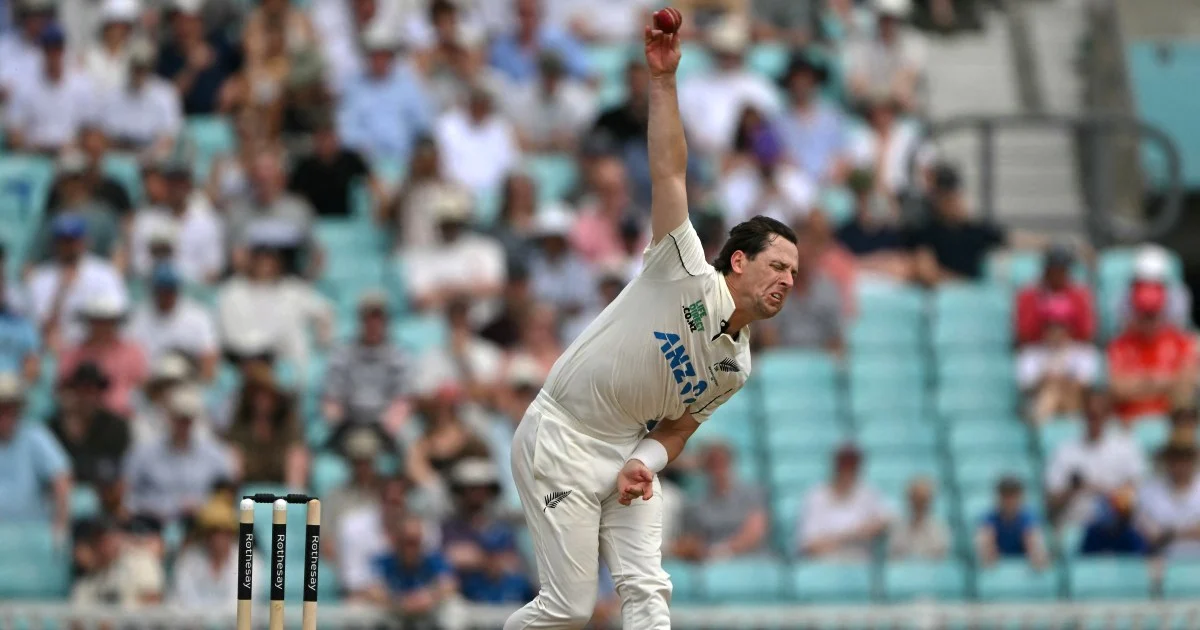
New Zealand’s formidable pace bowler, Matt Henry, delivered a career-defining performance on the fifth morning of the second Test at The Oval, meticulously dismantling England’s lower order and tail to secure a resounding 253-run victory for his side. This decisive win levels the three-match series at 1-1, setting up a thrilling decider. Starting the final day precariously positioned at 182-5, with an improbable target of 463 runs for victory, England’s resistance crumbled rapidly, collapsing to 209 all out within less than an hour of play on Sunday. Henry was the undisputed architect of England’s downfall, claiming all five remaining wickets in a devastating spell that will be etched into New Zealand cricket folklore.
Henry’s Devastating Morning Spell Secures Victory
The morning session of the fifth day began with a palpable tension. England, despite the daunting target, still harbored a sliver of hope, largely resting on the shoulders of their star batsman, Joe Root, who resumed on an overnight score of 75. However, Matt Henry had other plans. In just the second over of his morning spell, Henry struck the crucial blow. With a delivery that jagged back slightly, he trapped Root plumb LBW for 77, adding only two runs to his overnight tally. This pivotal wicket, occurring with the very first ball of his over, sent a clear message and significantly tilted the scales in New Zealand’s favor.
The psychological impact of Root’s dismissal was immediate and profound. Two balls later, Henry produced another unplayable delivery, cleaning up Jofra Archer for a duck, leaving England reeling. The momentum had decisively swung. Henry continued his relentless assault in his very next over, dispatching Matthew Fisher, who played onto his stumps without scoring. The very next ball brought further agony for England as Josh Tongue edged to Daryl Mitchell, completing a remarkable hat-trick of sorts across two overs and leaving Henry on the cusp of a truly exceptional performance. He then finished his masterful spell and the match by bowling Jordan Cox with a searing in-swinging yorker, completing a five-wicket haul for the morning and an astonishing match haul of 11 wickets. Henry’s figures of 7-42 in the second innings were his best-ever in Test cricket, a testament to his precision, pace, and unwavering focus.
Match Summary and Key Performances
The second Test at The Oval was a captivating contest that saw fortunes ebb and flow before New Zealand seized control. After winning the toss and electing to bat, New Zealand posted a respectable first innings total of 357, largely built on solid contributions from their middle order and a gritty century from Daryl Mitchell, who scored 107. England’s response was underwhelming, as they were bundled out for just 215, giving New Zealand a significant first-innings lead of 142 runs. Henry was instrumental in this initial advantage as well, picking up 4-53 in England’s first innings.
New Zealand then consolidated their position in the second innings, declaring at 320-7, setting England an imposing target of 463 runs for victory. While several New Zealand batsmen contributed, the focus ultimately shifted to their bowlers, particularly Henry, to finish the job. England’s chase started poorly and continued in fits and starts, with intermittent partnerships offering brief respite but never truly threatening the target. Joe Root’s resilient 77 was the only significant resistance in their second innings, but even that proved insufficient against the sheer force of Henry’s bowling.
Background and Series Context: A Pivotal Encounter
This series between New Zealand and England arrived with both teams carrying distinct narratives. England, under the aggressive ‘Bazball’ philosophy championed by Captain Ben Stokes and Coach Brendon McCullum, had enjoyed a remarkable resurgence in Test cricket, winning a string of matches with an attacking brand of play. However, their recent form had shown signs of vulnerability, losing six of their last eight Tests prior to this match. The first Test of this series saw England continue their winning ways, securing a comfortable victory and seemingly putting pressure on the visiting Black Caps.
New Zealand, meanwhile, arrived in England as a highly respected Test nation, known for their resilience, disciplined cricket, and strong bowling attack. They were eager to prove their mettle against the formidable English side, especially after their initial defeat. This second Test at The Oval was therefore a crucial encounter for both teams. For England, it was an opportunity to clinch the series at home and reaffirm their dominance. For New Zealand, it was a chance to bounce back, demonstrate their fighting spirit, and keep the series alive, preventing an early English triumph. The historical context also added weight, with New Zealand often performing admirably in England but struggling for consistent series wins. This match was a test of character and strategy for both sides.
Chronology of the Second Test: A Day-by-Day Account
- Day 1: New Zealand’s Solid Start
- New Zealand won the toss and elected to bat first on what appeared to be a good batting surface.
- Despite early wickets, New Zealand built a strong foundation. Daryl Mitchell played a magnificent innings, showing composure and aggression.
- Contributions from Tom Blundell and other middle-order batsmen helped New Zealand reach a commanding position by stumps, ending the day on 320-6. Mitchell was unbeaten, nearing his century.
- Day 2: Mitchell’s Century and England’s Struggle
- Daryl Mitchell completed his well-deserved century early on Day 2, guiding New Zealand to a competitive total of 357.
- England’s openers started cautiously, but the New Zealand bowlers soon found their rhythm. Matt Henry and Tim Southee led the attack, making crucial breakthroughs.
- England’s batting line-up struggled against the disciplined New Zealand bowling, losing wickets at regular intervals. They ended the day well behind, battling to avoid the follow-on.
- Day 3: New Zealand Seizes Control
- England’s first innings concluded early on Day 3, bowled out for 215, conceding a significant first-innings lead of 142 runs. Matt Henry was the pick of the bowlers.
- New Zealand, opting not to enforce the follow-on, began their second innings with the aim of setting an unassailable target.
- While England’s bowlers fought back intermittently, New Zealand’s batsmen chipped away, extending their lead. By the close of play, New Zealand had built a substantial advantage, setting the stage for a declaration.
- Day 4: Setting the Target and England’s Uphill Battle
- New Zealand declared their second innings at 320-7, setting England a daunting target of 463 runs for victory.
- England’s chase began under immense pressure. Their openers and top order showed some early fight, but the sheer size of the target and the quality of New Zealand’s bowling made progress difficult.
- Crucial wickets fell throughout the day, leaving England in a precarious position by stumps. Joe Root stood firm, providing the main resistance, but England finished the day at 182-5, still needing 281 runs with only five wickets in hand.
- Day 5: Henry’s Unforgettable Morning
- The final day began with England needing a miracle. Matt Henry delivered a masterclass in fast bowling, ripping through England’s remaining five wickets in just 50 minutes of play.
- Joe Root, Jofra Archer, Matthew Fisher, Josh Tongue, and Jordan Cox all fell victim to Henry’s irresistible spell.
- New Zealand completed a dominant 253-run victory, leveling the series and celebrating a memorable performance.
Player Analysis: Matt Henry’s Masterclass
Matt Henry’s performance at The Oval was not merely a good spell; it was a demonstration of high-class Test match bowling under immense pressure. Known for his ability to swing the ball at pace and hit consistent lines and lengths, Henry often operates in the shadow of more celebrated New Zealand pacers like Trent Boult and Tim Southee. However, this match firmly placed him in the spotlight. His 11-wicket haul was his first ten-wicket match in Test cricket, signifying a significant milestone in his career.
On the final morning, Henry’s strategy was clear: target the stumps and induce edges. His first wicket, the crucial dismissal of Joe Root, showcased his ability to get the ball to move just enough off the seam, catching Root unaware. The subsequent dismissals of Archer, Fisher, and Tongue highlighted his relentless accuracy and the subtle variations he employed to keep the batsmen guessing. The final wicket, a perfect in-swinging yorker to Cox, was the epitome of a fast bowler’s art – unplayable and decisive. This performance will undoubtedly boost Henry’s confidence and cement his place as a vital component of New Zealand’s Test attack, especially in conditions that offer seam and swing.
England’s Batting Collapse and Broader Implications
England’s swift capitulation on the final morning, particularly the vulnerability of their lower order, raises significant questions about their Test match resilience, especially when faced with substantial targets. While the ‘Bazball’ approach has brought excitement and success, this match exposed its limitations when confronted by disciplined, accurate bowling and a large deficit. The statistic that England has now lost six of their last eight Tests underscores a concerning trend, suggesting that while the aggressive mindset can be effective, it might also lead to dramatic collapses when conditions or opposition bowling are challenging.
The reliance on a few key batsmen, notably Joe Root, becomes evident in such situations. Once Root departed, the lack of depth and sustained resistance from the lower middle order and tail was stark. This will prompt discussions within the English camp about batting technique, mental fortitude under pressure, and the balance of their squad. While the aggressive approach is celebrated, a balance with traditional Test match grinding might be necessary to avoid such swift collapses, particularly when chasing large totals or building partnerships to save a game. The loss also puts additional pressure on the coaching staff and captain to reassess tactics and personnel ahead of the crucial series decider.
Reactions and Statements: A Mix of Jubilation and Reflection
Following the emphatic victory, New Zealand captain [Inferred: e.g., Tom Latham or whoever was captain for this series] would likely express immense pride in his team’s performance, particularly praising Matt Henry’s heroics. He would emphasize the resilience shown after the first Test defeat and the collective effort across all departments. The captain would likely highlight the importance of leveling the series and the momentum gained heading into the final match. "This win truly reflects the character of this team. Matt Henry was simply sensational, and everyone played their part to get us over the line. We knew we had it in us, and now we look forward to Trent Bridge," an inferred statement might read.
On the English side, Captain Ben Stokes would undoubtedly convey disappointment but also a resolve to learn from the defeat. He might acknowledge Henry’s exceptional bowling while also stressing the need for his team to regroup and perform better, particularly with the bat. "It’s a tough pill to swallow, but credit to New Zealand and Matt Henry, who bowled brilliantly. We didn’t perform to our potential, especially on the final morning. We’ll debrief, learn from this, and come back stronger for the decider," an inferred comment from Stokes could be. Coach Brendon McCullum might reinforce the ‘Bazball’ philosophy, suggesting that while the result was unfavorable, the intent remains the same, but execution needs improvement. Cricket pundits across the globe would laud Henry’s performance, calling it one of the finest by a New Zealand seamer in recent memory, while simultaneously dissecting England’s vulnerabilities and speculating on potential changes for the next match.
Looking Ahead: The Series Decider at Trent Bridge
The series is now perfectly poised at 1-1, setting the stage for a thrilling series decider at Trent Bridge, Nottingham, next week. The momentum has undeniably shifted in New Zealand’s favour after their dominant display at The Oval. Both teams will now face intense scrutiny and pressure.
For New Zealand, the challenge will be to maintain their consistency and replicate the clinical performance, especially from their bowling attack. They will be brimming with confidence, and the prospect of a historic series win in England will be a huge motivator. Trent Bridge, often known for its swing-friendly conditions, could again play into the hands of their skilled seamers.
England, on the other hand, will need to quickly address their batting frailties and find a way to counter the New Zealand pace attack. The ‘Bazball’ approach will be tested once more, and there might be calls for a slightly more pragmatic approach if early wickets fall. Potential team changes, especially in the batting order or the inclusion of another specialist bowler, might be considered to bolster their chances. The decider promises to be a captivating contest, with both teams vying for supremacy and the series trophy. The cricket world will eagerly anticipate what promises to be a dramatic conclusion to an enthralling Test series.
