

The global consumer electronics landscape is facing a significant shift as the massive demand for artificial intelligence infrastructure begins to impact the pricing of personal hardware. Apple CEO Tim Cook has confirmed that the company is preparing to implement price increases across its product portfolio, citing a worldwide memory shortage that has made current production costs unsustainable. In a wide-ranging interview with the Wall Street Journal published on Wednesday, Cook described the situation as "unavoidable," marking a rare public admission from the tech giant regarding its vulnerability to supply chain volatility.
The announcement comes at a pivotal moment for Apple, as the company navigates the transition to on-device artificial intelligence while managing the departure of Cook, who is scheduled to step down as CEO in less than three months. For years, Apple has been regarded by industry analysts as uniquely insulated from the price fluctuations that plague its competitors, thanks to its immense market power and sophisticated long-term supply agreements. However, the current strain on the global semiconductor industry, driven by the insatiable appetite for AI-capable chips, has reached a level that even the world’s most valuable company can no longer mitigate through internal efficiencies alone.
The AI Infrastructure Boom and the Memory Vacuum
The primary catalyst for this shift is the explosive growth of generative AI and the data centers required to power it. Companies like Nvidia have seen unprecedented demand for their AI processors, such as the Blackwell B200, which are essential for training and deploying large language models. These high-performance chips require a specific type of memory known as High-Bandwidth Memory (HBM).
The production of HBM is a resource-intensive process that directly competes with the production of the DRAM and NAND memory used in consumer devices like smartphones, tablets, and laptops. According to industry data, the three primary memory suppliers—Micron, SK Hynix, and Samsung—are pivoting their production capacity toward HBM because it offers significantly higher profit margins. This shift creates a zero-sum game in the semiconductor fabrication plants (fabs). When a supplier like Micron allocates resources to produce a single unit of HBM for an AI server, it must forgo the production of approximately three units of conventional memory typically destined for consumer electronics.
"The world is being disrupted by AI and, at the same time, even before we start reaping the benefits of AI in our devices, we are already paying the bill," noted Francisco Jeronimo, an analyst at IDC. This "AI tax" is manifesting as a global shortage that is driving up the procurement costs for every major hardware manufacturer.

Strategic Pricing and Product Segmentation
While Cook declined to specify exactly which models would see price hikes or the precise timing of the adjustments, market analysts have begun to project how Apple might distribute these costs. A common consensus among firms like BofA Securities and IDC is that Apple will likely focus the increases on its premium "Pro" and "Ultra" tiers.
Currently, the iPhone 16 Pro starts at $999, while the iPhone 16 Pro Max starts at $1,199. Analysts suggest a $100 increase across these high-end models is probable. This strategy allows Apple to pass costs on to its most affluent customers, who are statistically more likely to absorb the increase without defecting to other brands. Furthermore, price adjustments are also expected for the iPad Pro and the MacBook Pro lineups, both of which have seen their internal specifications grow more memory-intensive to support "Apple Intelligence" features.
However, Apple is simultaneously pursuing a secondary strategy to capture the more price-sensitive segments of the market. The recent launches of the $599 MacBook Neo and the $599 iPhone 16e represent an effort to maintain a footprint in the mid-range market. By keeping these entry-level prices stable while raising the ceiling on premium products, Apple may be able to gain market share from Android manufacturers who lack the margins to keep their prices low during a component shortage.
The Technical Necessity of Higher Memory Capacity
The push for higher prices is not merely a reaction to component costs but also a reflection of the changing hardware requirements for modern software. As Apple prepares to launch its sophisticated "Apple Intelligence" suite, including a redesigned Siri with enhanced dictation and generative capabilities, the hardware demands have escalated.
On-device AI requires significant amounts of Random Access Memory (RAM) to function smoothly. Previous generations of iPhones often shipped with 6GB of RAM, but the new AI-centric features require a minimum of 8GB to 12GB. This increased memory "density" per device, combined with the rising cost per gigabit of memory, creates a compounding financial challenge for Apple’s manufacturing division. Older and less expensive devices are already being phased out of the compatibility list for new AI features because their hardware cannot handle the memory-hungry processes required for local machine learning.
A Chronology of Supply Chain Strain
The current crisis is the culmination of several years of shifting priorities within the tech industry:

- Late 2022: The public release of ChatGPT triggers a global race to build AI infrastructure.
- 2023: Nvidia emerges as the dominant player in AI hardware, leading to a surge in orders for HBM from Korean and American memory manufacturers.
- May 2024: Apple increases the starting price of the Mac Mini to $799, citing increased base storage and memory configurations, signaling the start of a trend.
- Late 2024: Memory suppliers announce that HBM production for 2025 is already sold out, leaving limited capacity for consumer-grade DRAM and NAND.
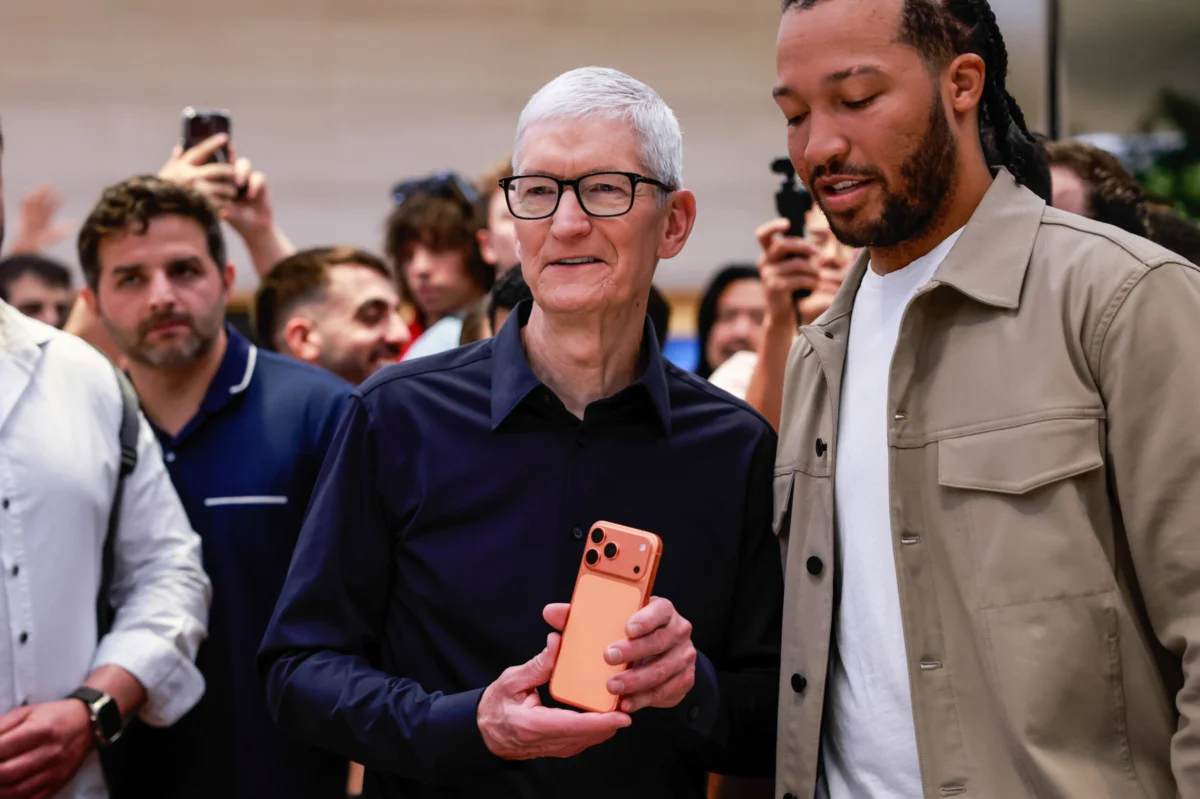
- September 2025: Tim Cook appears at the Fifth Avenue store in New York with NBA star Jalen Brunson for the launch of new products, amid growing rumors of supply constraints.
- Wednesday: Tim Cook officially confirms that price increases are "unavoidable" due to the "unsustainable" memory situation.
The Role of Memory Suppliers and Global Capacity
The bottleneck remains centered on a trio of suppliers: Micron (USA), SK Hynix (South Korea), and Samsung (South Korea). These companies are currently investing billions of dollars into the construction of new fabrication plants, or "fabs." However, bringing a new semiconductor facility online is a multi-year process fraught with regulatory and technical hurdles.
In his interview, Cook suggested that Apple might take an interventionist approach to solve the supply problem. "We’re willing to use our balance sheet to help be a part of the solution," he stated. This implies that Apple could provide massive upfront capital or prepayments to suppliers to guarantee priority access to memory production or to fund the expansion of dedicated production lines. This "checkbook diplomacy" has been a hallmark of Apple’s supply chain management in the past, but the sheer scale of the AI-driven demand suggests that even Apple’s cash reserves may only provide a partial shield.
Broader Market Implications and Competitive Analysis
The implications of Apple’s price hike extend far beyond its own ecosystem. Historically, when Apple raises prices, it provides a "price umbrella" that allows other manufacturers to follow suit. IDC estimates that average smartphone prices could increase by as much as 20% this year across the entire industry.
For Android manufacturers, the memory shortage presents a difficult choice: they must either raise prices and risk losing customers or "de-spec" their devices by offering less RAM and storage, which would render them less capable of running the latest AI software. Simon Bryant, an analyst at CCS Insight, believes this could be a strategic opening for Apple. "Apple could really use this to squeeze a lot of market share from Android," Bryant noted, suggesting that Apple’s ability to maintain high-quality specs (even at a higher price) might be more attractive to consumers than a compromised, lower-cost Android alternative.
Conclusion: A New Era of Hardware Economics
As the tech industry moves deeper into the era of artificial intelligence, the traditional economics of consumer electronics are being rewritten. The days of consistent year-over-year decreases in component costs appear to be over, replaced by a volatile environment where consumer devices must compete with massive data centers for the same silicon wafers.
Tim Cook’s admission serves as a definitive signal to the market: the AI revolution is not free. While the benefits of smarter, more personalized devices are on the horizon, the cost of the physical infrastructure required to support them has reached a breaking point. For consumers, the message is clear: the next generation of technology will come with a premium price tag, reflecting the high cost of the memory that makes modern intelligence possible. Apple’s decision to flex its pricing power is a testament to the severity of the shortage and a preview of the inflationary pressures likely to define the technology sector for the remainder of the decade.
