

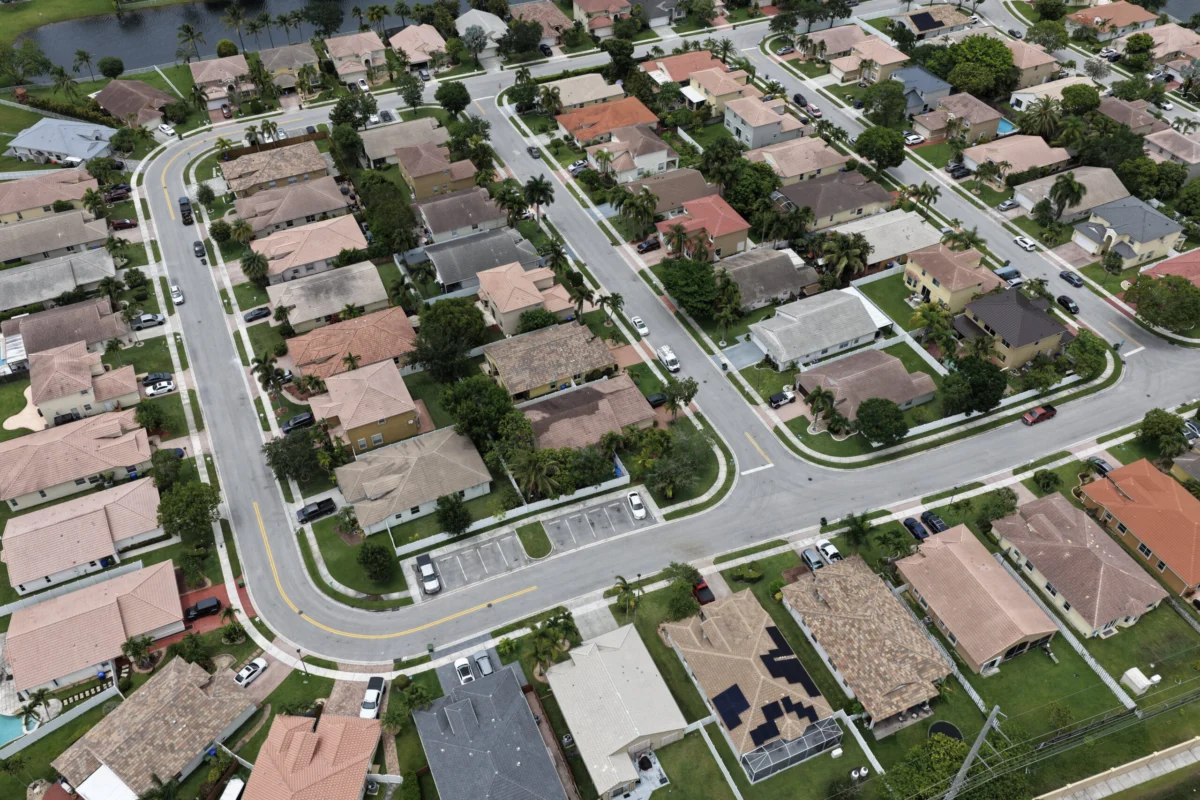
The housing market experienced a notable slowdown in demand last week, as a volatile period for mortgage rates deterred both prospective homebuyers and current homeowners from engaging in new transactions. Total mortgage application volume registered a 3.8% decline compared to the preceding week, according to the latest seasonally adjusted index released by the Mortgage Bankers Association (MBA). This dip reflects a complex interplay of macroeconomic forces, including persistent inflation, shifting geopolitical landscapes, and the anticipation surrounding critical central bank policy decisions.
Decline in Application Volume Amidst Rate Volatility
The primary indicator of market activity, the MBA’s overall index, underscored a cautious sentiment pervading the residential lending sector. Despite the overall decrease, the average contract interest rate for 30-year fixed-rate mortgages with conforming loan balances—those at or below $832,750—remained stable at 6.60%. Accompanying this rate, points, including the origination fee for loans with a 20% down payment, also held steady at 0.63. This stability in the headline rate, however, belies significant intraday and intra-week fluctuations that contributed to market uncertainty. Borrowers, faced with the prospect of rates potentially moving higher or lower within days, often adopt a wait-and-see approach, leading to a temporary contraction in application activity.
The 6.60% rate, while unchanged week-over-week, represents a challenging environment for many potential buyers, particularly when viewed through a historical lens. While considerably lower than the double-digit rates seen in the early 1980s, it remains significantly elevated compared to the sub-3% rates that characterized the pandemic-era housing boom. This higher baseline rate directly impacts affordability, increasing monthly mortgage payments and consequently reducing the purchasing power of many households. For a typical median-priced home, a rate at this level can add hundreds of dollars to a monthly payment compared to just a few years prior, exacerbating the already strained affordability landscape.
Breaking down the aggregate figures, applications for refinancing existing home loans saw a 5% weekly drop. This decline suggests that while rates dipped at the week’s end, the overall trajectory earlier in the week, combined with the 6.60% average, was not sufficiently attractive to spur a wave of refinance activity. However, in a year-over-year comparison, refinance applications were 17% higher than the same week one year ago. This intriguing contrast indicates that while current rates might not be low enough to entice a significant portion of homeowners who secured ultra-low rates during the pandemic, they are demonstrably more appealing than the rates available in June 2025, which were nearly a quarter of a percentage point higher. This suggests a segment of homeowners with even higher rates from previous periods are seizing opportunities as rates incrementally improve from their peak.
Similarly, applications for mortgages to purchase a home declined by 3% for the week. Yet, mirroring the refinance trend, purchase applications were up 3% compared to the same week last year. This slight annual increase, despite weekly volatility, underscores the underlying demand for housing, which persists even in the face of significant headwinds. The year-over-year improvement, though modest, offers a glimmer of resilience in a market grappling with numerous challenges.
Geopolitical Tensions and Economic Indicators Shape Rate Movement
The nuanced movement of mortgage rates last week was a direct reflection of a complex interplay between domestic economic data and evolving geopolitical developments. Mike Fratantoni, senior vice president and chief economist at the MBA, articulated this intricate balance, stating in a release, "Last week’s CPI data showed that inflation continued to move higher, putting upward pressure on rates early in the week, but growing optimism regarding the opening of the Strait of Hormuz brought rates down again by the end of the week."
Inflationary Pressures and CPI Data
The Consumer Price Index (CPI), a critical gauge of inflation, is a primary driver of bond yields, which directly influence mortgage rates. When CPI data indicates persistent or accelerating inflation, it typically signals to the Federal Reserve that inflationary pressures are not subsiding, potentially necessitating a continuation of restrictive monetary policy or at least a delay in any potential rate cuts. Investors, anticipating higher future inflation and the Fed’s response, demand higher yields on Treasury bonds to compensate for the erosion of purchasing power, pushing mortgage rates upward. The "higher" movement in CPI data referenced by Fratantoni would have created immediate upward pressure, causing lenders to price mortgages higher to account for increased funding costs. This initial market reaction highlights the sensitivity of the lending environment to inflation metrics.
The Strategic Importance of the Strait of Hormuz
Conversely, the latter part of the week saw a reversal of this trend, driven by "growing optimism regarding the opening of the Strait of Hormuz." The Strait of Hormuz, a narrow waterway situated between the Persian Gulf and the Gulf of Oman, is one of the world’s most critical oil chokepoints. An estimated one-fifth of global oil consumption, equivalent to approximately 21 million barrels per day, passes through this strait. Any geopolitical tensions or disruptions in this region have historically led to significant spikes in global oil prices due to supply concerns. The mention of "war with Iran" in the broader context of oil price movements suggests a period of heightened geopolitical instability in the Middle East. The prospect of the Strait of Hormuz "opening" or returning to normal operations, likely signaling a de-escalation of tensions or a potential resolution to a conflict, would alleviate fears of oil supply disruptions. This improved outlook would typically lead to a fall in crude oil prices.
Oil Prices and Their Market Influence
The inverse relationship between oil prices and bond yields, and subsequently mortgage rates, is a well-established economic phenomenon. Lower oil prices reduce input costs for businesses, ease inflationary pressures across the economy, and improve consumer purchasing power. This environment often translates into lower inflation expectations, which in turn leads investors to accept lower yields on long-term government bonds. As the yield on the 10-year U.S. Treasury bond often serves as a benchmark for 30-year fixed mortgage rates, a decline in bond yields directly translates to a decrease in mortgage rates. Mortgage News Daily corroborated this trend, reporting that rates continued to move lower this week, reaching their lowest level since May 14, directly mirroring the fall in oil prices as investors reacted to a "potential end to the war with Iran."
However, this optimism is not without its caveats. Matthew Graham, chief operating officer at Mortgage News Daily, cautioned, "The only warning is that some analysts think oil prices have already gotten ahead of themselves in that regard. If those analysts are right, it could limit any additional momentum toward lower rates until peace is on more solid footing." This statement underscores the speculative nature of market reactions to geopolitical events. Should the perceived resolution of tensions prove premature or unstable, oil prices could rebound, quickly reversing any downward momentum in mortgage rates. Such volatility necessitates a cautious approach from both lenders and borrowers, as the sustainability of lower rates remains tied to the enduring stability of global supply chains and geopolitical dynamics.
Persistent Challenges for Aspiring Homeowners
Beyond the immediate fluctuations in mortgage rates, prospective homebuyers continue to navigate a profoundly challenging market. The 3% weekly decline in purchase applications is not solely attributable to rate sensitivity; it is a symptom of a broader set of structural impediments.
The Supply-Demand Imbalance
A critical factor remains the persistently lean supply of available homes for sale. Years of underbuilding following the 2008 financial crisis, coupled with a significant portion of existing homeowners locked into historically low mortgage rates, have created an inventory crunch. Many homeowners are reluctant to sell and forfeit their advantageous financing, thereby exacerbating the supply shortage. This imbalance means that even with a slight cooling in demand, the number of active listings remains insufficient to meet the needs of a growing population and demographic shifts, such as millennials entering their prime homebuying years.
Affordability Crisis and Economic Headwinds
The scarcity of homes directly contributes to high prices, which have continued to climb in many markets, pushing homeownership further out of reach for a significant segment of the population. This affordability crisis is compounded by the high mortgage rates, creating a formidable financial barrier. Furthermore, continued uncertainty over the direction of the broader economy and inflation weighs heavily on consumer confidence. Concerns about job security, potential economic slowdowns, and the erosion of purchasing power due to persistent inflation make large financial commitments, such as buying a home, particularly daunting. This confluence of factors creates a complex decision-making environment for potential buyers, often leading them to delay their home purchase plans.
The Federal Reserve’s Critical Role Under New Leadership
The economic landscape and, by extension, the trajectory of mortgage rates, are heavily influenced by the actions and pronouncements of the Federal Reserve. Wednesday will mark a pivotal moment with the first meeting of the Federal Reserve under its new chairman, Kevin Warsh. While it is widely not expected that the Fed will alter its benchmark interest rates at this inaugural meeting, the market will be keenly attuned to any signals or "clues" regarding future monetary policy.
Chairman Kevin Warsh’s Inaugural Meeting
Kevin Warsh, a former Federal Reserve Governor (2006-2011) known for his hawkish stance on inflation and deep understanding of financial markets, brings a new perspective to the helm of the central bank. His appointment as chairman signals a potential shift in the Fed’s long-term strategy, even if immediate policy changes are not anticipated. Investors, economists, and market analysts will scrutinize his opening remarks, the post-meeting statement, and any subsequent press conferences for indications of his philosophy on inflation targeting, economic growth, and the future path of interest rates. His leadership comes at a time when the Fed is navigating the delicate balance between cooling inflation without tipping the economy into recession, a task made more challenging by global geopolitical complexities.
Decoding the Fed’s Forward Guidance
The Fed’s "forward guidance"—its communication about the likely future course of monetary policy—is a powerful tool for influencing market expectations. Even without a rate change, Chairman Warsh and the Federal Open Market Committee (FOMC) can provide insights into their economic projections, their assessment of inflationary pressures, and their outlook on the labor market. Details in the accompanying Summary of Economic Projections (SEP), including the "dot plot" (individual FOMC members’ projections for the federal funds rate), will be critical. Any subtle shifts in language or tone, particularly concerning the Fed’s commitment to its 2% inflation target or its assessment of economic resilience, could significantly impact market sentiment. If the Fed’s communication suggests a more aggressive stance on inflation or a more cautious approach to rate cuts than previously anticipated, it could exert renewed upward pressure on bond yields and, consequently, mortgage rates. Conversely, a more dovish tone could provide further impetus for rates to decline.
Industry Reactions and Future Outlook
The mixed signals in the mortgage market are generating diverse reactions across the real estate industry. Real estate agents report a noticeable hesitancy among potential buyers, who are increasingly sensitive to rate movements and overall affordability. Homebuilders, while still grappling with supply chain issues and labor shortages, are closely monitoring demand trends and may adjust their construction pipelines based on sustained shifts in application volumes.
Expert Perspectives on Market Trajectory
Economists like Fratantoni and analysts such as Graham provide crucial context, but the market’s future trajectory remains highly dependent on external factors. The stability of global oil markets, the persistence of inflationary pressures, and the Federal Reserve’s response will all play pivotal roles. If geopolitical tensions truly subside and oil prices stabilize at lower levels, it could provide a sustained tailwind for mortgage rates. However, the risk of a rebound in oil prices, as highlighted by Graham, remains a significant concern. Furthermore, the longevity of disinflationary trends will dictate the Fed’s flexibility in easing monetary policy, which is ultimately what the housing market requires for a more robust recovery.
Implications for Real Estate Professionals and Consumers
For real estate professionals, the current environment demands adaptability and a deep understanding of market nuances. Educating clients on rate lock strategies, exploring alternative financing options (such as adjustable-rate mortgages for certain borrowers), and emphasizing the long-term value of homeownership despite short-term fluctuations become paramount. For consumers, the message is one of cautious optimism tempered by vigilance. While rates have shown signs of improvement, the market remains susceptible to rapid shifts. Prospective homebuyers are advised to secure pre-approvals, monitor rates closely, and be prepared to act decisively when favorable conditions emerge, while also maintaining a realistic perspective on affordability in a supply-constrained, high-price environment.
Conclusion – Navigating a Complex Housing Landscape
The housing market in June 2026 finds itself at a crossroads, where the immediate demand for mortgages is tempered by a complex web of economic indicators and geopolitical developments. While the promise of easing global tensions offers a potential pathway to lower rates, the enduring challenge of inflation and the cautious stance of central banks, particularly under new leadership, suggest that volatility will likely remain a defining characteristic. For millions of Americans, the dream of homeownership or the opportunity to refinance remains contingent on how these powerful, often unpredictable, forces ultimately unfold. The coming weeks, with key economic data releases and the Fed’s ongoing communication, will undoubtedly provide further clarity on the direction of this intricate and vital sector of the economy.
