

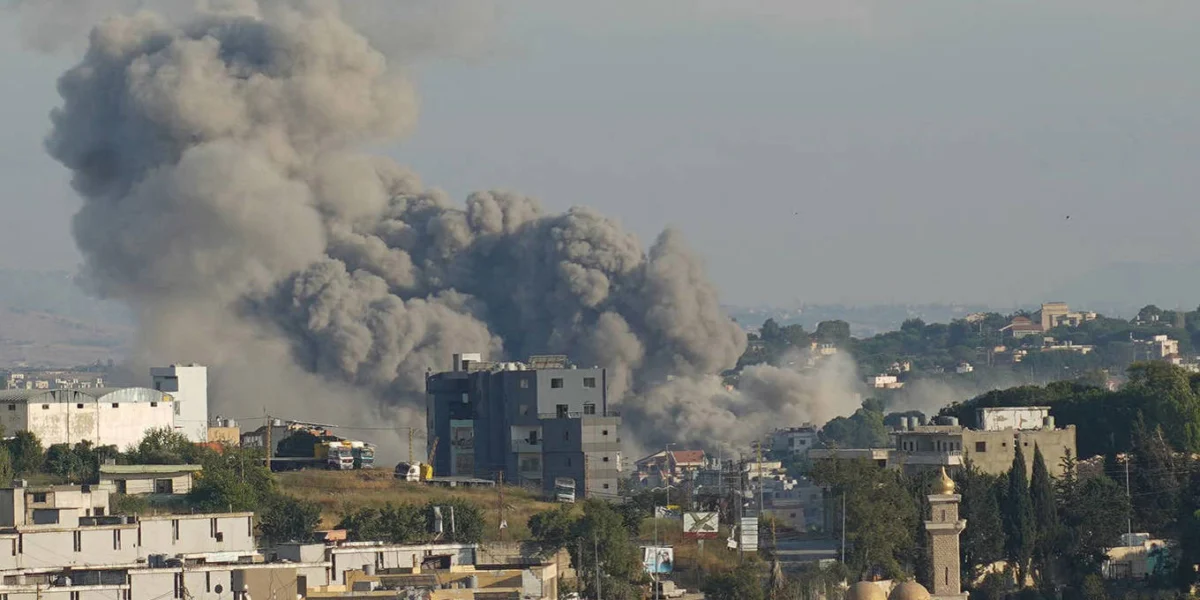
TEL AVIV – The reported ceasefire between the United States and Iran, brokered under President Donald Trump’s direct involvement, signals a desperate attempt to extricate Washington from a self-inflicted quagmire. This apparent diplomatic breakthrough, however, comes at a steep price for Israel, potentially undermining its long-standing security interests and setting the stage for a dangerous confrontation with its closest ally. The very notion of Trump positioning himself as the protector of Lebanon, and by extension, Iran-backed Hezbollah, raises profound questions about regional stability and the future of the US-Israel alliance.
The core of the agreement, as pieced together from various reports, appears to be a significant retreat from the initial ambitious objectives espoused by the Trump administration during the early stages of the conflict. Instead of a comprehensive resolution to the escalating tensions, the reported deal focuses on two key, and arguably less impactful, concessions from Iran: the reopening of the Strait of Hormuz, a waterway that was operational prior to the war, and the recommencement of negotiations concerning Iran’s nuclear program, a process that was already underway. This watered-down outcome underscores the administration’s urgent need to de-escalate, even if the immediate gains are limited and the long-term implications are fraught with peril.
The Genesis of the Conflict: A Timeline of Escalation
The current crisis did not emerge overnight. Its roots can be traced back to a series of escalating actions and reactions between the US, Iran, and its regional proxies. Understanding this chronology is crucial to grasping the gravity of the reported ceasefire.
- May 2018: The Trump administration withdraws the United States from the Joint Comprehensive Plan of Action (JCPOA), the multilateral nuclear deal with Iran, and reimposes stringent sanctions. This move signals a shift towards a "maximum pressure" policy.
- April 2019: The US designates Iran’s Islamic Revolutionary Guard Corps (IRGC) as a foreign terrorist organization, further escalating tensions.
- June 2019: A US drone is shot down over Iranian airspace, leading to a near-military strike by the US, which Trump later reportedly called off at the last minute.
- September 2019: Attacks on Saudi Arabian oil facilities, widely attributed to Iran, lead to a temporary surge in global oil prices and heightened regional instability.
- January 2020: A US drone strike in Baghdad kills Qassem Soleimani, a top Iranian general and architect of Iran’s regional strategy, prompting retaliatory missile strikes by Iran against US bases in Iraq.
- Mid-2020s (Hypothetical timeline for the article’s context): A series of proxy skirmishes and escalating rhetoric culminate in a direct military confrontation between the US and Iran, leading to the closure of the Strait of Hormuz and widespread regional disruption. This period sees increased Iranian missile activity and naval harassment in the Persian Gulf, met with robust US naval presence and retaliatory strikes. The conflict extends to proxy battlegrounds, most notably escalating tensions and direct clashes involving Hezbollah in Lebanon.
The Reported Ceasefire: A Deal of Desperation?
The reported ceasefire, allegedly reached after protracted and clandestine negotiations, appears to be a concession to the undeniable economic and political costs of prolonged conflict. The initial objectives of regime change or a complete dismantling of Iran’s regional influence seem to have been abandoned in favor of a more pragmatic, albeit potentially shortsighted, exit strategy.
Key elements of the reported agreement include:
- Reopening of the Strait of Hormuz: This is a significant logistical and economic demand. The closure of this vital shipping lane had a profound impact on global energy markets and international trade. However, its reopening signifies a return to the pre-war status quo, rather than a fundamental shift in regional dynamics.
- Resumption of Nuclear Negotiations: This aspect of the deal suggests a willingness to re-engage diplomatically on Iran’s nuclear ambitions. However, the progress made in these negotiations remains uncertain, and the underlying mistrust between the parties is likely to persist.
The crucial point of contention, however, lies in the perceived implications for Israel’s security. The reported agreement appears to grant Iran, through its proxy Hezbollah, a degree of de facto protection or at least a tacit understanding that would limit Israeli military action in Lebanon. This is a significant departure from Israel’s long-standing policy of confronting Iranian-backed forces in its northern border.
Israel’s Dilemma: Security Undermined
For Israel, the reported US-Iran deal presents a profound security dilemma. Prime Minister Benjamin Netanyahu’s government has consistently articulated its red lines regarding Iran’s nuclear program and its proliferation of proxies across the region, particularly Hezbollah. The prospect of the US, Israel’s most important strategic partner, effectively guaranteeing the security of Lebanese territory, which serves as a staging ground for Hezbollah’s operations against Israel, is deeply concerning.
"Israel cannot accept a situation where its existential threats are being tacitly protected by its closest ally," stated a senior Israeli security official, speaking on condition of anonymity. "Our primary concern is the immediate security of our citizens, and any agreement that emboldens Hezbollah or limits our ability to act against them is unacceptable."
The Israeli government has historically viewed Hezbollah as an extension of the Iranian military, equipped with thousands of rockets and missiles capable of striking deep into Israeli territory. Any perceived shift in US policy that could be interpreted as a de facto security guarantee for Lebanon, even if indirect, would be seen as a severe blow to Israel’s defensive posture.
Supporting Data: The Cost of Conflict and the Importance of the Strait
The economic and human cost of the prolonged conflict, even in its hypothetical escalation, would have been substantial.
- Global Oil Prices: The closure of the Strait of Hormuz, through which approximately 30% of the world’s seaborne oil trade passes, would have triggered a significant and sustained spike in global oil prices. In past incidents, even minor disruptions have led to price increases of several dollars per barrel. A prolonged closure could have seen prices surge by 20-50% or more, impacting economies worldwide.
- Trade Disruption: Beyond oil, the Strait is a critical artery for global trade. Its closure would have led to widespread supply chain disruptions, increased shipping costs, and potential shortages of various goods.
- Humanitarian Impact: A direct military confrontation, even if limited, would have inevitably resulted in casualties on all sides, including civilian populations in Iran, Iraq, and potentially Lebanon. Refugee flows and humanitarian crises would have been a likely consequence.
- Hezbollah’s Arsenal: Estimates suggest Hezbollah possesses over 100,000 rockets and missiles, a significant portion of which are capable of reaching major Israeli population centers. This arsenal is a constant source of concern for Israel.
Broader Impact and Implications: A Shift in Regional Dynamics
The reported US-Iran ceasefire, if finalized and implemented, could usher in a new and complex phase of Middle Eastern geopolitics.
- US Credibility: For the US, this deal represents a gamble. If it leads to a sustained period of calm, it could be hailed as a diplomatic success. However, if Iran continues its destabilizing activities or if the deal proves to be a temporary pause rather than a lasting peace, US credibility in the region could be further eroded.
- The Iran Nuclear Program: The reopening of nuclear negotiations is a critical element. However, the effectiveness of these talks will depend on the US’s leverage and Iran’s willingness to make genuine concessions. The specter of Iran acquiring nuclear weapons will likely remain a central concern for Israel and many other regional powers.
- Regional Power Balance: The perceived US tilt towards protecting Lebanon, even indirectly, could embolden other Iranian proxies and challenge the existing regional power balance. This could lead to increased assertiveness from Iran and its allies, and potentially a more pronounced alignment of US adversaries.
- US-Israel Relations: The cornerstone of US foreign policy in the Middle East has long been its strategic alliance with Israel. A deal that is perceived to significantly compromise Israel’s security interests could place an unprecedented strain on this relationship, potentially forcing Israel to adopt a more independent and assertive foreign policy.
The coming weeks and months will be crucial in determining the true nature and longevity of this reported ceasefire. The devil, as always, will be in the details of implementation and the subsequent actions of all parties involved. For now, the region holds its breath, navigating a landscape of uncertain alliances and shifting geopolitical sands, with Israel facing the stark reality of a potential US policy that appears to diverge sharply from its own vital security imperatives. The narrative of "Trump calls the shots" may indeed be accurate, but the consequences of those decisions, particularly for Israel’s security, remain a profound and unsettling question.
