

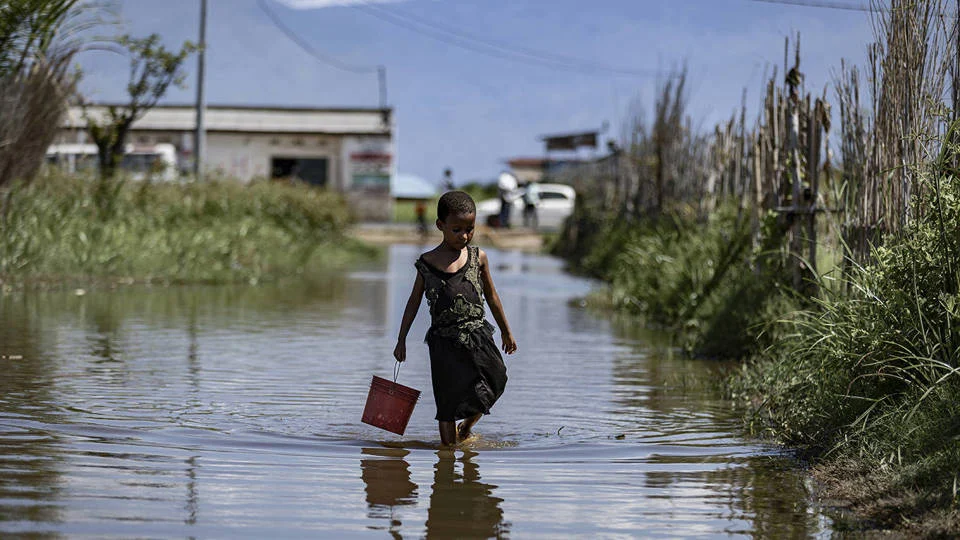
The escalating impacts of global warming are not merely an environmental concern; they represent a profound humanitarian crisis, uprooting communities and plunging vulnerable populations into deeper poverty. While the global discourse has largely fixated on decarbonization efforts, a critical dimension of climate change—human mobility—is often relegated to the periphery. However, the nascent Global Climate Mobility Principles offer a vital framework for policymakers, aiming to safeguard the agency and rights of individuals grappling with climate-induced displacement and immobility.
The Unfolding Crisis of Climate Mobility
The reality of climate-driven displacement was starkly illuminated at the inaugural Berlin Climate Mobility Forum. Leaders from nations on the frontlines of climate change, including those in Africa, South Asia, the Pacific, and the Caribbean, convened to address an urgent yet frequently overlooked consequence of a warming planet: the profound impact on human lives and communities. As the Earth’s climate continues to destabilize, communities worldwide are confronted with increasingly agonizing choices. Some individuals, driven by a deep connection to their ancestral lands, cultural heritage, and established livelihoods, choose to persevere despite escalating environmental risks. Others, facing insurmountable challenges, are compelled to abandon their homes, leading in some instances to the complete displacement of entire villages and towns.
The scale of this phenomenon is substantial and growing. According to the Internal Displacement Monitoring Centre (IDMC), in 2022 alone, 32.6 million people were displaced by disasters, with weather-related events accounting for the vast majority. This figure represents a significant portion of the 71.1 million people living in internal displacement at the end of 2022 due to conflict and violence. While the immediate focus often falls on sudden-onset disasters, slow-onset environmental degradation, such as desertification, rising sea levels, and water scarcity, also compels movement, often in a more gradual but equally devastating manner.
A Fragmented Policy Landscape
The Berlin Climate Mobility Forum underscored a widely acknowledged truth: addressing this complex challenge necessitates coordinated governmental action and resource allocation. The consensus among participating leaders was that governments must prioritize support for adaptation planning and direct essential resources to the most affected communities. Yet, a year after the inaugural forum, and as preparations commence for the second Berlin Climate Mobility Forum scheduled for June 18-19, the global and national policy frameworks designed to manage climate-related human mobility remain conspicuously inadequate and fragmented.
When sudden-onset disasters, such as hurricanes, floods, and wildfires, strike, national emergency response mechanisms are activated to provide aid and assistance. The effectiveness of these responses, however, varies significantly across regions and nations. Beyond the immediate emergency phase, individuals displaced by such events often find that rebuilding their lives or returning to their former homes is an insurmountable challenge, necessitating long-term, comprehensive solutions. While the majority of climate-displaced persons remain within their national borders, those who cross international frontiers encounter a more perilous situation. These individuals frequently do not meet the established international legal definition of "refugee," leaving them in a precarious legal gray area, vulnerable to exploitation and lacking adequate protection from various threats.
The situation is further exacerbated by the insidious effects of gradual climate change, which systematically erodes living conditions. For those compelled to relocate due to these slow-onset changes, the decision is often one of dire necessity rather than free choice. Despite this reality, formal pathways offering assistance to internal migrants, particularly those moving from rural to urban areas, or legal status for individuals settling in foreign countries, remain scarce. Concurrently, those who remain in severely affected regions often slide deeper into poverty, their vulnerability intensifying with each passing year. Existing international instruments, including climate negotiations under the UNFCCC, migration compacts like the Global Compact for Migration, and disaster-risk-reduction frameworks such as the Sendai Framework, all contribute elements of a potential solution. However, none offers a holistic response, leading to siloed and reactive approaches that leave communities ill-prepared for the escalating climate-related risks they face.
Introducing a New Paradigm: Climate Mobility
The urgent need for a new approach is undeniable. A fundamental prerequisite for effective action is the establishment of a shared understanding and terminology to describe this complex and deeply human reality. The concept of "climate mobility" has emerged as a crucial descriptor, encompassing the diverse spectrum of human movement—including forced displacement, migration, and planned relocation—as well as the critical issue of "immobility" in the face of escalating risks. This term accurately captures movements motivated by the adverse impacts of both sudden and slow-onset climate disasters, occurring both within and across national borders.
The Global Climate Mobility Principles: A Framework for Action
Following the conceptualization of climate mobility, the imperative shifts to devising concrete policy responses. The Global Climate Mobility Principles, slated for endorsement at the upcoming Berlin Climate Mobility Forum, aim to provide precisely this much-needed actionable framework. These principles, developed through extensive consultation and collaboration, represent a voluntary, non-binding commitment designed to complement and consolidate existing international legal and policy commitments. They are intended to work in tandem with landmark agreements such as the Paris Agreement on climate change, the Sendai Framework for Disaster Risk Reduction, the Global Compact for Migration, and the Nansen Initiative Protection Agenda.
Crucially, these principles establish common objectives around which diverse sectors and stakeholders can align their efforts. Foremost among these are the defense of human agency and rights, and the localization of adaptation measures. By focusing on these core tenets, the principles aim to foster a more coherent and people-centered approach to climate mobility.
Key Pillars of the Principles
The Global Climate Mobility Principles advocate for a multi-faceted approach to address the challenges of climate-induced human movement:
- Protecting the Right to Remain: A primary objective is to uphold the right of individuals to remain in their homes and communities. This is to be achieved through robust climate action aimed at mitigation and adaptation, alongside the implementation of locally led adaptation strategies that enhance resilience and reduce vulnerabilities.
- Ensuring Safe and Dignified Pathways: For those who must or choose to move, the principles emphasize the creation of safe, legal, and dignified pathways for relocation. This includes addressing legal barriers, providing necessary support services, and ensuring that migration is a choice made with agency, not a desperate last resort.
- Establishing Legal Frameworks: A significant gap in the current international system is the lack of adequate legal protection for climate-displaced persons. The principles call for the development of specific legal frameworks that recognize and protect individuals displaced by climate change, particularly across borders.
- Preserving Statehood and Cultural Heritage: For low-lying island nations and coastal communities, rising sea levels pose an existential threat to statehood and cultural identity. The principles underscore the need to support these vulnerable states and to safeguard their unique cultural heritage, which is intrinsically linked to their land and environment.
- Empowering Frontline Communities: Essential to effective adaptation and mobility planning is the empowerment of frontline communities. The principles call for providing these communities with access to critical climate data, robust early-warning systems, and adequate financial resources to implement adaptation measures and manage climate-related risks.
This comprehensive approach offers the coherent framework that has thus far been absent in the global response to climate mobility.
Building Momentum for Implementation
The endorsement of these principles is gaining significant momentum, challenging the narrative that geopolitical competition has unduly narrowed the scope for international cooperation. A growing coalition of willing countries, cities, civil society organizations, Indigenous groups, private sector entities, and affected communities are actively demonstrating that a new form of multilateralism is not only possible but essential. Even as some national governments appear to be retreating from global commitments, a discernible consensus is emerging around the paramount importance of centering human needs and evidence-based approaches to achieve tangible and equitable outcomes in the fight against climate change.
The trajectory of the Berlin Climate Mobility Forum exemplifies this growing collaboration. The inaugural event in 2023 served as a crucial platform for dialogue and consensus-building. The upcoming second forum in June 2024 is designed to transition from endorsement to concrete implementation. The objective is to initiate a robust multi-stakeholder process, fostering the establishment of committed coalitions. These coalitions will comprise affected communities, champion governments, regional organizations, United Nations agencies, international financial institutions, and leading experts. The ultimate goal is to deliver a community transition roadmap by June 2027, outlining practical steps and timelines for addressing climate mobility challenges.
The Path Forward: Solidarity and Foresight
The reality of climate change is already displacing populations and exacerbating poverty in vulnerable regions. However, by acting with foresight, solidarity, and a commitment to human rights, it is possible to navigate this unfolding crisis. The Global Climate Mobility Principles provide a vital roadmap for ensuring that individuals who are forced to move do so with their rights intact, and that those who choose or are compelled to remain do so with dignity and resilience. The challenge now lies in translating these principles into tangible action, fostering a global response that is as compassionate as it is effective. The time to choose this path, and to walk it together, is now.
