

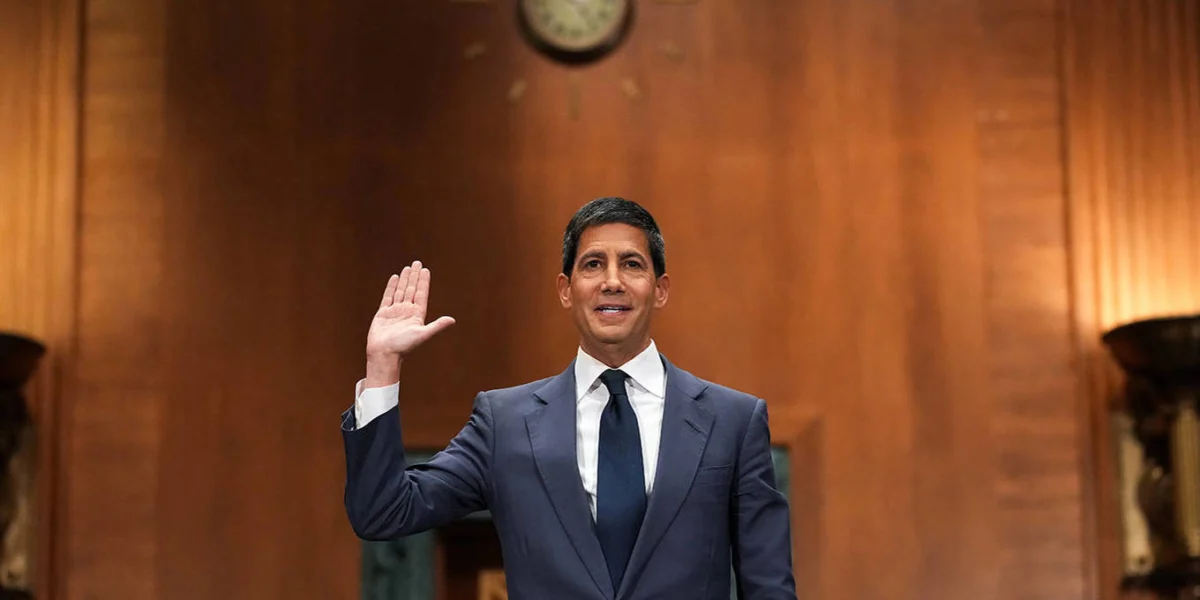
It would be easy—and a mistake—to blame the US Federal Reserve’s many blunders on corrupt bureaucrats or imagined conspiracies. The truth of the matter is that the central bank relies on an outdated regional map and lagging indicators that no longer tell the whole story, while battling macroeconomic blazes that politicians stoke. SAN DIEGO—While pilots learn to trust instruments, smart ones know to peek out the window now and then. For too long, the US Federal Reserve Board has behaved like a pilot who stares at his gauges and cites the altitude to the nearest foot but doesn’t see the mountain in the windshield. Kevin Warsh, the new Fed chair, has slipped into the pilot’s seat just as markets debate whether monetary policy should be loosened or tightened. He will need a nimble neck to make wise decisions.
The Illusion of Control: A Systemic Lag
The Federal Reserve, the central bank of the United States, operates under a mandate to promote maximum employment, stable prices, and moderate long-term interest rates. Its policy decisions, particularly those concerning interest rates and the money supply, are designed to influence the broader economy. However, the tools and data the Fed relies upon are increasingly showing their age, creating a significant lag between policy implementation and observable economic effects. This temporal disconnect, coupled with an over-reliance on historical data, often leads to policies that are either too late or too aggressive, exacerbating economic volatility.
The Federal Reserve’s structure, with its twelve regional Reserve Banks, was established in 1913. While designed to ensure representation from different economic regions, this decentralized framework can, in certain contexts, contribute to a fragmented understanding of the national economic landscape. Each Reserve Bank collects data and assesses conditions within its district. While this provides valuable micro-level insights, aggregating and interpreting this information to form a cohesive national picture can be challenging, especially in an era of rapid globalization and interconnected financial markets. The economic realities of a port city like San Diego, for instance, might differ significantly from those of a manufacturing hub in the Midwest or a tech center in the Northeast, yet a singular monetary policy must attempt to address these diverse conditions.
The Tyranny of Lagging Indicators
A core challenge for the Federal Reserve lies in its heavy reliance on lagging economic indicators. These are statistics that reflect past economic activity, such as inflation rates, unemployment figures, and GDP growth. While these indicators provide crucial historical context, they are inherently retrospective. By the time the Fed observes a significant rise in inflation, for example, the underlying causes may have already shifted, and the economy may be on a different trajectory. Similarly, a decline in unemployment figures might signal a robust economy, but the Fed’s decision to raise interest rates in response could inadvertently stifle nascent growth before it solidifies.
Consider the Consumer Price Index (CPI), a widely watched measure of inflation. The Bureau of Labor Statistics releases CPI data monthly, but the collection and analysis process means that the reported figures often reflect price changes from one to two months prior. For a dynamic economy, this lag can be substantial. If the Fed decides to adjust interest rates based on CPI data that is already several months old, its actions might be misaligned with the current economic reality. This is particularly problematic when the economy is experiencing rapid shifts, such as during periods of supply chain disruptions or sudden changes in consumer demand.
The Unseen Mountain: The Need for Real-Time Insights
The analogy of the pilot peering out the window highlights a critical deficiency: the Federal Reserve’s apparent struggle to incorporate real-time, forward-looking data into its decision-making process. While financial markets are inherently forward-looking, constantly pricing in future expectations, the Fed’s official data streams are often less agile. The challenge lies in developing and integrating reliable real-time data sources that can provide a more immediate pulse on the economy.
This could include a more sophisticated analysis of high-frequency data, such as credit card transaction volumes, real-time job postings, shipping container movements, and even sentiment analysis from online platforms. While some of these data points are already being explored by researchers and policymakers, their systematic integration into the Fed’s core analytical framework remains a work in progress. The ability to discern emerging trends and potential headwinds before they fully manifest in lagging indicators would equip the Fed with a more proactive and effective policy toolkit.
The Shadow of Political Influence
The article also alludes to "macroeconomic blazes that politicians stoke." This suggests a concern that fiscal policies enacted by the government can create economic conditions that the Federal Reserve then struggles to manage. Fiscal policy, which involves government spending and taxation, can have a profound impact on aggregate demand, inflation, and employment. When politicians pursue expansionary fiscal policies, such as large stimulus packages or unfunded tax cuts, without adequate consideration for their inflationary or debt implications, they can create a challenging environment for the central bank.
For instance, a significant increase in government spending during a period of already high demand can overheat the economy, leading to inflationary pressures. The Federal Reserve might then be forced to implement contractionary monetary policies, such as raising interest rates, to cool down the economy. This can lead to a delicate balancing act, where the Fed’s efforts to stabilize prices may be undermined by ongoing expansionary fiscal actions. The resulting economic volatility can create uncertainty for businesses and consumers, hindering long-term investment and growth.
The Warsh Era: Navigating Treacherous Airspace
Kevin Warsh, as the newly appointed Fed chair, inherits a complex and volatile economic landscape. The debate over whether monetary policy should be loosened or tightened is a recurring one, but it takes on particular urgency when the underlying economic signals are obscured by outdated data and the unpredictable influence of fiscal policy.
A Potential Timeline of Key Events Leading to the Current Juncture:
- Early 2020s: The global economy experiences significant disruptions due to the COVID-19 pandemic, leading to unprecedented fiscal stimulus measures and supply chain bottlenecks.
- 2021-2022: Inflationary pressures begin to mount globally, driven by a combination of strong demand, supply constraints, and the lingering effects of stimulus. The Federal Reserve, initially hesitant, begins to signal a shift towards monetary tightening.
- 2023: The Fed aggressively raises interest rates in an attempt to curb inflation. This leads to concerns about a potential recession and increased volatility in financial markets.
- Early 2024: Inflation shows signs of moderating, but the economy remains somewhat uncertain. Debates intensify within the Fed and among economists about the appropriate path for monetary policy – whether to continue tightening, hold rates steady, or begin to loosen.
- Mid-2024 (hypothetical): Kevin Warsh assumes the role of Fed Chair amidst this complex economic environment, facing immediate pressure to make critical decisions regarding interest rates.
Supporting Data Illustrating the Challenges:
- Inflation Volatility: Between 2021 and 2023, the annual inflation rate in the US, as measured by the CPI, surged from below 2% to over 9%, then began a gradual decline. This rapid fluctuation underscores the difficulty in forecasting and controlling price stability. (Source: Bureau of Labor Statistics)
- Employment Data Lag: While unemployment rates have remained historically low, the nuances of labor market dynamics, such as wage growth and labor force participation, can take time to be fully reflected in official statistics. For example, the Personal Consumption Expenditures (PCE) price index, the Fed’s preferred inflation gauge, is released with a lag.
- Interest Rate Sensitivity: Historical data shows that monetary policy changes can take several months, even up to 18-24 months, to fully impact economic activity. This extended lag period makes it challenging for policymakers to calibrate their actions precisely. (Source: Various economic modeling studies)
- Fiscal Stimulus Impact: The multi-trillion-dollar fiscal packages enacted in response to the pandemic, while crucial for mitigating immediate economic hardship, are widely acknowledged by economists to have contributed to the subsequent inflationary surge. (Source: Congressional Budget Office, academic economic research)
Official Responses and Broader Implications
The Federal Reserve’s communication strategies are crucial in shaping market expectations and guiding economic behavior. Statements from Fed officials, meeting minutes, and speeches are scrutinized for clues about future policy direction.
Potential Reactions and Statements (Logically Inferred):
- From the Fed: A spokesperson might emphasize the Fed’s commitment to data-driven decision-making, acknowledging the challenges of navigating a complex economic environment and the importance of a balanced approach to achieving its dual mandate. They might highlight ongoing efforts to refine analytical frameworks and incorporate a broader range of economic indicators.
- From Economists: Analysts might express concern about the Fed’s reliance on lagging data, urging for greater transparency and a more proactive approach. Some might advocate for innovative data collection methods, while others might call for better coordination between fiscal and monetary policy.
- From Industry Leaders: Business leaders could voice anxieties about policy uncertainty, emphasizing the need for clear forward guidance to facilitate long-term investment and hiring decisions. They might highlight the impact of interest rate fluctuations on their operational costs and strategic planning.
The implications of the Federal Reserve’s struggles with outdated data and a complex economic environment are far-reaching. If the central bank consistently misjudges the economic landscape, it risks either exacerbating inflation or triggering unnecessary economic downturns. This can lead to:
- Increased Economic Volatility: Unpredictable policy shifts can create uncertainty, discouraging investment and consumer spending.
- Erosion of Confidence: Repeated policy missteps can diminish public trust in the Fed’s ability to manage the economy effectively.
- Long-Term Stagnation: An environment of persistent uncertainty and mismanaged inflation can hinder long-term economic growth and prosperity.
Kevin Warsh’s tenure as Fed chair will be a critical period for the institution. His ability to adapt to the evolving economic landscape, embrace more agile data analysis, and navigate the interplay between monetary and fiscal policy will be paramount. The central bank’s journey forward requires not just trusting the instruments, but also developing a keen awareness of the terrain ahead, lest it fly directly into an unforeseen economic mountain. The challenge is immense, and the stakes for the American economy are exceptionally high. The pilot must indeed learn to peek out the window with greater frequency and acuity.
