

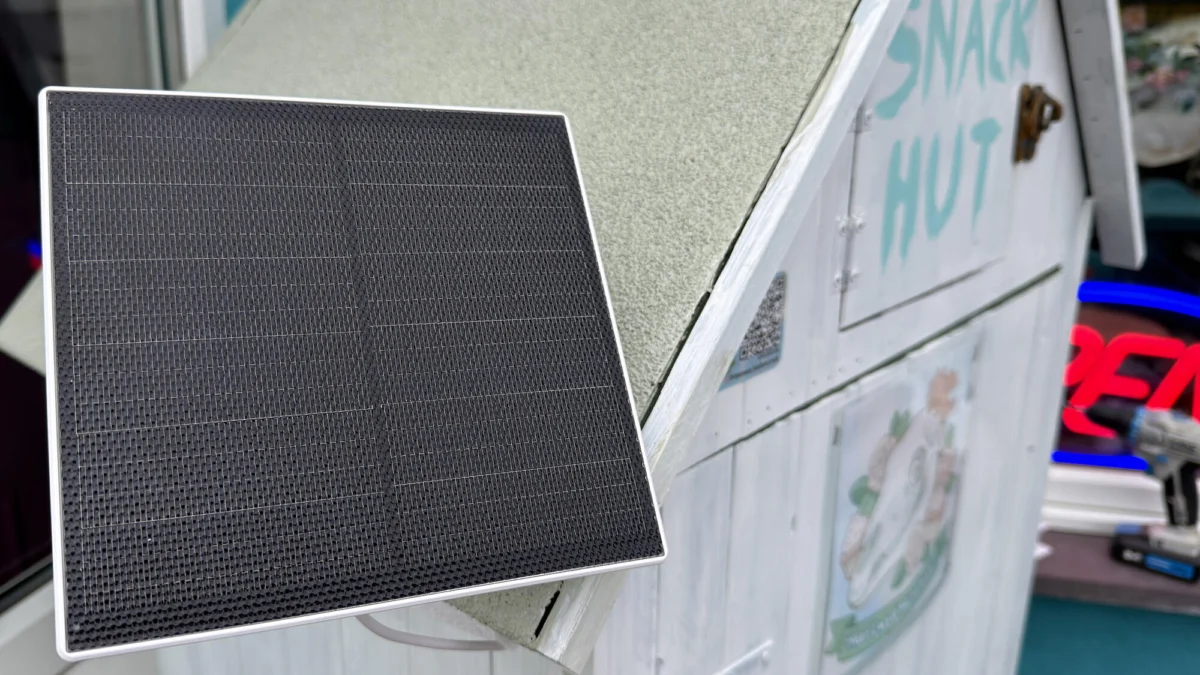
The deployment of remote security infrastructure has historically been limited by the availability of consistent power sources, a challenge that is increasingly being addressed through the refinement of micro-solar technology. As residential and commercial security shifts toward wireless, battery-operated camera systems, the logistics of maintenance—specifically the periodic recharging of batteries—have emerged as a primary friction point for users. The EverExceed 5V Weatherproof Solar Panel represents a growing category of specialized photovoltaic accessories designed to eliminate this maintenance cycle by providing a continuous trickle charge to low-power electronics. This analysis explores the technical specifications, real-world application, and broader implications of utilizing 5-watt solar solutions for off-grid security monitoring.
The Landscape of Remote Surveillance and the Power Dilemma
The rise of the "honor box" system in the United Kingdom and other rural European regions provides a compelling case study for the necessity of remote surveillance. These systems, which rely on the honesty of hikers and tourists to pay for snacks and beverages, are inherently vulnerable to theft and vandalism. While modern battery-powered cameras offer high-definition video and motion detection without the need for hardwiring, their reliance on internal lithium-ion cells creates a recurring labor requirement. In high-traffic areas, a standard battery-operated camera may require recharging every few weeks, a task that is often overlooked in remote or volunteer-managed settings.
To address this, the integration of small-scale solar panels has moved from a niche DIY "MacGyver" solution to a standardized consumer product. The EverExceed 5V panel is positioned as an affordable, plug-and-play solution for this specific problem, targeting users who require "set-and-forget" reliability for their security apparatus.
Technical Specifications and Engineering Standards
The EverExceed 5V solar panel is a compact photovoltaic module measuring approximately 7 by 6.5 inches. Unlike the integrated solar panels often found on cheap consumer power banks—which are frequently criticized by engineers as being largely "gimmicky" due to their negligible surface area—the 5-watt rating of this standalone panel is sufficient to maintain the charge of most modern surveillance units.
Key technical specifications include:
- Power Output: 5 Watts at 5 Volts, optimized for USB-based charging protocols.
- Connectivity: A 10-foot (3-meter) integrated cable terminating in a convertible microUSB and USB-C connector.
- Durability Rating: IP65 water and dust resistance, ensuring protection against low-pressure water jets and environmental particulates.
- Operating Temperature: A rated range of -4°F to 122°F (-20°C to 50°C), making it suitable for temperate climates such as the UK and most of North America.
- Mounting Hardware: A 360-degree adjustable plastic bracket designed for wall or surface mounting.
Industry experts note that a 5W panel in ideal conditions can generate enough current to fully recharge a standard 5,000mAh camera battery within a single day of clear sunlight. However, the true value of such a device lies in its ability to provide a "trickle charge" during overcast conditions, balancing the daily energy consumption of the camera’s motion sensors and Wi-Fi radio.
Implementation Chronology: A Field Test in the United Kingdom
The effectiveness of the EverExceed system was recently tested in a real-world scenario involving a trailside honor box in the UK. The project aimed to secure a wooden shed used for vending snacks to hikers without the possibility of connecting to the local power grid.
Phase 1: Planning and Assessment
The initial setup involved a high-performance battery-powered camera. Under standard operation, the camera’s battery would deplete within 14 to 21 days depending on trigger frequency. The goal was to extend this indefinitely using the EverExceed panel.
Phase 2: Installation and Positioning
Installation began with the selection of a south-facing mounting point to maximize solar exposure in the northern hemisphere. Using the 10-foot cable, the panel was positioned high on the exterior of the shed, while the camera was mounted at eye level near the honor box.
Technical precision during this phase is critical. Installers utilized digital inclinometers (often via smartphone applications) to set the panel at an angle of approximately 45 degrees. This angle is generally considered optimal for capturing sunlight across varying seasonal solar altitudes in the UK.

Phase 3: Cable Management and Weatherproofing
A common failure point in outdoor solar installations is cable degradation. The installation process involved securing the cable with duct tape and staples to prevent wind-induced friction. Furthermore, a "drip loop" was implemented—a technique where the cable hangs lower than the entry point into the building—ensuring that rainwater runs off the wire rather than following it into the sensitive electronics or through the wall.
Phase 4: Operational Results
Upon connection, the panel successfully raised the camera’s battery level from 75% to 100% within 24 hours, despite typical UK weather patterns characterized by intermittent cloud cover. Subsequent monitoring over several weeks showed the battery remaining at a constant 100% charge, effectively transitioning the system from a high-maintenance asset to an autonomous security solution.
Compatibility and Technical Hurdles
One of the primary challenges facing consumers in the micro-solar market is brand-specific proprietary technology. Major manufacturers such as Arlo, Ring, and Blink often utilize unique charging ports or software locks that discourage the use of third-party solar panels.
While the EverExceed sales documentation suggests it may not be compatible with these brands, technical workarounds are often possible. For instance, Arlo cameras utilizing magnetic connectors require a USB-C-to-USB-C adapter. To maintain the system’s IP65 integrity, these adapters must be sealed with heat-shrink tubing or silicone caulk. This "MacGyver" approach, while effective, requires a level of technical proficiency that may exceed the average consumer’s comfort level. However, for generic or "open" USB-C powered cameras, the EverExceed panel functions as a standard 5V power supply, offering broad compatibility.
Economic and Sustainability Analysis
At a price point of approximately $16 USD per unit (with bulk discounts available for 2-pack and 3-pack configurations), the EverExceed 5V solar panel offers a significant return on investment when calculated against labor costs. For a business or property owner, the time spent retrieving, charging, and remounting a camera every three weeks represents a hidden cost. Over a year, the solar panel pays for itself through the elimination of these maintenance intervals.
From a sustainability perspective, the use of micro-solar for IoT (Internet of Things) devices reduces the reliance on grid-based electricity for small-scale applications. While the individual energy savings of one camera are marginal, the cumulative effect of millions of smart home devices transitioning to solar power could significantly lower the carbon footprint of the consumer security industry.
Broader Implications for the Smart Home Market
The success of 5W panels like the EverExceed model signals a shift in the smart home and security markets. We are moving toward an era of "energy-independent" peripherals. As camera sensors become more efficient and Wi-Fi protocols like Wi-Fi 6 and 7 reduce power consumption during idle states, the threshold for solar power becomes even lower.
Future implications include:
- Urban Deployment: Solar-powered security is no longer just for rural trails. Urban renters who cannot drill into walls for permanent wiring can use solar panels on windowsills or balconies to keep wireless cameras operational.
- Standardization: There is a growing call for the standardization of outdoor charging connectors. The transition to USB-C as a universal standard, mandated in regions like the European Union, will likely force proprietary brands to become more compatible with third-party solar solutions.
- Enhanced Reliability: By maintaining a battery at 100%, users ensure that their security system is always ready for an emergency. A camera that dies mid-week because the owner forgot to charge it is a liability; a solar-fed camera is a reliable asset.
Conclusion: The Verdict on Micro-Solar Utility
The EverExceed 5V Weatherproof Solar Panel is a testament to the maturation of small-scale photovoltaic technology. It effectively solves the primary pain point of wireless security systems—power management—without requiring a massive financial or technical investment. While it requires careful positioning and occasionally creative weatherproofing for certain camera brands, its performance in low-light environments like the United Kingdom proves that it is more than a gimmick.
For property owners, small business operators, and hobbyists managing remote sites, the integration of 5W solar panels represents a critical step toward autonomous surveillance. As the technology continues to scale and prices remain low, the "trust, but verify" mantra of the honor box system can finally be supported by a security infrastructure that never sleeps and never needs to be plugged in.
