

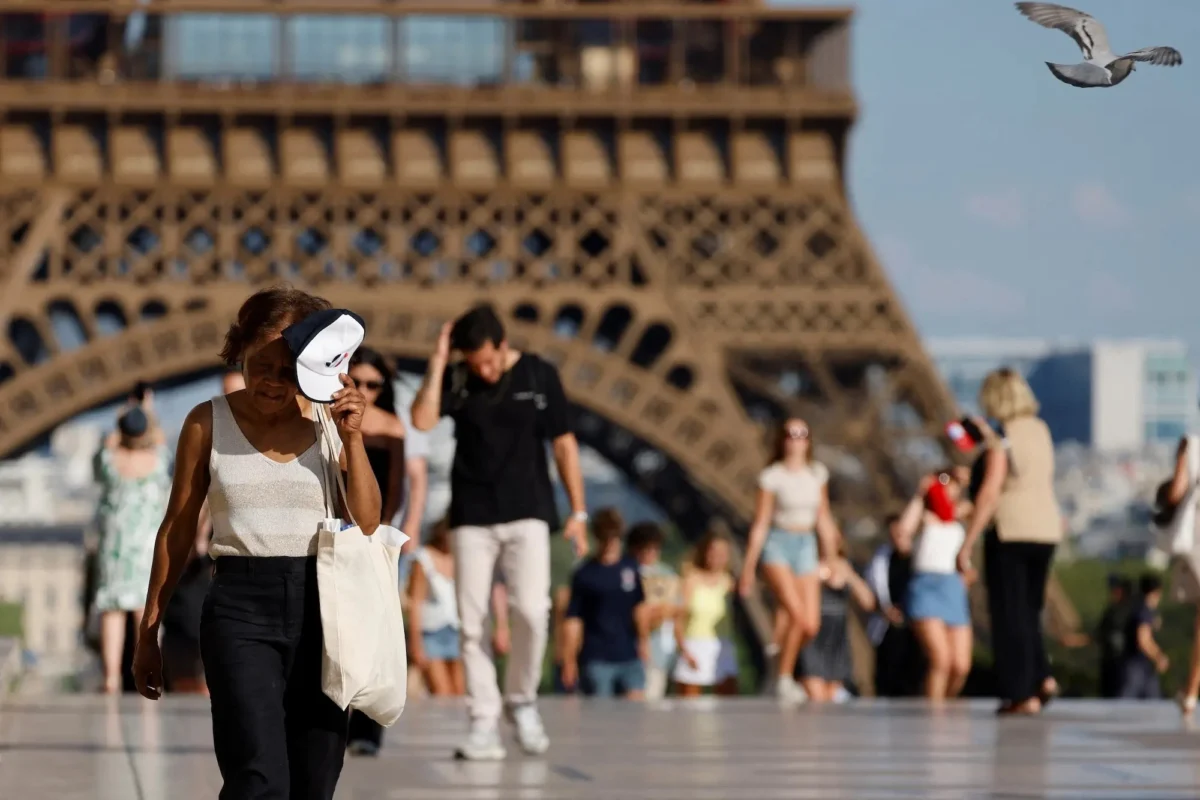
In the subterranean depths of southern Paris, an abandoned railway tunnel known as the Petite Ceinture became an unlikely laboratory for the future of urban survival. On a Friday afternoon in October 2023, approximately 70 schoolchildren gathered in the cool, 64-degree Fahrenheit (18-degree Celsius) environment to participate in a grim but necessary piece of theater. While the air in the tunnel remained temperate, the scenario they were acting out was one of lethal, record-breaking atmospheric pressure: a heat wave that pushed surface temperatures in the French capital to a staggering 122 degrees Fahrenheit (50 degrees Celsius).
This exercise, titled "Paris at 50 degrees Celsius," represents a growing global movement among municipal governments to "stress test" their cities before climate change renders them uninhabitable. As global temperatures continue to climb, urban centers are shifting from theoretical planning to physical rehearsals, attempting to identify the exact moments when infrastructure, healthcare systems, and social order might collapse under the weight of extreme heat.
The Paris Prototype: Simulating the Unthinkable
The Paris drill was not merely a performance; it was a sophisticated diagnostic tool developed over 18 months by Pénélope Komitès, Paris’ deputy mayor in charge of resilience, in collaboration with Crisotech, a consultancy specializing in crisis management. The simulation was structured to address the "cascading impacts" of a heat dome—a phenomenon where high-pressure atmospheric conditions trap heat over a specific geographic area for an extended period.
During the live drill, children role-played various medical and social emergencies. Some simulated the symptoms of food poisoning, a common byproduct of power outages that disable refrigeration. Others mimicked the effects of carbon monoxide poisoning, occurring when residents use faulty generators during grid failures. Simultaneously, Red Cross workers and emergency dispatchers were forced to make "battlefield" decisions, triaging patients as hospitals reached capacity and transport systems failed.
The financial and logistical investment in this exercise was significant, costing approximately €200,000 ($236,000). Unlike previous drills in cities like London or Melbourne, Paris made the strategic choice to involve ordinary citizens and students. According to Ziad Touat, the lead consultant for Crisotech, including children was vital because they represent the generation that will actually live through these extremes. Their participation also served to highlight the vulnerability of the young and the elderly, who are disproportionately affected by hyperthermia and dehydration.
The Scientific Imperative: Why 50 Degrees?
The choice of 50 degrees Celsius (122 degrees Fahrenheit) as the target temperature for the Paris drill is based on rigorous climate modeling. While the city’s current record stands at 108.68 degrees Fahrenheit (42.6 degrees Celsius), recorded in July 2019, scientists at the Île-de-France Regional Climate Change Expertise Group warn that the 122-degree threshold is a mathematical probability by the year 2100.
Europe, as a continent, is warming faster than the global average. Current recommendations from climate advisory boards urge European governments to prepare for a warming of 2.8 to 3.3 degrees Celsius above pre-industrial levels. In a dense urban environment like Paris, where limestone buildings and asphalt streets create a powerful "urban heat island" effect, these temperature increases are magnified.
The human cost of failing to prepare is already documented. The World Health Organization estimates that heat is responsible for roughly 500,000 deaths annually. In 2003, a historic heat wave across Europe resulted in more than 70,000 excess deaths, with France suffering the highest toll. The Paris simulation aims to prevent a repeat of that catastrophe by identifying "failure points" in advance—such as the temperature at which railway tracks warp (known as "sun kinks") or the point at which water pumping stations lose efficiency.
A Global Chronology of Heat Preparedness
The rise of heat simulations marks a new era in climate adaptation. Five years ago, such exercises were rare, often confined to academic papers or high-level government briefings. Today, they are becoming standard operating procedures for the world’s "C40" cities—a network of nearly 100 global megacities committed to addressing the climate crisis.
- Phoenix, Arizona: After conducting heat drills, the city established the first permanent "Office of Heat Response and Mitigation" in the United States. The drills revealed a lack of coordination between the transit department and cooling center operators.
- Athens, Greece: As one of Europe’s hottest cities, Athens appointed a Chief Heat Officer to oversee the implementation of "cool routes" and the restoration of ancient Roman aqueducts for urban irrigation.
- Freetown, Sierra Leone: This African capital has utilized simulations to plan for the protection of informal settlements, where corrugated metal roofing can turn homes into ovens during heat spikes.
- Taipei, Taiwan: In July 2024, Taiwan expanded its preparedness from tabletop exercises to live simulations. The focus was on the "inter-agency gap"—ensuring that national power authorities communicate effectively with local health clinics during a 40-degree Celsius (104-degree Fahrenheit) heat wave.
Infrastructure and the "Silent Breakdown"
One of the primary goals of these rehearsals is to expose the fragility of interconnected urban systems. Cassie Sunderland, managing director of climate solutions at C40, notes that success in a drill is often defined by what goes wrong. "The most valuable ones are realistic enough to force decisions, yet unpredictable enough to expose coordination problems," she explained.
In Barcelona, officials are currently adapting the Paris model to address the specific threats facing the Mediterranean basin, which is warming 20 percent faster than the rest of the world. Irma Ventayol, who leads Barcelona’s climate change department, raised questions that are rarely considered in standard city planning: Can garbage trucks operate at 50 degrees Celsius? Will the engines overheat, leading to a sanitation crisis in the middle of a health emergency? Does the city have a registry of every bedbound resident who lacks air conditioning?
Similarly, Dr. Satchit Balsari, a professor of emergency medicine at Harvard Medical School, argues that simulations must get into the "uncomfortable weeds" of medical logistics. During a massive heat stroke event, standard medical supplies may be insufficient. "How do you take a large human body and put it in ice? Is there a bucket that big?" Balsari asks. "The answer is no. So is it a body bag? Where do you get all this ice?" These are the logistical bottlenecks that only become apparent when officials are forced to act out the scenario in real-time.
From Simulation to Policy: The Paris Results
The Paris simulation was not a one-off event; it served as the foundation for the city’s 2024–2030 Climate Action Plan. The exercise produced 50 specific recommendations that are currently being implemented. These include:
- Thermal Insulation: The city has accelerated the insulation of thousands of public housing units to keep interiors cool without relying solely on energy-intensive air conditioning.
- Urban Re-greening: In the winter following the drill, Paris planted 15,000 trees. The goal is to replace asphalt parking spaces with "urban forests" that can lower local temperatures through evapotranspiration.
- Hydraulic Infrastructure: The city opened three permanent bathing spots along the Seine River, providing residents with free, accessible ways to lower their body temperature during heat spikes.
- The Campus of Resilience: Perhaps the most significant outcome was the realization that the public was largely unprepared for the physiological realities of extreme heat. In March, Paris opened the "Campus of Resilience," a training center where residents can learn how to recognize heat stroke and assist vulnerable neighbors.
Analysis of Implications: The Implementation Gap
While the proliferation of heat rehearsals is a positive step, climate experts warn that "simulating" a disaster is not the same as "preventing" one. The true test of these exercises lies in whether cities have the political will and financial resources to implement the findings.
Smaller cities or those in the Global South often lack the €200,000 budget required for a Paris-style simulation. However, crisis management consultants like Ziad Touat argue that preparedness is scalable. "It’s better to do five small ones than one big one," he says, suggesting that testing a communication plan or mapping vulnerable citizens can be done with minimal overhead.
Furthermore, there is the risk of "adaptation fatigue." If cities conduct drills but fail to address the root causes of urban heat—such as car-centric design and a lack of green space—the simulations may offer a false sense of security. As Cassie Sunderland of C40 points out, true resilience requires long-term structural changes that cool the city every day, not just during an emergency.
As the world enters an era of "unprecedented" weather events, the lessons learned in the tunnels of Paris and the streets of Taipei will become the new baseline for urban governance. The transition from reactive emergency response to proactive climate rehearsal may be the only way for the world’s major cities to remain viable in a century defined by the rising mercury. For the residents of these cities, the goal is simple: ensuring that the 50-degree Celsius day, when it inevitably arrives, remains a manageable crisis rather than an insurmountable catastrophe.
