

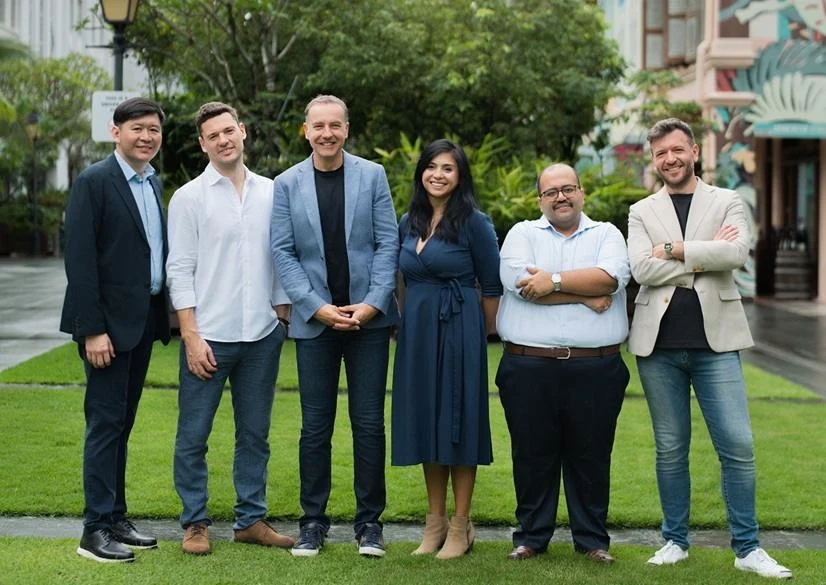
Singapore-based climate venture builder and fund management platform 100×100 has officially announced the launch of its second major investment vehicle, titled "Fund II," which seeks to raise $100 million to catalyze the development of 50 new climate technology startups across the high-growth markets of Southeast Asia and India. This strategic move represents a significant escalation in the firm’s mission to address the global climate crisis by focusing on the world’s most carbon-intensive regions, utilizing a unique venture-building model that prioritizes both environmental impact and commercial viability. The announcement comes as the global community faces increasing pressure to decarbonize industrial supply chains while meeting the burgeoning energy demands of developing economies.
A Strategic Expansion of the Venture Building Model
The launch of Fund II follows the successful deployment of the firm’s inaugural fund, Fund I, which reached its hard cap of $60 million in 2023. Since its inception, 100×100 has distinguished itself from traditional venture capital firms by adopting a "company builder" approach. Rather than merely providing capital to existing startups, the firm identifies "white space" opportunities—unmet needs in high-emissions sectors—and actively co-founds companies to fill those gaps.
Founded in 2025 as a specialized spin-off from the renowned venture capital firm Wavemaker Partners, 100×100 has rapidly established a robust track record. To date, the platform has co-built 27 companies, creating a diversified portfolio that spans critical sectors including land-use, agriculture, energy production, industrial manufacturing, sustainable materials, and green building technologies. The firm’s name itself, 100×100, reflects its core investment thesis: every company built under its wing must have the inherent potential to abate 100 million tons of carbon dioxide equivalent (CO2e) while simultaneously achieving $100 million in annual revenue.
Chronology of Growth and Development
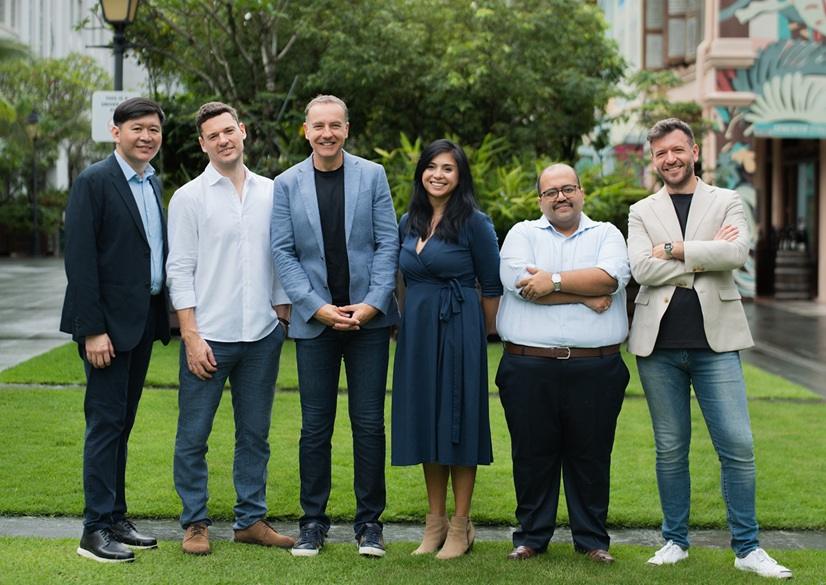
The trajectory of 100×100 illustrates a maturing landscape for climate tech in the Global South. The timeline of the firm’s evolution highlights a disciplined approach to scaling climate solutions:
- 2023: Launch and closing of Fund I at $60 million. This initial capital was used to test the venture-building hypothesis in Southeast Asia, focusing on early-stage interventions in agriculture and energy.
- 2024: Expansion of the portfolio to 27 companies. During this period, the firm refined its "Green Discount" strategy, ensuring that new ventures could compete on price with carbon-intensive incumbents.
- 2025: Official establishment as an independent platform from Wavemaker Partners, allowing for more specialized focus on climate-specific engineering and operational challenges.
- June 2026: Announcement of Fund II with a $100 million target. This new fund is designed to bridge the "valley of death" between technological proof-of-concept and large-scale commercial deployment.
The firm’s operational model is rigorous. Each year, 100×100 evaluates more than 1,000 entrepreneurs to identify a handful of founders who possess the specific operational expertise required to scale complex industrial and agricultural businesses. This selective process ensures that the technical solutions are paired with leadership capable of navigating the regulatory and logistical hurdles inherent in the Indian and Southeast Asian markets.
Leveraging the Green Discount for Economic Resilience
A central pillar of the 100×100 strategy is the pursuit of the "Green Discount." While many climate technologies historically relied on "green premiums"—where consumers or businesses pay more for a sustainable alternative—100×100 focuses on ventures that deliver cost advantages. By optimizing supply chains, improving resource efficiency, or utilizing decentralized energy models, these startups aim to be the more economical choice regardless of their environmental benefits.
The firm notes that this approach is particularly vital in the current global climate. Rising energy demand in developing nations, coupled with geopolitical fragmentation and the "reshoring" of manufacturing, has created a sense of urgency for domestic industrial resilience. Low-emissions technologies that also reduce operational costs are increasingly seen not just as environmental necessities, but as strategic economic assets.
Proven Performance and Portfolio Highlights
The effectiveness of the 100×100 model is evidenced by the rapid commercialization of its early ventures. According to the firm, its portfolio companies have collectively raised over $28 million from 16 external institutional investors. Notably, the majority of these startups begin generating revenue within just six months of their launch, a pace rarely seen in the deep-tech or climate-tech sectors.
Two standout examples from the current portfolio illustrate the breadth of the firm’s impact:

- Rize: This company focuses on one of the most significant yet overlooked sources of greenhouse gases: methane emissions from rice cultivation. By implementing sustainable farming practices and technology, Rize generated $11 million in revenue in 2025. More importantly, it has scaled its impact to support more than 40,000 smallholder farmers, proving that climate solutions can provide social and economic uplift simultaneously.
- Helios: A Philippine-based residential solar provider, Helios has addressed the high cost of electricity in the archipelago by providing accessible solar solutions. The company has recorded a staggering monthly growth rate of more than 40% over the past year, capitalizing on the region’s abundant solar resources and the increasing demand for energy independence.
Official Perspectives on Regional Challenges
Quentin Vaquette, Founding Partner at 100×100, emphasized that Southeast and South Asia are the most critical battlegrounds for the global energy transition. "Southeast and South Asia sit at the intersection of the world’s most urgent challenges," Vaquette stated. "These regions hold a disproportionate share of global emissions while increasingly becoming key hubs for manufacturing reshoring, AI infrastructure buildout, and food system redesign."
Vaquette further noted that by deploying venture-building infrastructure specifically tailored to these regions, the firm aims to reduce global emissions by a collective 10%. This ambitious goal reflects the massive scale of the industrial sectors in India and Southeast Asia, where even incremental improvements in efficiency can lead to massive absolute reductions in carbon output.
Broader Impact and Market Implications
The launch of a $100 million fund dedicated to venture building suggests a shift in how climate tech is being funded in emerging markets. Traditional venture capital often struggles with the capital-intensive nature of "hard tech" or the fragmented nature of agricultural markets in Asia. By taking an active role in company formation, 100×100 de-risks these investments for subsequent funding rounds, creating a pipeline of "investment-ready" companies for larger global funds.
The implications for Southeast Asia and India are profound. As these regions continue to urbanize and industrialize, the "business as usual" path would lead to a catastrophic increase in global emissions. However, the infusion of $100 million specifically targeted at building 50 new companies provides a blueprint for a different kind of growth—one that is decoupled from carbon emissions.
Furthermore, the focus on AI infrastructure and manufacturing reshoring mentioned by Vaquette highlights a new frontier for climate tech. As data centers and high-tech factories proliferate in India and Vietnam, the demand for carbon-neutral cooling, sustainable materials, and circular waste management will skyrocket. 100×100’s Fund II is positioned to seed the companies that will provide this essential green infrastructure.
Analysis of Future Challenges
Despite the optimistic outlook, the path forward for Fund II involves navigating complex macroeconomic headwinds. High interest rates globally have made capital more expensive, and the physical infrastructure required for many climate solutions—such as grid upgrades for solar or cold-chain logistics for agriculture—remains underdeveloped in many parts of South Asia.
However, the 100×100 model is specifically designed to thrive in these "difficult" environments. By focusing on the "Green Discount" and ensuring rapid revenue generation, the firm builds companies that are less dependent on long-term subsidies or speculative capital. The success of Fund II will likely serve as a bellwether for the broader climate-tech ecosystem in Asia, determining whether the venture-building model can truly scale to meet the 100-million-ton abatement target.
As 100×100 begins the process of deploying this new capital, the eyes of the global investment community will be on the 50 new startups slated for creation. If successful, these companies will not only contribute to the global cooling of the planet but will also cement Southeast Asia and India as leaders in the next generation of industrial innovation.
