

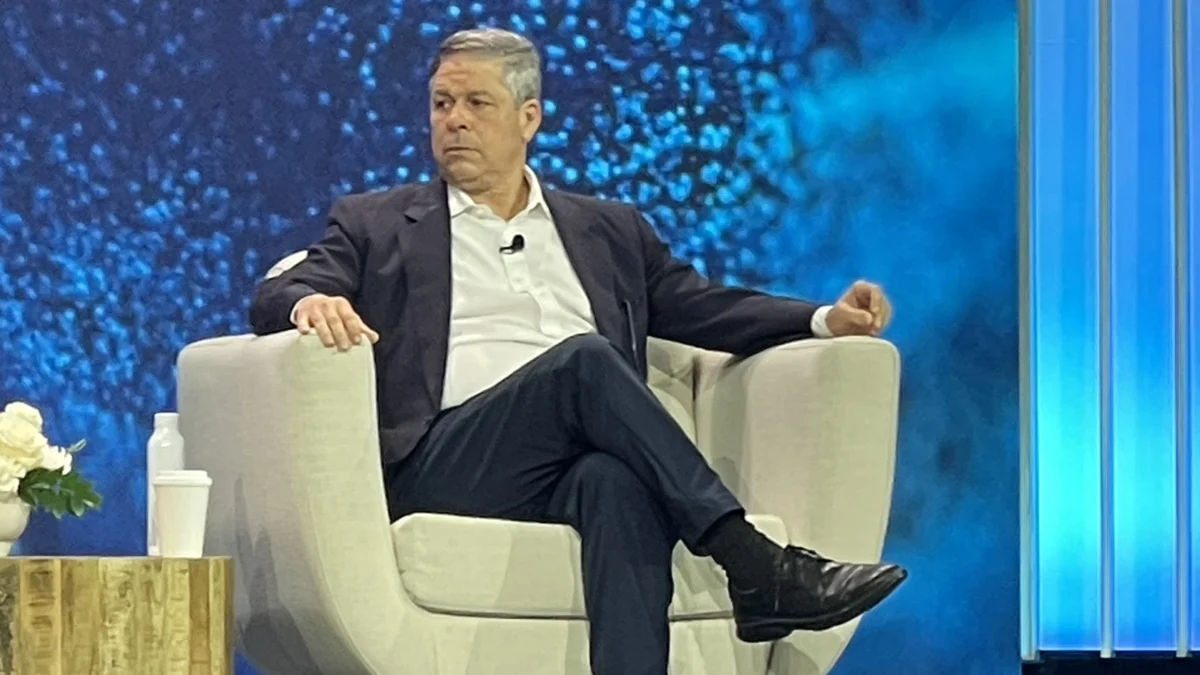
Jonathan Steinberg, the chief executive of WisdomTree Inc., an established exchange-traded fund (ETF) issuer managing approximately $170 billion in assets under management, has articulated a clear vision for the future of asset management. During his participation in the prestigious BNY INSITE 2026 conference, held in Aurora, Colorado, Steinberg highlighted the critical role of ETFs in providing investors with access to private markets. His insights were delivered during a panel discussion titled "The Future of Asset Management and the Convergence with Wealth Management," where he positioned ETFs as the next evolutionary step in democratizing investment opportunities.
The BNY INSITE 2026 conference is a significant gathering for industry leaders, bringing together key players in finance, technology, and investment to discuss prevailing trends and forecast future developments. The event provides a platform for thought leaders like Steinberg to share their strategic outlooks and engage in critical dialogues about the evolving financial landscape. WisdomTree, with its substantial AUM, is a prominent voice in the ETF industry, and its CEO’s pronouncements carry considerable weight among asset managers, advisors, and institutional investors.
Steinberg’s remarks signaled a divergence from the prevailing trend of encouraging retail investors to allocate substantial portions of their portfolios to private markets through evergreen funds. He expressed strong reservations about this approach, citing inherent challenges such as limited liquidity and a pervasive lack of transparency in the pricing mechanisms of private-market assets within these structures. His critique extended to governmental initiatives, including past efforts by the Trump administration to broaden access to alternative investments through workplace retirement plans, underscoring a belief that such measures may not adequately address the risks involved for the average investor.
"People are telling retail investors: ‘You need to have up to 30% of your assets in private assets.’ Sounds like a lot!" Steinberg remarked during the conference. He further cautioned that "High fees can corrupt advice," pointing to a potential conflict of interest where the pursuit of higher fees associated with private market investments might compromise the quality of guidance provided to investors. Adding another layer to his assessment, Steinberg noted that the lucrative returns once characteristic of private equity have diminished significantly over the past 15 to 20 years, suggesting that the allure of private markets may be based on historical performance rather than current realities.
WisdomTree’s Strategic Pivot: Integrating Private Assets into ETFs
In direct response to the growing demand for private market exposure and to offer a more accessible route for retail investors, WisdomTree has embarked on a significant strategic initiative. Last year, the company acquired Ceres Inc., an alternative asset manager. This acquisition is poised to facilitate the launch of a commodities ETF that will incorporate exposure to Ceres’ extensive farmland holdings. This innovative ETF is slated for release by the end of the first quarter of 2027, marking a concrete step in WisdomTree’s strategy to bridge the gap between private assets and the ETF structure.
The Ceres acquisition has propelled WisdomTree into a prominent position within the agricultural sector. The company now stands as the third-largest owner of farmland in the United States, managing an impressive 180,000 acres. Steinberg enthusiastically described farmland as "the most interesting asset class in the world," highlighting that WisdomTree’s competitive landscape in this arena will include entities such as the Mormon Church, Bill Gates, and traditional family farmers, rather than the behemoths of the alternative asset management world like BlackRock or Blackstone. This diversification into farmland represents a novel approach to providing tangible asset-backed exposure through an ETF.
Furthermore, WisdomTree is not limiting its private asset integration to commodities. The company has also announced plans to introduce an equity ETF with venture capital exposure in early 2027. This dual approach—spanning both real assets and growth-stage companies—underscores WisdomTree’s commitment to offering a comprehensive suite of private market investment solutions within the familiar and liquid ETF wrapper.
Steinberg articulated his firm’s differentiated strategy by stating, "What I don’t want to be is the last person buying SpaceX." This analogy powerfully conveys his aversion to chasing overvalued assets or being late to an investment trend. He elaborated on WisdomTree’s distinct methodology: "As my competitors are taking private credit and putting it into interval funds, we will be taking private assets and putting them into ETFs."
The ETF Advantage: Liquidity, Accessibility, and Transparency
The core of Steinberg’s argument for ETFs in private markets lies in their inherent advantages over traditional private fund structures, particularly for retail investors and their advisors. He outlined a compelling proposition: "We’ll be able to get to 15% [private asset] exposure, but there will be no K-1s, no paperwork, no holding period, no minimums, no maximums." This addresses many of the operational and administrative burdens associated with direct private investments, which can be prohibitive for individual investors and even some financial advisors.

Steinberg emphasized the flexibility this offers to financial advisors: "And you, the advisor, will have a choice—you can lock up your client’s money and do all that comes with traditional private assets. It can absolutely be worth it. But that manager needs to be great. And you need to know your customer and sort out if it’s worth it for them." This positions WisdomTree’s ETF offerings not as a replacement for all private investments but as a complementary tool that provides a more streamlined and accessible entry point, allowing advisors to make informed decisions based on their clients’ specific needs and risk tolerances.
The absence of K-1s (which are typically associated with partnerships and can complicate tax reporting for individuals), holding periods, and minimum/maximum investment requirements significantly lowers the barrier to entry. This enhanced accessibility is crucial for democratizing investments that were once the exclusive domain of institutional investors and high-net-worth individuals.
The Long-Term Horizon: Tokenization and the Future of Finance
Beyond the immediate focus on private market ETFs, Steinberg also offered a glimpse into the longer-term transformative potential of tokenization within the financial services industry. While acknowledging that the concept of tokenization is not yet a primary concern for most financial intermediaries today, he expressed a strong conviction in its future impact. WisdomTree itself has already made a significant investment, holding $1 billion in tokenized digital assets, signaling its proactive stance on this emerging technology.
"In fact, when it really evolves, you won’t even know. It’s like the internet—we don’t know how it works, it’s just out there embedded in everything we do," Steinberg analogized, drawing a parallel to the ubiquitous and often invisible integration of the internet into modern life. He envisions a future where "We’ll bring financial services onto the blockchain," suggesting a fundamental shift in how financial transactions and asset ownership are managed. This forward-looking perspective indicates WisdomTree’s commitment to staying at the forefront of technological innovation in finance, even as its immediate strategic priorities focus on more established asset classes.
Broader Implications for the Investment Landscape
Steinberg’s articulation of WisdomTree’s strategy carries significant implications for the broader investment landscape. Firstly, it challenges the established norms of private market access, suggesting that the ETF structure can indeed accommodate illiquid and alternative assets without compromising investor accessibility or liquidity. This could spur further innovation from other ETF issuers, leading to a more competitive and diverse market for private asset exposure.
Secondly, his cautionary notes regarding retail investors’ exposure to private markets highlight a critical need for investor education and responsible product development. The push to channel retail capital into private markets, while potentially lucrative for asset managers, carries inherent risks that must be clearly communicated and mitigated. WisdomTree’s approach, by wrapping these assets in ETFs, aims to provide a more regulated and transparent framework, potentially setting a new standard for responsible innovation in this space.
Thirdly, the focus on tangible assets like farmland demonstrates a recognition of investor demand for real-world value and diversification beyond traditional financial instruments. Farmland, as an asset class, offers unique characteristics such as inflation hedging and uncorrelated returns, making it an attractive component of a diversified portfolio. WisdomTree’s ability to package this into an ETF format makes it accessible to a wider audience.
Finally, Steinberg’s forward-looking comments on tokenization underscore the ongoing digital transformation of finance. While widespread adoption may be years away, WisdomTree’s early investments and strategic positioning suggest that it is preparing for a future where blockchain technology underpins a significant portion of financial services. This foresight is crucial for long-term relevance and competitive advantage in an industry that is rapidly evolving.
The BNY INSITE 2026 conference served as a pivotal platform for Jonathan Steinberg to not only articulate WisdomTree’s strategic direction but also to engage in a critical dialogue about the future of asset management. His emphasis on ETFs as the vehicle for private market access, coupled with his pragmatic approach to risk management and his forward-looking vision for tokenization, positions WisdomTree as a key innovator shaping the next era of investment. The firm’s strategic moves, particularly its significant investment in farmland and its plans for venture capital exposure via ETFs, are likely to be closely watched by investors and competitors alike as they navigate the evolving financial landscape.
